November 13, 2015
Share:
Facebook Twitter Email

ENTERTAINMENT Opens Today

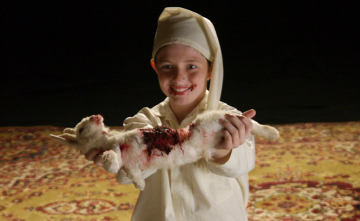
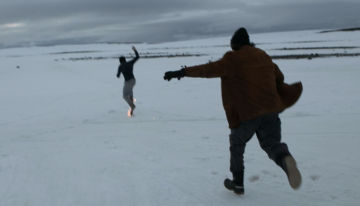
The Fessenden-EP’d ENTERTAINMENT, director Rick Alverson’s follow up to the GEP-Produced THE COMEDY, opens in theaters today. See the film that Jeannette Catsoulis of NY Times calls a “downward odyssey that’s hard to shake off.”

entertainment-image-1-600x337

From the NY Times:

By Jeannette Catsoulis

Watching “Entertainment” is a profoundly uncomfortable, some would say repellent, experience that isn’t easily forgotten. Yet I left this barbed portrait of a cracking-up comic with more than a little respect for its fearless director, Rick Alverson, and his trusting star, Gregg Turkington. You can’t deny that they’re a match made in heaven.

Or at least in the California desert, where Mr. Turkington, known simply as the Comedian (and playing a version of his real-life stand-up persona, Neil Hamburger), schlumps from one seedy, underpopulated gig to another. Onstage, carefully arranged strands of comb-over cling to his pallid forehead like wet seaweed, and spare drinks nestle in the crook of his arm. Whether he’s spewing tasteless riddles or responding to hecklers, his act is a sewer of misogyny, homophobia and sexual insult. There is also an unspoken sense that his audiences — trimmings of humanity trapped in a soulless limbo of dust and dive bars — deserve no better.

Capturing a world of flyblown mirrors and sad carpeting, where shirts are washed in motel room sinks, and terrible things happen in public restrooms, Mr. Alverson jacks up the tension with exquisite restraint. Winding scene after scene to a breaking point, he brings our discomfort to a rolling boil, then quietly backs away. Amplified by the stillness of Lorenzo Hagerman’s camera, these moments inspire an apprehension that feels slightly sadistic, as if Mr. Alverson were enjoying his screw-turning a little too much.

Even if he were, there’s a strange nobility to this downward odyssey that’s hard to shake off. Snippets of well-chosen music appear judiciously, though not in the movie’s best scene: a squirmy bathroom encounter between the comedian and a tense young stranger (a perfect Michael Cera). When the comic warns his new acquaintance to back off, we know the younger man would do well to listen. JEANNETTE CATSOULIS

“Entertainment” is rated R (Under 17 requires accompanying parent or adult guardian). Foul language, flowing alcohol and frightening midwifery. 

November 13, 2015
Share:
Facebook Twitter Email

Tonight: Double Feature Featuring Fessenden

Spend this Friday the 13th with a double dose of Fessenden at the Ithaca International Film Festival. GEP-produced DARLING and Joe Begos’ THE MIND’S EYE play back to back tonight… look out, Ithaca!

DARLING
Directed by Mickey Keating
8pm
Darling_PressPhoto_GlassEyePix_03Tickets and Info


THE MIND’S EYE
Directed by Joe Begos
10pm
minds-eye-620x400Tickets and Info

November 12, 2015
Share:
Facebook Twitter Email

Friday and Saturday! STAKE LAND at IFC in NYC

This weekend (Friday November 13th and Saturday November 14th) IFC Center in NYC screens STAKE LAND at 12:15am (b0th showings) as part of their Glass Eye Pix: 30th Anniversary Tribute. Catch up with the film variety called “Highly cinematic, pitch-perfect…”

Screen Shot 2015-11-12 at 12.51.42 PM

Head over to IFC for tickets and more info.

November 11, 2015
Share:
Facebook Twitter Email

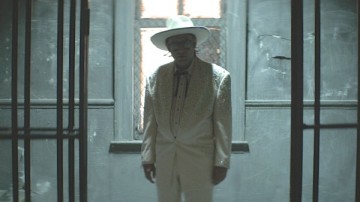
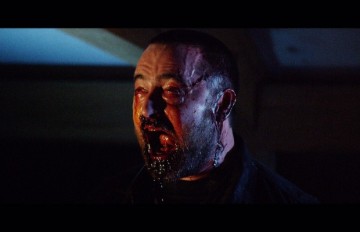
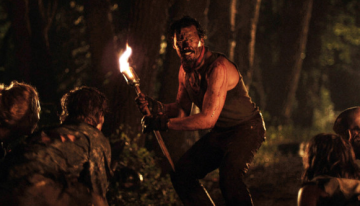
dailygrindhouse digs THE FESSENDEN COLLECTION

4XF_DD_AW_art_web-744x1024-700x963


In 1996, the movie SCREAM was released into theaters. With Kevin Williamson’s hip and meta script, and the old-school gravitas of director Wes Craven, SCREAM was seen by a lot of people as the kind of shot in the arm that the horror genre desperately needed. It was aware of its past and seemed willing to burn the genre down in order to define its future.


Problem is, while those people weren’t wrong, they also weren’t right.


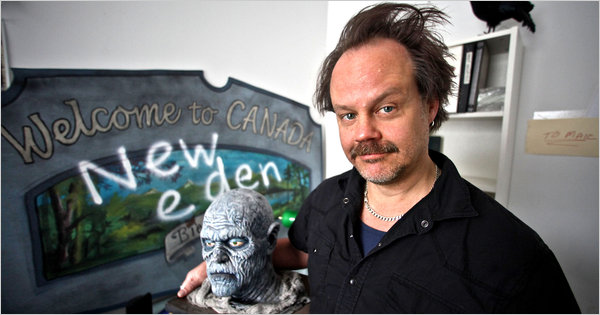
SCREAM is a great film, but its overall influence was far from positive, as it spawned a rash of imitators that seemed to believe SCREAM‘s success wasn’t its intelligence or its technical acumen, but its hiring of too-pretty teen stars of the moment and the kind of zeitgeist-chasing dialogue that feels old the second it takes to exit your mouth and hit your ears. What has become abundantly clear is that SCREAM was a prime representative of the nineties, not because it became a mission statement, but because like much of the quality genre fare of the decade, it was a one-off. As the years have gone by, though, there has been a slow buildup of quality films that take the tropes of the past and come at them in ways that are stylish, naturalistic, and emotionally devastating. However, this current trend hasn’t sprung out of nothing — in fact, the origin point for the current cinematic landscape in horror can be pinpointed to a single filmmaker. But that filmmaker wasn’t Craven, Romero, or even Carpenter — instead, it was a wild-haired New York City native with a broken smile by the name of Larry Fessenden.


960


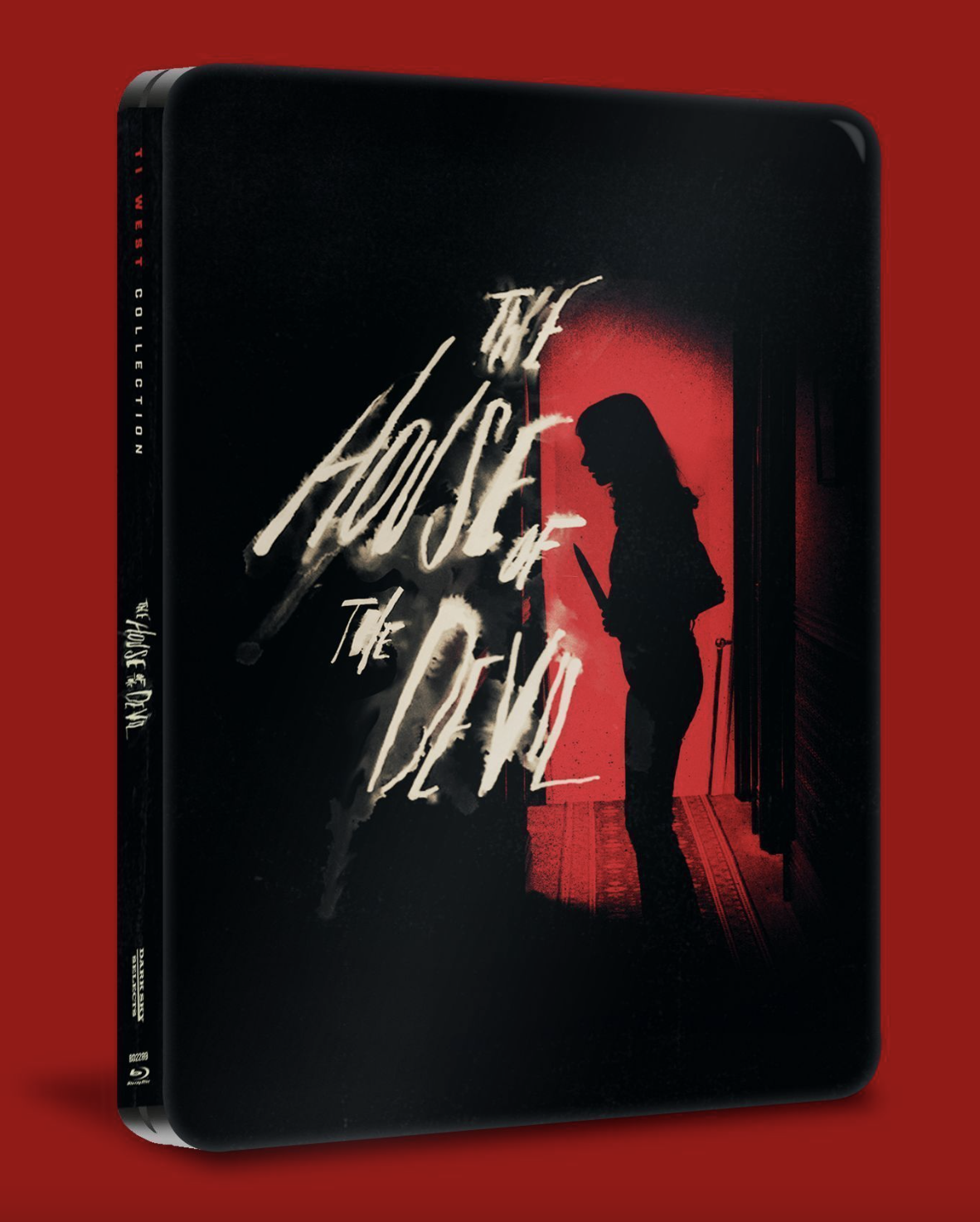
This isn’t going to come as much of a surprise to those who are familiar with Fessenden and his work. In the last decade, he’s had a hand in films such as YOU’RE NEXTHOUSE OF THE DEVILJUG FACESTAKE LANDLATE PHASESTHE BATTERY, and many more which would only serve as overkill to list here. Sometimes his contribution is only as an actor (or in the case of THE BATTERY, a voice over a walkie-talkie), but he’s had an even bigger impact as a producer, whose production company Glass Eye Pix effectively acts as a micro-studio which has produced genre defining work from writers and directors such as Ti West, Jim Mickle, Glenn McQuaid, and Mickey Keating. If we only counted those contributions, Fessenden’s influential nature would be without question, but it goes even further, because all of those films listed above, plus many more, are utilizing a cinematic language that Fessenden created with a series of films he made throughout the nineties.


Credit Fred R. Conrad/The New York Times


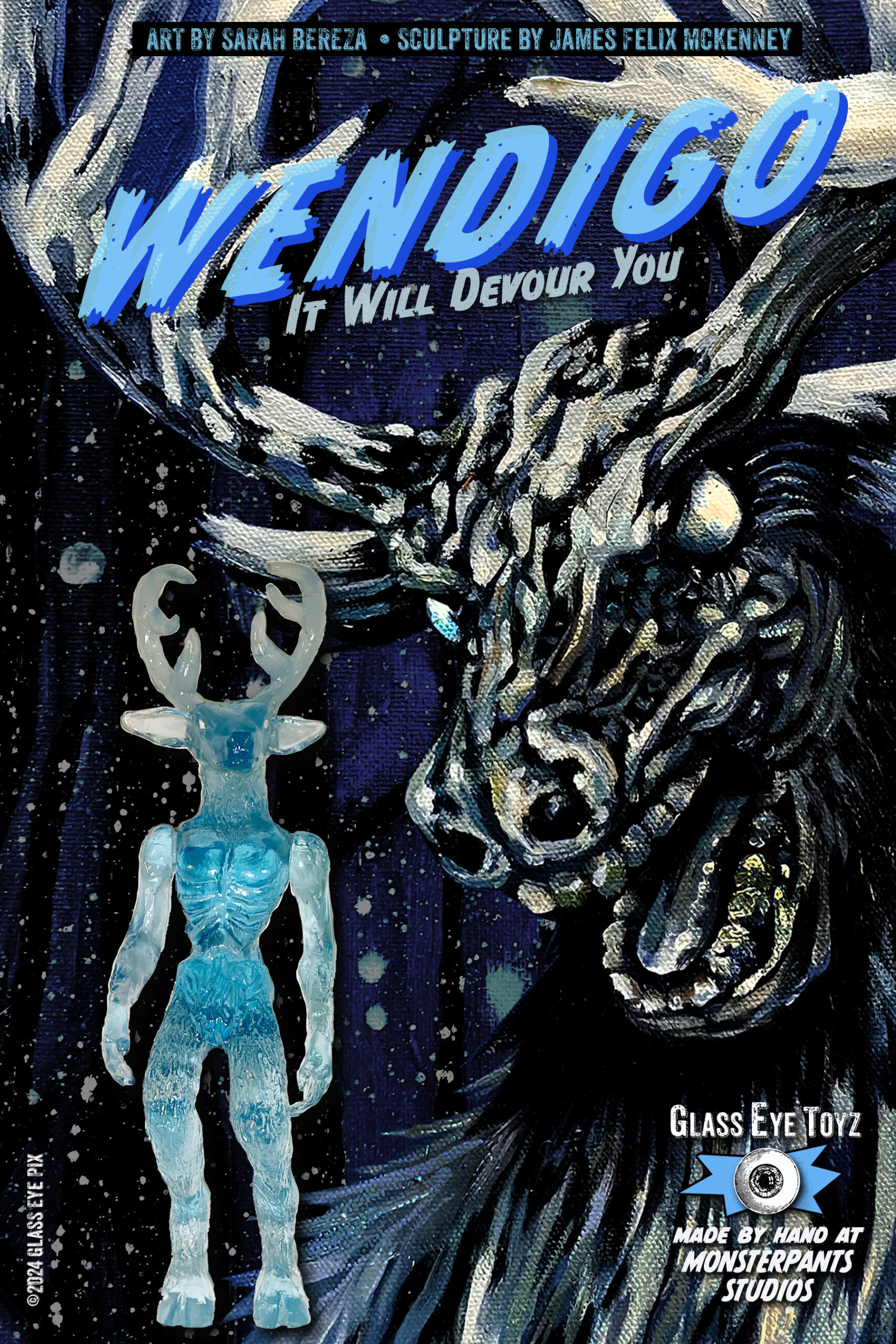
Fessenden’s most fertile period took place over a decade, with three films: NO TELLING (1991), HABIT (1995), and WENDIGO (2001). Collectively, they are referred to as his “Trilogy of Terror,” but individually they act as Generation X’s answer to FRANKENSTEINDRACULA, and THE WOLFMAN. These three films offer a very specific vision of how to tell a horror story, taking more cues from the nature-as-monster narrative of THE BIRDS than from proto-slasher stylings of PSYCHO as is the case with most of his contemporaries. Fessenden’s films take their time to build up their horror elements, to the point that the terror part of the trilogy could be seen as a bit of a misnomer, since if you go into these films cold, the first hour’s worth of material are usually very human dramas. If the New Hollywood ever made monster movies, they would look a lot like Fessenden’s films. Utilizing that era’s “everything old is new again” approach to genre, he digs deep into what makes us human, particularly when confronted with the monstrous.


notellcalfjeff


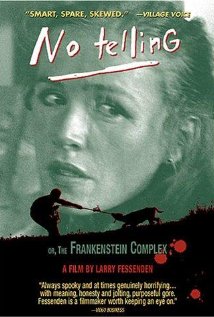
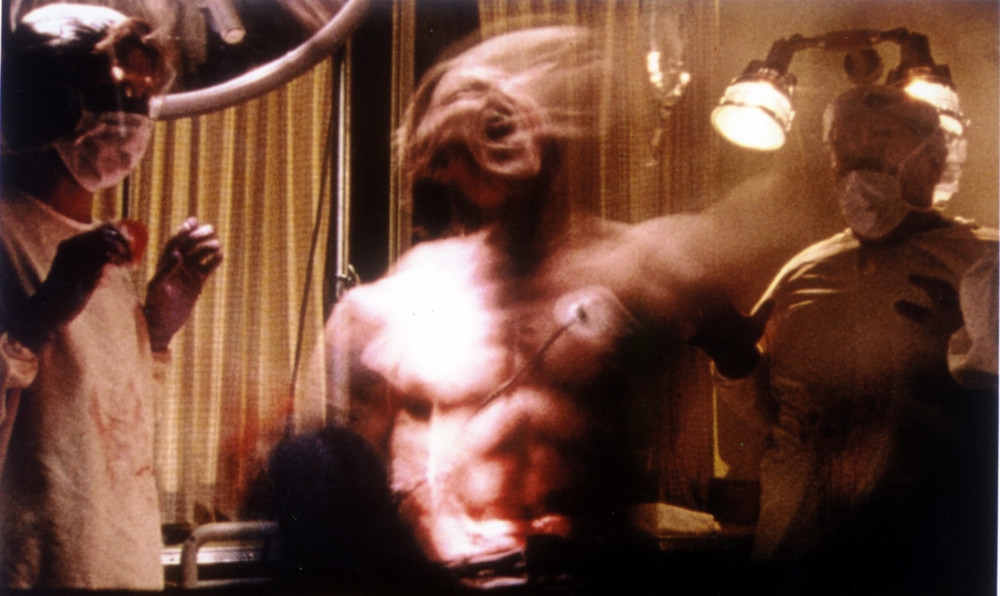
Although not his first feature — that would be the virtually unfindable EXPERIENCED MOVERS— NO TELLING offers an interesting if unwieldy opening statement for Larry Fessenden’s approach to genre. The film centers on a woman named Lillian Gaines (Miriam Healy-Louie) spending a summer with her husband Geoffrey (Stephen Ramsey) in the country, both to get away from the city and for Geoffrey to work on an experimental limb-transfer surgery, away from prying eyes. While there, long-simmering martial problems come to a head,and Lillian meets an environmental activist named Alex Vine (David Van Tieghem), while Geoffrey continues to push his experiments into possibly unethical directions. The film looks great, as Fessenden utilizes the lush greens of the New York countryside to great effect. However, it’s probably Fessenden’s peachiest film. Fessenden has long been an activist for the environment and animals, and NO TELLING was made at the peak of his passion. (He even went so far to write a booklet on low impact filmmaking). The setting of the film in a rural farming community allowed Fessenden to really get into the problems of the day, with the Alex Vine character given long strings of dialogue about the dangers of pesticides. both to the environment and to the farmers who use it. Although still valid nearly twenty five years later. it doesn’t coalesce as well with the rest of the film as you would hope. Thankfully, Fessenden seems like he was aware of this enough that he manages to rein it in, so it never comes off as obnoxious.


MV5BMjEyMzY4MDgxNF5BMl5BanBnXkFtZTcwMjMxMTkxMQ@@._V1_SY317_CR2,0,214,317_AL_


The real meat of the story is in the form of science run amok, as represented by Geoffrey. Geoffrey’s research involves a lot of animal experimentation, starting with mice but eventually moving on to dogs and calves he acquires through various means around the community. Fessenden stages these scenes like serial killings out of something like HENRY: PORTRAIT OF A SERIAL KILLER — he makes it clear this is in the name of science, but there’s a casual cruelty to it that makes the whole thing feel sick. Fessenden uses that cruelty to make a broader point about the causal nature of how human beings can treat the world around them, and also for how as a people we really don’t want to know the great details of what goes into scientific progress. These points combine as Lillian begins to learn to live alongside nature while spending time with Alex, and while she comes to realize that Geoffrey only sees the natural world as a means to an end, ultimately leading him to create something completely unnatural in the climax of the film. In the world of NO TELLING, humans might not be monsters, but our ambitions might just create some.


No-Telling-still-2_9aceb1d2-a267-e511-9442-0ad9f5e1f797_lg


NO TELLING is a solid film, but it’s a bit slow going, and pretty much the definition of minimalist horror. As engaged as he might be, you can kind of feel Fessenden rubbing up against the parameters of the story and setting. So it’s interesting that he went from the naturalistic painted polish of NO TELLING to the grainy guerrilla style he utilizes in HABIT.


Habit


HABIT is an interesting film in the Fessenden oeuvre given its setting, its shooting style, and the personal touches from Fessenden’s own life and struggles that blur the line between fact and fiction. Doubly so in the fact that Fessenden himself plays the lead.


LF-Habit1-360x243


At this point, it’s worth noting that Fessenden the director and Fessenden the actor have always been fairly separate entities. Despite having a few early successes, including being the male lead in Kelly Reichardt’s now classic RIVER OF GRASS, Fessenden has never used his films as a showcase of his own acting a la Ed Burns or early Spike Lee. He has small roles here and there in films he’s produced, but it’s not so much nepotism and more just being the right man for the job.  Of the movies he’s directed, it’s more likely he’ll have a stand in for himself, as with NO TELLING‘s Alex Vine, in roles wic he just hands over to other actors. Fessenden never assumed he would play the lead in HABIT, going so far as to hold several casting sessions, but it makes sense he did, since Fessenden’s character in HABIT isn’t so much a stand-in as he is a very specific version of Fessenden himself, which includes his own real life story of how he lost his front tooth in a mugging, to his past with self-harm and self-medication. It’s hard to imagine anyone else playing the role.


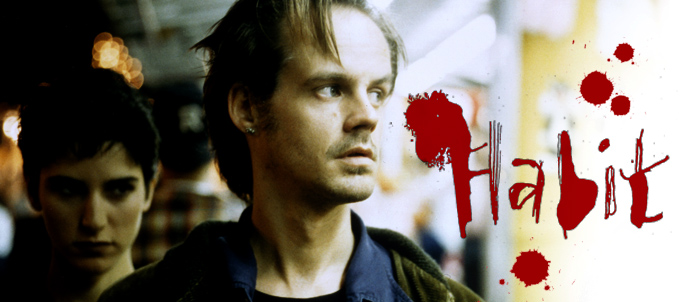
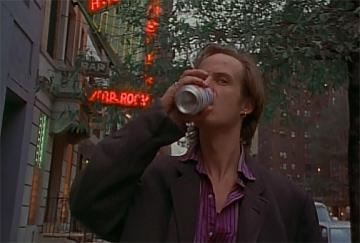
HABIT centers on Sam (Fessenden) in the wake of his father’s death and his breakup from his long-time girlfriend. He spends his days hanging out with friends and indulging in heavy drinking with a side of melancholy until he meets Anna (Meredith Snaider) at a Halloween party. They instantly form a connection and begin a very sex-driven relationship, which Sam indulges in the same way he does the drink. As time goes on, Sam’s mental state deteriorates, and he begins to suspect that Anna might be contributing to it in some way, eventually coming to the conclusion that she might be a vampire. HABIT is the film that has become the film most closely associated with Fessenden, both because of the autobiographical elements to Fessenden’s own life and because it’s basically his cinematic thesis statement.


NO TELLING can generally be described as an interesting oddity, but HABIT is a gauntlet being thrown down. Fessenden made the movie with a small crew, often shooting in the city with no permit,s and staging scenes on the quick with handheld cameras. There’s passion and danger that comes through nearly every frame, Fessenden showing just like many other independent filmmakers of the time that if you want to make a movie, than there’s really no other choice but just to make it. In the case of HABIT, Fessenden had access to a culture of New York city bohemia very rarely caught on film, as well as a wealth of personal experience as an artist just trying to live another day in a city that’ll eat you whole given the chance. And that hunger is brilliantly personified by the sexual relationship between Sam and Anna.


habit


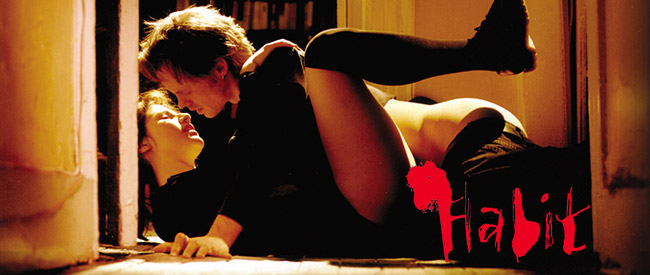
The sex scenes in HABIT aren’t the sort of thing that would make Lars van Trier blush, but even in a modern context it’s still impressive both in how much they show and in how they actually contribute to the film aside from baseline titillation. Sex in HABIT says a lot about its characters, Sam using it as another form of medication to avoid pain, and Anna as the aggressor and dominating in a way that telegraphs a predatory nature that only fully becomes apparent as the film goes on. The relationship is disturbing enough when taken from a strictly human point of view, and when the supernatural elements are fully introduced late in the film, it’s just icing on the cake. Fessenden offers a look at a familiar relationship dynamic that doesn’t operate on love but on something close — it’s the sort of connection that only really forms when you’ve gone through that special hellish blend of death, disappointment, and heartache that leads you to someone you can lose yourself in but who will ultimately tear you apart. By the time the idea that Anna might be a vampire appears, Fessenden has made us watch Sam just deteriorate right before our eyes, and like his friends, we have no way of knowing if what he’s seeing is real or if it’s the rambling hallucinations of an addict in the middle of a mental breakdown.


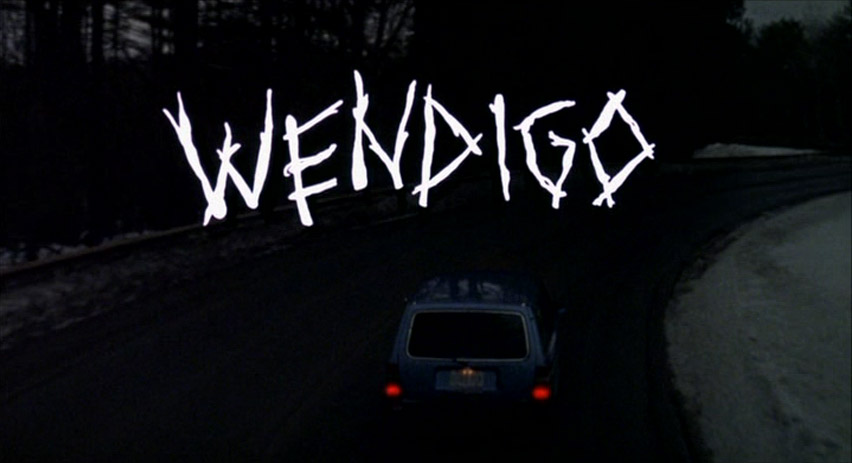
wendigo title


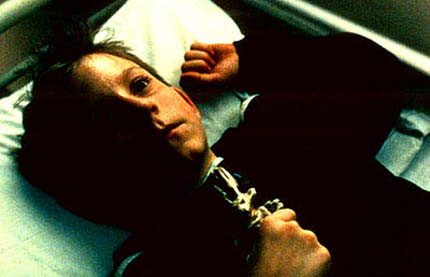
Those elements of whether or not what we are seeing is “real” is very important in Fessenden’s films. NO TELLING had small elements of it, and HABIT goes even further, but Fessenden perfects it with WENDIGO. Seeking a short winter vacation in rural winter New York, George (Jake Weber), his wife Kim (Patricia Clarkson), and their young son Miles (Erik Per Sullivan) get into a car accident by hitting a deer that was being pursued by local hunter Otis (John Speredakos). George and Otis instantly take a disliking to one another, particularly after Otis shoots the injured deer right in front of Miles. Afterwards, they head to their rented cabin, but Otis continues to taunt them over the course of the next day, until suddenly tragedy strikes, and an ancient spirit makes itself known. Like NO TELLING and HABIT, WENDIGO takes its time to reveal itself as a horror movie, and it uses the majority of its run time on a meditation of the differences of modern masculinity and on the kind of love/hate relationship that only exists between father and son. George represents the kind of guy that doesn’t have anything to prove except when he runs up against a guy like Otis, someone who inhabits an antiquated but for some reason idealized version of what a man is, and the frustration that goes along with it.


wendigo


We see that frustration play out through Miles’s point of view, which adds WENDIGO‘s final layer with Fessenden’s particular brand of horror of the mind. In NO TELLING, the horror literally springs from Geoffrey’s mind, while in HABIT, there’s more than enough evidence in the final minutes of the film that seem to suggest that Anna’s vampirism could possibly all be in Sam’s head, but WENDIGOis filtered through the eyes of a scared child, who turns Otis and his version of toxic masculinity into a literal monster in his closet. So when that particular monster unleashes itself further into Miles world by fatally attacking his father, that’s when the titular monster of the film finally makes its appearance.


larry-fessenden-is-the-greatest-horror-film-director-youve-never-heard-of-body-image-1445885696-size_1000


The WENDIGO has become a fairly well known Native American myth in recent years, to the point where it’s become a prominent X-MEN villain, but the gist of it is that its a spirit that was formerly a man who engaged in cannibalism and is now cursed with a beastly form and an insatiable appetite. Fessenden retains that aspect but also interprets it in his own way, even going so far as to provide voiceover himself, in a scene where Miles is told the legend in the first place by a local Native American man when the actor couldn’t deliver his lines, making this version of the WENDIGOFessenden’s own, as a shapeshifter who takes on the form of a skeleton made of tree branches to a more traditional flesh and blood monster that eventually seeks out Otis as a kind of spirit of vengeance. The way it goes after Otis has the kind of fury that only a child could muster, which makes you wonder if the WENDIGO actually exists, or if it’s just something Miles is imagining to create a kind of karmic balancing system to make sense of this tragedy. WENDIGO caps off Fessenden’s first decade of professional filmmaking with no easy answers and the unsettling feeling that outside man’s petty struggles, nature endures with an unblinking gaze.


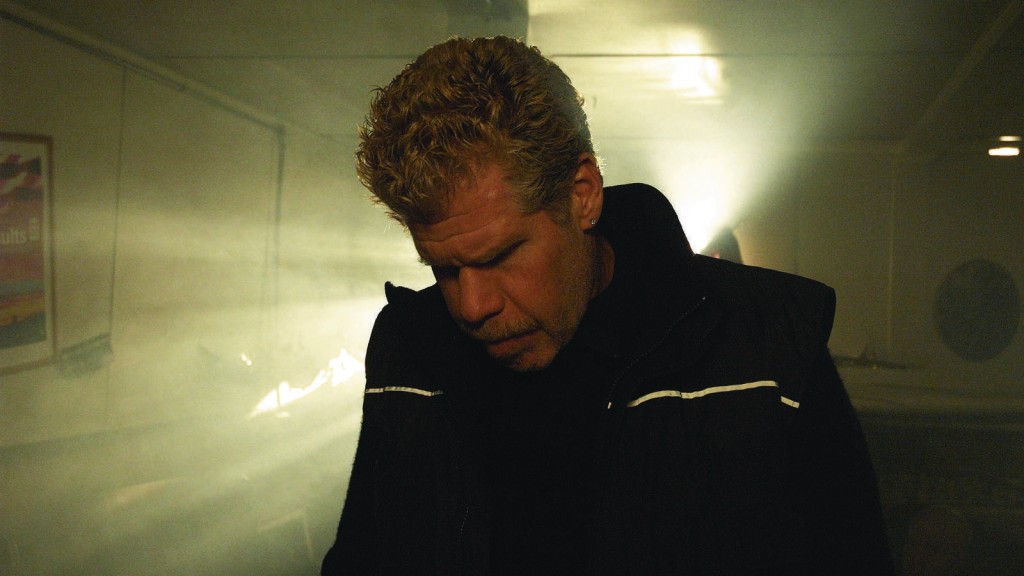
The idea of nature enduring comes into play again with Fessenden’s next feature, THE LAST WINTER (2008), which drops a lot of the build-up elements of the Trilogy of Terror and goes for a much more straightforward approach in its telling. When Ed Pollack (Ron Perlman) returns to his Alaskan outpost, where he’s trying to set up infrastructure for oil drilling, his crew informs him that his second-in-command Abby (Connie Britton) has begun seeing the station’s ecological advisor James (James Le Gros), who in turn believes that the impact of the drilling will cause irreversible damage. As they argue, the crew begins experiencing odd phenomena around the station, and it soon becomes clear that an otherworldly presence is making itself known.


thelastwinter


THE LAST WINTER plays like Fessenden’s attempt at a ghost story, a la THE AMITYVILLE HORROR, where the haunted house infects its inhabitants with a madness that moves like a virus. The only difference is that the haunted house in this story is the world itself, and like a lot of haunted houses, it wants its residents out of it. THE LAST WINTER doesn’t have the same intimacy that Fessenden’s other films have, but it has environmental passions present of the sort that got him started in NO TELLING. However, whereas NO TELLING had a modicum of hope that we could turn our relationship with the natural world aroun,d THE LAST WINTER has none of that. Fessenden has been watching too long, and although the words “global warming” are only mentioned once, he knows that the writing is on the wall. There is no respite, with the potential that the horror we’re seeing is not real in the world of the film, and as such, Fessenden ostensibly created a film that acts as an elegy for humanity.


2006_the_last_winter_0041


If that comes off as depressing, that’s because it is, and you get the feeling that coming off THE LAST WINTER, Fessenden’s priorities had shifted. It’s immediately following this film that his work as a producer went into overdrive, and he began popping up in more acting roles. It’s possible given that his own films hadn’t hit much farther than cult status by this point, that he felt that he could do more good utilizing what he had learned working within his own independent productions to ensure that some younger filmmakers could have an easier go than he did. And if those younger filmmakers just happened to start out as Glass Eye Pix interns, or were directly influenced by Fessenden himself, all the better.


Fessenden


This isn’t to say he wasn’t pursuing his own projects at the time, most notably how he began working on an American remake of THE ORPHANAGE with Guillermo Del Toro that fell apart, and even tried petitioning Marvel for the rights for Werewolf by Night before they became a cinematic juggernaut and locked their shit down tighter than an axe murderer in an insane asylum. The main problem, though, seems to be that while Fessenden was proving himself with quality genre fare, he was still seen as a weird indie auteur that major studio people just assumed wouldn’t want to work for them, an understandable assumption but one that no doubt led Fessenden to bang his head against a few walls. So it wouldn’t be until 2013 that we would get what is at this time his most recent film as director, BENEATH.


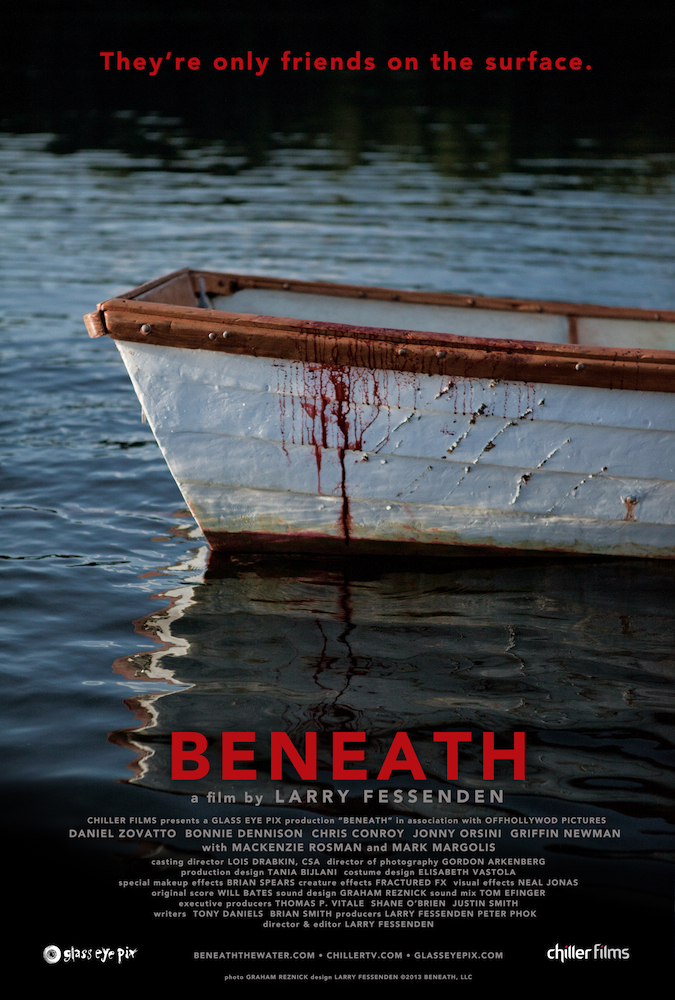
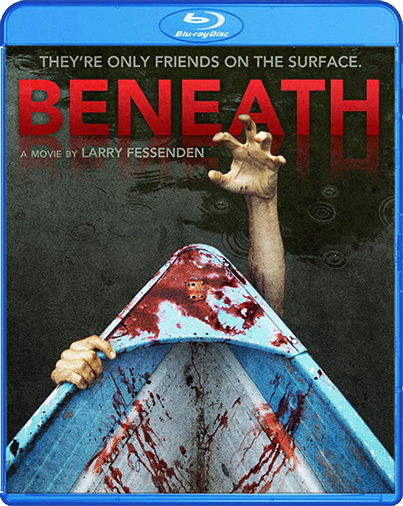
beneath


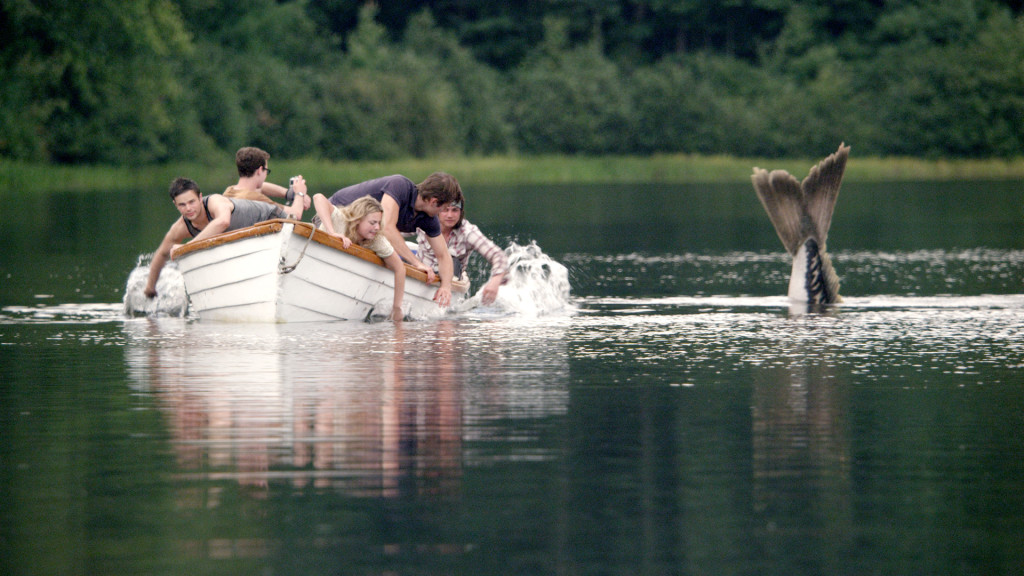
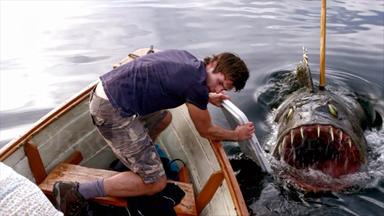
Following a group of high school graduates Johnny (Daniel Zovatto), Kitty (Bonnie Dennison) , Matt (Chris Conroy), Simon (Jonny Orsini), Zeke (Griffin Newman), and Deb (Mackenzie Rosman) decide to take a final summer vacation at a nearby lake, but quickly discover that the lake is home to a giant man-eating fish that leaves them stranded in in the middle of the lake without a paddle on a slowly sinking boat. As they try to reach the shore, they start realizing that in order to distract the predator, they need to give it some bait, and proceed to vote each other out of the boat, which leads to long buried secrets and grudges being revealed.


beneath


From the outside, BENEATH looks like Fessenden’s most commercial film, in terms of structure and content, but working off a script he himself didn’t write, BENEATH plays like a strangely detached exercise for Fessenden. However, that might be to its benefit, and that subsequently allows Fessenden to work outside his wheelhouse and still manage to add his own little personal touches. The most obvious example of this being the giant man-eating fish, which is a practical creation that looks equal parts goofy and terrifying and yet weirdly endearing. It’s his take on THE CREATURE FROM THE BLACK LAGOON by way of JAWS and as such, it’s not the villain by any means, just a beast following its natural instincts. Instinct turns out to be the backbone of the film, because what follows is almost every human character indulging in their worst ones.


beneath-2013-larry-fessenden


Films in secluded locations, inhabited by characters who turn on one another to survive, are a dime a dozen, but Fessenden is a savvy enough filmmaker to know what beats to hit and how to work with actors to create a series of very unique scenarios. The cast of BENEATH is a lot younger than those of most of his previous productions, and he uses that fact to show what characters would do if they believed they had to fight for the rest of their lives. The film is in line with the rest of his filmography because it works with the points he’s already made about the primal nature of the world, and BENEATH‘s characters are driven by primal desires like lust and self preservation, but ultimately it just comes down petty jealousies and each of them getting payback for petty grudges. They just happen to be using a giant fish to act out their resentments, and Fessenden cranks up the tension with every pass the fish makes and every drop of bloody water thrown out of their sinking boat until the very end, when the last man standing is left in the dark of the night, one monster being eaten by another.


Larry-Fessenden-600x400


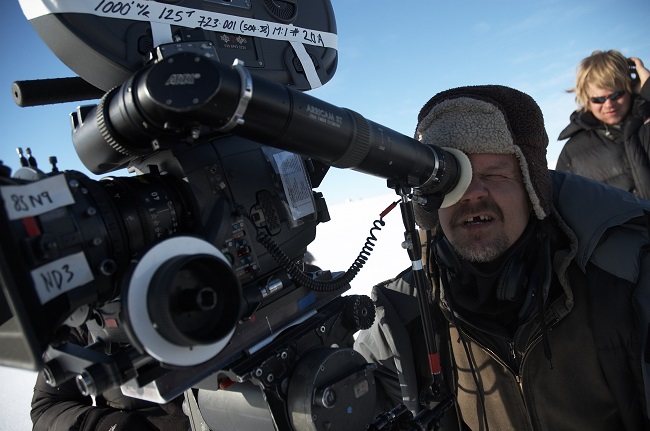
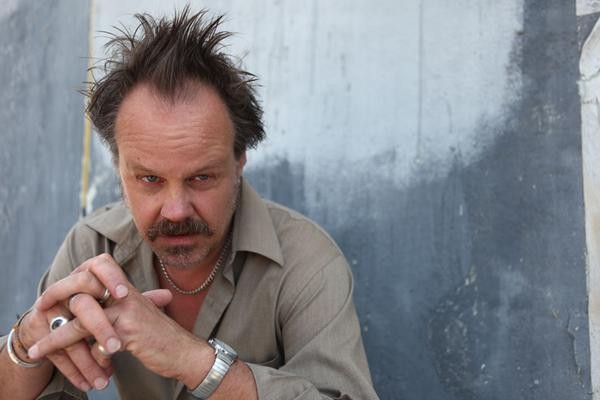
Larry Fessenden has been working for over thirty years at this point, and he has shown just how far someone can go with a unique vision and perseverance. He hasn’t been ignored, rather in the world of horror and independent film he’s played the part of a patron and comes close to being seen as a saint in some circles, but it’s only recently he has been acknowledged as the trailblazer that he was and continues to be. Even outside of film, he continues to create new and daring narratives, whether it’s through the intensely creepy audio plays for the digital age Tales from Beyond the Pale, or the critically acclaimed choose-your-own-slasher-movie-style video game Until Dawn. Larry Fessenden isn’t done by any means, Glass Eye Pix is still going strong, and Fessenden will no doubt step behind the camera again in the near future, but as of right no,w he would be more than justified to sit back and look at a landscape that he has helped create. Fessenden’s legacy is ongoing, but of all of his contributions, his most notable might be offering the world films that brings humanity back to its monsters while making humanity itself look monstrous. Its Larry Fessenden’s world, and we’re lucky to be living in it.


— PATRICK SMITH.


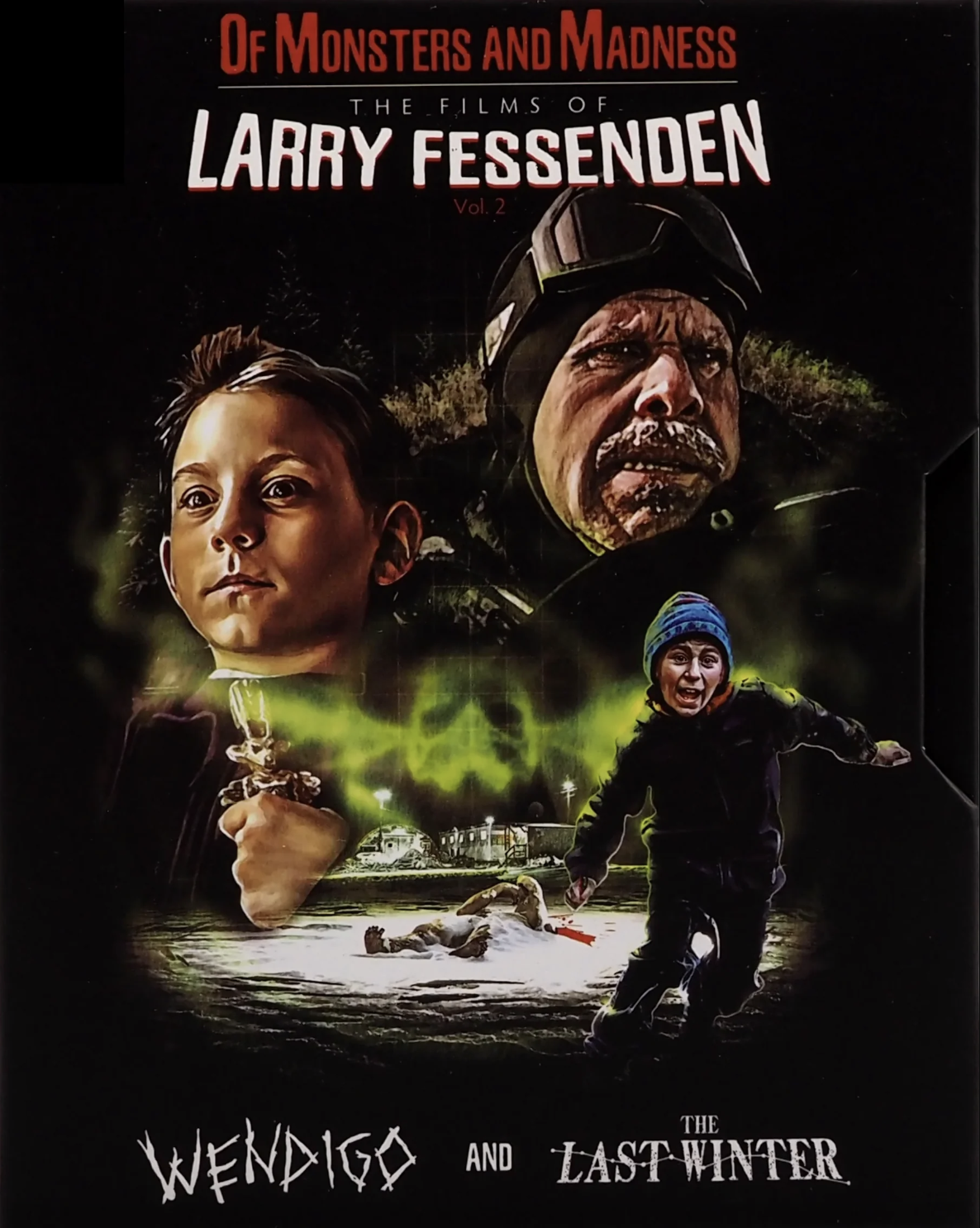
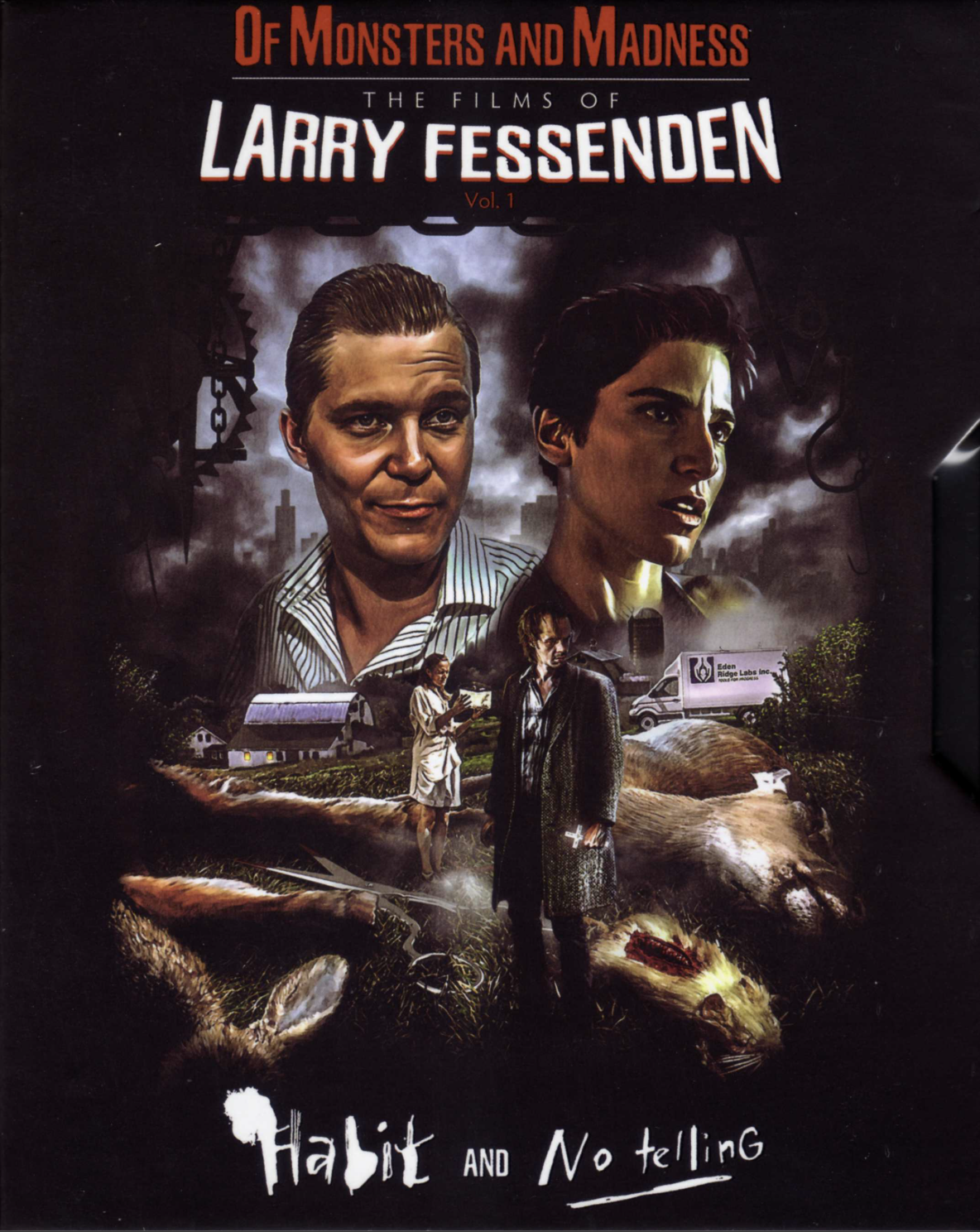
NO TELLINGHABITWENDIGO, and THE LAST WINTER have recently been collected on Blu-Ray by the good folks at Shout! Factory via THE LARRY FESSENDEN COLLECTION. If interested, you can support Daily Grindhouse by buying it here and BENEATH here. 


The Larry Fessenden Collection (Blu-ray)


Beneath (Blu-ray)


November 10, 2015
Share:
Facebook Twitter Email

Dread Central: FESSENDEN COLLECTION “one of the most important releases by Scream Factory”

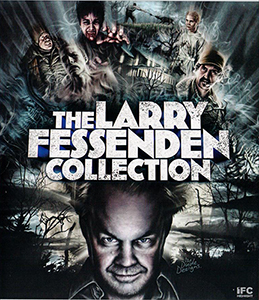
Dread Central‘s Anthony Arrigo examines THE LARRY FESSENDEN COLLECTION:
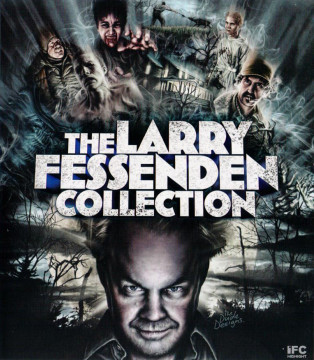
Fess Collection COVER

From Dread Central:

When Scream Factory announced they’d be releasing a collection of films by acclaimed auteur Larry Fessenden, my reaction was one of excitement and slight concern. Excitement because I genuinely look forward to nearly every catalog release put out by Scream Factory (most of the newer films, however – like the IFC Midnight stuff – have been less than stellar); slight concern because it felt like I hadn’t done my due diligence as a horror fan; namely, watching anything from Fessenden’s early filmography. Other than being aware of Wendigo (2001) and its minor cult status, I hadn’t seen a frame of Fessenden’s work outside of Beneath (2013), a creature feature which got a release from Scream Factory last year. I hated Beneath, and so I went into Fessenden’s oeuvre with relatively low expectations.

That was a mistake. Right from the get-go, with No Telling (1991), it became clear Fessenden is a man who makes deeply personal films, raw & full of emotion, with horror merely an undercurrent complicating already troubled lives. He fully embodies the auteur theory by writing, directing, editing and sometimes acting in his own films. And he’s actually a pretty decent actor, too. Everything seen on screen comes directly from his mind, with no compromises or studio interference. There’s a real sense of cinema verite to his work; his characters look and act like real people in real situations. This is personal, introspective filmmaking without pretense.

Fessenden’s first feature, No Telling, examines the effects of man and technology on animals and the environment, as told through the relationship among three people. Lillian (Miriam Healy-Louie) and her husband, Geoffrey (Stephen Ramsey), have recently moved to a country home so Geoffrey can continue his medical research in peace. He does animal experimentation to test new drugs and their effects; she’s a painter. At a local auction they meet Alex (David Van Tieghem), an activist and environmentalist who is passionate about stopping pesticide use in the county. Lillian and Alex become fast friends, a relationship helped along in no small part by Geoffrey’s constant dedication to work. He almost never leaves his laboratory, located in a small building just outside the main home. While Alex and Lillian’s friendship begins to grow into something more, Geoffrey’s work grows, too… only more sinister. Unable to acquire fresh specimens as quickly as he wants them, Geoffrey has taken to abducting local wildlife and even pets to satisfy his quota. When Lillian learns of what Geoffrey has been doing in his lab, she finds herself torn between a new lover and the man to whom she still feels devoted.

The semi-official subtitle to this film is … Or, the Frankenstein Complex. It’s fitting given Geoffrey’s line of experimentation, something not made entirely clear until the film’s climax. The culmination of his work isn’t entirely important, rather it is the lengths to which he is willing to go; his complete disregard for life – that is part of the film’s focus. As his workload increases his emotional availability and openness toward Lillian greatly decreases, straining what was clearly once a strong relationship. When Alex enters the picture, Geoffrey seems less jealous and more pleased that someone is around to keep his wife away from him and his work. He is wholly consumed by his obsession with surgical advancement. Not even Lillian can open his eyes to the damage he causes.

I found the characters here to be believable, responding to circumstances like real people. There are no big gaps in logic here. Each of the actors does a great job presenting a different personality in this triumvirate of emotion, though I did find Ramsey to be a bit flat. I suppose that’s how Geoffrey is supposed to act, but part of it felt like Ramsey wasn’t able to convey some of the needed subtleties. Fessenden puts to use some inventive camera placement with pulls/zooms to add nice stylistic flourishes. Some might find the film’s slow, contemplative pace to be positively glacial; I found myself engaged with these characters and the creeping horror that permeates the picture. All in all, a promising debut.

Four years later, Fessenden returned to one of his short films made in 1982 and expanded it into a feature of the same name. Habit (1995) is about as far from a traditional vampire tale as you can get, and it might just be one of my favorites in the subgenre for that reason. Here, Fessenden stars as Sam, a world-weary lush who just recently broke up with his girlfriend and lost his father. One night at a Halloween party he meets Anna (Meredith Snaider), an enigmatic little minx who reveals little about herself outside of a clearly insatiable sex drive. She and Sam begin a passionate romance primarily based around frequent copulation. So intense are their sexual escapades that Sam is blithely unaware of her bloody indulgences, although being three sheets to the wind doesn’t help his acuity much. Anna is a mystery to Sam. She never eats or drinks and he only ever sees her at night. As friends around him begin to disappear, and a general malaise begins to affect him heavily, Sam suspects Anna might not be much of a normal girl at all.

Of all the vampire pictures I have seen, this one feels the most realistic. Anna is a bloodsucker operating in one of the biggest cities in the world. She sees Sam less as an ideal partner (which is his assumption, at least sexually) and more as an easy mark given his tendency to drink heavily and remember little. Her androgynous appearance and frequent solidarity make blending into the millions-strong crowd of NYC a breeze. Sam, meanwhile, is just a guy trying to make peace with himself in this world. He drinks to his own disadvantage, drifting from one day to the next, yet he’s a pretty deep dude, too. He’s thoughtful and affable, with a solid core group of friends. This is in stark contrast to his messy personal life, which is in a constant state of rapid decay. It’s a wonder Anna didn’t become belligerent drunk each time she siphoned off Sam’s supply of inebriated blood. The vampirism is second fiddle story-wise, though, with the real focus here on Sam’s discontentment with life. Habit, much like No Telling, uses the horror angle as a hook while making the meat of his story about a fractured life.

For his third feature, Wendigo (2001), Fessenden continued with his themes of man vs. nature, though this effort is decidedly more subdued and pondering, even more so than his previous two films. A family of three – father, George (Jake Weber); mother, Kim (Patricia Clarkson); son, Miles (Erik Per Sullivan) – head out of New York City and up to the mountains, where they’re planning to stay at a cabin in a small town. On their trip up George hits a deer, scaring the family and damaging the car. When George steps out to investigate he comes across Otis (John Speredakos) and his hunting buddies. They’d been after this buck and now George’s car has (however clearly inadvertently) cracked its prized antlers. Otis doesn’t take kindly to these “city folk” and gives George a hard enough time that the tension is palpable. Shaken, the family finally gets to their cabin and is able to unwind.

The next day Kim and Miles go to the drug store. While mom shops, Miles walks around and finds himself a cool figurine of a creature in a display case. An old Indian man who works there appears and tells Miles about the creature, known as a Wendigo. He gives Miles the statue free of charge. But when Miles tells his mom, who in turn asks the manager, Miles is shocked to hear no one else works at the store but the woman in front. A vacation of family bonding is what everyone has in store, but looming problems with Otis are soon coming to pass. He’s got a chip on his shoulder George doesn’t yet know about, and when an accident leaves someone in bad shape the laws of nature come into play to even out the score.

What Wendigo lacks is a compelling conflict. The arguing between Otis and George never feels like it should amount to anything more than it does, at that moment in time. It doesn’t make much sense why Otis would hold such a grudge… until it does; however, the reasoning behind Otis’ malevolence is still not compelling enough to warrant his actions. Speredakos plays Otis as more complex than a one-note redneck hunter, which may be to the character’s disadvantage because he seems capable of thinking more rationally than he does. The family’s own stresses aren’t much more than the usual work/kids variety. That aside, what makes the picture worth watching is Fessenden’s writing, which always presents his characters as authentic people. Their struggles may not be massive but they’re relatable. There are rarely lapses in logic with their actions, too. Kim gets a little less-than-sensible late in the film, though it’s nothing frustrating. The film also has another one of those sucker punch endings Fessenden seems to excel at writing. Fans of his earlier work should enjoy this one but will likely agree it’s a bit weaker.

The last disc here is, fittingly, The Last Winter (2006), Fessenden’s most polished and cinematic picture yet. The story is once again focused on man vs. nature, only there’s a clear narrative targeting global warming this time around. When an oil company makes plans to build ice roads in the Arctic, a research team is sent in to check on the environmental impact. Led by the hardnosed tough guy, Ed Pollack (Ron Perlman), the crew is ready to tackle their assignment when suddenly one of them, Maxwell “House” (Zach Gilford), disappears. Just as they’re about to go out after him he returns, changed. Maxwell is distant, won’t eat and often stares out into space. The next morning he’s found miles from the camp site – dead, frozen solid and completely naked. The crew’s environmentalist, James Hoffman (James LeGros), suggests sour gas may be the culprit, as it causes hallucinations and insanity, and that the mission should be called off. Ed strongly disagrees.

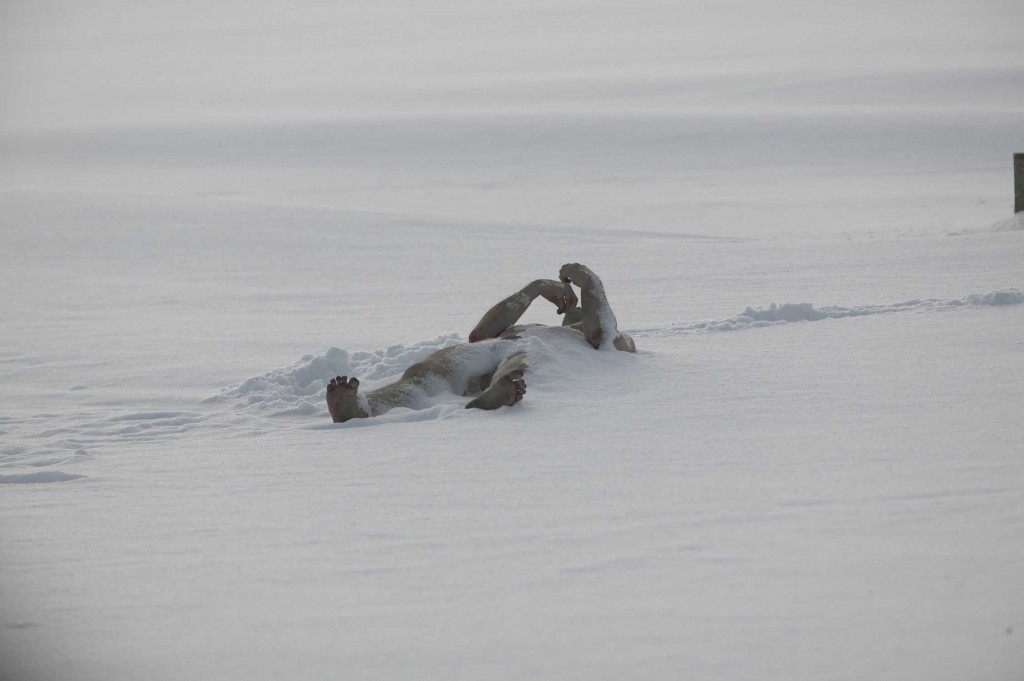
During one scene, a character finds discarded documentation suggesting the planet is fighting back against humanity. We have mined the fruits of the earth for too long, too much, and now the planet is unleashing a “last winter” that will punish us. When a plane arrives to drop off another man and take back Maxwell’s body, it suddenly crashes and destroys a large portion of the camp shelter. Ed and James put their differences aside and head out to find help, but miles from camp and out in the cold the only thing they’re going to find is a warning from Mother Nature.

Fessenden almost overplays his hand with the film’s message, which is more salient than the way he usually presents his subtext. Man is bad; global warming is a slow punishment. Still, the reasoning put forth makes sense and Fessenden has it delivered by fleshed-out, strong characters played by very capable actors. I thought it was great to see James LeGros from Phantasm II (1988) as a pragmatic scientist who simply presents facts as he knows them, while Perlman’s character of Ed is a “shoot the messenger” type who takes a double disliking to Hoffman since he’s banging Ed’s ex, Abby (Connie Britton). The interplay between these two disparate people drives the film all the way through to the end. I loved watching James and Ed go at it constantly, with James remaining so cool and level while Ed blows up at the drop of a pin. “Goddamnit!” – constantly.

It was also cool to see Fessenden carry over something from a previous film, in this case the Wendigo. As with all of his other films, horror is merely a MacGuffin, an undercurrent, in his pictures, taking a backseat to characters’ lives. Here, he spends a good chunk of the third act showing off some big beasts and having them play a large part in the ending. The CGI used here actually works pretty well since the creatures are spiritual and not flesh and blood.

My Fessenden education now complete, I can definitely say this four-film collection is one of the most important releases by Scream Factory. Larry’s movies may not have massive cult followings or huge critical acclaim but what they do is present a single uncorrupted voice, unimpeded by studio mandates and outside influence. Larry Fessenden’s films are his films, with the man wearing many hats on each production. All of his films share common themes without being preachy, well-written – and acted – characters, and engaging stories with empathetic struggles. Anyone expecting full-on horror will be sorely disappointed. Those who enjoy slower, introspective films that unfold complex tales will (hopefully) enjoy this set as much as I did. Plus he shoots these things beautifully, with some expertly crafted camera movement and blocking. These films are not perfect, but I have such a strong admiration for what Fessenden does as an auteur that my enjoyment of his work is heightened. I really don’t understand how Beneath came out so poorly because his four features that preceded it are solid indie cinema.

Making the most of low budgets and employing a less polished shooting style, there are variances among Fessenden’s four titles shown here. Overall, the films look strong and are likely reproduced as faithfully as possible. The only real sore spot is Habit which, through no fault of Scream Factory, is presented as Fessenden shot it – in full-frame.

No Telling has a very indie aesthetic to it. Presented in 1.78:1 with a 1080p picture, the image features nicely saturated colors, with a slightly warm tint to them, average definition and stable black levels. There is only minor print damage and/or dirt to be seen. Film grain appears healthy and cinematic.

Habit receives a 1.33:1 1080p picture that looks very lo-fi, although that does assist in heightening the look Fessenden was hoping to achieve. Definition is moderate, occasionally poor, with many soft shots. Night shots explode with film grain, robbing the image of details in the process. Contrast is decent, though hardly spectacular.

Wendigo sports a very grainy 1.78:1 1080p image and this is because the film was hot on Super 16mm and blown up to 35mm. Personally, I love the heavy grain field; it adds a certain warmth to the picture. Don’t expect great detail or definition either, as both are just passable. Black levels look solid, and colors are nicely reproduced, although the palette is hardly vibrant. There are minor instances of white flecks on the print, which is generally quite pleasing.

The Last Winter is presented with a 2.35:1 1080p picture, and with a scope aspect ratio and a bigger budget this is easily Fessenden’s most cinematic feature to date. Grain, as expected, is present and marginally heavy. The locale of Iceland looks fittingly bleak and very white, with ice for miles and miles in every direction. Colors are pleasing, white levels don’t look blown out, nighttime shots show off moderate details and definition is acceptable.

This section can be kept brief, as each films gets the same audio options – English DTS-HD MA 5.1 surround sound or 2.0 stereo. None of these films is a sonic wonder. Each picture is primarily populated with lots of dialogue and a somber, complementary score. Few bombastic moments can be found across the four films. Instead, the tracks carry subtleties, eerie atmosphere, and moody ominous cues. The score for each of Fessenden’s pictures feels right for that particular film and no other, yet they all have a similar style and use of melody that helps tie his movies together, however tenuously. Subtitles are available in English on all films.

Spread out across the four discs of this collection is a treasure trove of bonus features that fill in the gaps of Fessenden’s career between making feature films. In addition to audio commentary tracks on each picture, the set also includes short films, making-of featurettes, music videos, interviews, trailers and much more. Also included in the set is a 24-page booklet filled with information on each film, pictures, liner notes by Fangoria’s Michael Gingold, sketches, storyboards, and more.

DISC ONE: NO TELLING

Writer/Director/Executive Producer Larry Fessenden delivers his first of four audio commentaries here, touching upon recurring themes in his work, changes he’d make now with the benefit hindsight, and so forth.

“Making of No Telling” (1991) – Fessenden talks about his “modern Frankenstein tale”, which focuses on the horror of man abusing nature. Some on-set b-roll footage and FX work is also shown.

“Archival Footage” (1990) – After a present-day intro from Fessenden, the footage shown here is culled from the making of the movie.

“Short Film: White Trash (1980) with Music by Composer Will Bates” – The title here is taken literally, as a white guy is prepared for his ultimate resting place.

“Glass Eye Pix Sizzle Reel (1985-1990)”.

DISC TWO: HABIT

Once again, actor/director/writer/editor Larry Fessenden is on hand for an audio commentary track, this one discussing the autobiographical nature of the film, influences, themes, references and his style.

“The Making of Habit” (1995) – Once again we go back into Fessenden’s past, with the director providing narration (from 1995) over behind-the-scenes footage from the film, talking about reality vs. fiction, metaphors and more.

“Music Video: Save You From Yourself”.

The film’s theatrical trailer is included here.

Habit (1982), the original short film made by Fessenden.

“The Making of Habit” (1981) – This much older making of the short film piece features some behind-the-scenes footage and interviews.

“Short Film: N is for Nexus” – This was originally created for the film The ABCs of Death 2 (2014).

“The Making of N is for Nexus” shows some brief behind-the-scenes footage.

DISC THREE: WENDIGO

There are two audio commentary tracks here, the first with writer/director/editor Larry Fesseden; the second features actors Patricia Clarkson, Jake Weber, and John Speredakos.

“Behind the Scenes – Searching for the Wendigo” – Fessenden tells of the story he heard back in 1972 that inspired this film, and then the piece gets into FX tests, behind-the-scenes footage and so forth.

“Interview with Larry Fessenden” (2001) – The director talks about the appeal to this subject matter and his approach.

“Wendigo: Animated Series Trailer” – Someone get this made because it looks pretty rad.

“Short Film: Santa Claws” (2008) – This was shot using lots of toys and it is trippy.

The film’s theatrical trailer is included along with “Glass Eye Pix Sizzle Reel” (2010).

DISC FOUR: THE LAST WINTER

Once again, there is an audio commentary with writer/director/producer/editor/actor Larry Fessenden.

“The Making of The Last Winter” is a documentary that runs for 1 hour and 46 minutes. As expected, given the length, this covers everything you could want to know and more.

“Archival Footage” (2005) – See Ron Perlman get pranked. It’s pretty funny.

“Short Films: Origins, Jebediah and Mister” – These three shorts were made by Fessenden to expand upon the world seen in the film Stake Land (2010).

“Music Video: Tired of Killing Myself”, by the band Just Desserts, of which Fessenden is a member.

“2015 Interview with Larry Fessenden” – Larry talks about the current state of horror, the film industry, his work, his place and more.

A “Glass Eye Pix Sizzle Reel (2014)” finishes off the extensive extras.

There is also a 24-page booklet included, with an essay by Fangoria’s Michael Gingold, storyboards, sketches, production photos and more. All of this comes housed in a sturdy slipcover. It’s a nice little package.

Special Features:

The Larry Fessenden Collection Bonus Features:

  • 24-Page Booklet with liner notes by Fangoria’s Michael Gingold, featuring never-before-seen photos, storyboards and sketches.

No Telling

  • NEW director-approved HD Transfer
  • NEW audio commentary with writer/director/executive producer Larry Fessenden
  • Making of No Telling (1991)
  • Archival footage (1990)
  • Short Film White Trash (1979) with new music by composer Will Bates
  • Glass Eye Pix Sizzle Reel (1985-1990)

Habit

  • NEW director-approved HD Transfer
  • NEW audio commentary with actor/director/writer/editor Larry Fessenden
  • The Making of Habit featurette (1995)
  • Short film Habit (1981) (20 minutes)
  • The Making of short film Habit (1981)
  • Save You from Yourself music video
  • Theatrical trailer
  • Short film N is for Nexus, from Magnet Releasing’s The ABCs of Death 2
  • The Making of N is for Nexus
  • Frankenstein Cannot Be Stopped music video

Wendigo

  • NEW director-approved HD Transfer
  • NEW audio commentary with writer/director/editor Larry Fessenden
  • NEW audio commentary with actors Patricia Clarkson, Jake Weber and John Speredakos
  • Search for the Wendigo – Behind the Scenes featurette (2001)
  • Interview with Larry Fessenden (2001)
  • WENDIGO: animated series trailer
  • Short Film Santa Claws (2008)
  • Theatrical trailer
  • Glass Eye Pix Sizzle Reel (2010)

The Last Winter

  • Audio commentary with co-writer/director/producer/editor Larry Fessenden
  • The Making of “The Last Winter” – full-length documentary featuring deleted scenes
  • Archival footage (2005)
  • Short film Jebediah
  • Short film Origins
  • Short film Mister
  • Tired of Killing Myself music video
  • NEW 2015 interview with Larry Fessenden
  • Glass Eye Pix Sizzle Reel (2014)
Screenshot 2015-11-10 10.42.40

November 5, 2015
Share:
Facebook Twitter Email

Friday and Saturday: I SELL THE DEAD Screenings in NYC 11/6 & 11/7

Attention NYC Fans! Glenn McQuaid’s I SELL THE DEAD screens Friday 11/6/15 and Saturday 11/7/15 at midnight at the IFC Center in NYC.

Screenshot 2015-11-05 18.01.26

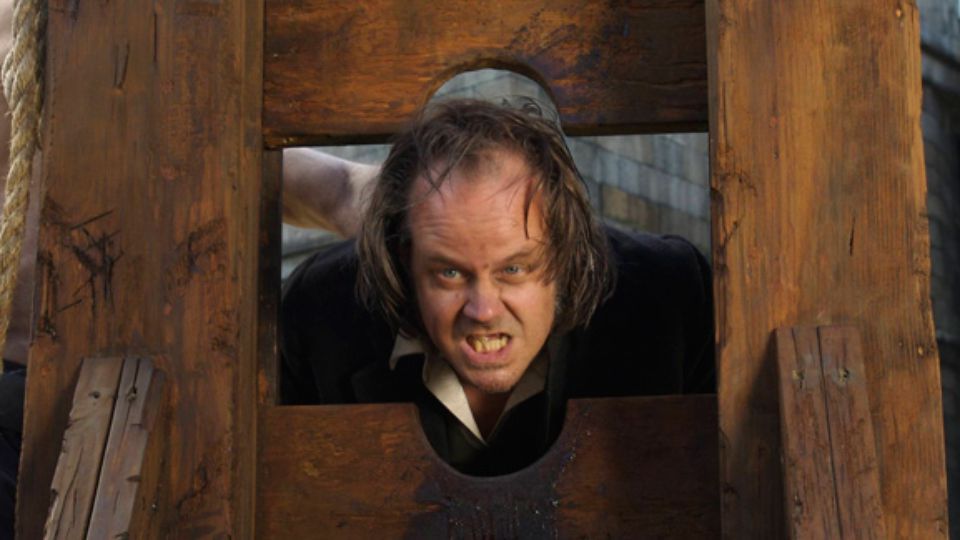
18th-century justice has finally caught up with grave robbers Arthur Blake (Dominic Monaghan) and Willie Grimes (Larry Fessenden). With the specter of the guillotine looming over him, young Blake confesses to a priest, Father Duffy (Ron Perlman), about his fifteen years of adventure in the resurrection trade; from his humble beginnings as a young boy stealing trinkets from corpses, to his partnership with seasoned ghoul Willie Grimes hunting creatures unwilling to accept their place in the ground. The colorful and peculiar history of Grimes and Blake is one filled with adventure, horror, and vicious professional competition that ends where it begins — the grave.
For tickets and more info, head over to IFC.

November 5, 2015
Share:
Facebook Twitter Email

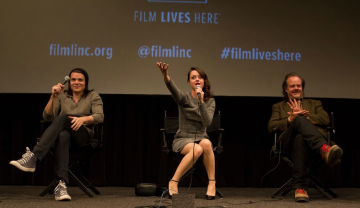
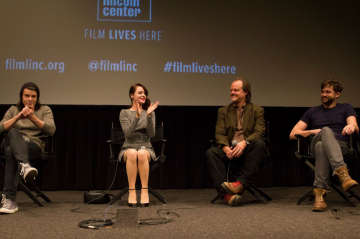
An Evening with Larry Fessenden at Lincoln Center – THE LAST WINTER & DARLING

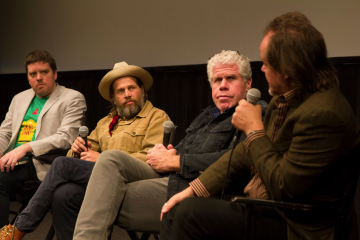
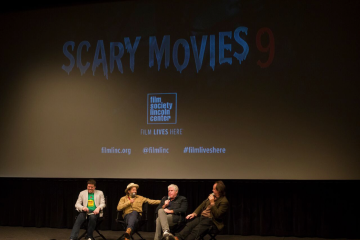
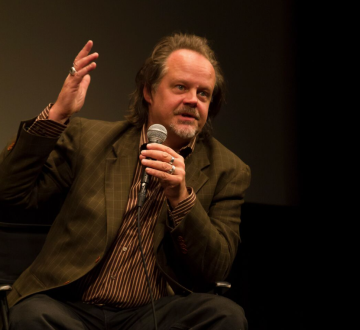
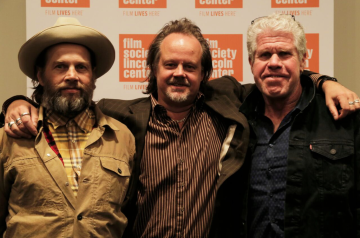
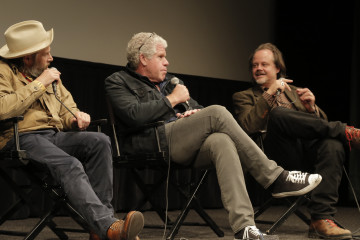
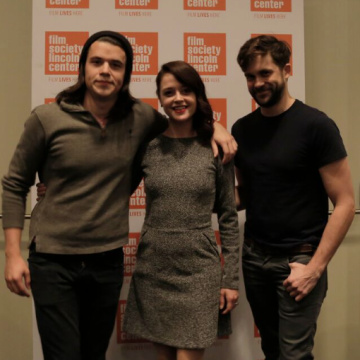
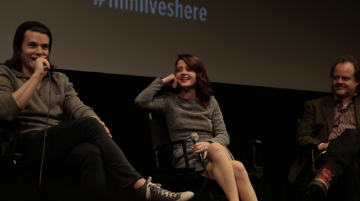
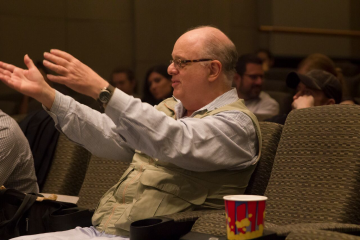
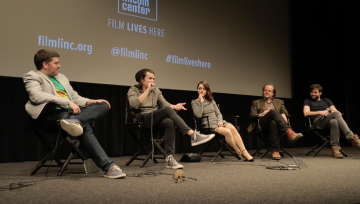
Tuesday night the Film Society of Lincoln Center hosted Fessenden and the Glass Eye Pix crew for a double screening of THE LAST WINTER and the NYC premiere of Mickey Keating’s DARLING.

THE LAST WINTER
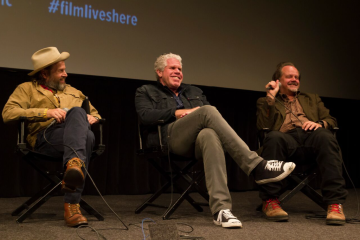
Screening and Q&A w/ Fessenden, Ron Perlman, and James LeGros


Photo by Lindsey Seide

Photo by Lindsey Seide

Photo by Lindsey Seide

Photo by Lindsey Seide

Photo by Lindsey Seide

Photo by Lindsey Seide

Photo by Lindsey Seide

Photo by Lindsey Seide

Screenshot 2015-11-05 10.36.14

_E3A6994


DARLING
Screening w/ Fessenden, Mickey Keating, Lauren Ashley Carter, Brian Morvant

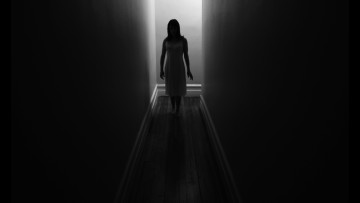
Check out Hollywood Reporter’s review of DARLING,
which they describe as “shot in starkly beautiful black & white
with elegant camera compositions.
The arresting sound design and discordant musical score
further contribute to the ominous atmosphere.

Screenshot 2015-11-05 10.36.35

Screenshot 2015-11-05 10.36.52

Screenshot 2015-11-05 10.37.04

Photo by Lindsey Seide

Photo by Lindsey Seide

Photo by Lindsey Seide

Photo by Lindsey Seide

Photo by Lindsey Seide

Photo by Lindsey Seide

Photo by Lindsey Seide

Photo by Lindsey Seide

Photo by Lindsey Seide

Photo by Lindsey Seide


November 4, 2015
Share:
Facebook Twitter Email

Diabolique Magazine Calls Fessenden America’s Unsung Auteur

Joe Yanick of Diabolique Magazine wrote an extensive look back at the career of Fessenden through a review of THE LARRY FESSENDEN COLLECTION.


From Diabolique Magazine:

The Larry Fessenden Collection Proves that Fessenden is America’s Unsung Auteur
by Joe Yanick

maxresdefault

“You know what, I’m very proud of it. [Horror is] a bastard genre and I stand by it. I think the world is a frightening place and people should be shocked out of their complacency. Now the irony is, I don’t know that everybody thinks of horror that way, but I think of it as a confrontational genre, a way to scream from the rafters, ‘Look at humanity, it needs fixing, it’s a mess, look at how we treat each other.’ So I use it as a punishing genre!”

— Larry Fessenden, Interview with SciFiNow

Though this runs dangerously close to hyperbole, if you bear with us it will hopefully be clear that it is said with the utmost sincerity: Larry Fessenden just may be the most important and under-appreciated figure working in horror today. The key word, here, is figure because Fessenden can’t be pegged down to a single occupation. He is more than just a writer, though he’s penned numerous important scripts; more than the director behind those scripts; and more than the producer of not only his own films but some of the best independent cinema in and outside of the genre. Fessenden is a sort-of indie film mogul; his presence is felt in front of and behind some of the last decade’s most viable works.

When looking at his own work, however, — especially his first few feature films — Fessenden is also perhaps the single most overlooked 90s American auteur. Looking back is an important aspect of film criticism and, with their new Blu-ray box set TheLarry Fessenden Collection, Scream Factory has given us the perfect opportunity to reappraise four of Fessenden’s early films. From No Telling — Fessenden’s second feature film, a retelling of the Frankenstein myth — to 2006’s The Last Winter, this box-set solidifies more than just Fessenden’s unique vision, it reveals within his work a strong thematic link: though Fessenden is draw to the supernatural (and often spiritual), his films tend towards the horrors of human progress.

In the 90s, when mainstream Horror cinema (particularly in America) was at one of its most stale moments, Fessenden was crafting deeply affective work that examined society through a personalized lens. He presented something wholly new for American Indie horror, by intentionally side-stepping many of the tropes that plagued US films. This meant avoiding overt gore and nudity in favor of psychological-driven horror. While the world was praising Tarantino and the Coen Brothers for shaking up crime cinema, Fessenden’s similar contributions to horror were and have been nearly ignored. Fessenden has lamented on this fact numerous times over interviews, stating that places like Sundance — where Tarantino and the Coen Brothers’ names were cemented in history — paid Fessenden no attention. In his mind, they only desired horror in an ironic, token way, choosing a select few films to play at midnight for the purpose of laughing at them. Fessenden’s esoteric style didn’t fit that formula and, because of this, the festival ignored him.

A Complex Frankenstein

Larry Fessenden’s No Telling (1991)

No Telling, Fessenden’s second feature film — following his debut, Experienced Movers in 1985 —, kicks off the collection and sets the bar quite high. Fessenden’s modernized retelling of FrankensteinNo Telling follows Lillian and Geoffrey Gaines, who escape the hustle and flow of Manhattan to enjoy some peace in a countryside farmhouse. But it’s not all pleasure. Lillian (Miriam Healy-Louie), a painter, and Geoffrey (Stephen Ramsey), a corporate scientist, use their stay as a chance to finally focus on their respective work. However, when Lillian finally begins to take an interest in Geoffrey’s work, her discovery proves horrific.

No Telling admittedly features many of the pitfalls characteristic of early/debut films. This is most obvious in relation to the film’s ideological function. Even Fessenden admits (vis-à-vis the included commentary track) that some of the hammier aspects of the film’s critique of society he later edited out due to their excessive nature. What remains, however, is powerful denunciation of animal experimentation and the exploitation of farmers for corporate interests. It could be argued that this dual intention in the film is somewhat muddled but Fessenden does a fine job at connecting their tissues in a strong enough manner that it never feels underdeveloped.

Larry Fessenden’s No Telling (1991)

No Telling sets itself apart from nearly every Frankenstein-esque horror film, in that Fessenden’s scientist never once considers human experimentation. It’s a tale of vivisection horror and, because of that, it is all the more harrowing and realistic. While slight exaggerations may exist in the film, this behavior exists in our world and, worse, is accepted…all in the name of progress. This will become a trope for Fessenden’s work, the critique of progress. What is the result of society moving forward? In movements forward in technology, Fessenden seems to argue that we lose our connection with the natural world and is where Fessenden most derives his view of horror.

One of the refreshing aspects of No Telling, is that the majority of the film plays out more like a drama than anything remotely resembling the typical horror film. Rather stunningly shot with sweeping camera movements, No Telling invests itself in the minutia of everyday life, while slowly visual metaphors begin sweeping into frame. Fessenden has a way of equating the everyday realities of life with the grotesque. An average picnic becomes a trove of waste and excess; a nice meal transformed into a bloody carcass. These subtle jabs fill the film’s runtime, so that by the time of its horrific denouement, the viewer is prepared (whether they realize it or not). No Telling begins developing the aspects of Fessenden’s work that will reach a point of perfection in his next three films.

Larry Fessenden’s No Telling (1991)

Self-destruction as Addiction

Larry Fessenden’s No Telling (1995)

If No Telling can be read as a somewhat externally-fixated film, Fessenden’s follow up, Habit, is nearly the polar opposite. Habit is perhaps Fessenden’s most personal work, although its hard to say that any of films aren’t direct representations of his thoughts and concerns. The story originates as a shot-on-video short film that Fessenden crafted while still at NYU and is based on Fessenden’s own struggles with addiction. As Fangoria Editor-in-Chief, Michael Gingold, discusses in the included booklet, you can read many of Fessenden’s work as being variations on the classic horror cinema monsters, and Habit continues this trend by offering one of the best alternative spins on vampire folklore to date.

In many of the same ways that George A. Romero approached MartinHabit is less concerned with actual vampiric mythology than it is using the framework as a way of breaking down personal psychology. Fessenden stars as Sam, a semi-functioning alcoholic whose problems have caused a breakdown in his personal relationships, including severing ties with his long-term girlfriend. In one of the film’s first scenes, Sam meets and becomes transfixed with enigmatic woman named Anna (Meredith Snaider) at a party. In a drunken stupor, Sam loses track of Anna and spends the next few days desperately trying to reconnect. When he is about to give up hope, fate (or otherwise) lands Sam back in place with Anna, when he runs into her at a street carnival. That night, the two begin a romantic affair that turns dangerous, as Sam begins to suspect that Anna might be a vampire.

The question of Anna’s nature is never really answered in the film and this is not for lack of effort. There is enough developed in the film’s run to make a strong case for numerous different outcomes and answers. This ambiguity works because the question of Anna’s being is ultimately not that important. The film is far more concerned, and rightfully so, with the ways that addiction (be in to substances like drugs and alcohol, love and sex, or blood) can be destructive. Through Fessenden’s careful direction, Habit becomes one of the most traumatic depictions of destructive behavior on screen. This is a topic often broached by many straight-laced indie dramas. While some of the best of these are able to develop deeply personal, affecting projects, they can be hamfisted and appear as nothing more than vanity projects. Fessenden, by utilizing the fantastical elements of the horror framework, avoids so many of the obvious clichés, favoring a more nuanced film. As its star, Fessenden is rather powerful; his honest portrayal lays bare his soul for all to see, developing a hyper-personalized form of cinema that is rarely seen. We often look at the Sundance films as a sort of qualitative rubric for 90s cinema, so much so that it can arguable that it even developed into a style over time. Habit easily stands up next to any of the Sundance-winning films of the 90s, and remains one of the strongest independent features of the decade, be it horror or otherwise.

Larry Fessenden’s Habit (1995)

Ancient Spirits Erode Modern Ways

Larry Fessenden’s Wendigo (2001)

The final two films in this collection, Wendigo and The Last Winter, form a sort of thematic series focusing on the Native American folklore of the Wendigo. The Wendigo is a being believed to be equally human as it is beast. In the folklore, the Wendigo is a representation of gluttony, greed, and excess but Fessenden takes the myth in a slightly different direction with Wendigo and The Last Winter.

The titular film — as well as Fessenden’s first foray into the lore — is one of his most challenging films. Despite the film having a strong, albeit small, fanbase — Gingold goes as far as to call it his masterpiece — Wendigo has more or less been lost in the annals of film history. There are reasons this is probably the case. First of all, as mentioned, Wendigo is perhaps Fessenden’s most exhaustive work. If his work can be characterized by a strong interest in not only human minutia but psychological and spiritual horror, Wendigo takes those interests and ramps them up to another level.

Larry Fessenden’s Wendigo (2001)

Like No TellingWendigo follows a city family’s relocation into rural settings, only this time that relocation is treated in a far more developed manner. When on their trek ‘home’ the family accidentally hit a deer that local hunters have been tracking for hours, which causes them to become the victims in an escalating, dangerous confrontation. As mentioned, Wendigo again sees Fessenden utilizing the invasion of foreign land — something that he will perfect in the following film — as a key principle for his narrative. Unlike No Telling, however, that encroachment is dealt with in far more complicated manners. This is what makes Wendigo such a powerful film — and what makes its current score of 5/10 on IMDb such a travesty. Full disclosure, on a personal level, Wendigo is perhaps my least favorite of the four film included but that is far from saying that it is in any way not a stunning achievement for Fessenden. Its one that I can easily see being my favorite with more watches because it is a film that demands to be unpacked. Because of its lofty goals it remains one of the most important pieces of Fessenden’s filmography. At worst, Wendigo is a beautifully flawed film but the case can be made that its flaws are often also its strengths.

As the conflict between George (Jake Weber), the family’s patriarch, and Otis (John Speredakos), a disgruntled hunter who despises George because he believes that he destroyed his hunt, Fessenden begins to weave in the Wendigo lore. Like Habit, the presence of the Wendigo is as much a reality of the film’s narrative as it is a purely-metaphorical analogy used for commentary; Fessenden leaves room for interpretation, rather than forcing it down explicitly. Wendigo doesn’t have a lot of real weaknesses. It’s definitely esoteric in its delivery and, again, not something that would typically be thought of as being horror, but its also a rather bright, multi-tiered analysis of modern society. Fessenden does not weave a story of Manichean polar opposites. George is not wholly good and neither is Otis entirely bad. They are both reflections of society and, it seems for Fessenden, that the true evil lies in the ways that modern society disassociates them. There is a thematic link to the displacement of Native Americans, that is further developed by the continual displacement of people due to modernization. George’s family, while principally the heroes, is not left unscathed. They represent the ills of an upwardly evolving society continually exploiting those that choose to live a life more connected to their land. And, Otis represents the horror of humanity, self-interested and fueled by hatred. What makes the film truly work, however, is that Fessenden weaves this all through the perspective of a child, (played by Malcolm in the Middle’s Erik Per Sullivan), adding another layer ripe for dissecting. Wendigo is not an easy film to absorb, in fact it may be Fessenden’s most difficult, but it’s a film worth investing the energy into.

Larry Fessenden’s Wendigo (2001)

The Last Winter is less challenging. In terms of setting, its shares a lot of common grounds in terms of atmosphere to The Thing, depicting an isolated core of oil workers stranded in the middle of a snow-covered landscape. However, beyond the growing paranoia of isolation, the similarities between the films become less and less solid as the film develops. Released in 2006, The Last Winter comes three years after the War in Iraq began and at a time when the price of gas seem only to escalate more and more every year. The discussion of our need for oil was in vogue; it was even colloquial. This is the idea that informs this film; again, a scathing indictment of the exploitation of the natural world in favor of the advancement of society.

Like all of the films in this collection, The Last Winter is a pure message film. It solidifies the auteurist bent of Fessenden’s career, each of his films exploring similar concepts through different lenses. Similar to Wendigo, what allows The Last Winter to transcend is Fessenden’s unwillingness to succumb to the pressures of simplistic characterizations. Ron Perlman puts in one of his career’s best performances as Ed Pollack, the hardheaded leader of the workers. Perlman stands in for as close as the film is willing to get to an antagonist but it never delves into conventional territories. It’s a complex performance that may not leave him likeable but he certainty remains identifiable and even charming. Perlman’s Pollack is akin to No Telling’s Geoffrey Gaines, his actions are wrong but he cannot be fully blamed. These men are the results of a society gone wrong. Obsessed with progress, humanity moves away from nature and, in doing so, the horrors of the world are created. These horrors, however, remain fixed on humanity, so while there is an element of spirituality at play, it is always reliant on the interaction of humanity: the ancient Wendigo may exist to punish evil, but it is aspects of humanity that beckon them to the surface…

Larry Fessenden’s The Last Winter (2006)

Final Thoughts Fessenden prefigured the style of horror cinema that would basically define the last decade. It’s smart, idea-driven work that pays homage to the history of horror rather than stick its nose up to it. It should come as little surprise, then, to see his name tagged as a producer for some of these very films — House of the Devil and Stakeland to name two. Now, it’s possible to see just how comfortable his films sit in tandem with works like It FollowsA Girl Walks Home Alone at Night, The Babadook — these recent indie darlings that have captured both horror and mainstream audiences by surprise. What is even more complex is that Fessenden, while overlooked and underappreciated, was not critically ignored. Roger Ebert (not necessarily always a friend to the horror genre) gave Fessenden’s third feature, Habit, three out of four stars, stating that he was a “talent to watch.” But who was watching? To this day, Fessenden has still yet to be given a serious play at working with a mainstream budget. Short of working on co-drafting a script for a proposed remake of The Orphanage with Guillermo Del Toro, which never came to fruition, Fessenden remains an outsider of sorts. Maybe this is for the best because it is possible that his vision would not translate well, when more money and meddling is involved. But, that his only shot was stopped short of even happening is a damn shame.

Larry Fessenden’s The Last Winter (2006)

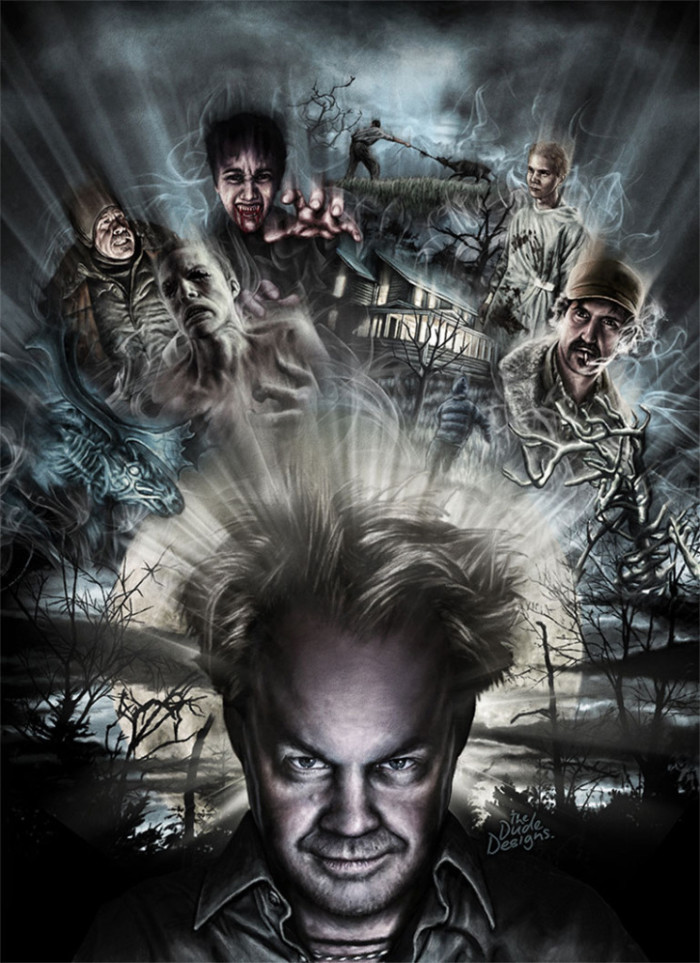
Fessenden’s reappraisal has been a long time coming, but its finally here. Scream Factory have had a rather strong year but this collection smashes all other releases out of the park. There were a few hiccups along the way, including the slip up over announcing featurettes that did not end up making it to the discs, but beyond that, this collection is a stunning presentation of his work. With fine looking transfers across the board, a wealth of special features (including numerous Fessenden shorts, which come highly recommended), a sturdy slipcase featuring the always-fantastic artwork of the Dude Designs, and Gingold’s short but effective essay lining the illustrated booklet, The Larry Fessenden Collection is easily a contender for one of the best Blu-ray releases of the year.

November 3, 2015
Share:
Facebook Twitter Email

Film Comment Talks DARLING Ahead of NYC Premiere

Matt Morrison of Film Comment just wrote a rundown of Mickey Keating’s DARLING ahead of its NYC premiere. See the movie tonight at 9:45pm at Film Society of Lincoln Center (tickets and more info here).


Darling

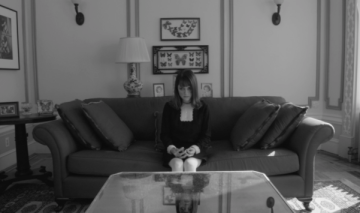
In Mickey Keating’s menacing new psychological thriller Darling, we meet the titular character (Lauren Ashley Carter)—sporting an innocent flip haircut, silk jabot, and Karina-in-Alphaville raccoon eyes—as she assumes care for an old Manhattan townhouse. It “really is a lovely old house,” the owner (Sean Young) deliciously and beguilingly informs her. “It will take care of you.”

If only it were so simple. Soon, we hear rumblings of previous suicides, devil worship; Darling finds an inverted cross, and happens upon a locked, inner-lit white door. A nameless Gentleman caller (Brian Morvant) pursues, then is pursued by the increasingly unhinged Carter. Whispers and squeals proliferate, and Darling’s nightmares and reality merge, giving way to loss of self, isolation, dread, and paranoia.

In addition to Keating’s disquieting collage, strobe effects, and disorienting shifts in perspective, Darling draws its eerie atmosphere from a score by Giona Ostinelli. Featuring staccato string trills, piano groans, glitches, static, resonance, and white noise, the mix frequently culminates in moments of authentic, deity-invoking terror.

“We wanted each room in the house have its own breath, its own voice,” Keating said. “We used bells, waterphone, contact microphones, and, as reference points, artists like The Black Angels, George Crumb.”

Though it tempts cliché to cite a home, or city, as a “character,” Darling’s apartment is, if not a persona, then certainly an entity. Shot in the verticalizing, claustrophobic aspect ratio of 1:1.66, the interior, at times, seems to verge on 90 percent wall.

Darling

“The house was inspired by Ferrara’s Ms. 45—a big, open New York City apartment. In 1:1.66, it came out quite tall, gained symmetry,” Keating said. “The family was quite nice about letting us move in and spill blood everywhere. Probably a lot in that house cost more than the entire crew’s lives.”

Like his Scary Movies peers, Keating sees Darling as a linear successor to horror history: “I wanted this to be a love letter to Sixties experimentalism, the ‘descent-into-madness’ movies. Polanski’s Apartment Trilogy: RepulsionThe TenantRosemary’s Baby. Altman’s That Cold Day In The Park. Kenneth Anger, Eraserhead. Hollis Frampton, Stan Brakhage. The InnocentsThe Haunting. I wanted to create a nightmare. A hallucination, without smoking dope.”

For Keating, who’s already at work on his next film (the sedately titled Carnage Park), horror has been less a choice than an object of sacred, ascetic reverence.

“I started making movies when I was 10. If I wasn’t directing, I would be walking the Earth,” he explained. After an internship at Larry Fessenden’s Glass Eye Pix, Keating began his career in earnest, leading to fruitful cross-pollination with Fessenden since; Fessenden has a cameo in Darling as a police officer. “I’ve been a fan of his movies, and Glass Eye in general, since I was a teenager. When I was in college, I found their number on the deepest part of Google, which was young then, cold-called, and begged them to be a gofer. Over time, I would always hound him to watch my short films. He’s a tremendous inspiration, and I’m delighted to call him a friend.”

As in The Innocents, and many horror movies before it, Darling wisely declines to specify the roots of its lead character’s undoing—whether psychosis, or demonic possession. At Darling’s denouement, one is left wondering: do caretakers ever fare well? There must be better ways to pay the rent.

November 3, 2015
Share:
Facebook Twitter Email

TONIGHT: Something Old, Something New at Lincoln Center

Attention NYC Fans: Tonight at the Film Society of Lincoln Center, as part of their horror program Scary Movies 9, there are two screenings of GEP Films… something old, and something new.

Screenshot 2015-11-03 11.57.08

THE LAST WINTER (2006)
dir. Larry Fessenden
7:00pm
w/ Fessenden, James LeGros, and Ron Perlman in attendance
Tickets and More Info

And make it a double feature with the NYC premiere of…

Screenshot 2015-11-03 12.03.26

DARLING (2015)
dir. Mickey Keating
9:45pm
w/ Fessenden, Mickey Keating, Lauren Ashley Carter and Brian Morvant in attendance
Tickets and More Info