November 25, 2015
Share:
Facebook Twitter Email

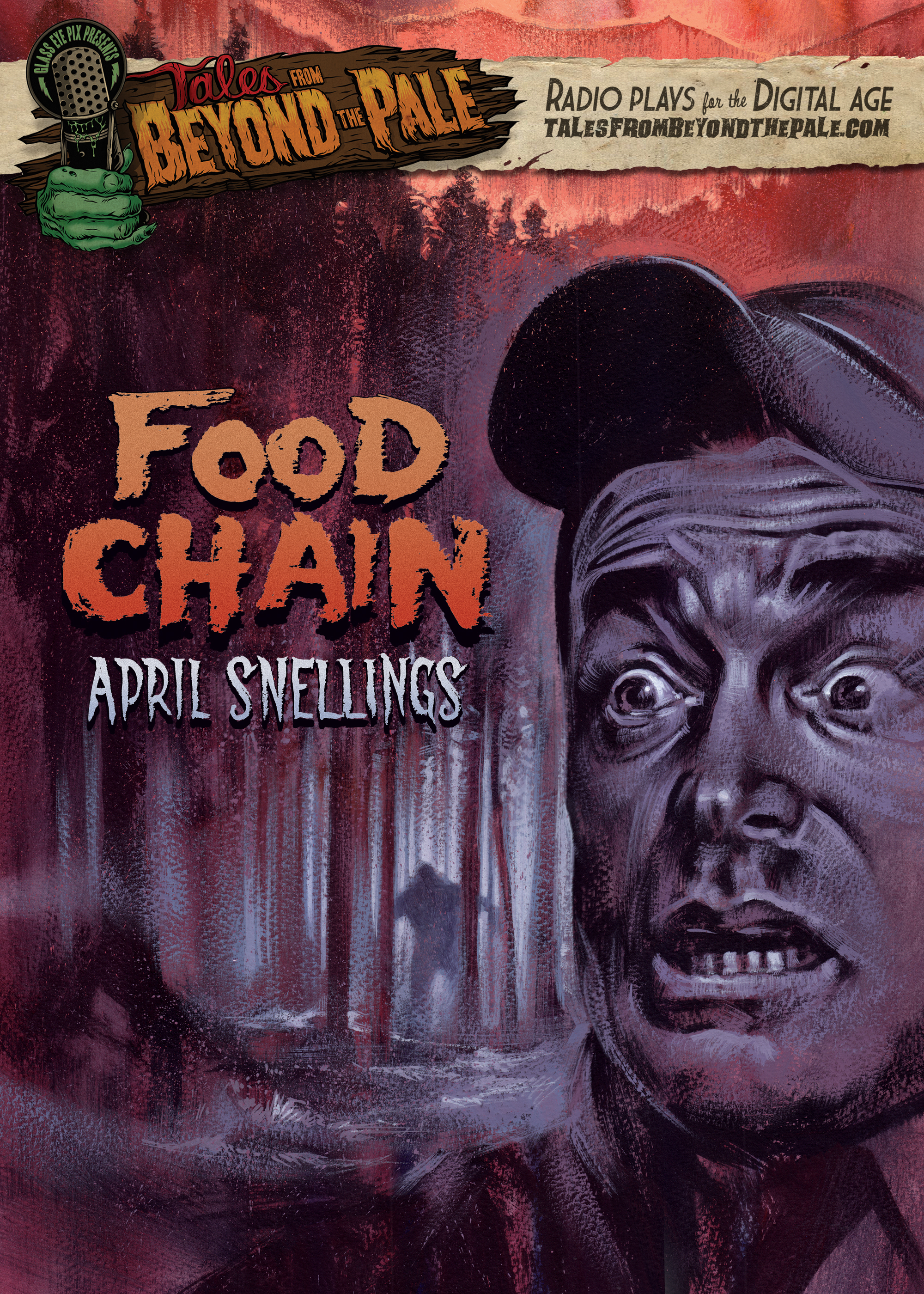
LISTEN NOW: April Snellings’ Bigfoot Shocker FOOD CHAIN – TALES FROM BEYOND THE PALE SEASON 3

Indiewire again presents an amazing season 3 episode of TALES FROM BEYOND THE PALE. April Snellings makes her TALES debut with FOOD CHAIN, a freaky southern gothic Bigfoot tale.

FROM INDIEWIRE:

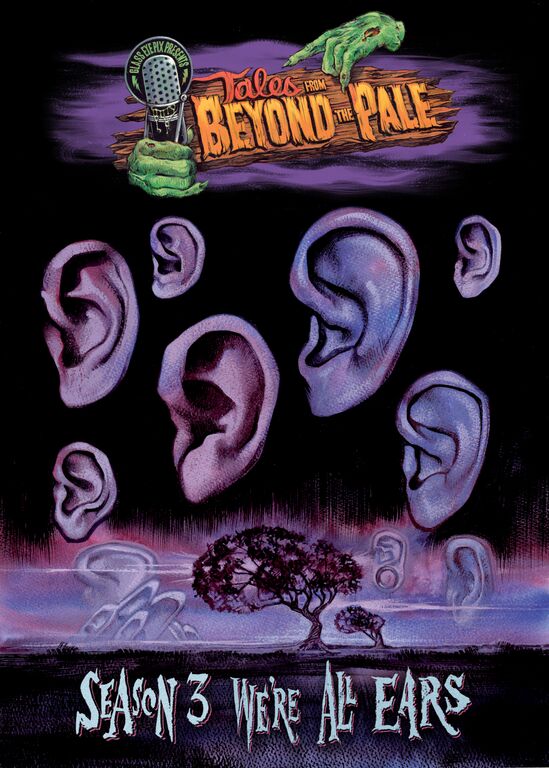
For the next several weeks, Indiewire is exclusively premiering new episodes from the third season of “Tales From Beyond the Pale,” the audio play series produced by Glass Eye Pix. Episodes will be available for two-day windows.

The season continues with Rue Morgue contributor April Snellings’ “Food Chain.” Listen to the episode above, and read an interview with Snellings conducted by Indiewire’s Eric Kohn about the inspiration for the episode below.

Pre-order the third season of “Tales From Beyond the Pale” here.

Your background is journalism. What’s it been like to jump into the creative side of things?

It’s been fantastic, and what I’ve always been working toward. You can’t ask for a better experience than writing for Glass Eye Pix. They told me at the beginning that this would be my story – that they’d be here for guidance, but that ultimately “Food Chain” would always be my weird, mutant baby. They made good on their promise, so I’m probably a little spoiled now.

How does the Southern Gothic tradition of storytelling influence your work?

I think it shows up in everything I write. I love the genre – that pervasive sense of decay, the twisted family dynamics, the dark humor, the grotesquery, the moral failings of a culture that’s warped by fundamentalist religion and its own ugly past. I only wish there’d been room for a crazy aunt in an attic. Maybe next time…

What’s your relationship to the Big Foot legend?

I’m from East Tennessee, an area with a very long tradition of monster legends. My state has more than fourteen million acres of forestland, so that’s a lot of damn monsters. When I was a kid, my grandfather used to scare me with stories about a very Southern monster called a wampus cat, which had me convinced there were monsters in the woods. As I got older, that turned into an interest in Bigfoot, the king of American monsters.

Years ago, there was a story on our local news about a woman who was really upset because she thought a Bigfoot had thrown half a cat at her. She was fabulous, and probably the grandmother of “Food Chain.”

What sort of stories did you consider when coming up with this idea?

EC Comics and other horror comics from the ’50s were a huge influence on “Food Chain.” I really love genre comics from that era, especially horror anthologies. The stories were batshit and they really pushed the envelope in terms of violence and gore, but they still had a sense of playfulness and often even a social conscience. They were gross and twisted and fun, and I wanted to play in that world with “Food Chain.” Also, I love crime fiction and sitcoms as much as I love horror, and I wanted to play with all of those elements – to write a heist story about people who have absolutely no business planning a heist. I dunno, I guess it’s kind of a bonkers hodgepodge of everything I obsess over.

What sort of challenges did you face in writing this episode?

My first draft of the script felt very top-heavy, but Glenn and Larry immediately suggested ways I could fix that – those guys are incredible storytellers, and they know this medium in and out.

Besides that, the main challenge was also the thing that makes this medium so much fun to write: finding organic ways to keep the reader oriented as to what’s going on – figuring out how to hide the narration in the action, I guess. It inspired some really fun gags and story elements.

In your opinion, how does this approach to storytelling differ from the kinds of horror films made today?

I love that these stories are small and self-contained, and that they can be really experimental – there’s no consideration of a franchise or sequels, no limits to what you can do, and no studio worried about recouping a multi-million dollar investment. You can play with exotic locations, unconventional story structures, weird surrealism – whatever you want, as long as it makes some noise.

What’s next for you?

I’ve got a lot of irons in the fire right now. I’m co-writing a script with Glenn McQuaid that I’m extremely excited about; I’m working on a very cool project for Rue Morgue that will be showing up in early 2016; I’m cooking up a comic book project with a fantastically talented illustrator pal; and, like everyone on the planet, I’m finishing up a novel. Hopefully the Glass Eye Pix gang will invite me back to play in their sandbox again!

Graham Humphreys
November 25, 2015
Share:
Facebook Twitter Email

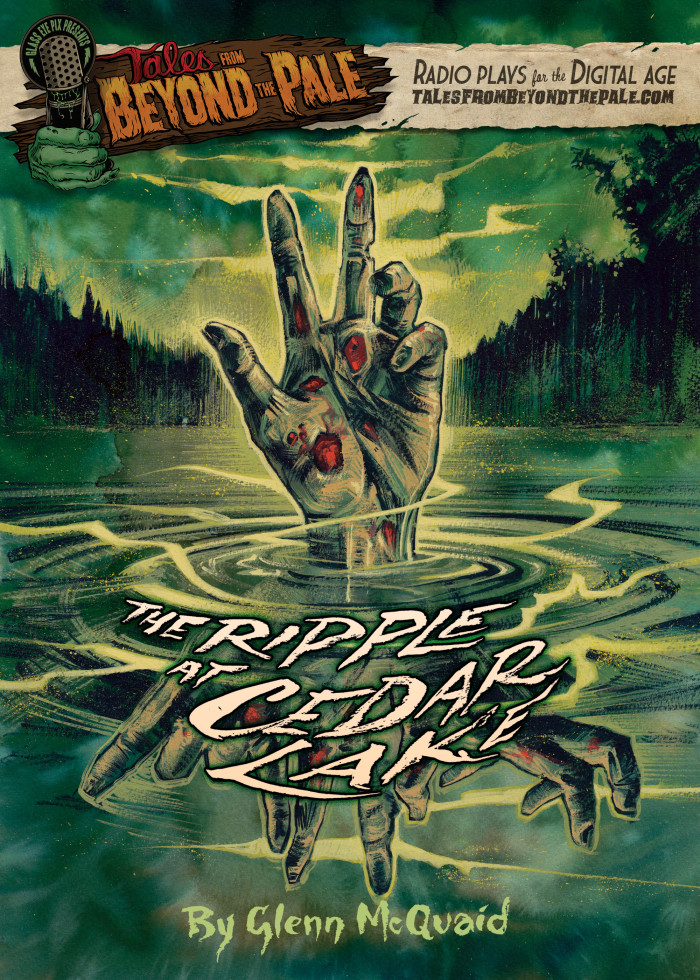
LISTEN NOW: Glenn McQuaid’s Sexual Thriller THE RIPPLE AT CEDAR LAKE – TALES FROM BEYOND THE PALE SEASON 3

Indiewire’s back with another Season 3 episode of TALES FROM BEYOND THE PALE. Listen in to the second installment in McQuaid’s loose “crime of passion trilogy.”


From Indiewire:

For the next several weeks, Indiewire is exclusively premiering new episodes from the third season of “Tales From Beyond the Pale,” the audio play series produced by Glass Eye Pix. Episodes will be available for two-day windows.

The season continues with filmmaker Glenn McQuaid’s “The Ripple at Cedar Lake.” Listen to the episode above, and read an interview with McQuaid conducted by Indiewire’s Eric Kohn about the inspiration for the episode below.

Pre-order the third season of “Tales From Beyond the Pale” here.

Where did the idea for this one come from?

“The Ripple at Cedar Lake” is the second part of a loose crime of passion trilogy that started with Season 2’s “The Crush.” I’m a big fan of EC’s Crime SuspenStories and wanted to tap into that world while keeping one foot firmly beyond the pale. While the double crossing in “The Crush” is coupled with a revenge from beyond the grave scenario, “Ripple” throws some weird science into the mix. I also wanted to put some sexuality into the audio drama format. Why not?

How has your relationship to this style of storytelling evolved?

I’ve become more confident in terms of committing to writing wilder storylines. Taking chances with different structures and tone is an awful lot easier when you’re writing a 30 page script that you know is going to get produced. It’s been very liberating for the writer in me. I’ve explored topics like religion, politics, war and dementia and been able to add my own stamp to them.

What’s the difference between performing live and recording in studio?

Performing “Tales from Beyond the Pale” live is a total blast. We only have one shot at getting everything right, so we have to go in really prepared. Sound design must already be built and our sound effects have to be organized in a way that’s easy to trigger live; the actors must rely on the foley artist for their physical performance, and the musicians have to hit all the right cues. It’s a lot to organize but once it’s all rolling, it’s incredible. Of course, things can go wrong live but that only adds to the magic.

The studio method is a lot more relaxed. The big difference is that we can have multiple takes which feels like a real luxury after the live experience. The studio pieces usually start with the vocal performance, and we build on it from there. The process is quite close to a film’s post production flow.

What’s it like to write one of these?

The more I read, the more I write, the easier it is for me to write. So l soak up a lot of novels, mostly horror fiction. Right now I’m on an eighties kick, reading people like Charles L. Grant, Robert R. McCammon and Gary Brandner — the pulpier the better.

I tend to write my “Tales” pretty quickly, or at least get a full first draft out of me before I can change my mind. We had a recent live show in Montreal and I surprised myself by writing three pieces before settling on one tale, which I then asked April Snellings to polish. I love collaborating with other writers. I’ve also had fun writing scripts with Clay McLeod Chapman and Ted Geoghegan.

You’ve taken on a bigger role this season by designing the music and sound design. What has that entailed?

I’ve been wanting to get deeper into sound design and music for a while now, so when we started off the season, I learned a few programs and sank my teeth into these aspects of the show. I’ve been tinkering with making my own music for a few years now, so it’s been really cool to get some tunes out there. I had a lot of fun scoring Jeff Buhler’s tale, “Guttermouth.” It’s got a real melodramatic 80s synth score, like “Pretty in Pink” by way of “Coil,” and it’s bananas. Music is probably my biggest obsession. I listen to absolutely everything, so it’s a real treat to get my own stuff out there. Larry, on top of everything else, is a terrific musician, so there’s a real respect and love for music going on in “Tales.”

How does gay content usually surface in horror films and what role does your work play in that?

This is a tough question. I think people are quite touchy when it comes to overt commentary on homosexuality in horror. I remember people were so annoyed at the two “Hostel” movies, calling them homophobic for even broaching the subject. It’s like people were saying Eli Roth had no right to be commenting on sexuality in these types of movies. I didn’t get the argument at all. I think those movies are great, especially the second one, which felt like vintage Hammer to me. But getting back to gay content: For the most part, I think the history of homosexuality in horror has been more covert but it occasionally comes to the surface. Films like “The Haunting” and even “Dracula’s Daughter” really went for it, and then there’s movies like “Tower of Evil,” where it’s all about John Hamill’s ass.

Writing gay content has never been at the top of my to-do list, but it’s definitely creeping into my work. “The Ripple at Cedar Lake” is probably more bisexual, though. Everyone is getting their leg over.

Gay visibility in pop culture has come a long way, thank God. When I was a kid, it was all evil queens and sissies and it had a profound effect on me. I thought those were the choices. I tried to pray the gay away for years — until l saw “Dynasty,” haha.

What’s next for you?

I’ve got a few feature scripts that I’m just starting to shop around and I’m currently working with April Snellings on something that we’re both really excited about. Larry and I also want to get out all the live Tales that we’ve been stockpiling. They’re really good!

The Ripple at Cedar Lake
November 25, 2015
Share:
Facebook Twitter Email

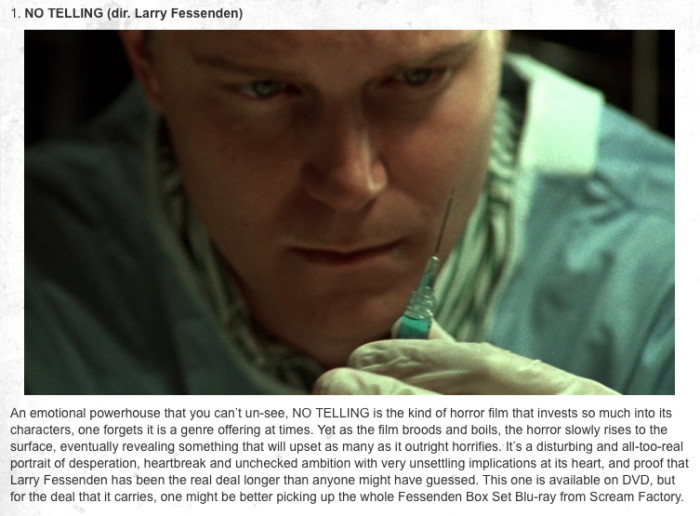
NO TELLING makes Fango’s Top 10 Horror Films Worth Hunting Down

Fessenden’s often maligned first feature NO TELLING (1991) crops up on Fangoria’s The Dreadful Ten: Top 10 Horror Films Worth Hunting Down List. check out the other films that made the grade here

NTFango

November 23, 2015
Share:
Facebook Twitter Email

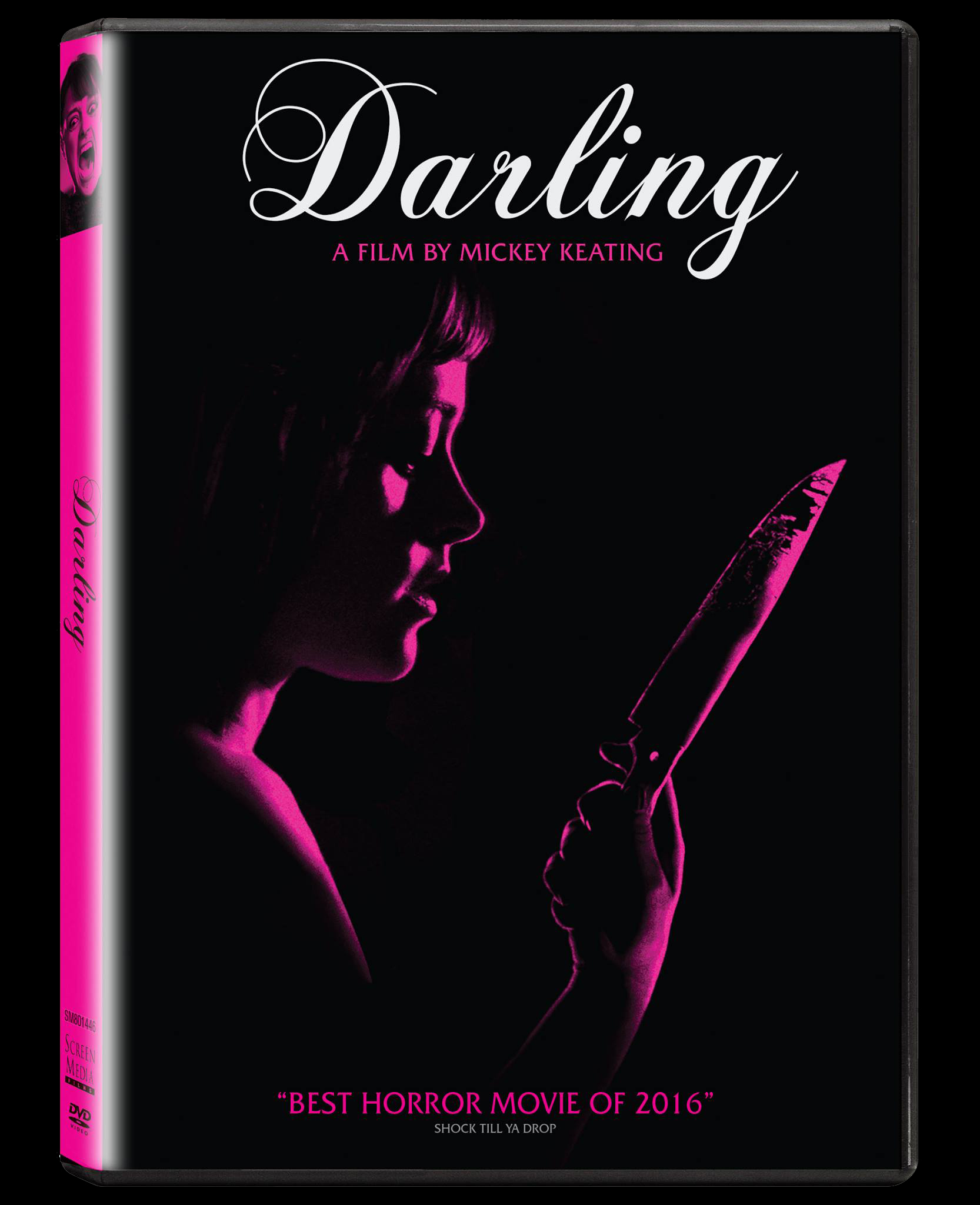
DARLING’s Mickey Keating to play follow-up flick at Sundance

GEP Pal Mickey Keating to unspool world premiere of CARNAGE PARK in the Midnight Slate at Sundance 2016.

Carnage Park / U.S.A. (Director and screenwriter: Mickey Keating) — The year is 1978. A team of wannabe crooks botch a small-town bank heist and flee with their hostage deep into the California desert, where they inexplicably find themselves in a harrowing fight for survival against a psychotic ex-military sniper. Cast: Ashley Bell, Pat Healy, Alan Ruck, Darby Stanchfield, James Landry Hébert, Larry Fessenden. World Premiere

for other entries, check Deadline

November 20, 2015
Share:
Facebook Twitter Email

LISTEN NOW: Brahm Revel’s Space Shocker ‘JUNK SCIENCE’ – TALES FROM BEYOND THE PALE SEASON 3

Indiewire’s hosting brand new Season 3 episodes of TALES FROM BEYOND THE PALE. Check out the newest, JUNK SCIENCE by Brahm Revel.

From Indiewire:

For the next several weeks, Indiewire is exclusively premiering new episodes from the third season of “Tales From Beyond the Pale,” the audio play series produced by Glass Eye Pix. Episodes will be available for two-day windows.

Listen to the previous episode here. In this second episode, comic book writer and poster artist Brahm Revel presents “Junk Science,” the story of an astronaut who comes around a haunted spaceship. Listen to “Junk Science” above, and read his thoughts on the project in the interview with Indiewire’s Eric Kohn below.

This episode feels a bit like “2001” meets “Aliens.” What inspired you to write it?

My first thought was, how can I make a story that will play to the strengths of a purely audio based storytelling medium? Normally I work in comics, which is the complete opposite of radio, all visuals and no sound, so thinking of specific ways in which sound could drive the story was my first priority. I also wanted to choose an environment that would be interesting to describe audibly. Something that could be suggested but also be vague enough that listeners could fill in the rest with their imaginations. Outer space seemed to fit the bill pretty nicely. A dark and nebulous place that has hints of bigger things just beyond what the eye can see. I also realized that when ships communicated by radio it would allow for characters to describe their surroundings very naturally, without it sounding too forced. From there, the ideas for sentient ship computers were not far off. In fact, 3 of the 4 characters in my story ended up being disembodied voices (2 AIs and one voice on a radio), which, I think, ended up working very nicely for the medium.

So yes, “2001” was, of course, a big influence, but Spike Jonze’s “Her” also inspired me a lot. Interpersonal relationships with artificial intelligence are fascinating to me. Humans project so much of themselves on to inanimate objects that anything remotely human seems completely alive to us. How this will affect us as technology becomes a bigger and bigger part of our lives is anyone’s guess!

Anyway, that was some of the initial inspiration. That, and what a haunted operating system might look like.

If this were a film, it would probably require a lot of special effects. What did you enjoy about working within the audio medium? And what were the biggest challenges?

Yeah, that’s a question for the filmmakers out there. In radio plays, as in comics, if you can imagine it, you can afford it! I’m sure it was very liberating for a lot of the film directors to essentially have an unlimited FX budget!

But to follow what I was saying earlier, my main goal was to take advantage of the storytelling properties unique to the radio format. You can suggest a lot with very little in radio, and I had a lot of fun playing in a new world built completely of sound. And music! Music is such a powerful tool for mood and ambiance. These are things that I don’t normally get to work with in comics, so I wanted to play with these elements as much as possible.

As for challenges…well, when I work in comics, I really try to let the visuals tell the story. You know, the old storytelling maxim, “show, don’t tell.” Well, in radio that still applies, but you have to “tell” the “showing.”

I know! Confusing, right!?

More generally, what do you make of sci-fi horror today?

I don’t know…As always, I think it’s a bit of a mixed bag. Sci-fi, like horror, is at its best when it acts as a metaphor for our underlying fears and insecurities. I really loved David Robert Mitchell’s “It Follows.” Though, the ending was a little lackluster. “Enemy” by Denis Villeneuve was really nice as well. Oh! And “Ex Machina” from Alex Garland! I saw this after I’d already finished recording and editing “Junk Science,” but I’m sure it would have been a big influence had I seen it earlier.

But for every interesting movie, there are 20 more that are just paint-by-numbers photocopies of the same ol’ thing. So, I don’t know…

In comics, there’s a few interesting things happening. “Prophet” by Brandon Graham and Simon Roy is waaaay out there! But the ratio of good to bad is probably even worse than film.

As a comic book writer, how did your experience with that process help you with this one?

I don’t know if I approached the process any differently. In terms of writing, I just try to let the idea dictate the medium. This story could have been told as a comic, or a short movie, but, if I did my job correctly, it was most suited as a radio play. I think you just have to keep yourself from trying to force square pegs in round holes. Other than that, these mediums aren’t all that different. The difference between a comic script, a screenplay, and a radio play are all very minor.

What are some of the differences between writing for a big company — say, Marvel — and a smaller independent one like Glass Eye Pix?

Well, I’ve been very lucky. Due to the nature of the project at Marvel, I was actually given a lot of freedom. They were letting indie creators take their crack at Marvel characters, so there was never any restrictions other than to try and keep the story in continuity (and even that wasn’t completely off limits). Ironically, the hardest part for me was creating stories for characters that were already established!

But in general, freedom is what you look for in every project, and working with Glass Eye Pix is exactly that! They create projects specifically as venues to support the unique voices of the friends and colleagues they’ve worked with through the years. I hope the fans realize this and support fringe projects like these, because, in my opinion, the best work happens when the shackles come off.

How has your experience with Glass Eye Pix, working on storyboards, comics and posters, informed your work as a whole?

Working with Glass Eye Pix has been, by far, the most important working relationship in my career. I connected with Larry Fessenden right out of college, back in 1999, and for many years worked almost exclusively for them. They allowed me to make a living as a commercial artist (in NYC of all places!) and to learn my craft while I did it. Sometimes we made comic adaptations which allowed me to find my style and storytelling voice. Other times I learned how to animate so we could pitch a project or create an animatic.

There has always been a DIY attitude at Glass Eye Pix that I’ve embraced, and it’s an important reason why I’ve had the success that I’ve had. It’s a work ethic that is important for all artists to have, especially at this point in time, where being a successful artist means being your own manager, and your own publicist, and a web designer, and an accountant, and a producer, and on and on. If you want to get something done, you figure out how to do it. That’s what Glass Eye Pix does. And that’s exactly the reason that Tales From Beyond the Pale exists.

Pre-order the third season of “Tales From Beyond the Pale” here.

November 20, 2015
Share:
Facebook Twitter Email

LISTEN NOW: Stuart Gordon’s ‘H.P. Lovecraft’s THE HOUND’ – TALES FROM BEYOND THE PALE SEASON 3

Indiewire’s hosting the very first Season 3 episode of TALES FROM BEYOND THE PALE. Check out Stuart Gordon’s ‘H.P. Lovecraft’s THE HOUND’ and let the madness of the third season seep in!

From Indiewire:

For the next several weeks, Indiewire is exclusively premiering new episodes from the third season of “Tales From Beyond the Pale,” the audio play series produced by Glass Eye Pix. Episodes will be available for two-day windows.

The season begins with an episode directed by Stuart Gordon, best known for his films “Re-Animator” and “From Beyond.” Listen to Gordon’s “H.P. Lovecraft’s The Hound” above, and read his thoughts on the project as well as the state of horror filmmaking today below. 

Although the story echoes Conan Doyle’s “The Hound of the Baskerville,” Lovecraft says that the inspiration for his story came about after a visit to an old cemetery in Brooklyn in which he broke off a piece of a tombstone dated 1747 and later placed it under his pillow. “Who can say what thing might not come out of the centuried earth to extract vengeance for his desecrated tomb?” he wrote.

Unlike most of Lovecraft’s stories, which are set in his mythical town of Arkham, Massachusetts, “The Hound” takes place in the English midlands and Holland. My longtime collaborator, Dennis Paoli, had great fun with the Anglicized language. It is also the first time we have set one of our adaptations of H.P.’s tales in the period he wrote the story, the 1920’s.

This is the first time I have directed a radio play. And the fact that it leaves so much to the listeners’ imaginations is very liberating. I always prefer putting the audience to work, and here they can each envision their own version of the other-worldly canine.

The process of directing a radio play is similar to making a movie, and we rehearsed it as I always do with my film projects. Working with old friends Barbara Crampton (“Re-Animator,” “From Beyond” and “Castle Freak”) Ezra Godden (“Dagon,” “Dreams in the Witch House”) and Chris L. McKenna (“King of the Ants” and “Re-Animator the Musical”) was a delight, and I was able to get composer Richard Band to provide the wonderful score as he has done on all of my Lovecraft adaptations beginning with “Re-Animator.” And the brilliant sound work by Glenn McQuaid was very complex and time-consuming.

I’ve been a big fan of the great work of director/actor Larry Fessenden for quite some time, and when he invited me to become a part of the new season for “Tales From Beyond the Pale,” I quickly accepted.

The biggest change in the world of horror films is the emergence of women directors and fans. Horror is no longer a boys’ club. (Thank God!)

Recently I have returned to the world of producing and directing live theater with “Nevermore,” starring Jeffrey Combs as Edgar Allan Poe, “Re-Animator the Musical” (both currently on tour) and most recently “Taste.” All three, by the way, are horror projects.

Thanks to digital technology, horror films can be made for a fraction of their former costs allowing a new wave of young writer/directors to emerge. I recently particularly enjoyed “Goodnight Mommy,” “The Babadook” and “Honeymoon” (all three directed by women.)

Pre-order the third season of “Tales From Beyond the Pale” here.

The Hound
November 18, 2015
Share:
Facebook Twitter Email

Indiewire Shows Off TALES FROM BEYOND THE PALE Posters

The good folks over at Indiewire just released an exclusive first look at every poster from the upcoming season of TALES FROM BEYOND THE PALE. These retro-inspired beauties by Graham Humphreys are guaranteed to pique your interest and get you jazzed about the new season.

the-ripple-at-cedar-lake

To see all the posters check out Indiewire.

November 18, 2015
Share:
Facebook Twitter Email

New 30th Anniversary mini doc: THE ART OF BECK UNDERWOOD

Our 30th Anniversary Hootenanny continues with this series of Legacy Docs celebrating the community and collaborators that have kept us honest all these years…

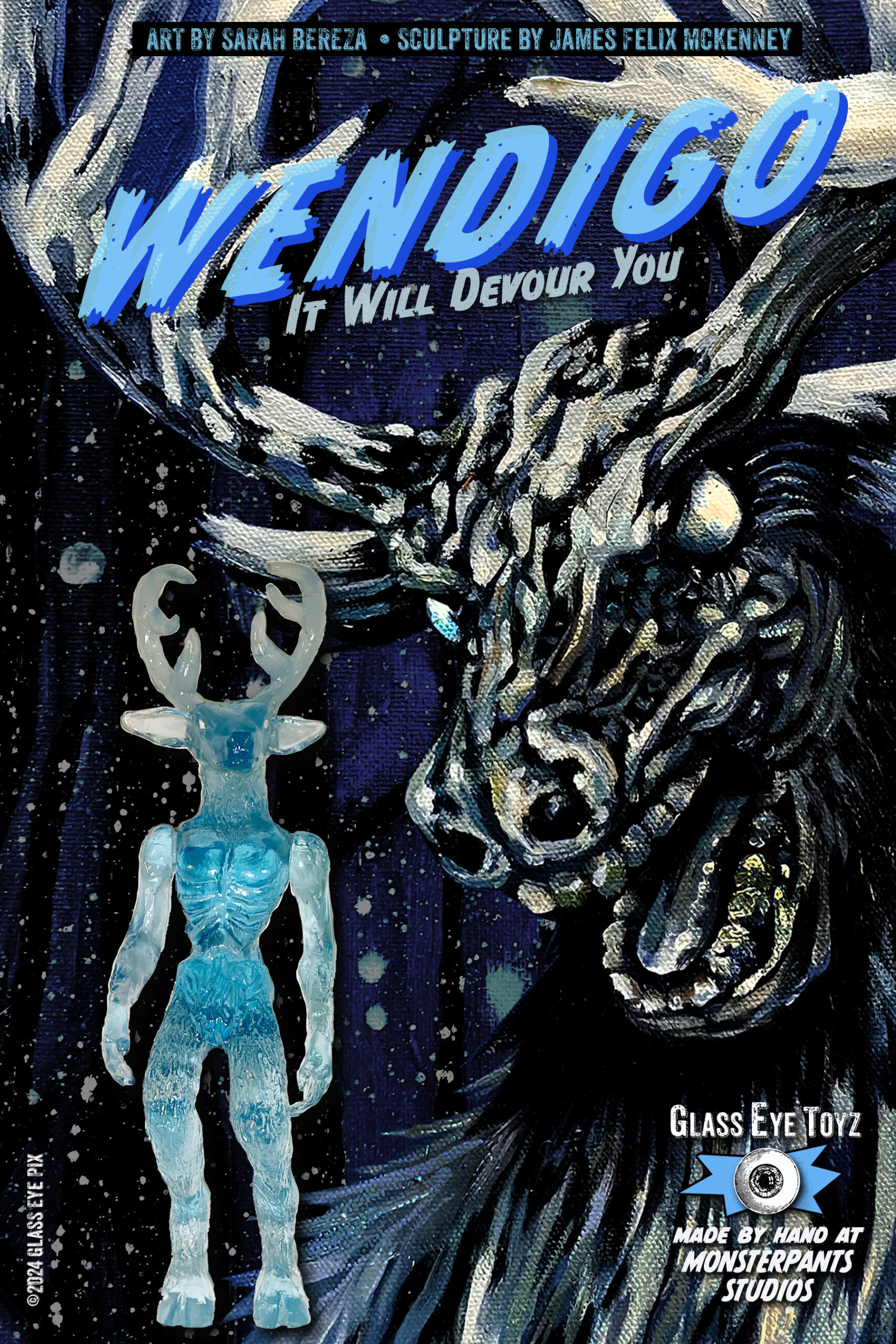
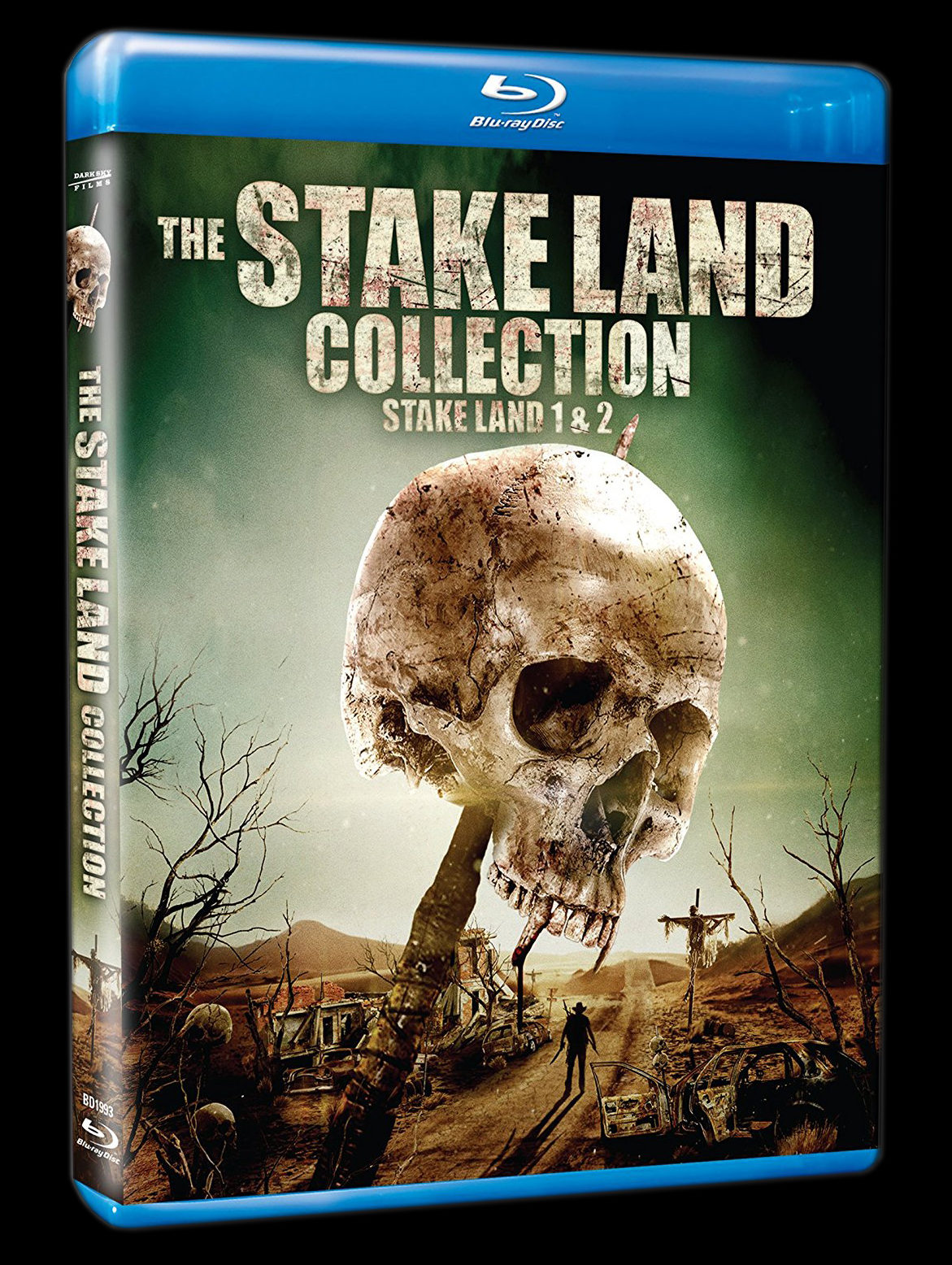
Adam Barnick put together this portrait of GEP’s longest-running collaborator BECK UNDERWOOD, responsible for logos (HABIT, NO TELLING, WENDIGO), art departments (HOLLOW VENUS, I SELL THE DEAD, BITTER FEAST, STAKE LAND), script writing (NO TELLING, HABIT), GEP advent calendars, the CREEPY CHRISTMAS FILM FESTIVAL, the brand new TALES FROM BEYOND THE PALE teaser… and some mayhem of her own… check it!


November 16, 2015
Share:
Facebook Twitter Email

Indiewire Presents First Looks at New TALES FROM BEYOND THE PALE

We’re teaming up with Indiewire to present brand new episodes of TALES FROM BEYOND THE PALE Season 3. This season sees episodes featuring talent like Stuart Gordon and Eric Red. Read on for the full story, and Indiewire’s interview with Glenn McQuaid and Fessenden, where Fessenden suggests that TALES season 3 will be “responsible for some ripped abs.”
graham-humphreys

From Indiewire:

Get Your Scary Story Fix Here: Indiewire to Present Exclusive Episodes of ‘Tales from Beyond the Pale’ Season 3
by Eric Kohn

Indiewire is partnering with the independent horror studio Glass Eye Pix to provide exclusive first looks at the new episodes of its radio theater show “Tales Beyond the Pale.” Each Friday through mid-December, new episodes from the third season of the eerie audio plays will be available on the site for exclusive two-day windows alongside interviews with the talent.

The brain child of Glass Eye Pix founder Larry Fessenden and filmmaker Glenn McQuaid, “Tales From Beyond the Pale” draws on the 1930’s tradition of radio dramas that showcased numerous filmmakers from the contemporary horror scene. This season, that includes Stuart Gordon, whose episode will kick off the series on Friday, in addition to screenwriter Eric Red (“Near Dark”) and installments scripted by both McQuaid (“I Sell the Dead”) and Fessenden (“Habit,” “Last Winter”). Fessenden also provides the voice of the host in each episode. Here, the duo discuss the dynamics of their unique project and what’s in store for the third season. Check out one of several posters designed by Graham Humphreys above.

It’s the 21st century. Why radio theater?

LARRY FESSENDEN: I always loved listening to audio plays and radio in general growing up. In the seventies, before there was VHS or DVD, I used to record old movies off the TV and on to audio cassette, and listen to them over and over. I came to love the rhythm of the sound effects and the whole experience of listening to a story. I made a lot of stuff with my hands and so I loved being free to not watch a screen. I still love it to this day. Glenn and I were listening to a radio show in the car, and he said, “Glass Eye Pix should do radio plays.” I loved the idea of working in a different medium. We’ve made comics, books, movies, video games, models, advent calendars, why wouldn’t we try audio plays?

GLENN MCQUAID: We originally started “Tales from Beyond the Pale” as a means of producing content that was otherwise collecting dust. Larry and I, and a bunch of our colleagues, were sitting on great stories that needed to get out to an audience in one way, shape or form. We’ve both produced comics in the past, and audio dramas seemed like a similarly interesting option, the other side of the coin. As we’ve continued with the project, the format has become a vital way for us to tell our stories.

In what sense has the project evolved?

LF: The first season was created in a studio environment where we had a good deal of control. The second season and subsequent performances in L.A., Colorado and Montreal, we’ve done live. That is different, of course, because there’s really only one take of each performance. We spruce up the live recording before releasing them, but there is still a spontaneity to those shows. This season, our third, we are back in the studio.

GM: Over the past five years, we’ve produced 40 audio dramas, many in the studio, and just as many in a live environment. The more we do this, the more the audio-drama format is opening up to us in new ways. So I think there’s an experimental element, or at least an confidence in experimenting, that’s running though our work now — and it wasn’t there in the first season. Certainly with my own Tales, from “Trawler” to “The Ripple at Cedar Lake,” I think there has been interesting development.

What are some of the specific ways that this form of storytelling can scare people?

LF: When so much is left to the listener’s imagination, it is bound to be more scary. But our stories are not just to frighten; they are engaged with the things that are really scary like loneliness and madness.

GM: The format’s limitations are its strengths. We can’t show you the monster, but why would we want to? Your imagination is a darker and scarier place than anything that can get generated on a computer. Asking the audience to use their imaginations makes it a much more personal and interactive experience. We had a live show in Montreal recently where an audience member sketched out what he thought a certain character would look like; even though it was live and he could see Larry play the character, he drew a very different person. I think audio dramas can be extremely effective because we ask something of the listener.

In what ways do your backgrounds as filmmakers apply to the medium of the radio play?

LF: Sound and sound design has always been very important to my approach to film, because it is a more subversive and allusive aspect of the medium.

GM: The relationship with actor and director is probably closer to theater, in that, when we record the dialogue, there is very little in the way of the creative collaboration — no cameras, lighting or even locations. Then, once we record, the post process is very similar to the post flow in filmmaking — editing, sound design, mixing, etc. At the end of the day, it’s all about storytelling and honing in on a tone by developing a rhythm and structure that suits the storytelling.

How did you go about selecting the filmmakers and talent for the current season?

Well, with Stuart Gordon — who joins us this season — we had gone to him for season one and it didn’t come together at the time. But we kept circling back and this time it worked out. I took a meeting with Eric Red as well when I was in L.A. and invited him to be a part of the series. Often these are associations that start with a discussion of making a movie together through Glass Eye Pix. When realities of financing a movie get in the way, we often say, well, heck, we can do a radio play! Our other collaborators are all pals with whom we’ve worked before. It’s just about timing and a pitch that works with the other pitches in a given series.

The Ripple at Cedar Lake

What are the steps involved in producing one episode? What’s the turnaround time?

LF: It’s always different, depending on the writer and the director. A collaborator like Graham Reznick delivers a fully finished piece, perfected in every way. Other writers direct the recording session and then leave quite a bit of the work to us. Glenn did a lot of heavy lifting on this season, taking on edit and sound design duties on several of the tales, as well as composing some fantastic music for a number of them. Then we take the sessions to our partners at Dig It Audio, where Glass Eye has mixed maybe a dozen films, and we finalize the mixes there. It all takes about a year to build a season, because we are doing other stuff.

GM: We have worked with a lot of the season three collaborators before, either through “Tales” or in other capacities — for instance, Brahm Revel, who wrote and directed “Junk Science,” did the comic book for “Wendigo” as well as “The Last Winter” and “I Sell the Dead.” April Snellings, who writes for Rue Morgue, has done two live shows with us before, and James Felix McKenny is a long-time Glass Eye Pix collaborator. Working with Eric Red and Stuart Gordon was something we’ve wanted to do since Season 1, so it was great to get those guys involved — they’re people we’ve always looked up to and were certain they could bring something interesting to the show.

As filmmakers, how does this kind of experience compare to your day jobs?

LF: The biggest difference for me is that the tales really have no logical outlet, no particular infrastructure in which to present them as you would have with a film festival. There’s no IMDb for audio dramas. So there’s a lot of work with no particular reward. That’s why this forum for putting them out through Indiewire is so exciting, I often said to Glenn, “These tales are like little half hour films in their ambition and artistry, just no picture!”

GM: We usually start by asking the collaborators to submit a couple of ideas. Then, Larry and I will sort through all the submissions and choose the ones based on what we think will add most to the collection. Once the scripts are written, the stages are: rehearse, record, edit, sound design, foley and finally, the mix.

The turnaround time varies a lot. With “The Ripple at Cedar Lake,” I actually recorded it over a year ago but it wasn’t until recently that I jumped back in and mixed it all together. With something like “The Hound,” it was much faster. We recorded with Stuart in L.A., then I took the material back to NYC and edited and designed under Stuart’s direction. That probably took about a month. Keep in mind that we’re always up to other things, so we tend to sit on things from time to time. In an uninterrupted world, I think we could have each of the tales finished, soup to nuts, in a week.

How will the wraparound play out this season? 

LF: It’s the first time the wraparound has a narrative tinge to it. Same host poking around the “Tales” HQ, but then something unexpected develops and he has to deal with it. It was a bold experiment, put together at the 11th hour, but I think we were happy to be loose after the hard work putting the 10 tales together. Glenn and I had fun collaborating with our mixer like we were a couple of rock and rollers putting a track together in the studio.

GM: We’re trying something new with The Host this season — he’s moved into an old light house for some peace and quiet but he’s not alone. We’re referring to the wraparound as our 11th Tale as it gets pretty insane.

What are the best conditions for listening to these episodes?

LF: Honestly, on very good speakers or with headphones. They are perfect to listen to in a half hour commute in your drive to work, but I worry some of the rich detail will be lost. Not bad listening on earphones at the gym, too. Time flies when you’re scared shitless. I’d like to think “Tales” will be responsible for some ripped abs.

GM: I love the idea that people are listening to “Tales” during all types of activities. Knitting in their favorite chair, rock climbing, sky diving, driving at night. Actually, my mother was driving around Ireland listening to Simon Rumley’s “British and Proud,” and had to turn it off. After we wrapped, I listened to the entire Season 3 out on my deck, at night, while my dog chewed on my ankle. I recommend this type of immersive situation especially for “Food Chain” and “Natural Selection.”

 

November 13, 2015
Share:
Facebook Twitter Email

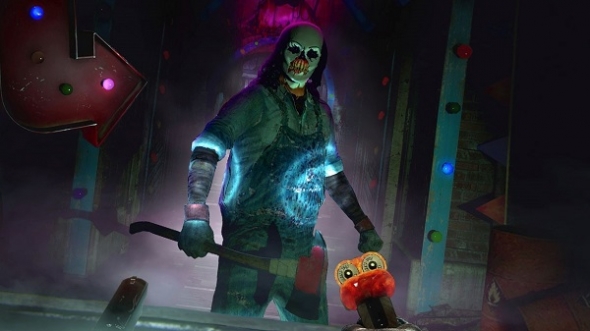
UNTIL DAWN: RUSH OF BLOOD Will be a Standalone VR Game

Supermassive Games, the makers of the Fessenden and Graham Reznick-scribed PS4 game UNTIL DAWN, have just announced that a new game, UNTIL DAWN: RUSH OF BLOOD will hit in 2016 as a Virtual Reality game.

until-dawn-rush-of-blood

Will you be able to keep everyone alive… again?

From Venture Capitalist Post:

Developed by Super Massive Games, Until Dawn: Rush of Blood is confirmed to be released sometime in 2016 for PlayStation VR. Often mistaken as a sequel, DLC or an extension of the previous ‘Until Dawn’ title, the game developers have reiterated that Until Dawn: Rush of Blood is a standalone game.

Amidst the confusion of being a DLC of Until Dawn, Sony Entertainment has confirmed that Until Dawn: Rush of Blood is independent of the Rush of Blood title. It was further explained that it is not a DLC nor an expansion as Rush of Blood was in development the same time as the main Until Dawn game, Design & Trend reported. It was also reported that the game will mainly utilize the PlayStation VR headset and is not programmed to play in a traditional television.

Until Dawn: Rush of Blood was first confirmed during the recently held Paris Games Week when Sony Computer Entertainment have released its upcoming Play Station VR titles. The game presents a story of eight friends who were trapped in a mountain retreat. Suspicious that they are not alone in the area, they must fight through their fears in order to come out of the haunted area in one piece. Crossmap commented that the gameplay itself is simple yet very engaging and rewarding. Players get to play each of the eight characters, whose actions and decisions affect the circumstances of the ending.

Meanwhile, a released gameplay footage of the Until Dawn game featured in the Agents of S.H.I.E.L.D. series provides a tease for Brett Dalton’s playable character, Mike. According to MStars News, the teaser of the PS4 exclusive, Until Dawn, is released to set the game before the Until Dawn: Rush of Blood title. The story is written in collaboration with cult horror writer/director Larry Fessenden and Graham Reznick.

Super Massive Games’ Until Dawn: Rush of Blood, is a standalone game exclusive for PlayStation VR. The game is said to be released sometime in 2016.