December 9, 2015
Share:
Facebook Twitter Email

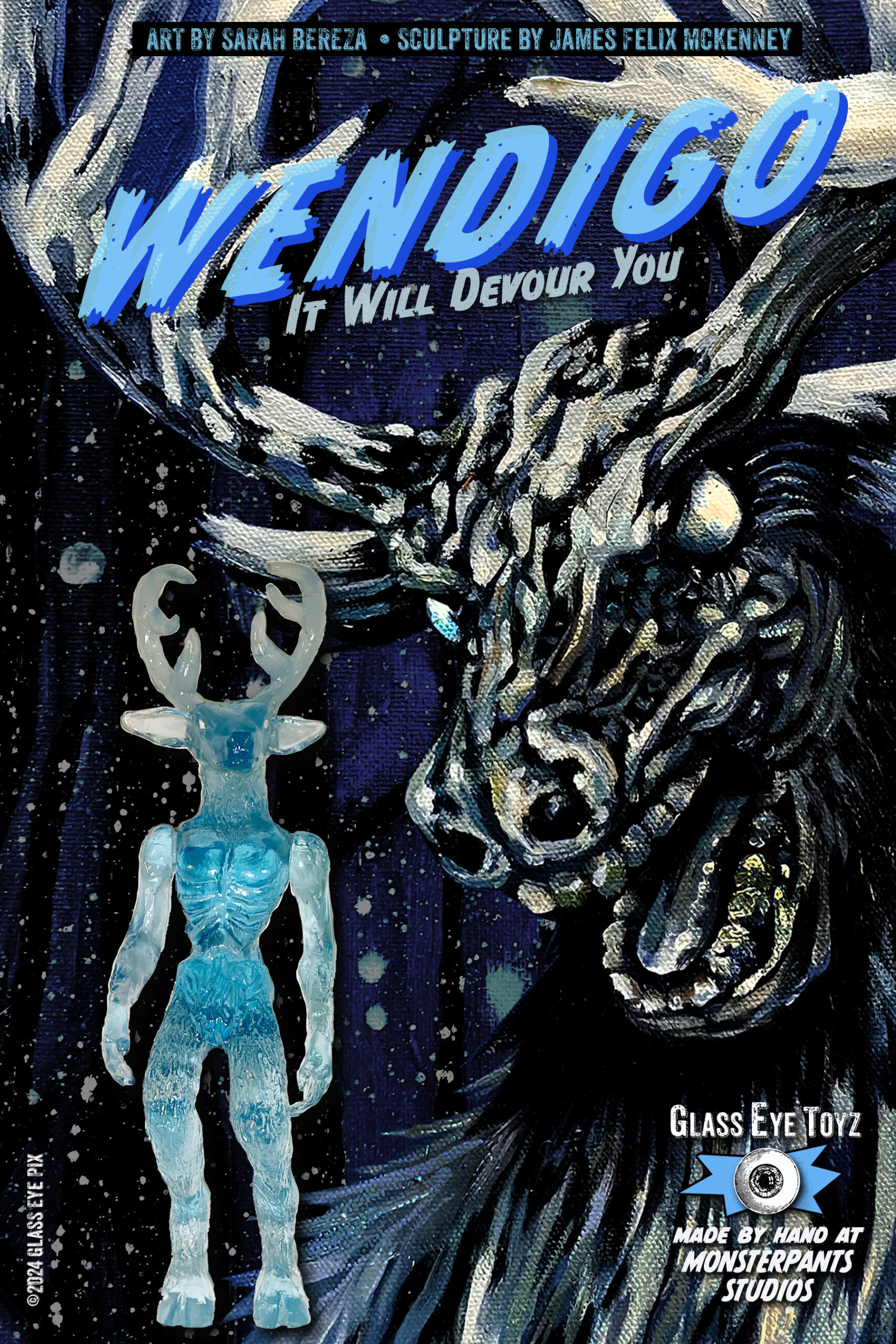
New 30th Anniversary mini-Doc: James Felix McKenney, long-time GEP collaborator

Our 30th Anniversary Hootenanny continues with this series of Legacy Docs celebrating the community and collaborators that have kept us honest all these years…

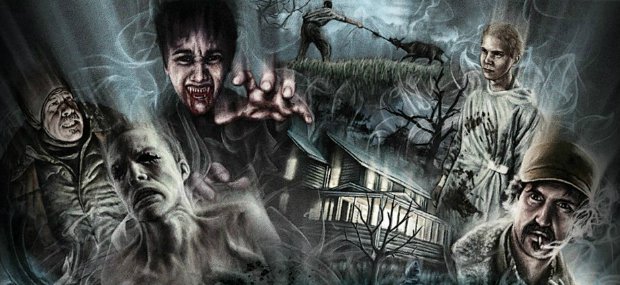
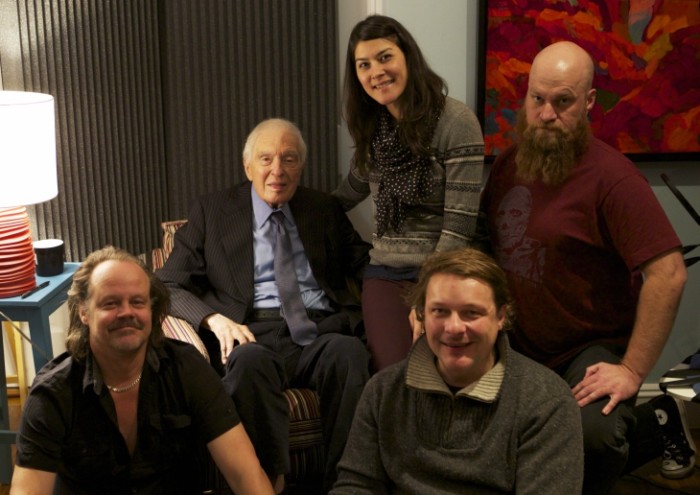
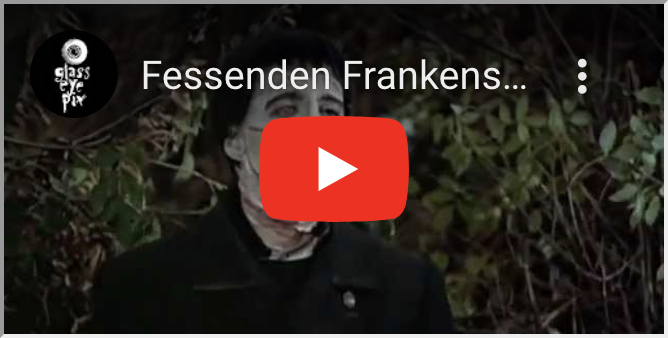
Chris Skotchdopole edits this interview by Fessenden of Glass Eye Pix with writer, director, producer and special projects instigator James Felix Mckenney, aka Monsterpants.


December 8, 2015
Share:
Facebook Twitter Email

Rue Morgue on fessenden collection

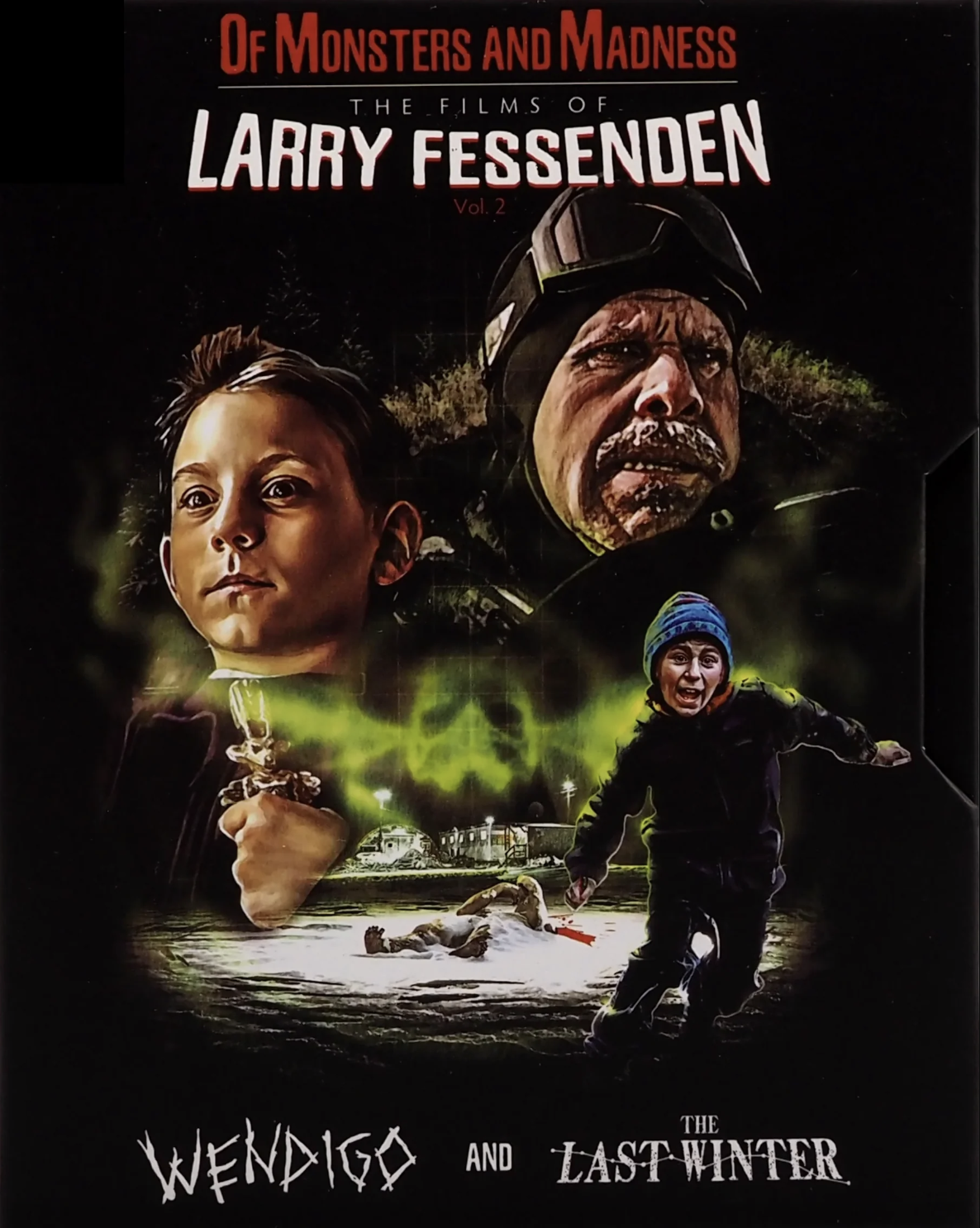
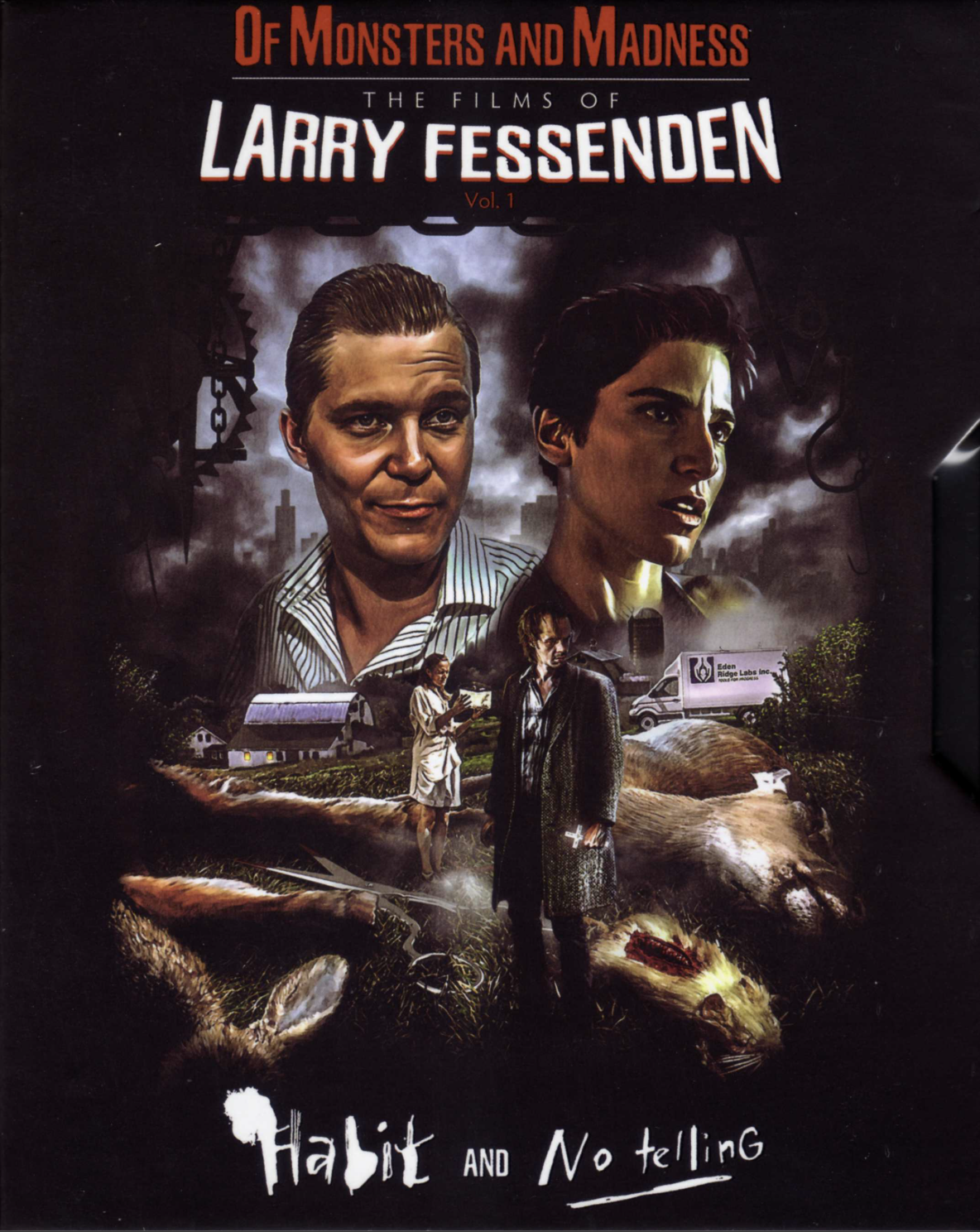
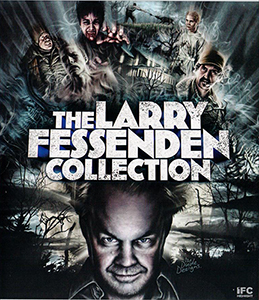
Rue Morgue reviews THE LARRY FESSENDEN COLLECTION, out now on Blu-ray
Monday, December 7, 2015

by JEFF SZPIRGLAS

Over the last quarter century, New York-based filmmaker Larry Fessenden has been taking horror tropes and turning them on their ear, crafting a series of personal ruminations on our relationships with the environment, and each other. Fessenden imbues his movies with a unique sensibility, deconstructing the horror genre as much as he adds to it. Four of his features have been upgraded to high-def and are now neatly packaged in a set from Scream Factory.

NO TELLING, (1991), Fessenden’s first feature, concerns married couple Geoffrey (Stephen Ramsey) and Lillian (Miriam Healy-Louie) grappling with marital woes and secret lives: she’s a painter flirting with new neighbor Alex (David van Tieghem); he’s a scientist locked up in the basement of their country house doing terrible things to animals in the name of progress.

The spare plot makes for a slow but steady build, and Fessenden doesn’t exploit horror conventions in predictable ways. There’s barely a boo! moment. Instead, NO TELLING employs an uneasy atmosphere to play out its themes of secrecy and paranoia, although at times the proceedings get didactic with heavy talk about scientific ethics. Yes, the characters and themes are painted in broad strokes (Geoffrey is bad because he works for big science; Alex Vine, the neighbor who fights for the local farmers is righteous despite trying to hit on Lillian). But the movie is lensed with such style and exuberance that its virtues outweigh the flaws. Throughout, Fessenden always finds interesting camera angles or ways to pull into a scene (energetically crosscutting between Miriam Healy-Louise painting and Ramsey engaged in gory experiments, or some unusually fast and lengthy tracking shots that just don’t feel right). There’s a unique and confident rhythm that propels NO TELLING out of gate, and it’s worthy.

Next up is HABIT (1997), which won a handful of awards and put Fessenden on the map. The low-fi NYC-set feature, expanded from his own student film, sees Fessenden in the lead role as Sam. Mourning the death of his father, and having just broken up with his girlfriend, Sam finds solace in booze, as well as an enigmatic new flame Anna (Meredith Snaider), who may or may not be a vampire.

The cast, including Fessenden, is spot-on, while the grainy cinematography and shabby interiors add a lived-in look that oscillates between melancholy and menacing, especially in the HD transfer. The documentary-like realism adds a layer of authenticity; New York City is as much a character in the film as the human actors. Coupled with Sam’s mounting paranoia, HABIT playfully keeps audiences guessing whether the vampire is real or imagined, but the horror remains undiminished.

In WENDIGO (2002), burnt-out photographer George (Jake Weber), wife Kim (Patricia Clarkson), and son Miles (Erik Per Sullivan) head out to the Catskills for a little R&R weekend that turns sour after an edgy encounter with some hunters. A strange accident during a sled ride makes us question whether the weird goings-on are the hunter’s revenge, or the work of the wendigo, a creature from First Nations mythology.

As with NO TELLING, the movie plays on tensions that made DELIVERANCE work so well, stacking locals against foreign city folk. WENDIGO is always at its strongest (and scariest) when told from the boy’s perspective. The adult world seems overbearing: there’s the violence of the hunters, and then there’s the boy’s parents, who are playing nice but clearly going through marital challenges. Fessenden plays a strong hand when rendering horrors that are ambiguous; this is an underrated gem that finally gets the HD treatment it deserves.

A supernatural thriller set in the Alaskan tundra, THE LAST WINTER (2006) concerns oil driller Ed Pollack (Ron Perlman) trying to get environmentalist James Hoffman (James Le Gros) to green-light the construction of an ice road. Quickly, things go awry. One worker is plagued by nightmarish visions, and he’s not alone. Numerous project members start going batshit crazy – or is something from the earth itself coming to get them? The flick ultimately amounts to nature kicking some ass in retaliation for the fossil fuels we suck from it.

Drawing visual inspiration from THE THING and THE SHINING, Fessenden makes use of moving cameras and aerial photography in his biggest picture yet. Also effective is the use of ambient sound (moaning winds, violent gusts of snowsquall) to generate eerie tension. This tale of man vs. nature expands on the ecological themes in Fessenden’s oeuvre, but the movie really soars when it ceases to preach and turns into the kind of sustained mood piece he’s known for.

These four discs comprise an impressively comprehensive collection. While Fessenden’s big ideas and inventive filmmaking approach are sometimes heavy-handed, he’s a man with a message and passion to spare, as evident on the supplementary material and commentary tracks, in which he dwells on all aspects of production, down to the minutiae of the action figures used for the opening credits of WENDIGO. Bonus features include a fistful of making-of docs and short films, such as the original HABIT, music videos, and even Fessenden’s bit for THE ABCS OF DEATH 2.

THE LARRY FESSENDEN COLLECTION is out now from Scream Factory.

December 5, 2015
Share:
Facebook Twitter Email

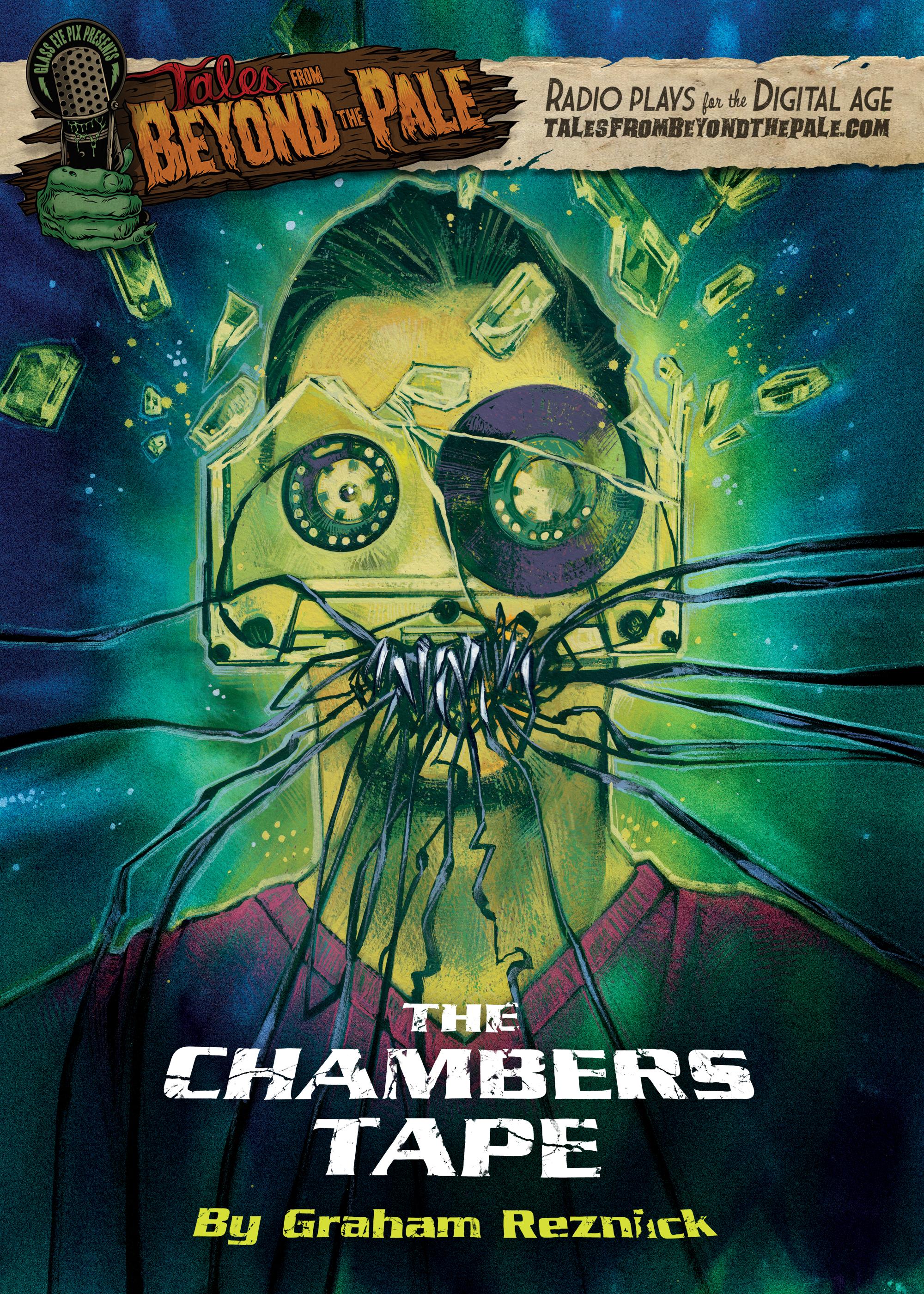
LISTEN NOW: Let Graham Reznick’s THE CHAMBERS TAPE Guide You – TALES FROM BEYOND THE PALE SEASON 3

Indiewire presents a guided meditation unlike any you’ve tried before! Graham Reznick’s THE CHAMBERS TAPE (ranked #1 on iTunes Audiobooks in Fiction) is streaming now.

FROM INDIEWIRE:

For the next several weeks, Indiewire is exclusively premiering new episodes from the third season of “Tales From Beyond the Pale,” the audio play series produced by Glass Eye Pix. Episodes will be available for two-day windows. 

The season continues with filmmaker Graham Reznick’s “The Chambers Tape.” Listen to the episode above, and read an interview with Reznick conducted by Indiewire’s Eric Kohn about the inspiration for the episode below. 

Pre-order the third season of “Tales From Beyond the Pale” here.

The structure of this narrative is very innovative, since it takes the form of a guided meditation. How did this idea come together?

“The Chambers Tape” looks at the sometimes surreptitious use of “science” as the promise of a magical cure-all. (“We’ve infused our special meditation tape with scientific technology to enhance your results!”) It’s a strange racket and distracts from legitimate and truly positive advancements.

There’s always been complicated relationship between the general public and the mental health industry. It’s only in the last 20 or 30 years that the idea of going to therapy has become less taboo. I think there was a strange fear that a psychologist might have some special power, that they could use the power of their voice and choice of words to alter the mind and personality of their patient. They were referred to as head-shrinkers, or shrinks – which implies a fearful, controlling presence.

“There’s always been complicated relationship between the general public and the mental health industry.”

Around the same time that therapy became more acceptable, the New Age movement and eastern practices like meditation became more popular. Guided meditation became a big thing and continues to this day to be incredibly popular on YouTube – with many professional and amateur variations available.

If you really give yourself over to a guided meditation, if you trust in it the way you would trust a therapist, you’re opening yourself up in a vulnerable, impressionable way. What if your guide had less than noble intentions, even nefarious? What if they simply didn’t know what they were doing? Meditation and therapy are incredibly positive things that do a great good for many people, myself included. I wanted to explore the dark flipside of that.

I’m also really interested in the idea of neuro-linguistic programming — the power of spoken words and their effect on the the mind. Can you reshape someone’s reality just by saying the right things?

How did you approach the idea of “The Aviary” tape?

“The Aviary” is a real meditation tape from the seventies I heard about in high school, around 1995 or 1996. A friend who made cassette mixes had used a sample from it on one of his tapes. His dad had an original but after he made the mix, he lost the cassette before I could get a copy. I tried to find it online but there’s not a whole lot out there. We found some partial transcripts and tried to recreate it as faithfully as possible but had to take a few liberties to fill in the pieces.

shock value

As for the cast, I’ve been a fan of Misha Collins’ work on “Supernatural” and when Jason Zinoman — who wrote the excellent and absolutely essential book on horror “Shock Value” — mentioned to me they knew each other, I jumped at the opportunity to work with him. He was absolutely perfect for Dr. William Chambers. His voice is so controlled and commanding that there were times in the booth I forgot that I was working with an actor. Instead, I felt as if I were in the presence of the doctor himself. He sunk his teeth into the role and completely nailed it right away. Sophia Takal and Lawrence Levine are friends and both excellent directors and actors, and I’ve always wanted to cast them together as a couple – they’re married in real life. And Kersten Haile was in my segment of a Chiller film last year – a great, versatile actress – plays brief but very important role connected to the true nature of the piece.

We’ve made several cassettes to match the original Aviary release. It’s as accurate a recreation of the real thing as we could manage. A very limited number will soon go up for sale on the “Tales From Beyond The Pale” site. Side A is the “Tales” episode, and Side B is a 35-minute ambient soundscape piece available only on the cassette.

Digital is the preferred and easiest method of consuming as much content as quickly and efficiently as possible, but there’s something very appealing about the formality of the physical medium experience. I listen to (and collect) boatloads of vinyl, and one of my favorite things to do is to put on a record, sit back, and enjoy it – without the urge to click away or jump to another track. There’s a certain focus to it. In our hyper-stimulated era, a 30-minute uninterrupted side is a welcome relief.

How has this production approach impact storytelling for you?

One of the great things about Tales From Beyond The Pale is that it lets the writers and directors play with the expectation of how the audience experiences a “story,” both in the studio and live. This season is no different – there are some really excellent forays into unexpected territory. Glenn and Larry are incredibly encouraging of this kind of experimentation. For “The Chambers Tape,” I wanted to try something that was treated like an actual audio artifact: a primary source that cuts out the middleman (the storyteller) and involves the audience directly with the story itself. Using a meditation tape as the format allowed me to use the second person (which I’ve been intrigued by ever since Choose Your Own Adventure books and “Bright Lights, Big City”). Second person is a powerful, underutilized tool that has the ability to involve the audience even more directly: “You are doing this, you are seeing that.” It places the audience in the middle of the action. But it has its challenges – everyone brings their own personality, interpretations, and baggage to the table. It’s a real collaboration between the piece itself and the audience, which is exciting and unpredictable.

Specifically in regards to audio, I loved working within constraints of the meditation tape format. And a retro seventies style one at that. It was super fun creating the music and the overall sound design for the piece. There’s a dirtiness — an unsteady, detuned waviness to it all that I really enjoy – as if the tape itself is coming apart. I highly recommend listening in a good pair of headphones.

You’ve been experimenting with a lot of media. With Larry Fessenden, you co-wrote the PS4 game “Until Dawn.” What sort of new challenges did that present?

“Until Dawn” was an incredible experience, and writing with Larry is always a pleasure. The process was simultaneously incredibly rigid and remarkably freeing, in that the story beats were very precisely mapped out by the developer, Supermassive Games — who did a brilliant job — but we had to script many different versions of every scenario. So we could really explore character development in a way you don’t really get to do in normal linear writing. My analogy for it is that when you write a character in a film, you daydream about the many different ways a scene could go, how the character could react, how that could change the dynamics of all the other characters. With “Until Dawn,” we didn’t just daydream all those other versions – we wrote them all down.

It’s been a number of years since you tried out 3D with your short film “The Viewer” What do you make of that approach now? Any thoughts on virtual reality headsets?

I’m a big believer in exploring every possible medium that offers the opportunity to experience a story. 3D is a relatively untapped medium. It’s often used as a gimmick or an afterthought, but there have been interesting exceptions. Virtual reality is just as appealing. I’m working on one project right now as a sound designer, and it’s presenting some incredibly new, complex challenges in regards to audio mixing and design – which is exciting and provides opportunities to do things no one has ever done before. I’ve been developing a VR project very loosely based on “The Viewer” that I’d really like to get made. 3D was something I could experiment with for almost no money at all – but VR is unfortunately much more expensive and technical in ways that are exponentially more daunting, so it’s tough to get anything going without serious finance behind it.

What’s next for you?

I’ve got a couple electronic music albums ready to be released – one will be coming out soon and the other I’m about to start shopping around. I co-wrote a movie called “Bushwick,” which just started shooting this week in Brooklyn, with Dave Bautista, which is being directed by Cary Murnion and Jon Milott, who directed “Cooties.” We recently finished mixing Ti West’s new western “In a Valley of Violence,” which I sound-designed and composed some additional music for. And I have a few feature films that are slowly but surely forging their way towards production, hopefully sometime in 2016.

The Chambers Tape
December 5, 2015
Share:
Facebook Twitter Email

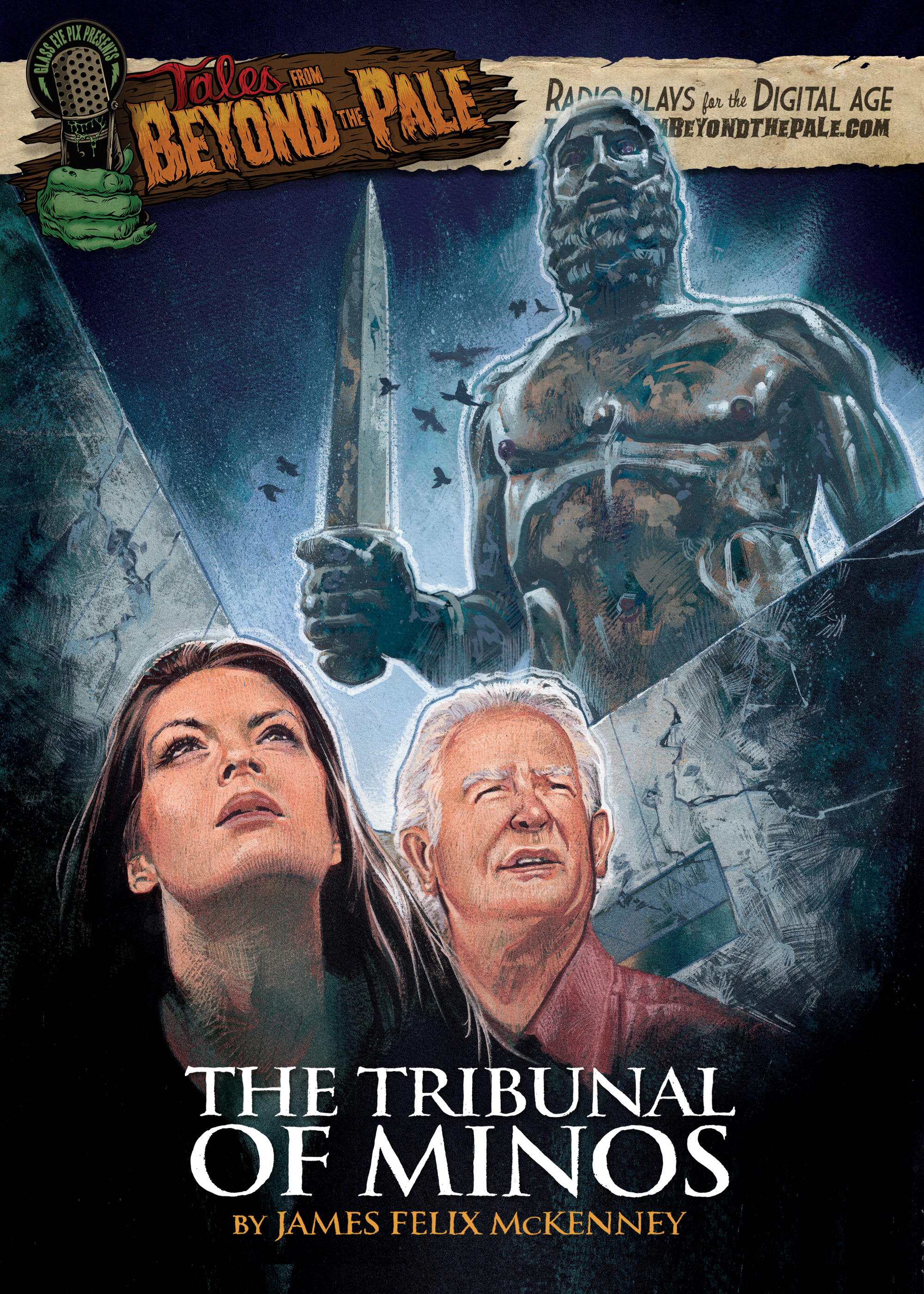
LISTEN NOW: Tourists in Trouble with James Felix McKenny’s THE TRIBUNAL OF MINOS – TALES FROM BEYOND THE PALE SEASON 3

Indiewire presents James Felix McKenny’s Season 3 TALES FROM BEYOND THE PALE episode, THE TRIBUNAL OF MINOS.

FROM INDIEWIRE:

For the next several weeks, Indiewire is exclusively premiering new episodes from the third season of “Tales From Beyond the Pale,” the audio play series produced by Glass Eye Pix. Episodes will be available for two-day windows. 

The season continues with filmmaker James Felix McKenny’s “The Tribunal of Minos.” Listen to the episode above, and read an interview with McKenny conducted by Indiewire’s Eric Kohn about the inspiration for the episode below. 

Pre-order the third season of “Tales From Beyond the Pale” here.
Your story involves American tourists getting more than they bargained for in a foreign land. We’ve seen the trope before in horror films. What inspired your take?

I wasn’t really thinking about the whole fear of being away from home or fish out of water trope when I was writing it, but you’re right, it’s a reliable standard. Back when Glenn started talking about doing “Tales” and asked me to do one — I eventually had to bow out of the first two seasons due to commitments to films I was working on — I started listening to these audio dramas put out by Big Finish Productions based on “2000 AD” comics and the classic “Doctor Who” television series that use the original actors from the show.

So my starting point was really the old “Doctor Who” formula of a somewhat condescending older man and younger female companion being dropped in an alien environment where they are pursued by a monster. I’m sort of obsessed and frustrated with the whole American Culture Wars thing, so having these two people from opposite sides of the argument forced to spend time together provided an opportunity to explore that conflict. I was hoping to show that regardless of their beliefs, people are people with their own complexities and contradictions and not just screaming caricatures. Although I did write this story before the current Republican presidential race, which has turned out to be pretty cartoonish.

Your movies always have a very DIY, handmade feel. How did that sensibility translate into the production of a radio play?

Yeah, I love things that are a little rough and look like they were made by humans rather than computers. I really want to keep the old traditions alive, even when working in digital formats.

For the audio drama, obviously there were no props to make or sets to paint, but there was still a lot of stuff I could do myself. Beyond the writing and directing, I cast people I knew and had worked with before on our little handmade films, did the editing and the sound design myself before handing it over to Tom Effenger for the final polish and mix. This is what we try to do with our films — get the thing as close to a finished project as we possibly can before hiring experts to bring it across the finish line.

Angus Scrimm is the main actor here. What’s your history with him?

I cast Angus in the first film we made for Glass Eye Pix in 2003, “The Off Season.” I had him in mind for the role, but didn’t think our $20,000 budget could afford a name actor from Los Angeles. He happened to be on the East Coast for a horror convention the weekend we were to begin shooting, so we gave it a shot to see if he’d be interested in doing it while he was out here. Turns out, he really wanted to visit Maine, where we were shooting, and came up, saving us some money on travel and giving us a very affordable rate as long as we agreed to get him a lobster dinner.

“Regardless of their beliefs, people are people with their own complexities and contradictions and not just screaming caricatures.”

Angus is the sweetest, kindest man you’ll ever meet. We’ve been friends ever since and I always try to work him into any project where casting him makes sense. I think he really clicked with our other main actor in this audio piece, Mizuo Peck, someone whom I met through my friends that form the band Shellshag. Mizuo appeared in another project I did, an odd little sci-fi short  — also somewhat inspired by old “Doctor Who,” I’m just realizing — called Chapter Four. She does a lot of voice work, so she seemed like an obvious choice for this “Tale,” but I think she’s probably best known for playing Sacagawea in the “Night at the Museum” movies.

The music, by Carrie Bradley, is a distinctive aspect of the episode. How did you get connected with her and collaborate for this piece?

Carrie is a friend of mine that I’ve seen play violin many many times with one of my favorite bands, The Breeders. Actually, all of the music that I had been exposed to over the years has been her performing with others — she’s also worked with Jonathan Richman and Love & Rockets, as well as her own bands The Great Auk, 100-Watt Smile and Ed’s Redeeming Qualities. But it was just a few years ago when she sent me some home recordings of some music she produced entirely on her own. That stuff really stuck with me. I figured the violin would fit well with the Greek setting, but Carrie took it so much further and exceeded my expectations a hundred fold. She wrote, performed and recorded everything herself and that singular vision really adds an incredible third voice to the piece. I can’t wait to rope her into scoring a feature film.

Why does the Glass Eye Pix model work for you?

I had already written, directed, edited and produced my first feature and sold it to a distributor before I came to work for Larry and Glass Eye Pix.

The film was a blood-soaked black comedy, called “CanniBallistic,” where I had only $8000 of my own money to make a movie and had to do a dozen different jobs myself — including making props, buying wardrobe, securing locations, grocery shopping for our four-person crew, building the film’s website, etc., mainly because I’m the cheapest resource that I have.

That’s pretty much how I continued to make movies once I met Larry, who very generously offered to bankroll a few more features that I wanted to do. For the most part, the budgets on our movies have been a lot lower than the rest of the films that Glass Eye Pix produces and I take bringing in a film on or under budget very seriously, so I still perform a lot of different tasks. So do the other members of Team MonsterPants, who all have a wide range of skills thanks to their backgrounds in construction, electrical work, fine art, carpentry, etc., as well as filmmaking. On the first three films we did for Glass Eye Pix, Larry was great about giving us the freedom to do what we do the way we do it, even if our methods could be a bit unconventional at times.

What are the biggest challenges you face with respect to the kind of stories you like to tell?

I really enjoy working in the more fantastic genres, but when I sit down to write I tend to get a little more involved in the characters or whatever message I’m trying to convey than some of the horror or action elements. I always say that my movies are a little too highbrow for traditional or mainstream genre movie fans and way too lowbrow for the art house crowd. This audio drama is probably a perfect example of this, I’m sure there will be plenty of listeners screaming at their mp3 player, “Enough with this talky talky crap, where’s the Minotaur?”

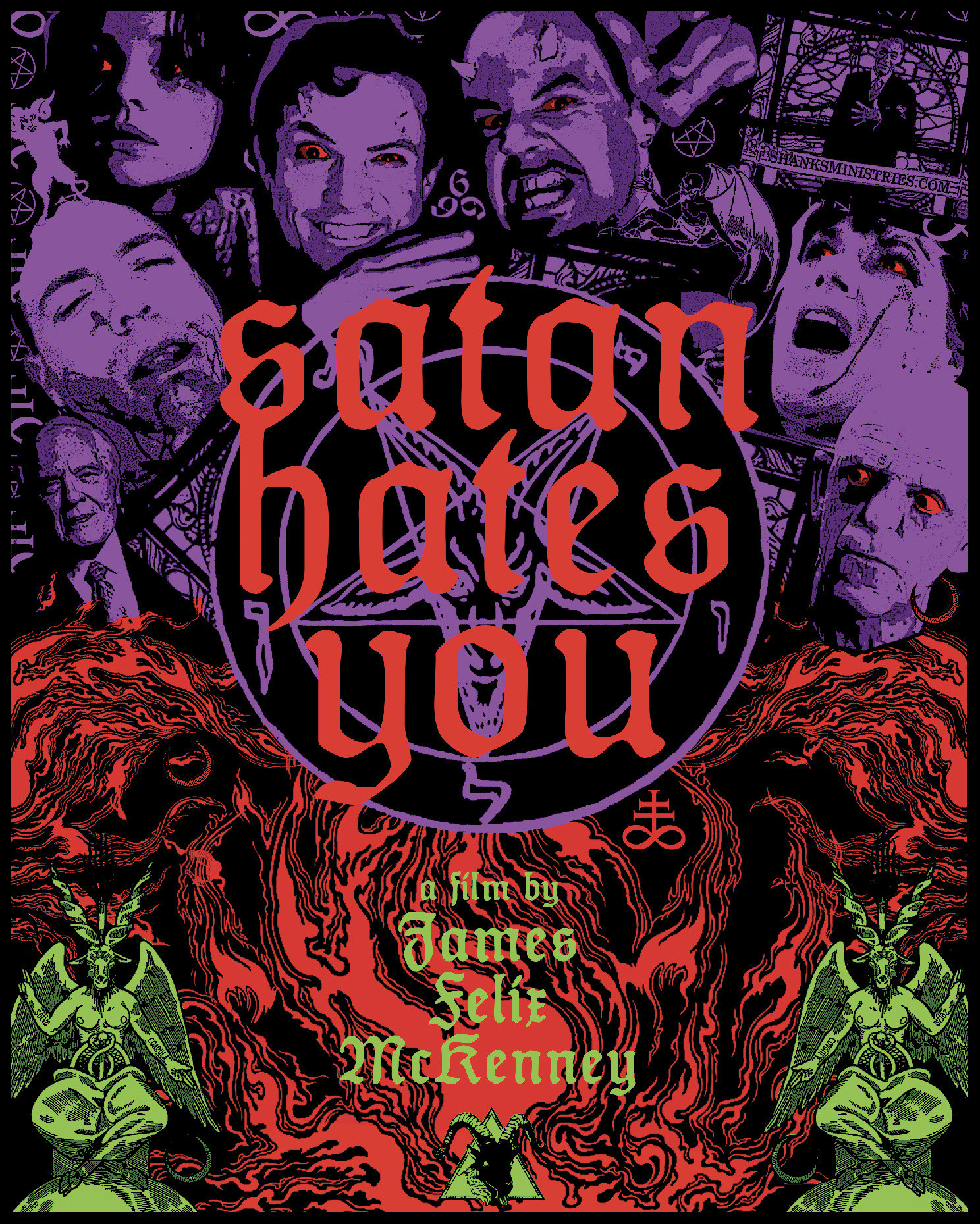
Obviously, there’s a long tradition of social commentary in horror and science fiction,. I’m just not sure it’s always welcome if it takes priority over the scares and action or if it’s not really obvious or heavy-handed. I made a film called “Satan Hates You” a few years back that was an homage to the old Christian scare films and Jack Chick comic tracts. But because I didn’t openly mock Christianity, I took a bit of heat from people who missed the satirical elements and thought I was an actual hardcore right-wing evangelical Christian, which couldn’t be farther for the truth.

I just write things that interest me, which is very satisfying artistically, but my tastes don’t always mesh with those of ticketbuyers and film bloggers. Oh well.

What’s next for you?

I have this sort of very DIY, one-man-band feature film project that I have been pecking away at in my free time over the last couple of years and probably won’t see the light of day for at least a couple more. I’m working on a script for a folk horror feature that I’ll be trying to raise money to shoot next year and I’m also editing a short that I directed called “Candyland,” which features a cast almost entirely made up of 12-year-old girls. We’ll be submitting that one to festivals this summer.

I also produce and co-host the world’s worst podcast, Before Geeks Were Cool, which is available on iTunes and have an ongoing line of designer toys, most of which are a series of action figures called the Sea-Borgs, that I hand sculpt and cast in plastic resin in my home studio. I may never get rich doing any of this stuff, but it’s all very satisfying.

The Tribunal of Minos


December 3, 2015
Share:
Facebook Twitter Email

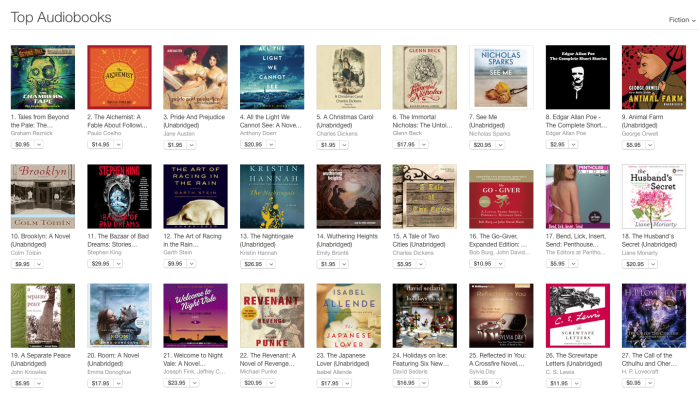
TALES FROM BEYOND THE PALE Hits Number One Spot on iTunes

Graham Reznick’s TALES FROM BEYOND THE PALE season 3 episode THE CHAMBERS TAPE just hit #1 on iTunes Fiction Audiobooks. Check it out!

Screenshot 2015-12-03 13.54.38

December 2, 2015
Share:
Facebook Twitter Email

FANGO Reviews TALES FROM BEYOND THE PALE: SEASON THREE

Ken W. Hanley, writing for Fangoria, just reviewed the third season of TALES FROM BEYOND THE PALE.

TALESBEYONDPALES2LAUNCHFEAT

From Fangoria:

It’s been two years since TALES FROM BEYOND THE PALE clawed its way into the ears of fright fans, with select live outings to satiate the interested while Season Three of the radio play series was in development. However, luckily for purveyors of audio horror, the wait was not in vain, as the months of development have led to TALES strongest season to date, providing bold, wickedly entertaining stories that stir up one’s imagination with mischievous glee. And furthermore, with an assembly of terrific performers and storytellers by their side, there’s an inherently unique air about this season of TALES that certainly separates it from season’s past, offering a structural and tonal continuity that impressively feels much more carefully curated than previous iterations.

While previous TALES regulars such as Ashley Thorpe and THE PUMPKIN PIE SHOW’s Clay McLeod Chapman are absent in this go-around, perhaps Season Three’s strongest asset is its roster of writers and directors, mixing genre heavyweights alongside carryovers and fairly newcomers. Maintaining a brilliant variety of sordid subject matter, the influence of producers Glenn McQuaid and Larry Fessenden gives each production a fairly theatrical quality which keeps the tone from jumping between melancholy to gruesome to cerebral; in essence, TALES keeps an ear towards horror that’s emotional but nonetheless entertaining. And furthermore, even with that theatrical flair, it’s refreshing to see the audio medium represent each artist’s voice, with no single tale ever feeling monotonous or familiar to those surrounding them.

Given the two year wait between seasons, it’s only appropriate that TALES FROM BEYOND THE PALE’s third season starts off with a bang, offering a RE-ANIMATOR reunion in H.P. Lovecraft’s “The Hound,” written by Dennis Paoli and directed by Stuart Gordon. With music by Richard Band and a cast that includes RE-ANIMATOR’s Barbara Crampton, DAGON’s Ezra Godden and KING OF THE ANT’s Chris McKenna, “The Hound” is Gordon in top form, allowing his stellar performers (especially a particularly against-type Crampton) to bring Paoli & Lovecraft’s depraved tale come to life in frightening fashion. Furthermore, the production value is rather fantastic, punctuating every macabre moment and providing depth to Lovecraft’s universe and its many creepy creations.

Food Chain

From there, comic book mastermind Brahm Revel offers “Junk Science,” which re-unites STAKE LAND stars Nick Damici and Michael Cerveris in an outer space tale that carries strong dialogue, savvy personality and a surprisingly emotional finale. “Junk Science” relies much on the production-heavy science fiction, but the story is so rooted in the relationship of our protagonist and his A.I. that it never falls short of engrossing. Afterwards, McQuaid himself steps up to the plate with “The Ripple at Cedar Lake,” a tale of colliding dimensions that is a stellar listen and features performances by WENDIGO’s John Speredakos, TALES vet Matthew Huffman and THE PUMPKIN PIE SHOW’s Hanna Cheek. “Cedar Lake” makes the most of its fun, clever concept, with every performer enthusiastically embracing the utter insane direction that the story sends them spiraling towards.
However, the fourth entry vies for the possible highlight of the entire season as genre journalist April Snellings’ “Food Chain” offers such a strong sense of humor, character, emotion, nail-biting gruesomeness and karmic justice that it feels as if it could stand toe-to-toe with the finest words of William Gaines. Luckily, Snellings’ superb script is elevated by great performances by Fessenden, THE BATTERY’s Jeremy Gardner, SOUTH OF HELL’s Drew Moerlein, POULTRYGEIST’s Jason Yachanin as well as JUG FACE’s Sean Young and Lauren Ashley Carter (not to mention an inspired vocal creature performance from McQuaid). And the foley work and music on display is rather fantastic, helping to add an extra dimension to an already strongly defined world.

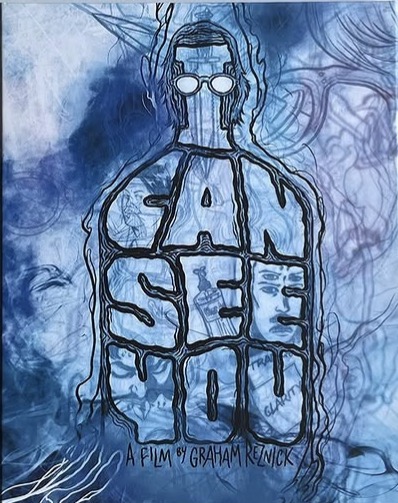
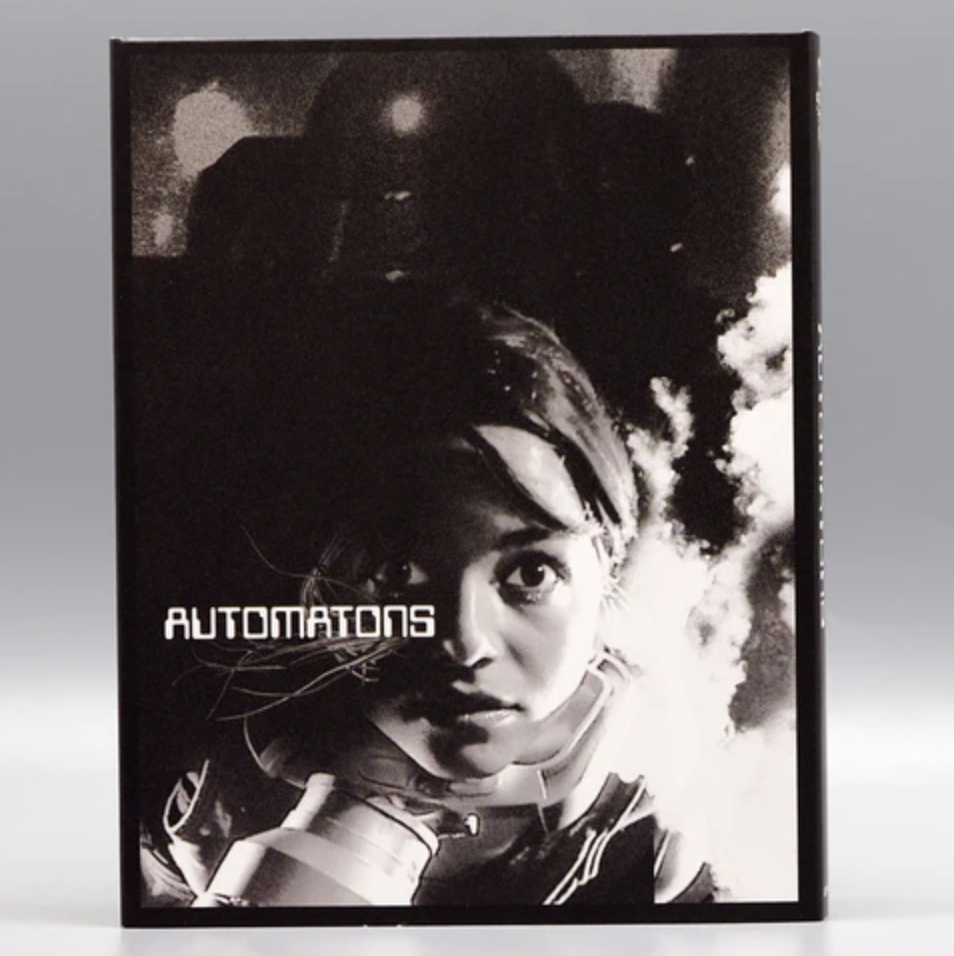
AUTOMATON director James Felix McKenney’s “The Tribunal of Minos” is also an impressively entry as well, an all-too-human character piece starring Angus Scrimm and Mizuo Peck following a pair of Americans trapped inside a mythological labyrinth. It’s a fairly predictable story and yet one that works by the director’s decision to keep the dialogue intimate and, while politically present, far from heavy handed or biased. Meanwhile, UNTIL DAWN scribe Graham Reznick’s “The Chambers Tape” may be the weakest of the set, but if only as the cost of being the most ambitious: by presenting the tale as a therapeutic tape of sinister origins (narrated by Misha Collins), the pacing of the story drags through its first fifteen minutes, while the going finally gets good and unsettling in its latter half.

Little Nasties

Next up, Fessenden joins the fray as writer and director of “Natural Selection,” which cleverly plays off Dominic Monaghan’s real-life persona of adventurer and reteams him with his LORD OF THE RINGS co-star Billy Boyd in a story about an animal discovery gone monstrously wrong. With strong supporting performances from Pat Healy and James Ransone as well as terrific sound design, “Natural Selection” explores Fessenden’s inherent talent for crafting human tales in horrific scenarios, and this entry certainly is no different. Following that is TALES vet Jeff Buhler’s “Guttermouth,” a fascinating and engrossing story about an unhappily married man who becomes obsessed with woman whose voice emanates from his drain pipes. Offering a foreboding atmosphere and a Stephen King-esque edge to the supernatural element, “Guttermouth” is another highlight of the season and includes fantastic performances from Joshua Leonard, Heather Goldenhersh, Molly Bryant, Mark Kelly and Rocco Buhler.
One peculiar TALE among the bunch is esteemed horror scribe Eric Red’s “Little Nasties,” although the issues lie not with the story but with the medium. As a radio play, “Nasties” is hilarious, creepy and utterly brilliant in concept and features an exceptional ensemble of all ages (with special note going to a particularly versatile turn from writer Jack Ketchum), but nevertheless, the story seems much more suited for a visual medium, especially the chaotic third act in which one’s imagination can’t quite offer the satisfying pay-off that the premise deserves. And TALES ends strong with an exceptionally twisted story from BITTER FEAST filmmaker Joe Maggio called “Cannibals,” the title of which carries a biting (no pun intended) double meaning as a story who two filmmakers (played by Vincent D’Onofrio and James Le Gros) whose taste in film is much more similar than their taste in food. Essentially a one-act, dialogue-driven play, “Cannibals” game of cat and mouse is a gripping one and ultimately satisfying as each character’s true nature is gradually revealed.

Overall, with a murderer’s row of horror voices and actors involved, not only is TALES FROM BEYOND THE PALE’s third season incredibly worthwhile but a masterful example at how audio production can be used effectively within the genre. With impressive sound design, mixing, foley work and editing, this anthology radio play series plunges the listener into its many nightmarish worlds effectively and with unflinching resolve. So if you’re looking to creep out your fellow carpoolers or if you just need a scary story for a dark and stormy night, look no further than this latest batch of TALES FROM BEYOND THE PALE.

4_skull

December 2, 2015
Share:
Facebook Twitter Email

Daily Dead Reviews FESSENDEN COLLECTION

Patrick Bromley over at Daily Dead just wrote a review of THE LARRY FESSENDEN COLLECTION.

Larry-Fessenden-Collection-620-04

From Daily Dead:

If ever there was to be a Mt. Rushmore of modern horror, there’s no question that the face of Larry Fessenden would get prominent placement. One of the patron saints of indie horror, Fessenden is a true auteur and a true original whose incredible career is now being celebrated with the Scream Factory release of The Larry Fessenden Collection, containing four of his films and hours of bonus features that help illuminate just what a vital voice Fessenden has been in the genre for more than three decades. This is one of the best horror releases of the year.

Fessenden (whose Glass Eye Pix has been around since the mid-’80s, helping produce films including The House of the DevilI Sell the DeadStake Land and Late Phases) has built a career on twisting and subverting the conventions of classic horror films and filtering them through his own distinctive lens. His movies seem to start with the seeds of horror tropes that we recognize but then are bent to meet Fessenden’s own interests and preoccupations—the universality of familiar pared down to the personal and individualistic. It’s a thread that runs through all four of the films included in this excellent collection.

First up is 1991’s No Telling, one of Fessenden’s earliest features and a clever take on the mad scientist genre. Stephen Ramsay stars as a scientist who has recently moved to the country with his wife, an artist played by Miriam Healy-Louie. While the pair adjusts to their new, quieter life, Ramsay conducts animal experiments in secret, attempting to uncover… well, I’m not exactly sure. This is Fessenden playing in the Frankenstein sandbox (the film’s alternate title is even The Frankenstein Complex), but he does so without explicitly invoking horror until some of the movie’s final disturbing images.

No Telling still has a lot on its mind, whether it’s the domestic drama of a marriage unraveling or the statements against big pharmaceuticals and corporate science. Of the four films included in The Larry Fessenden Collection, this one might be the most crudely made (to which Fessenden himself openly admits on the commentary), but it still manages to feel genuinely eccentric and contains a quirky visual style that announces Fessenden as an exciting voice in the genre.

The second feature is Habit from 1997, Fessenden’s take on the vampire genre and arguably his best-known film. A remake of Fessenden’s own feature from the early ’80s, it stars Fessenden himself as Sam, a New York hipster who has just lost both his father and his relationship with his girlfriend. He meets a mysterious woman named Anna (Meredith Snaider), to whom he is immediately drawn. As their relationship intensifies, Sam begins to suspect that Anna is more than she seems to be.

The vagueness of Habit is deliberate. Like in the Nicolas Cage vehicle Vampire’s Kiss, the audience is left uncertain as to whether or not the protagonist has become the victim of a real vampire or if it’s simply the delusion of an unreliable narrator. Vampirism here stands in for addiction, primarily sexual—it is the foundation on which the central relationship is built and Sam is practically powerless to stop himself from giving in to Anna’s advances.

Almost 20 years removed from its release, Habit remains the best of Fessenden’s movies I’ve seen. Despite its genre trappings, it feels intensely personal—and not just because Fessenden himself plays the lead (and very well, I might add), but also because of the specific details he includes both about the protagonist’s life and the ’90s New York “scene” he captures. The movie feels lived in, its relationships feel authentic and Fessenden makes for an unusual, utterly compelling protagonist. Habit works both as a straight horror movie and, as the title suggests, as a movie about addiction and self-destruction. It’s territory that has been mined elsewhere in the vampire genre (Abel Ferrara’s The Addiction; Park Chan-wook’s Thirst), but Fessenden’s take has its own pulse, its own energy. It’s great.

The 2001 film Wendigo, found on disc three of The Larry Fessenden Collection, is the filmmaker’s version of a werewolf movie. It stars Jake Weber and Patricia Clarkson—marking this as one of the first times Fessenden was directing established stars—as a couple who travel to upstate New York with their young son Miles for the winter. On their drive up, they hit a deer and draw the ire of a local hunter named Otis (John Speredakos). Once they arrive at their cabin, they can sense bad mojo. It could be the ever-growing conflict with Otis, or it could be the appearance of a Wendigo, a supernatural shapeshifter from Indian folklore known for eating its victims.

While Fessenden tries to touch on the relationship between man and beast in Wendigo, the movie never quite captures the central conflict of the werewolf story that is the tortured duality of man becoming a monster. Everything else could be changed and decontextualized, but losing that dramatic conceit removes much of the tension from the movie and strains its already tenuous relationship to horror convention.

Because the film is told mostly through the eyes of a child (Erik Per Sullivan of Malcolm in the Middle fame), there is the same sense of unreliability Fessenden embraced in Habit: are we seeing events as they are actually happening or are we seeing the imagination of a child who has been told a folk tale and chooses to believe it? The metaphorical remove that was so effective in Fessenden’s previous film here keeps us, too, albeit at a distance. But Wendigo has enough atmosphere and eccentricity to remain compelling, and Fessenden’s approach to the effects of the titular Wendigo (achieved through puppetry and stop motion) help give the movie a singular personality. The movie falls short of being what it wants to be, but succeeds quite beautifully at being what it is.

The fourth and final feature included in the set is The Last Winter, Fessenden’s environmental horror film from 2006 that casts James Le Gros, Ron Perlman, Connie Britton and Kevin Corrigan (among others) as a team of scientists on an expedition in the Arctic seeking energy independence in conjunction with an oil corporation. Their efforts, however, have conjured the angry spirits of the Earth, who begin to fight back and take revenge on the crew. Their days are numbered. It’s the last winter.

Of the four films included in this set, The Last Winter is the biggest mixed bag. It’s the slickest and most polished, featuring the most recognizable cast, but it’s also got the biggest disconnect between Fessenden’s ambitions and the execution. His passion and concern for the environment are apparent, but The Last Winter rarely finds a way to communicate those ideas in a way that’s either scary or less heavy-handed. The arctic setting is effectively claustrophobic—shades of Carpenter’s The Thing—and the cast acquits itself well, but it’s hard to view the movie now and not feel a little like it’s the indie horror version of M. Night Shyamalan’s The Happening. It’s a better, more thoughtful movie in every way, but its approach to environmental horror is not altogether different. The intent is honorable, but the finished product isn’t entirely successful.

In addition to shining a light on some under-the-radar horror films of the last 20+ years, where The Larry Fessenden Collection really excels is in its collection of bonus features, which go deep into Fessenden’s work and the history of Glass Eye Pix. No Telling’s supplements include a commentary with Fessenden as well as two 25-minute featurettes comprised of behind-the-scenes and archival footage, plus Fessenden’s 1979 short film “White Trash” and a sizzle reel for Glass Eye Pix covering highlights of the company’s output from 1985 to 1990. The bonus features on Habit include another Fessenden commentary, a vintage making-of piece, the original 1981 short film “Habit” (and a making-of piece for that, too), two music videos, the short film “N is for Nexus” (Fessenden’s contribution to ABCs of Death 2) and a brief making-of featurette for that short. The original theatrical trailer for Habit is also included.

The supplemental section for Wendigo contains not one but two commentaries: the first from writer/director Fessenden and a second from actors Patricia Clarkson, Jake Weber and John Speredakos. There’s an interview with Fessenden (conducted in 2001 when the movie was being made), a 30-minute making-of featurette, a trailer for the film, a trailer for a Wendigo animated series, the short film “Santa Claws” and another Glass Eye Pix sizzle reel, this one from 2010.

The fourth and final disc in the set contains a feature-length making-of documentary about the production of The Last Winter, as well as a fourth commentary from Fessenden. There’s an archival production featurette from 2005, a music video, a contemporary interview with Fessenden recorded in 2015 and the 2014 sizzle reel for Glass Eye Pix. Also included are three more short films from Fessenden: “Origins,” “Jebediah” and “Mister.”

Scream Factory has done such great work with The Larry Fessenden Collection that it’s one of those rare cases where the supplemental content is every bit as good as the film(s) it’s supporting. These are interesting, important movies that demand to be seen, but Fessenden’s interviews, short films and commentaries are every bit as important in understanding and appreciating independent filmmaking and one of its greatest champions. This is a great collection of work from a truly original, vital voice in horror. Long live Larry Fessenden.

No Telling Score: 3/5

Habit Score: 4/5

Wendigo Score: 3.5/5

The Last Winter Score: 2.5/5

Disc Score: 4.5/5

December 2, 2015
Share:
Facebook Twitter Email

FANGO: McQuaid and Fessenden talk TALES

The suspiciously named new feature from Fango (The Cutting Room?????!) presents an archived interview with McQuaid and Fessenden.

Have you ordered your new box set yet? Ships end of week!!

TalesRecord_11.16.14.jpg

“For Season 3, the collaborators who joined us have been very big and as much as I love the challenge of writing these stories under the gun, it’s been equally refreshing to seduce others into TALES. So we have some old collaborators, some new collaborators as well…”

November 28, 2015
Share:
Facebook Twitter Email

Fessenden and GEP pal Heather Woodbury cited in article on Climate Change and the Arts

Fessenden cited as an artist engaged in the Global Warming discussion (yes, ahem, since back in 1990 with LOW IMPACT FILMMAKING and later in 2005 with THE LAST WINTER). Also cited, GEP pal Heather Woodbury (HOLLOW VENUS) whose ferocious epic multi-character performance piece / podcast AS THE GLOBE WARMS is not to be missed.

From the article in CAPITAL & MAIN by Judith Lewis Mernit:

Bad enough that the climate is changing and humans are causing it; worse, most of us don’t even want to talk about it.

“Where are the books? The poems? The plays? The goddamn operas?” asked author and climate activist Bill McKibben a decade ago on Grist, comparing the climate crisis to the AIDS epidemic, which, McKibben noted, produced “a staggering outpouring of art that, in turn, has had real political effect.”

To be fair, that has started to change: Authors such as Paolo Bacigalupi (The Water Knife) and filmmaker Larry Fessenden (The Last Winter) have begun to address environmental catastrophe in their works. 

There are even occasional podcasts by story performer Heather Woodbury that will conclude during the festival’s two weeks.

November 27, 2015
Share:
Facebook Twitter Email

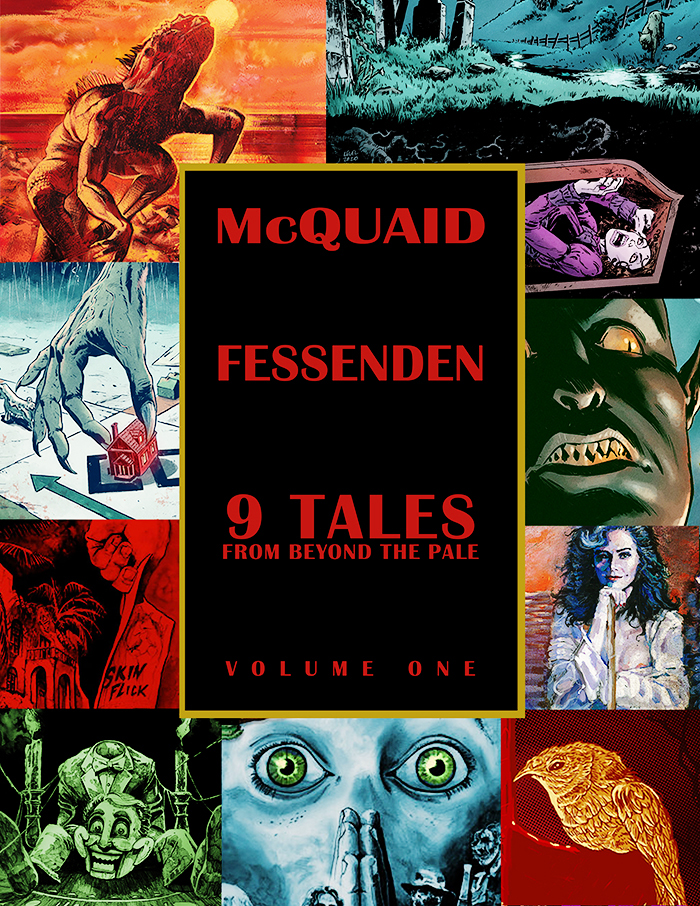
TALES SEASON 3 Now Available!

Today is the day! Escape the stores and spend Black Friday with TALES FROM BEYOND THE PALE, SEASON 3, now available on iTunes, Amazon, Audible, and the TALES online store.  Plus get your hands on the TALES SEASON 3 complete set (book & flash drive), shipping next week.

graham-humphreys

And keep it tuned to Indiewire all month long for interviews with the writer-directors and free-streaming sessions of the episodes.

Happy Black Friday!