
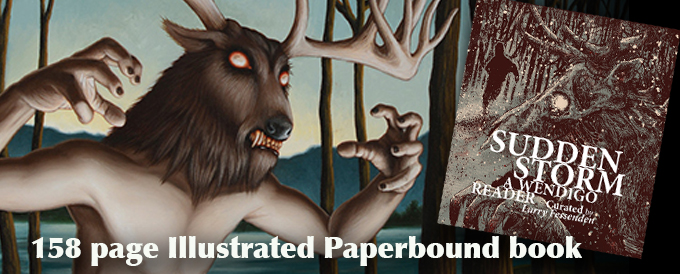
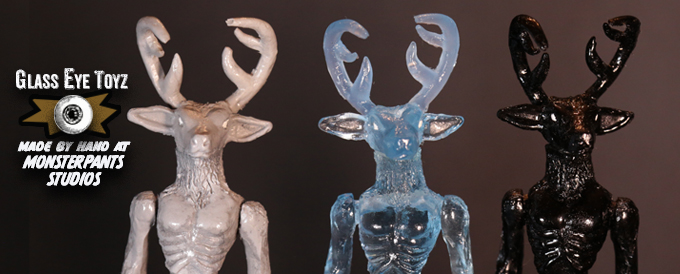
GLASS EYE PIX Sizzle Reel Collectible WENDIGO Figures from Glass Eye Toyz and Monsterpants Studios Oh, The Humanity! The Films of Larry Fessenden and Glass Eye Pix at MoMA The Larry Fessenden Collection BLACKOUT DEPRAVED BENEATH THE LAST WINTER WENDIGO HABIT No Telling / The Frankenstein Complex FEVER ABCs of Death 2: N is for NEXUS Skin And Bones Until Dawn PRETTY UGLY by Ilya Chaiken BLISS by Joe Maggio CRUMB CATCHER by Chris Skotchdopole FOXHOLE Markie In Milwaukee The Ranger LIKE ME PSYCHOPATHS MOST BEAUTIFUL ISLAND Stake Land II STRAY BULLETS Darling LATE PHASES How Jesus Took America Hostage — “American Jesus” the Movie New Doc BIRTH OF THE LIVING DEAD Explores the Impact of the Ground-Breaking Horror Film NIGHT OF THE LIVING DEAD THE COMEDY THE INNKEEPERS HYPOTHERMIA STAKE LAND BITTER FEAST THE HOUSE OF THE DEVIL I CAN SEE YOU WENDY & LUCY Liberty Kid I SELL THE DEAD Tales From Beyond The Pale Glass Eye Pix Comix SUDDEN STORM: A Wendigo Reader, paperbound book curated by Larry Fessenden Satan Hates You Trigger Man Automatons THE ROOST Impact Addict Videos
March 5, 2026
Share:
Facebook Twitter Email

HABIT analysis by Alisha Mughal at Roger Ebert.com: “this film is a beautiful beast.”

I’ve Started Seeing Somebody: The Monstrous-Masculine in Larry Fessenden’s “Habit”

by Alish Mughal at RogerEbert.com

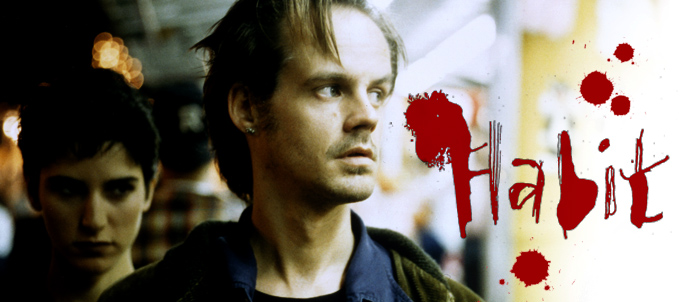
In “Habit,” Larry Fessenden’s Sam does not like to be asked too many questions. No matter that these questions come from his ex-girlfriend Liza (Heather Woodbury), from a place of love or concern, and for a good reason: Sam is slowly destroying himself. “I’m committing suicide on the installment plan,” he says with a wry laugh at the film’s beginning, his words slurring and his smile distracted; it doesn’t feel like a joke. He doesn’t like the feeling of being put under a microscope, every one of his actions scrutinized. Too many questions make Sam a bit upset, even a bit frightening. It’s been this way for a while, even before Sam meets the vampire Anna (Meredith Snaider), even before Sam’s life is irretrievably destroyed. “Habit” is both a vampire movie and not.

Sam has a drinking problem, and his girlfriend Liza decides she can’t live with him anymore, so she moves out, assuring Sam that she still wants to work on their relationship. She needs some space from his constant drinking, how he behaves when he’s drunk and hungover, and from his refusal to be an active agent in his life. Sam only ever drinks and moves from one moment to the next without any pause for sober introspection. Liza asks Sam to sort himself out. But Sam forgets about Liza, and he asks as soon as he meets Anna at Nick and Rae’s Halloween party. Sam is really good at forgetting. He is immediately besotted with the mysterious woman with short, dark hair and a soft, measured voice.

Anna is calm and assured—she is, in a way, still. Sam is not. Sam embarks on a passionate relationship with Anna, but gradually notices himself becoming absentminded, tired, nauseous, and, overall, very weak. Because Anna has been biting Sam during sex, right before he comes, and has been apparently drinking his blood, Sam becomes convinced she is a vampire. He begins having strange, phantasmagorical dreams of Anna, her skin scaly and her fingers clawlike, surrounded by all the iconography and effects that populate vampire movies. As Sam gets sicker and sicker, he loses his grip on reality and himself, and himself in myth. Fessenden’s genius is never providing us with a clear answer as to whether Anna is a monster—it’s up to us whether we want to see Sam or Anna as the destroyer of his life.
As with many vampire movies, there is a reading to hand for this film that would place it neatly in the ranks of our vaunted horror films, which limn patriarchal fears about women, weave stories about their unclean bodies, and disease. It is defensible to see Anna as the villain because so many of our cultural stories position women as monsters.

By this reading, Anna, depicted with the traditional imagery and vocabulary of the life-sapping vampire, is the monstrous-feminine because she leads a proper man to his ruin. And Sam is, at least on the face of things, a proper man: he drinks, like his father before him and Nick alongside him, and he fucks, a strong image of virile masculinity. When he becomes sick, he is left emasculated, sapped of his vigor.

To see Anna as a traditional monstrous-feminine, as the femme fatale and men-destroying vampire, would leave us with the conclusion that “Habit” is continuing tradition in its echoing of patriarchal fears. But such a conclusion doesn’t feel right—it would mean the film has nothing new to offer beyond aesthetic modernity. Such a conclusion elides something integral to the film: its observation of Sam and what is being said through this looking. There is baked into “Habit” Fessenden’s subversive cultural critiques and insights, at least in negative relief. Insightful though it is to consider this film through the lens of traditional feminist film theory, it’s not entirely fruitful because the film’s monsters have switched places; to see patriarchal regurgitation in “Habit” is not to see it as the self-aware, self-critical, and renegade artwork it is.

A second, alternative reading, motivated by a social realist point of view rather than a strictly feminist one, sees Sam as the agent of his own destruction. This reading reveals to us how grief destroys a person, or perhaps explicates the lack of meaning for a certain type of person in the modern world. This reading is one many viewers espouse when they describe this film as hopeless or sad, which it certainly is, but it still leaves the film feeling less incisive, less alluring than it is.

There is a faint edge to “Habit,” as if clouded by the mystifying fog of its genre and visual language. Blink, and you’ll miss it. But it is there, this something, and you can find it in what the women around Sam say. “Habit” follows Sam and is about Sam, but it also refrains from criticizing him. It is in the space around Sam where Fessenden writes, careful and measured as brushstrokes, something far more nuanced, far more interesting than tired patriarchal fears: a woman’s fears.

Anna is a far cry from Liza. Liza is warm, sunny, blonde, always caressing Sam, touching his face softly, taking note of his declining health and his moods. Emotionally entangled with Sam, Liza asks him tough questions and wants earnest answers, wants Sam to become better, to try harder, wants exclusivity, always asking him, as if jealous or fearful, whether he has started seeing someone else. Anna couldn’t care less about how Sam is doing—when he leaves the dinner table to throw up at one point, she doesn’t follow him to the bathroom, doesn’t seem concerned about him at all. When Sam does the same with Liza, she is terribly worried.

“I’ve started seeing somebody,” Sam tells Liza when she asks him out for breakfast one day. Liza’s face falls—they haven’t called it quits on their relationship yet, and for Liza, it’s still just a break. “I’m not saying it’s serious or anything, but I just feel like we should start to say our thing is over.” Sobs well up in Liza’s throat. “Well, that didn’t take long,” she says, trembling, not wanting to look at him, shoveling her breakfast into her mouth with a hurried panic, as if both angry at and fearful of Sam’s anticipated answers, the tired look in his eyes. “How long have you known her? Are you fucking her? Well, I hope you’re being careful. You met her at that Halloween party, right? I knew it when I saw you there.”

Sam gets fed up, his words become sharp, and his voice high-pitched: “This isn’t a separation if you keep quizzing me on everything! I mean, how is this any different from living together? You got me under a fucking microscope.” It’s a heated and messy exchange, the polar opposite of the dinner Sam had with Anna the night before. Only Sam eats that night while Anna watches. She evades his questions about her work. “How much do you need to know about someone to be attracted to them?” she says eventually. “I suspect that the less you know about me, the longer you’ll stay interested.” And she is right. While Liza’s questions push him away, Anna’s cool evasiveness is so alluring as to occupy all of Sam’s thoughts for days. Liza clearly loves Sam, while Anna is cold to the touch, yet even so, Sam likes Anna more, because she doesn’t ask him questions, because she is the way he wishes Liza was, because she is the way Sam is to Liza.

We have a sense of what Sam was like to the women he dated before Anna—to Liza, and even to Rae, whom he’d been with for a while before Liza. When Sam helps Liza move into her new place, Liza’s friends stare daggers at Sam. “I can’t believe how I’m getting the hairy eyeball from those two. What the hell did you tell them about me?” Sam says to Liza. “They’re treating me like the schmucky boyfriend who walked out on you.” Liza gives him a look—he was indeed the schmucky boyfriend, resenting Liza for asking him too many questions, for caring for him in the way you care for someone you love, for holding him accountable for his drinking. Sam squirms under Rae’s and Liza’s care because his own parents were so absent. Sam doesn’t feel like he instigated the separation, since Liza is the one moving out. But he’s wrong—he pushed her away first. “You got what you wanted: your freedom,” she says. 
Later in the film, we get a clear image of what Sam is like to his girlfriends when he’s drunk. Anna is talking to Rae, who is jealous of any woman Sam sees and who is overtly hostile toward Anna. When Rae says that her being with Sam is absurd, Anna asks, “Are you still carrying a torch for him? I mean, hasn’t it been quite some time since he used to get drunk and knock you around?” Rae walks away without responding. Sam physically abused Rae and emotionally abused Liza.

There’s a simmering violence in Sam that feels as though it’s transferred or displaced onto Anna through his accusations of vampirism. After Anna breaks things off with Sam near the end of the film, Sam himself irrevocably breaks. After a rough night, Sam finds Liza with her throat slashed, and he, paranoid, feels as though Anna is pursuing him, wanting to consume him. It’s easy, by virtue of the swiftness of Liza’s body’s discovery and the panic that propels Sam toward his ultimate doom, to think that the vampire Anna might have killed Liza, but closer scrutiny offers another possibility.  

The Anna Sam perceives—the transacting figure who saps him of his energy, leaving him feeling physically and mentally exhausted and lost, who is cold in her cruelty—is not at all like the monstrous-feminine figure Creed describes. Traditional monstrous-feminine vampires leave their victims “filled with new energy,” Creed writes, with shinier hair, brighter teeth, more vigor and passion. Sam, on the other hand, is wholly depleted and spent, not unlike Liza when she is moving out, wanting to get away from Sam so she can regain herself. In Anna, Sam sees what it’s like to be enamored of a person who doesn’t like you back in the same way. As he throws up day after day, he feels what it feels like for Liza to love him. With Anna, Sam feels physically how Liza feels. The Anna that Sam perceives is a monstrous-masculine figure, an absent partner at least, and the kind of abuser a woman might fear and avoid at most. Anna Sam perceives that it is Sam himself. Anna does to Sam what he has done to Rae and Liza, and this is the serrating story of “Habit.”

For its rejuvenation of the vampire film alone, “Habit” is an unignorable work of art, but for its expansion of monstrosity, its subversion of our expected villains, for its vocalization of women’s fears, for its depiction of how subtly men can destroy the women who love them, this film is a beautiful beast.

Read at RogerEbert.com

March 5, 2026
Share:
Facebook Twitter Email

One More for the Shelf: Ben Leonberg’s GOOD BOY featuring Fessenden coming soon!

Good Boy – March 17

Good Boy will be released on Blu-ray and DVD on March 17.

The haunted house movie told from the perspective of a dog was filmed over the course of three years for $70,000 and went on to earn $8.7 million worldwide.

Special features:

  • Audio Commentary by Director Ben Leonberg & Producer Kari Fischer
  • Making-Of Featurette
  • Behind-the-Scenes Extras
  • Development Diary

Canine hero Indy finds himself on a new adventure with his human owner — and best friend — Todd, leaving city life for a long-vacant family home in the country. From the start, two things are clear: Indy is wary of the creepy old house, and his affection for Todd is unwavering.

After moving in, Indy is immediately vexed by empty corners, tracks an invisible presence only he can see, perceives phantasmagoric warnings from a long-dead dog, and is haunted by visions of the previous occupant’s grim death.

When Todd begins succumbing to the dark forces swirling around the house, Indy must battle a malevolence intent on dragging his beloved Todd into the afterlife.

Ben Leonberg makes his feature directorial debut from a script he co-wrote with Alex Cannon.

Leonberg’s own dog, Indy, stars alongside Shane Jensen, Arielle Friedman, and Larry Fessenden.

Meagan Navarro wrote in her review, “Leonberg crafts a thoughtful, unnerving, and heartrending portrayal of how utterly terrifying it can be for a dog when his whole world is upended and he’s unable to understand why.”

March 3, 2026
Share:
Facebook Twitter Email

More Physical Media for YOU: Josh Heeps’ CITY WIDE FEVER featuring Fessenden

CITY WIDE FEVER BLU-RAY

Writen and Directed by Josh Heaps
Produced by Vincent “Chenzy” Graziano, Josh Heaps
Cinematography by Ethan Johnson 
Executive Produced by Guy Maddin, Robert Forbes, Richard Stoeffel, Jim Stoeffel, Brooks May, Amanda Romo, Franklin Laviola, Nicholas Laviola

Featuring: Diletta Guglielmi, Angelika Kim, Nancy Kimball, Hugo Alexander-Rose, Rutanya Alda, Onur Tukel, Ian Fidance, Carolyn Farina, Larry Fessenden, Douglas Buck, Stan Oh, Michael M. Bilandic, Maggie

Design by Love and Victory

“City Wide Fever reminds me why I still go to the movies — desperate souls and bad lighting.”
– Paul Schrader

“Not only does it capture the dreamy, off-kilter tone of giallo, but keeps the audience entertained with killer shot-on-video visuals and an endearing sense of humour.” 
– Alan Jones, Bleeding Edge

March 1, 2026
Share:
Facebook Twitter Email

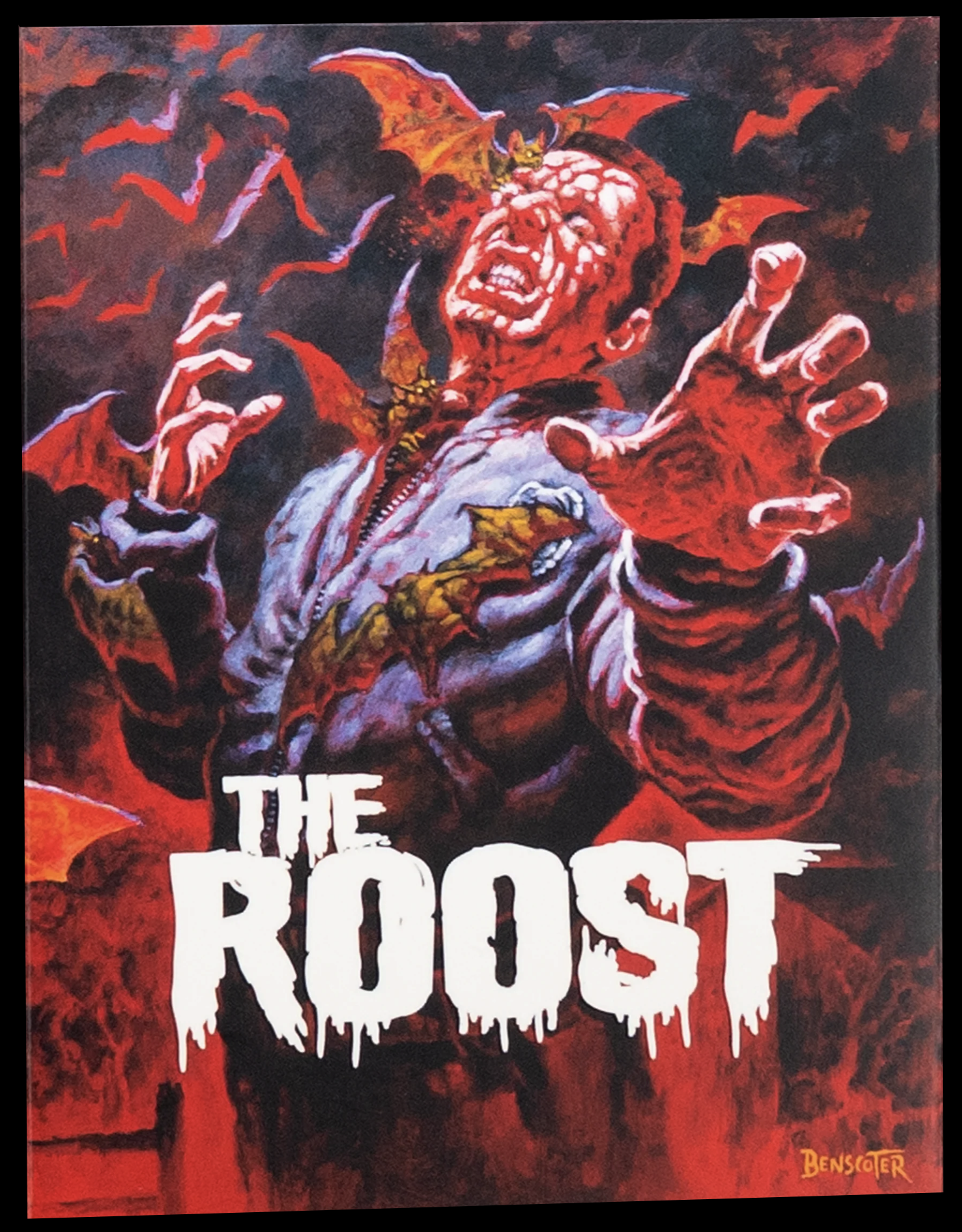
GEP and OCN Presents: Ti West’s THE ROOST on Blu-Ray for the first time

March 1, 2026
Share:
Facebook Twitter Email

February 27, 2026
Share:
Facebook Twitter Email

TONIGHT at Nitehawk in Brooklyn: HABIT on the Big Screen

Today, Feb 27 @ 11:55 pm: Seating begins Friday at 11:55; movie starts after midnite

Director: Larry Fessenden Run Time: 112 min. Format: DCP Rating: NRRelease Year: 1995

Starring: Larry Fessenden

Autumn in New York. Sam has broken up with his girlfriend and his father has recently died. World-weary and sloppy drunk, he finds temporary solace in the arms of Anna, a mysterious woman who draws him away from his friends and into a web of addiction and madness.

Larry Fessenden’s seminal New York vampire film was nominated for 2 Spirit Awards and winner of the Someone to Watch Award.

February 26, 2026
Share:
Facebook Twitter Email

Deadline has the scoop on THE LAST TEMPTATION OF BECKY from Glass Eye alumns Jenn Wexler and Chadd Harbold

Visit DEADLINE for the full skinny!

February 26, 2026
Share:
Facebook Twitter Email

THE TOWER Bonus Episode: Glenn McQuaid on THE SERVANT (1963)

February 25, 2026
Share:
Facebook Twitter Email

GEP Pals featured in Shudder’s 1000 WOMEN IN HORROR series

February 23, 2026
Share:
Facebook Twitter Email

Rue Morgue: GLENN MCQUAID’S “THE RESTORATION AT GRAYSON MANOR” SET TO HIT THEATERS THIS YEAR

Read at Rue Morgue