























GLASS EYE PIX Sizzle Reel TRAUMA OR, MONSTERS ALL BLACKOUT DEPRAVED HABIT Oh, The Humanity! The Films of Larry Fessenden and Glass Eye Pix at MoMA The Larry Fessenden Collection Let’s Get Physical BENEATH THE LAST WINTER WENDIGO No Telling / The Frankenstein Complex FEVER ABCs of Death 2: N is for NEXUS Skin And Bones Until Dawn PRETTY UGLY by Ilya Chaiken BLISS by Joe Maggio CRUMB CATCHER by Chris Skotchdopole FOXHOLE Markie In Milwaukee The Ranger LIKE ME PSYCHOPATHS MOST BEAUTIFUL ISLAND Stake Land II STRAY BULLETS Darling LATE PHASES How Jesus Took America Hostage — “American Jesus” the Movie New Doc BIRTH OF THE LIVING DEAD Explores the Impact of the Ground-Breaking Horror Film NIGHT OF THE LIVING DEAD THE COMEDY THE INNKEEPERS HYPOTHERMIA STAKE LAND BITTER FEAST THE HOUSE OF THE DEVIL I CAN SEE YOU WENDY & LUCY Liberty Kid I SELL THE DEAD Tales From Beyond The Pale Glass Eye Pix Comix SUDDEN STORM: A Wendigo Reader, paperbound book curated by Larry Fessenden Collectible WENDIGO Figures from Glass Eye Toyz and Monsterpants Studios Satan Hates You Trigger Man Automatons THE ROOST Impact Addict Videos
September 18, 2019
Share:
Facebook Twitter Email

GEP alumn Jim Mickle directs Netflix thriller IN THE SHADOW OF THE MOON

GEP pal Jim Mickle (STAKE LAND) is back this month with IN THE SHADOW OF THE MOON, 
a brand new psychological thriller that’ll be arriving exclusively on Netflix on September 27. 

Starring Boyd Holbrook, Michael C. Hall, Bokeem Woodbine, Rudi Dharmalingam,
Rachel Keller and Cleopatra Coleman.

Score by GEP collaborator Jeff Grace.

September 17, 2019
Share:
Facebook Twitter Email

Cutting Room #128: Magnolia

September 16, 2019
Share:
Facebook Twitter Email

DEPRAVED certified FRESH

September 16, 2019
Share:
Facebook Twitter Email

DEPRAVED premiere roundup

Good times in NYC where DEPRAVED unspooled at the IFC


Fessenden with stars Alex Breaux and David Call
Cast of FOXHOLE gathers for the screening:
Cody Kostro, Jack Fessenden, Breaux, Angus O’Brien, Andi Matichack
Joe Yankick of Sales Company Yellow Veil Pictures with producer Jenn Wexler and the monster

Wexler and event hosts Matt and Kate

photos by Nicholas Sansone

September 13, 2019
Share:
Facebook Twitter Email

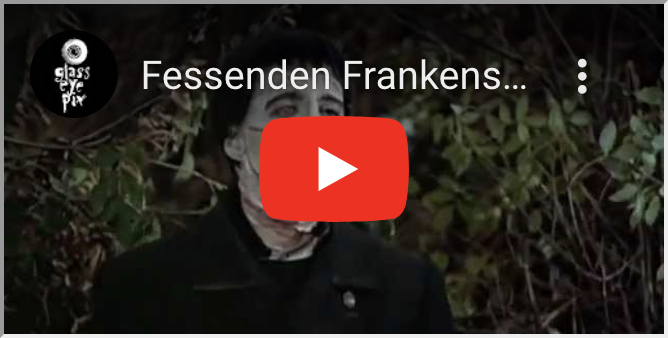
Fessenden Frankenstein Mashup 2019

Fessenden inserts himself into the Frankenstein canon
with this update to his 2012 
mashup of 25 Frankenstein Films,
now including images from DEPRAVED.

September 13, 2019
Share:
Facebook Twitter Email

DEPRAVED now playing IN THEATERS and on VOD

MOVIE PICK
fun, scary, and tragic”
—L.A. Weekly

“thoroughly modern, utterly disturbing …
but there’s real heart and empathy here too.”
—Kimber Meyers, Los Angeles Times

“American indie horror king Larry Fessenden is just as much a pulp fiction aficionado
as he is a neo-gothic romantic: his doomed heroes and sorrowful monsters
are all messy, small people whose apparent sense of compassion
is often dwarfed by their titanic egos and their general cosmic insignificance.”
—Simon Abrams, Roger Ebert.com

“If Mr. fessenden had a gospel to preach it would be about
the virtues of low-budget, intellectually rigorous, topical, mayhem-rich movies.
Depraved is a perfect example… delightfully gritty, sometimes gruesome…”
—John Anderson, The Wall street Journal

“Builds empathy for its exploited creature.
Beginning in lovemaking and ending in loneliness,
the movie has an unexpected poignancy”
—Jeanette Catsoulis, New York Times

“Moving and frightening and exciting in its intelligence”
—Michael Gingold, Rue Morgue Magazine

“serious but not pretentious”
—John DeFore, The Hollywood Reporter

“a triumphant piece of outsider cinema
which will sear itself onto the consciousness like Promethean fire.”
—Jenny Kermode, Eye for Film

“diagnoses the rot of our era through
the shifting personalities and power dynamics of solipsistic men.”

—Steven Scaife, Slant

“CERTIFIED FRESH”
—Rotten Tomatoes

FIND A THEATER OR STREAMING PLATFORM NEAR YOU

September 12, 2019
Share:
Facebook Twitter Email

Fessenden talks filmmaking in Talkhouse article

Musings of a Filmworker: As his latest opus, Depraved hits theaters,
indie horror maestro Larry Fessenden takes a moment to remind
himself exactly why he makes movies.

Read Full Article HERE

September 12, 2019
Share:
Facebook Twitter Email

NY Times: DEPRAVED is Fessenden’s “most coherent and visually polished work yet … the movie has an unexpected poignancy.”

Henry (David Call), the doctor in Larry Fessenden’s “Depraved,” isn’t actually called Frankenstein, but he’s the contemporary equivalent. A onetime Army surgeon, Henry suffers from post-traumatic stress disorder and a maniacal need to make positive use of his harrowing experiences. What he learned about death, he believes, he can use to create life.

The result of this obsession is a bundle of stitched-together body parts known as Adam (Alex Breaux), whose brain we meet while it’s still inside the skull of its about-to-be-murdered previous owner. That organ’s memories — often surrounded by bright bubbles of light, as if trapped in a lava lamp — help bond Adam to his creator, whose battlefield flashbacks are equally destabilizing.

In time, their relationship grows quietly touching; yet if Henry’s motives seem pure, those of his cynical business partner (Joshua Leonard) are anything but.

Shot in just 24 days in Brooklyn, N.Y., “Depraved” updates Mary Shelley’s classic tale with a coating of wartime trauma and medical-breakthrough profiteering. Making the most of his limited budget, not unusual for the prolific Fessenden, he has produced possibly his most coherent and visually polished work to date. The makeup effects and lead performances are excellent, and Fessenden’s signature cheek (two strip-club employees are called Stormy and Melania) never tips into silliness.

Though overlong and leaning predictably on old-school horror setups — like the beautiful barfly (this one is played by Addison Timlin) who trustingly toddles home with the monosyllabic weirdo — “Depraved” builds empathy for its exploited creature. Beginning with lovemaking and ending in loneliness, the movie has an unexpected poignancy: At the end of the day, it seems, all a monster really wants is a girl of his own.

Read Full Review HERE

September 11, 2019
Share:
Facebook Twitter Email

DEPRAVED coming to theaters Friday the 13th!

September 11, 2019
Share:
Facebook Twitter Email

SLANT: “Fessenden diagnoses the rot of our era”

Review: Depraved Views Modern Society Through the Lens of Frankenstein

What does a Frankenstein figure look like in 2019? According to Larry Fessenden’s Depraved, he’s a guy with war-addled, once-noble intentions set adrift by male ego and shady benefactors. He’s a white man grasping for control in a world coming apart, a cog in a machine who hasn’t broken free so much as changed the machine’s function—from that of war to that of the pharmaceutical industry. The film, Fessenden’s first feature as both writer and director since 2006’s The Last Winter, paints multiple psychological portraits that are sad, angry, and strangely beautiful. It shows us the mind of not just PTSD-afflicted field surgeon Henry (David Call), but also that of his prototypical sewn-together “monster,” Adam (Alex Breaux), and his assistant and Big Pharma bankroller, Polidori (Joshua Leonard).

For much of Depraved, Fessenden’s focal point is essentially the monster’s brain, which starts in the body of a man named Alex (Owen Campbell) before being unceremoniously transplanted to its final container in Adam, whose ghastly scars and stitches betray his unnatural heritage. Aside from vestigial flashes of his former life, Adam is a vessel to be filled with the perspectives of those around him. Fessenden devotes long stretches of the film to that learning process, an enthralling canvas for his usual bag of editing tricks.

As Adam’s brain develops and reconfigures, the screen is covered in green blots, time-lapse constructions, hyperactive movements, montages, and other music video-esque trappings that somehow are never incongruously showy so much as a mesmerizing fit for the material. In Wendigo, such flourishes followed the film’s spiral of supernatural unease, and in Depraved they give Adam’s learning process an odd, hypnotic beauty. Fessenden imposes brain scans and firing synapses over the screen as characters’ voices echo for an effect that compares these parts of the human body to the fingers of tree branches or the forks in a peaceful forest creek. Adam’s thoughts and feelings are natural, even if his existence is not.

His hair grows, his speech patterns diversify, he reads, and we learn what Henry deems important by what he teaches Adam as foundational, or what he doesn’t teach him at all. “Gravity is your friend,” one lesson goes, and then Henry drops a bouncy ball. Adam may not learn how to shake hands until he meets Polidori, but he learns how to play ping pong. In his loneliness, Henry has built himself a buddy, albeit one he may control and whose interests he may dictate. When he teaches Adam about music, he mentions Bach and Beethoven because they’re important, but you sense him skipping to the important stuff, to the music he personally likes. He’s the date who invites you over to tell you about his record collection.

At the museum, Polidori and Adam linger on a self-portrait of Vincent van Gogh, noting the similarity between the painter’s ear and Adam’s, which is discolored and conspicuously sewn on. But Van Gogh cut off his own ear; no one cut it off for him. So who’s the artist in this relationship? Is it Adam or Henry or Polidori, who supplies the body parts and the money and is named for John William Polidori, the writer who both played a small role in the creation of Mary Shelley’s Frankenstein and himself penned “The Vampyre,” one of the first vampire stories? With bad blonde hair and names for strippers including “Melania” and “Stormy,” Fessenden paints him as a Trump-like figure, a talentless bloodsucker.

The comparison is far from graceful. Though Fessenden’s films leave no mistake as to what they’re about, the characters of Depraved feel overly prone to calling out the obvious, ensuring that each name-drop and reference is processed appropriately by the audience. But if, as in the somewhat baggy final 30 minutes, the film’s thematic reach exceeds its grasp, it remains firmly focused on its thesis of Frankenstein as a lens for examining modern society. Throughout Depraved, Fessenden catalogues what personalities and power dynamics have shifted and what hasn’t changed at all. The filmmaker diagnoses the rot of our era through these solipsistic men that pour their prejudices and their insecurities into Adam, an open book eventually read back to its authors with a violence they cultivated themselves.

Read Review HERE