





October 30, 2021
Share:


Listen Now: HABIT appreciation on Frumess Podcast
October 30, 2021
Share:
New York Magazine’s VULTURE on Fessenden’s HABIT
 The Greatest Place to Be a Vampire Was New York in the ’90s
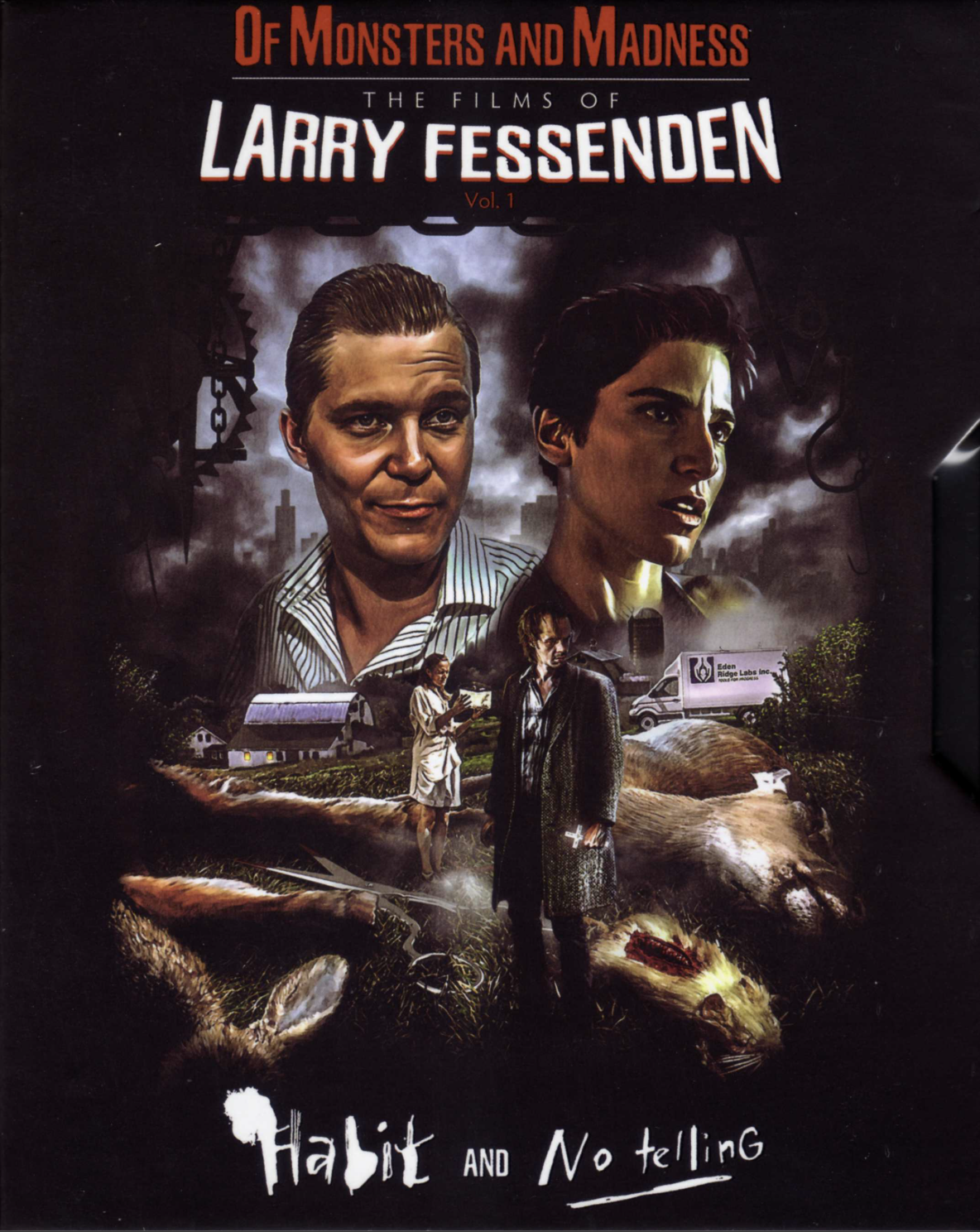
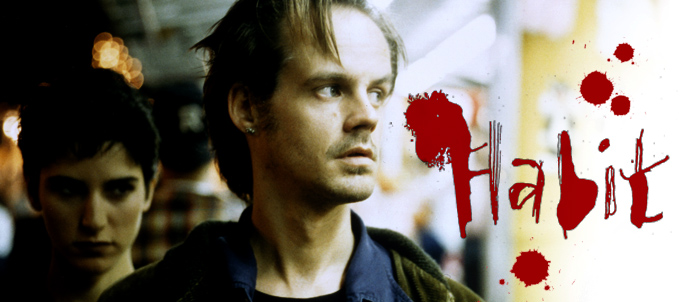
With apologies to Transylvania and Sunnydale, the ideal place to be a vampire was New York City in the mid-’90s. The only proof you need is a cluster of indie movies that came out so close together in 1994 and 1995 that they’re basically an example of multiple discovery. Michael Almereyda’s Nadja, Abel Ferrara’s The Addiction, and Larry Fessenden’s Habit operated under the common thesis that if bloodsuckers stalked the streets of the city, they’d blend seamlessly into the crowd, because resident scenesters like wearing dark clothes and being dramatic just as much as any supernatural figure. Vampires may be larger than life, but in these movies — two of them shot in black-and-white; all of them small, scrappy productions — they’re made to look small. They turn up in mundane places like a party, or at a bar, or on a walk — just a few more eccentrics looking to connect. It’s the city that ends up looking big, a bustling but precarious place where someone’s disappearance could go unremarked upon for days, ascribed to a bender, or a hot hooking, or a bout of depression.
…
Anna (Meredith Snaider), the waif with a pixie haircut that Sam (Larry Fessenden) begins a rebound relationship with in Habit, justifies her refusal to tell him about her job by saying, “It doesn’t really have anything to do with who I am.” It’d be a reasonable rejection of careerism if she were willing to share anything else about herself — like whether, as Sam starts to suspect, she’s draining the life out of him.
…
October 30, 2021
Share:
New York Times article on Vampires wraps with quotes from Joe Dante and Fessenden
Why the Vampire Myth Won’t Die
Bloodsucking monsters are avatars for our cultural anxieties. Especially now.
by Jason Zinoman
Have you heard that the Covid vaccine turns you into a vampiric monster — and that the proof is right there in the 2007 Will Smith movie “I Am Legend”?
This conspiracy theory appeared online last year and spread so widely that Reuters actually ran a fact check debunking it (and clarifying the plot). One of the screenwriters of the movie also felt compelled to tweet that it was fictional.
While such ludicrous disinformation may seem peculiar to the social media era, it’s also a throwback to the origins of our most famous monster.
 No, the first vampires did not appear in books or movies. They weren’t debonair Transylvanian counts or good-looking, disaffected teenagers. Rooted in folklore, they were symbols of epidemics — and a plausible explanation for disease, at least for the time.
…
To scare audiences, artists must adapt. Fanged Europeans don’t terrify like they once did, but contagion does. As societal fears become oriented around the pandemic, what will happen to the future of the vampire?
Joe Dante, a veteran horror director, speculated that we have so much more to be scared of today than in recent years, both politically and medically, that “it may be difficult to go back to the purely supernatural approach.” But Larry Fessenden, who starred and directed in one of the best vampire movies of the 1990s, the intimate New York indie “Habit,” sees new opportunities for horror.
“The pandemic has heightened our fear of each other, of infection and contagion, invisible droplets delivering a cataclysmic blow to our physical beings, leading in turn to an atmosphere of deep mistrust and isolation,” he wrote in an email. “And always, there will be those who don’t believe the monster even exists. I think a wave of vampire stories that captures a claustrophobic preoccupation with death and paranoia may be filling our screens next.”
Take a deep-dive into Zinoman’s article at The New York Times

GEP fans will know Jason Zinoman
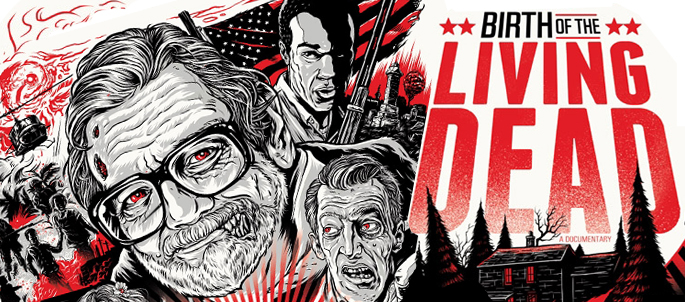
from his interview in Rob Kuhn’s documentary The Birth of the Living Dead
and we can’t recommend Zinoman’s book “Shock Value” highly enough!
October 29, 2021
Share:
FANGORIA: Watch This Exclusive Clip From THE SPINE OF NIGHT
Watch an exclusive clip from Fangoria.
THE SPINE OF NIGHT unspools in theaters and online TODAY!
Check your local listings!
Check your local listings!
From Fangoria: Roaming about movie theater lobbies and auditoriums during this festival season, it has been impossible not to encounter a multitude of movie-goers excitedly asking whether or not one has seen The Spine Of Night. Something lights up within them as they liken it to favorite pieces of childhood. The animated feature takes place in a magical world, ancient dark magic has fallen into the wrong hands, and so a band of heroes from across an array of cultures and eras must join together to defeat the evil forces and restore balance in the world. Tolkien fans rejoiced, basking in the quest, and fans of hand-rotoscoped animation (the same technique employed in the 1978 The Lord Of The Rings animated feature), joined in equally celebratory praise. The feature touts an all-star cast, including Lucy Lawless, Patton Oswalt, Joe Manganiello and Larry Fessenden as The Prophet Of Doom. It’s ultra-gory with an array of characters spanning from different fantastical realms, which makes for some really great Halloween costume inspiration here.
October 28, 2021
Share:
TALES DISPATCH: Speredakos on Edgar Allan Poe, Fessenden on sax
During the TALES 10th anniversary Bash October of 2020, hosted by The Pale Men, McQuaid and Fessenden, longtime TALES thespian and man of letters John Speredakos insisted on reading Edgar Allan Poe’s The Masque of the Red Death. But, pressed for time, we only let him read excerpts, promising to properly pay homage to Poe in another setting. When John suggested a sax and vocal reading of Poe as a stand-alone recording (“Sax of the Red Death”), the idea of TALES FROM BEYOND THE PALE “readings” was born: unabridged readings of literature with a musical accompaniment.
John Speredakos (selection and reader)
Halloween and Poe. The two have become inseparable. I grew up adoring the language of Master Poe, the extraordinary and unique vocabulary that sent chills and shudders regardless of whatever he was describing. It was the WAY he described it- somehow familiar and exotic at once, redolent of all matters of the crypt, of the ghastly, of the macabre. And his poetry! My God, his poetry. And not just in The Raven, Annabel Lee, The Bells, The Conqueror Worm, To Helen, but woven throughout his prose like a snake through Medusa’s hair. The opening lines of The Fall of the House of Usher are as evocative a piece of poetry as anything written in the 19th century. The reader is caught up in the cadence without even realizing it, and hopelessly compelled to read on and share this mad journey into Roderick Usher’s bizarre world. But unlike in The Cask of Amontillado and The Tell-Tale Heart your narrator, your guide- your only link to sanity and stability- is NOT insane. He provides a witness, a window through which to view the madness, and it’s even more horrendous given the seeming normalcy of our guide. The contrast shows the madness more acutely.

Which brings us to The Masque of the Red Death. Poe’s shortest gothic Tale, it manages to pack an unforgettable punch through the sheer narrative drive and transcendent power of his imagination. Very little actually occurs in the tale. A plague ravages the countryside, The Duke Prospero invites his minions to a formal masque; they are locked inside. There is exactly one line of spoken dialogue. And the castellated abbey he describes in such detail sets the stage for a scene of shocking horror. But WHERE it occurs, HOW it occurs and the gripping inevitability of its unfolding, are etched with such glorious specificity that the story lodges in the deepest recesses of the psyche. If ever a Tale begged to be read aloud it is this one. To let Poe’s language wash over you and seep inside is to be in the grip of a true master.
The Masque of the Red Death has been filmed and recorded many times of course, most famously in the Roger Corman/Vincent Price collaboration. But I’d never heard it relayed with a saxophone accompaniment. It struck me as a potentially powerful device, as the sax is capable of deep, sonorous tones, and jangly, cacophonous, abrasive, discordant bleatings. Just the range the Tale needed. When the clock strikes out and the revelers are forced to stop and reflect before resuming their gaieties, the sax could provide the necessary punctuation. As Clarence Clemons remains unavailable, a sax player needed to be engaged. Enter Mr. Larry Fessenden. Larry’s sax has been used sparingly in prior Tales, I thought this might be a perfect venue for more exploration: language and music winding together to create a soundscape that would expand the impact of the reading, and underscore the drama.
And a final word about the relevancy of Masque. Given what we’ve all endured in the last year, it’s shocking to realize this was written 179 years ago. Poe’s world was shaped quite literally by blood- his Mother, step-Mother, brother and wife all died at young ages from, essentially, consumption. The redness of blood he alludes to in the opening of Masque was a color he was familiar with from birth, it stained him in a way most of us can’t appreciate. Until now. Now we’ve been reminded again that our mortality and our frivolity go hand in hand. The Red Death is still out there, waiting to crash the party. We ignore it at our peril. And our Prince Prosperos would be wise to recognize the fact, and prepare.
Enjoy the genius of Poe, and the double-edged joys of Halloween.
Larry Fessenden (saxes and percussion)
I played the score by recording while listening to John’s reading. I had no preconceived idea and once I found a pattern I might double it, often without listening to the original line: I wanted a dissonant off kilter sound. I have always been inspire by Michael Nyman’s use of saxophones in a more orchestral setting as he did in several scores for Peter Greenaway’s movies. More recently I have enjoyed listening to Colin Stetson, who Glenn McQuaid had alerted me to some years ago; imagine my delight when I heard Stetson on the Hereditary score. Throughout my process I hoped to create space for the words to resonate while still building a sonic nightmare to enhance the text. Success is in the ears of the listener. Happy Spooktober.
poster by Brian Level
October 28, 2021
Share:
TALES FROM BEYOND THE PALE The Podcast — Episode #49 “The Masque of the Red Death”

Episode #49 “Masque of the Red Death”
written by Edgar Allan Poe
a Tales from Beyond the Pale READING
selected and read by John Speredakos
saxophone score by Larry Fessenden
mastered by Glenn McQuaid
posted October 28 2021 • poster by Brian Level
for more TALES physical media, info and Swag, visit
www.talesfrombeyondtheplae.com
October 26, 2021
Share:
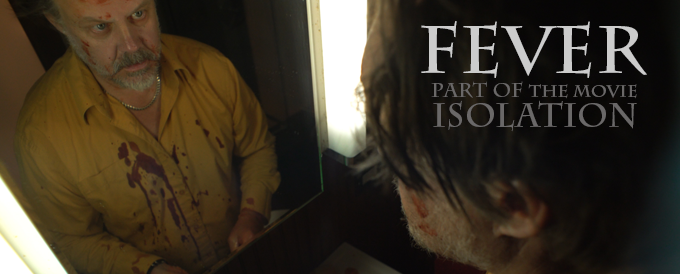
Pre-Order ISOLATION featuring Fessenden’s FEVER, available in one week!

“waiting… waiting… waiting til Nov 2 to see ISOLATION“

October 23, 2021
Share:
Cinemablend: 13 Great And Memorable Music Moments In Horror Movies
Welcome to Rocktober!
An essential part of planning the perfect Halloween party is the perfect playlist of songs to put you in the right spooky mood…

“Looking For The Magic” – Dwight Twilley Band (You’re Next)
The ominous opening piano chords leading into the groovy celebration of unbridled optimism that is Dwight Tilley’s “Looking for the Magic” almost make it a perfect companion to the jet black comedy throughout Adam Wingard and writer Simon Barrett’s You’re Next. Otherwise, the 1977 tune is effectively juxtaposed into two scenes from the brutal and brilliant 2011 home invasion thriller – first in the cold open featuring horror icon Larry Fessenden as Erik Hanson and second when Kelly (Margaret Laney) runs toward Harson’s house (where the song has apparently been playing on repeat this whole time) only to fall prey to one of the masked assassins targeting her family.
Read full list at Cinemablend
October 22, 2021
Share:
setthetape.com: Five Scary Podcasts for Halloween – Spooktober

Five Scary Podcasts for Halloween – Spooktober
Tales from Beyond the Pale
 Last but not least, and sadly on hiatus for now, is Tales from Beyond the Pale, a collection of audio dramas presented in a style reminiscent of old radio pulp tales but also like Tales From the Crypt.
Larry Fessenden and Glenn McQuaid have been creating together since 2010, releasing audio CDs, and performing live until the podcast was launched in 2019. There are forty seven unique and uncanny stories, leaning heavily into black comedy and real scares, that still draw new listeners today and have veterans hoping that there will be more to come.
Mostly written by Fessenden and McQuaid, with some shows featuring guest writers, Tales has featured a number of famous voices lending their performances to these macabre stories, including Misha Collins (Supernatural), Doug Jones (Star Trek: Discovery), Billy Boyd and Dominic Monaghan (The Lord of the Rings), Ron Perlman (Hellboy) and Tony Todd (Candyman).
You could pick any of the forty seven tales to play on Halloween night and we guarantee you will not be disappointed.