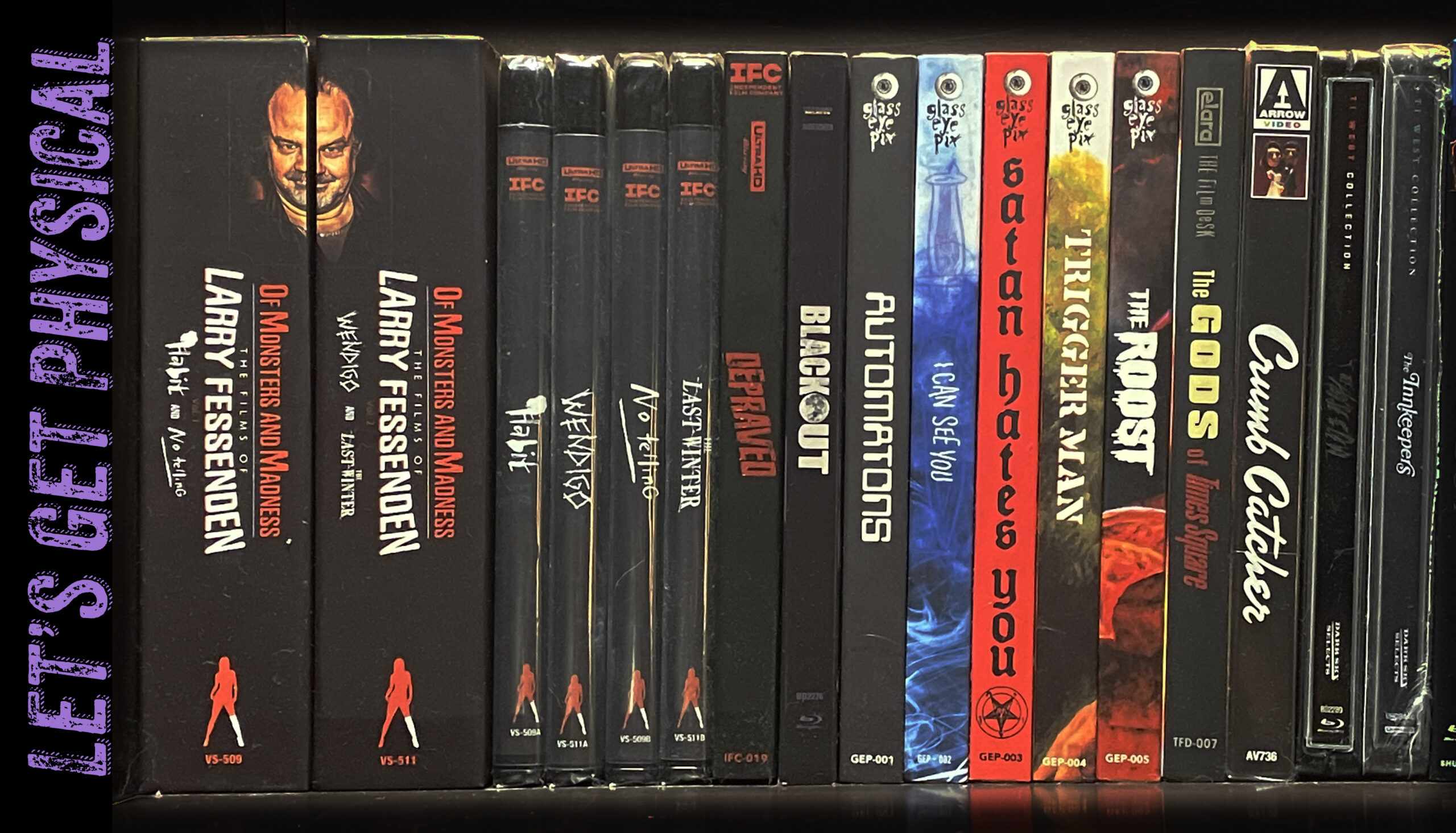
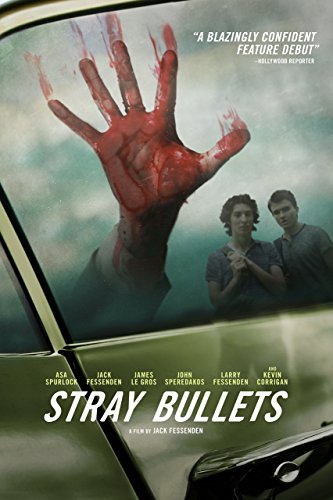
Dread Central posted news about a slew of events coming up for us here at Glass Eye Pix. Ever the busy-body, Fessenden will be hopping around with screenings and appearances this October to celebrate our 30th Anniversary.
Production company Glass Eye Pix, founded by indie maven Larry Fessenden, is celebrating its 30th anniversary this year; and numerous events are planned, including personal appearances by Fessenden, special screenings of GEP films, and lots more.
If you’re a fan of their particular breed of horror mayhem (and if you’re a regular reader of this site, you no doubt are), then read on for all the details!
From the Press Release:
On the delirious, dangerous streets of old New York, as young upstarts with names like Buscemi and Jarmusch rose to prominence, art-horror auteur Larry Fessenden birthed one of Gotham’s darkest icons of sovereign cinema. Called “one of the indie scene’s most productive and longest-running companies” by Filmmaker Magazine, Glass Eye Pix has been operated by Fessenden (THE LAST WINTER, WENDIGO, HABIT, NBC’s “Fear Itself”) since 1985, with the mission of supporting individual voices in the arts.
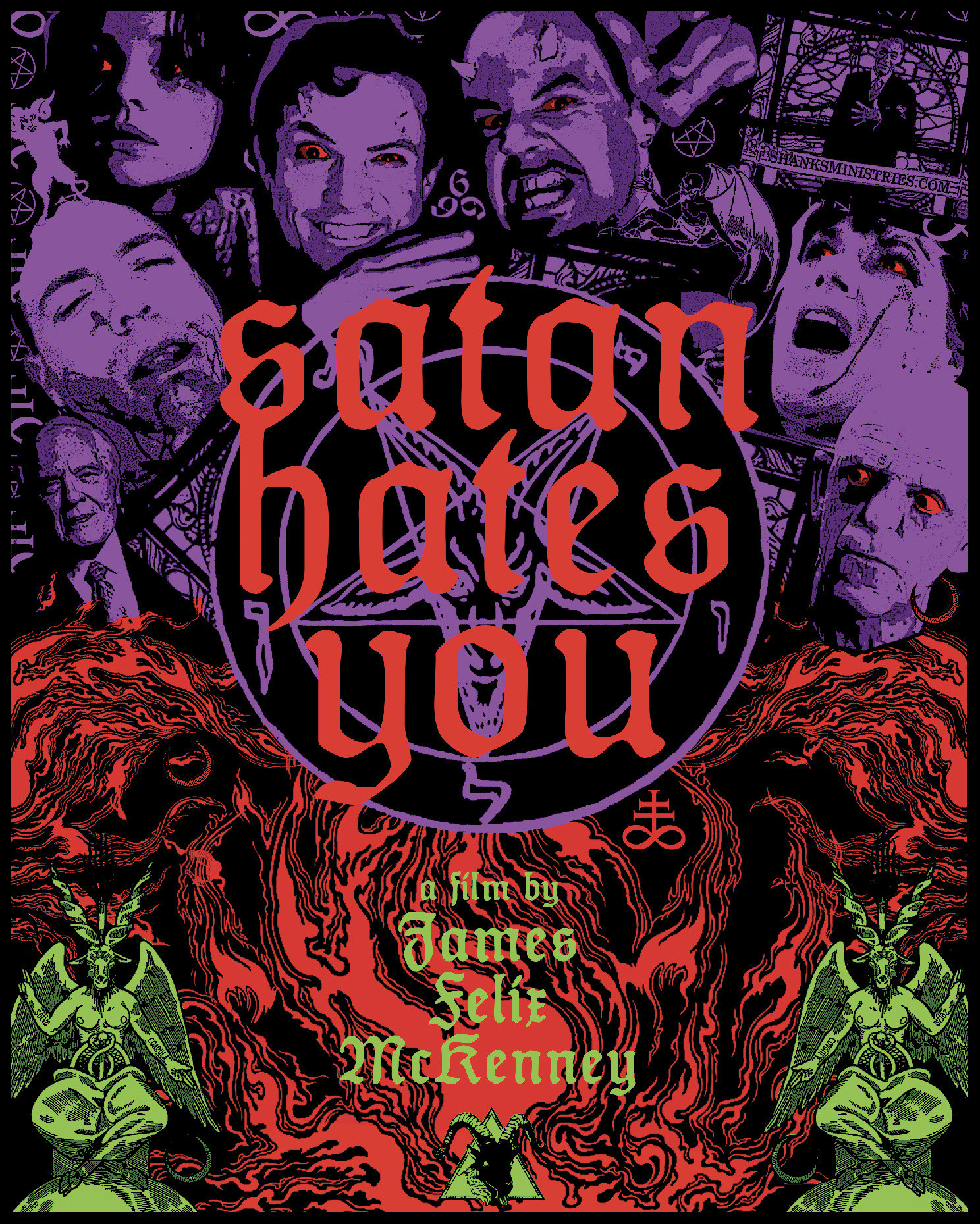
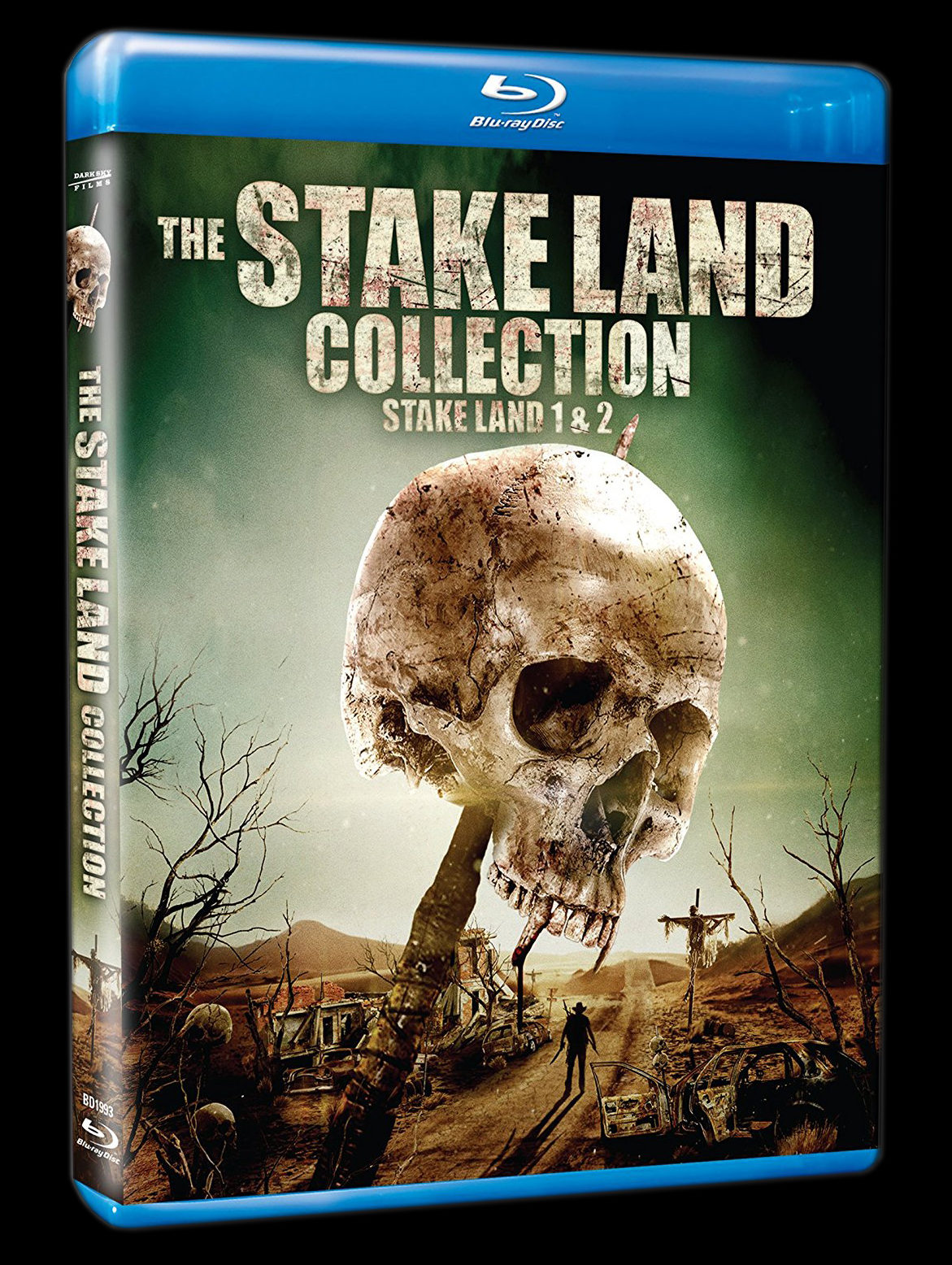
In addition to countless shorts, three seasons of radio dramas, and one of 2015’s most acclaimed, best selling video games, Fessenden’s Glass Eye Pix has been involved with over fifty critically acclaimed films in and out of the horror genre, including WENDY AND LUCY (Kelly Reichardt), STAKE LAND (Jim Mickle), THE COMEDY (Rick Alverson), THE HOUSE OF THE DEVIL (Ti West), BIRTH OF THE LIVING DEAD (Rob Kuhns), LATE PHASES (Adrián García Bogliano), SATAN HATES YOU (James Felix McKenney), LIBERTY KID (Ilya Chaiken), and the forthcoming DARLING (Mickey Keating).
Founder Fessenden, who still oversees operations at Glass Eye, began his career acting and shooting super 8mm shorts, eventually moving on to long format videos, such as his 144-minute caper flick EXPERIENCED MOVERS (1985), the first film to bear the Glass Eye Pix moniker.
1991 Saw the production of Fessenden’s first original feature, NO TELLING, and in 1994 Glass Eye birthed what many consider the seminal NYC vampire film, HABIT. Fessenden’s subsequent award-winning films WENDIGO and THE LAST WINTER inspired The New York Times to opine, “Fessenden approaches the themes and thrills of the classic American horror movies through a determinedly modern approach, as if John Cassavetes had been working for Universal in the early 30’s.”
Since the inception of Glass Eye Pix, Fessenden and co. have run a trans-media operation on a budget, producing movies, documentaries, performance art, comic books, audio dramas, soundtracks, trading cards, action figures, and a dedicated web presence since 1993. The recent success of the Sony PS4 video game UNTIL DAWN, written by Fessenden and longtime Glass Eye collaborator Graham Reznick, indicates that Glass Eye’s aesthetic of authenticity mixed with genre can inspire new generations of fright fans across all mediums.
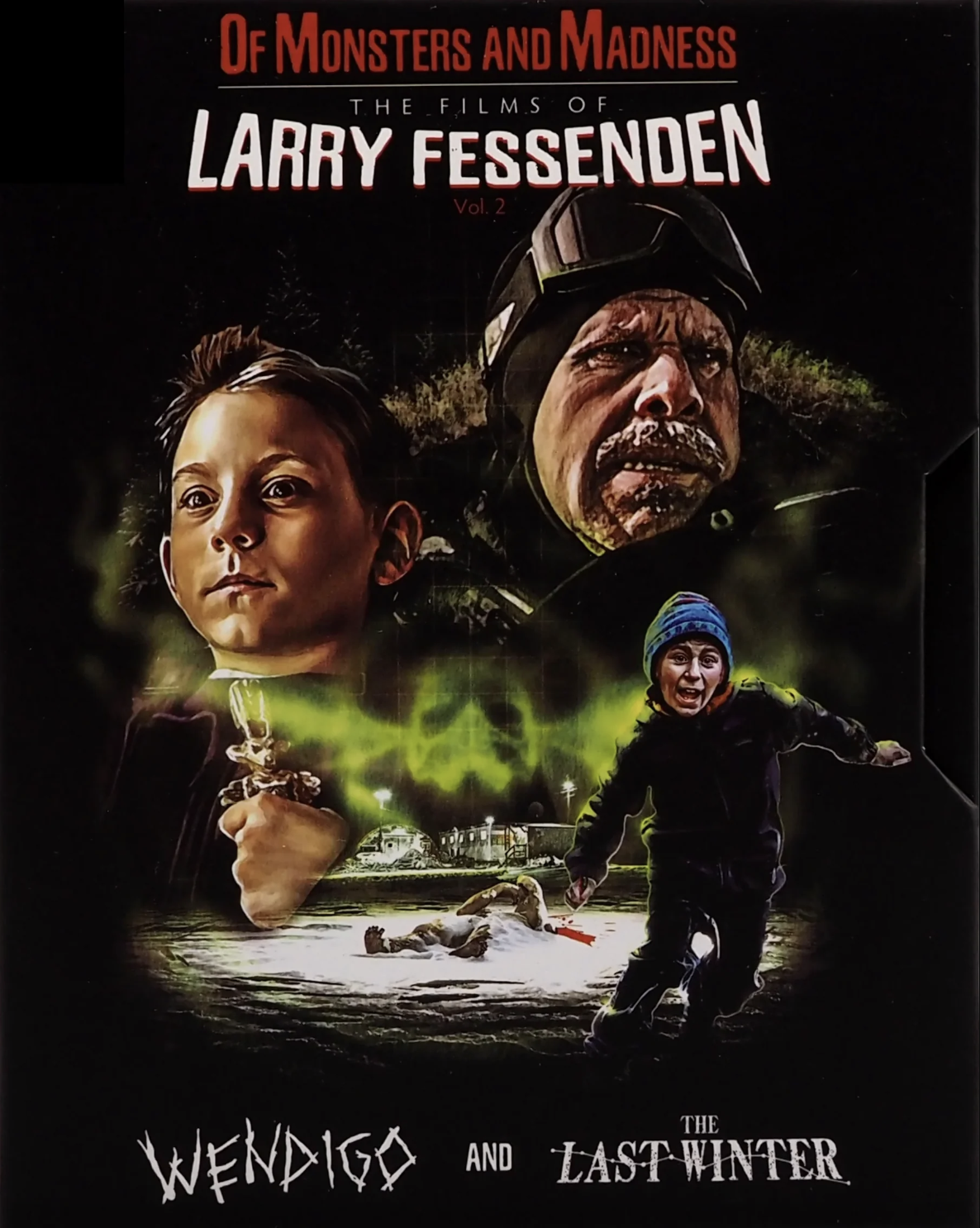
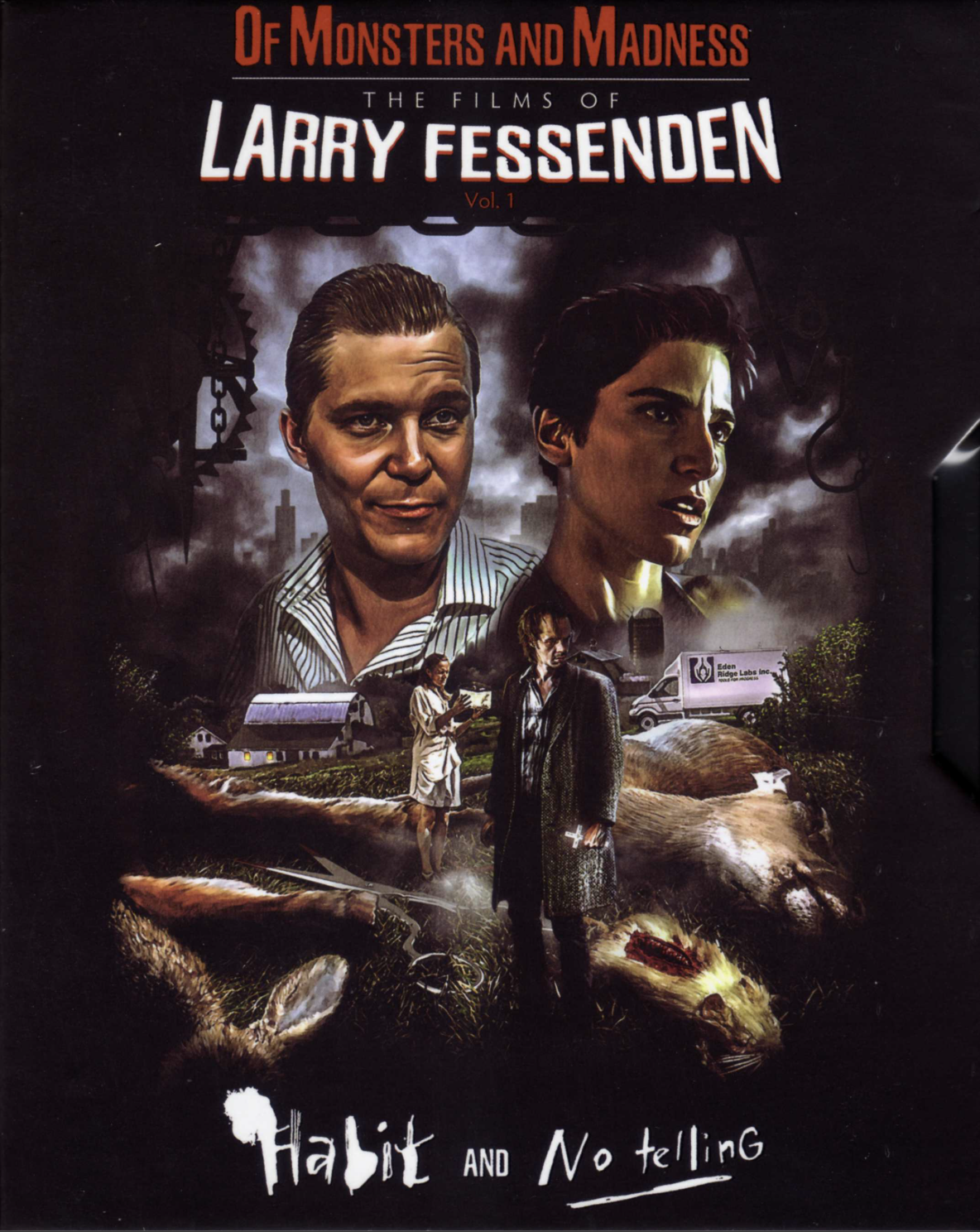
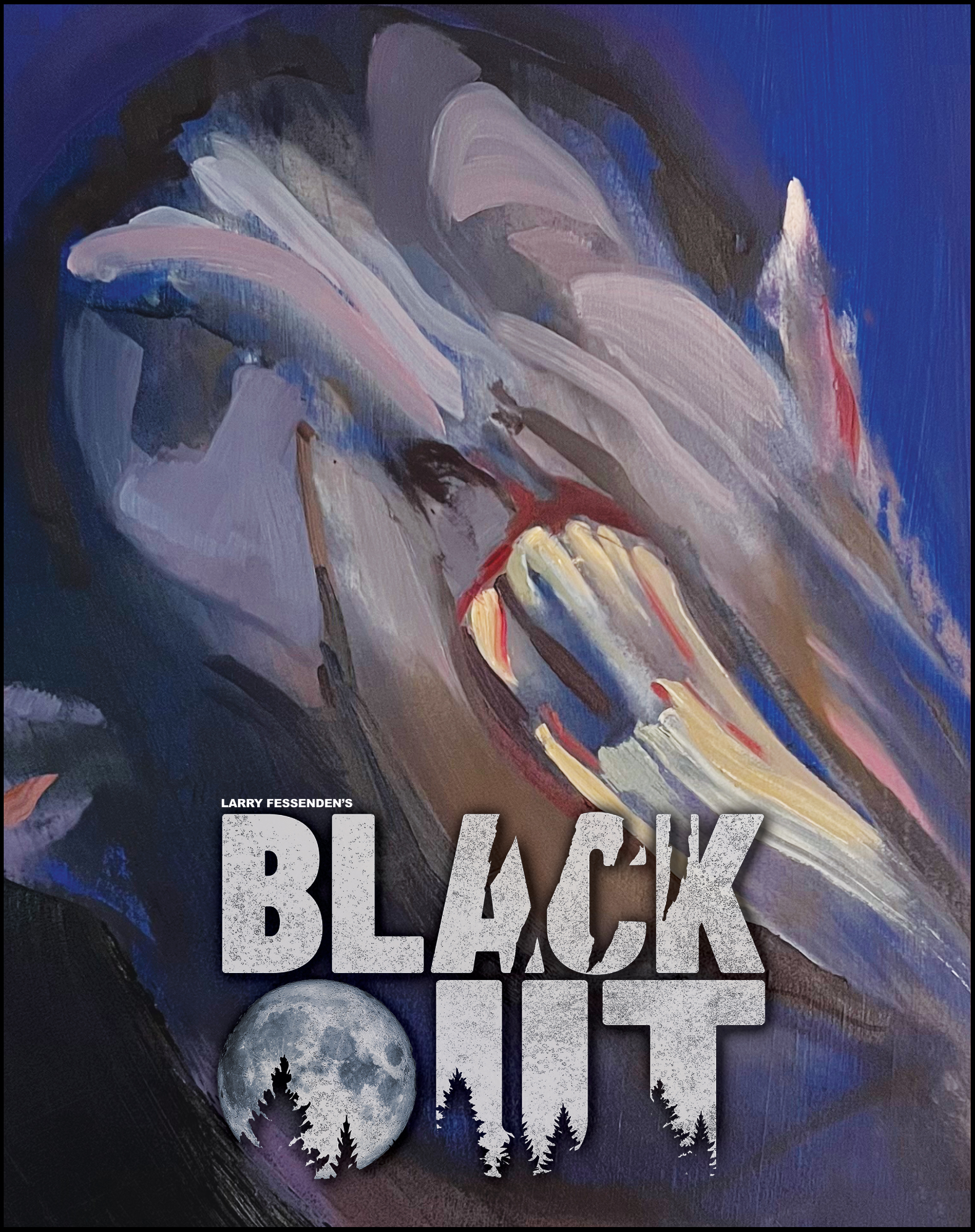
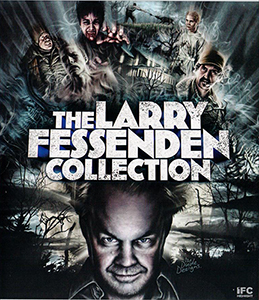
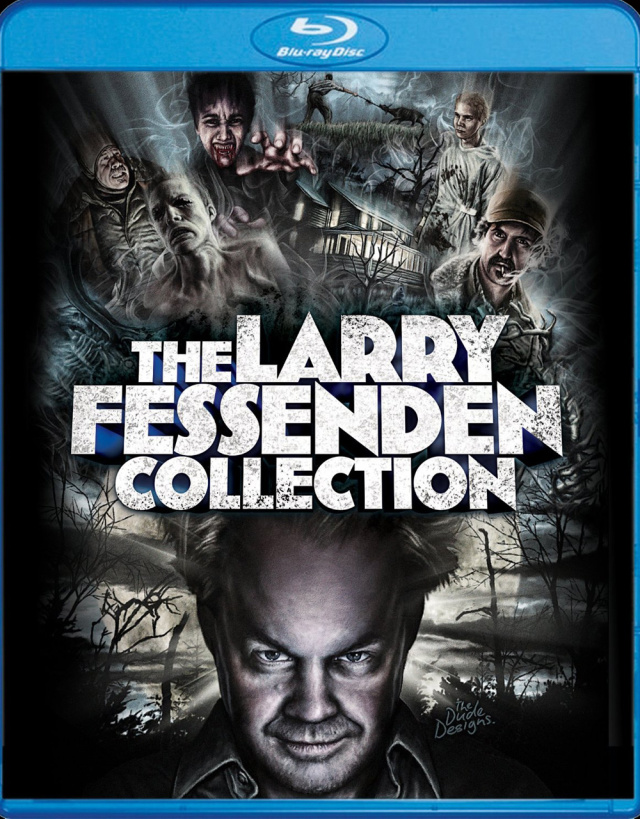
To mark thirty years of fierce independence, Glass Eye Pix is celebrating with a series of special screenings and events this autumn. On October 4th Larry will appear at SpectreFest in Los Angeles for a special screening of HABIT, followed by a conversation, and from October 8-11 Fessenden will appear at New York Comic Con alongside numerous Glass Eye directors, collaborators, and friends. October 20th sees Shout! Factory’s heavily-touted Blu-ray release of “The Larry Fessenden Collection,” containing four of the director’s most acclaimed works remastered in high-definition. Titles include No Telling (1991), Habit (1995), Wendigo (2001), and The Last Winter (2006).
Additional events will be announced in October, including a retrospective at New York’s IFC Center, screenings in New York and Los Angeles, and a special showing of EXPERIENCED MOVERS in the same East Village bar where it was shot 30 years ago.
For the first time on vinyl, the soundtrack composed by Jeff Grace (House of The Devil, In a Valley of Violence).
Limited edition of 500 copies on blood red and purple swirl vinyl. Housed in a deluxe gatefold sleeve with exclusive liner notes from the one and only Angus Scrimm!
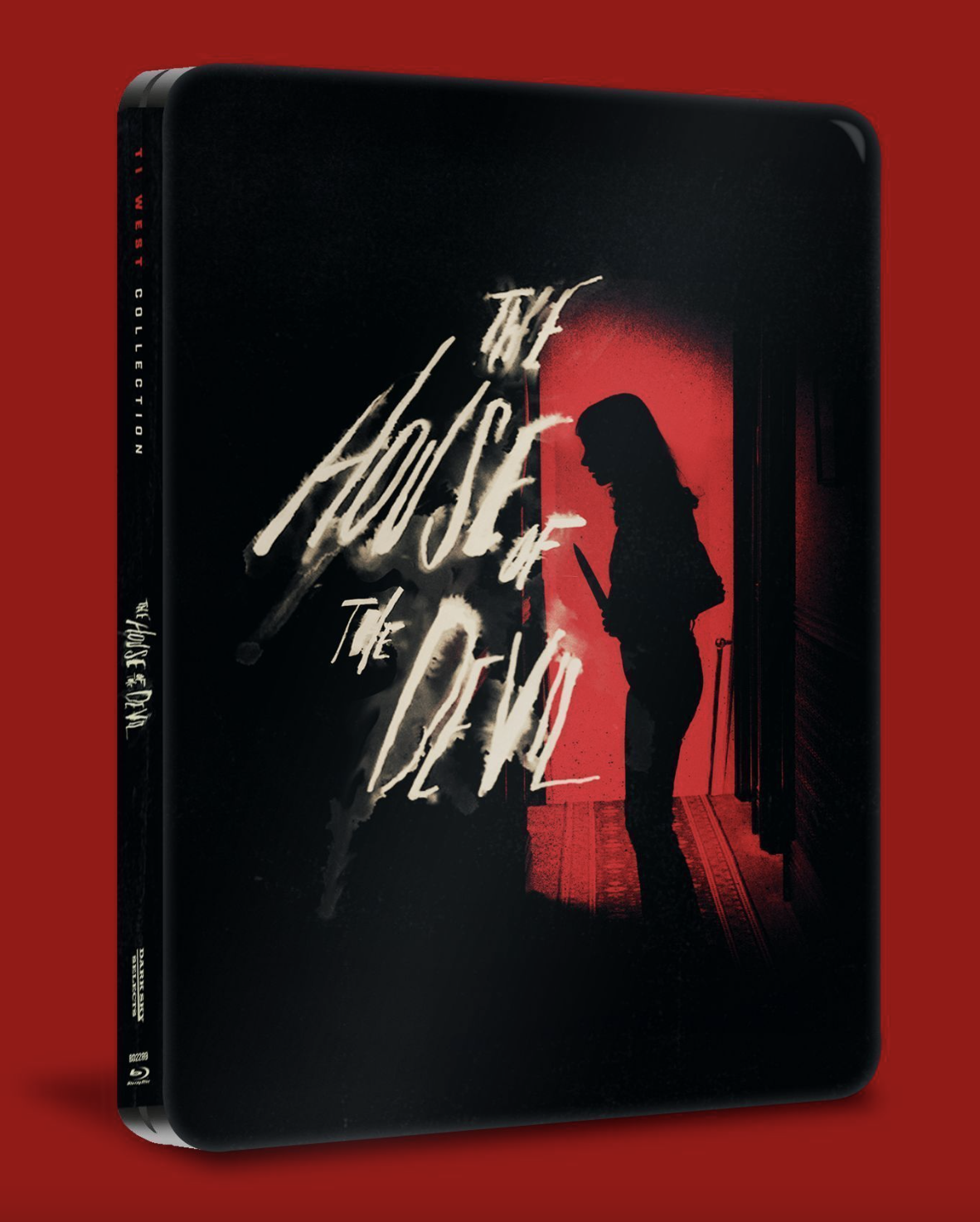
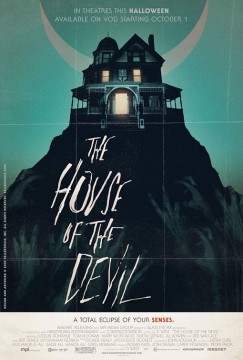
This Saturday, THE HOUSE OF THE DEVIL will screen at midnight at School of Visual Arts as part of their alumni program. Director Ti West and Producer Peter Phok will be on hand for a Q&A following the screening.
As part of After School Special: The 2015 School of Visual Arts Alumni Film & Animation Festival, we are pleased to present a special midnight screening of the cult horror hit The House of The Devil (2009), shown on 35mm film, accompanied by a Q&A with director Ti West (BFA 2003 Film and Video) and producer Peter Phok (BFA 2003 Film and Video). The Q&A will be moderated by current SVA student Amanda DiMartino (BFA 2017 Film).
Synopsis: College student Samantha Hughes takes a strange babysitting job that coincides with a full lunar eclipse. She slowly realizes her clients harbor a terrifying secret. Starring Jocelin Donahue, Greta Gerwig, and Tom Noonan.
The film will be preceded by the world cinematic premiere of The Hate My Day Jobs’ music video Double Vision (2015), by creative director Daniel Giachetti (BFA 2002 Advertising) and alumni from the BFA Illustration and BFA Photography departments.
The House of The Devil is rated R. Parents are strongly cautioned – some material may be inappropriate for children under 17, and children under the age of 12 will not be admitted.
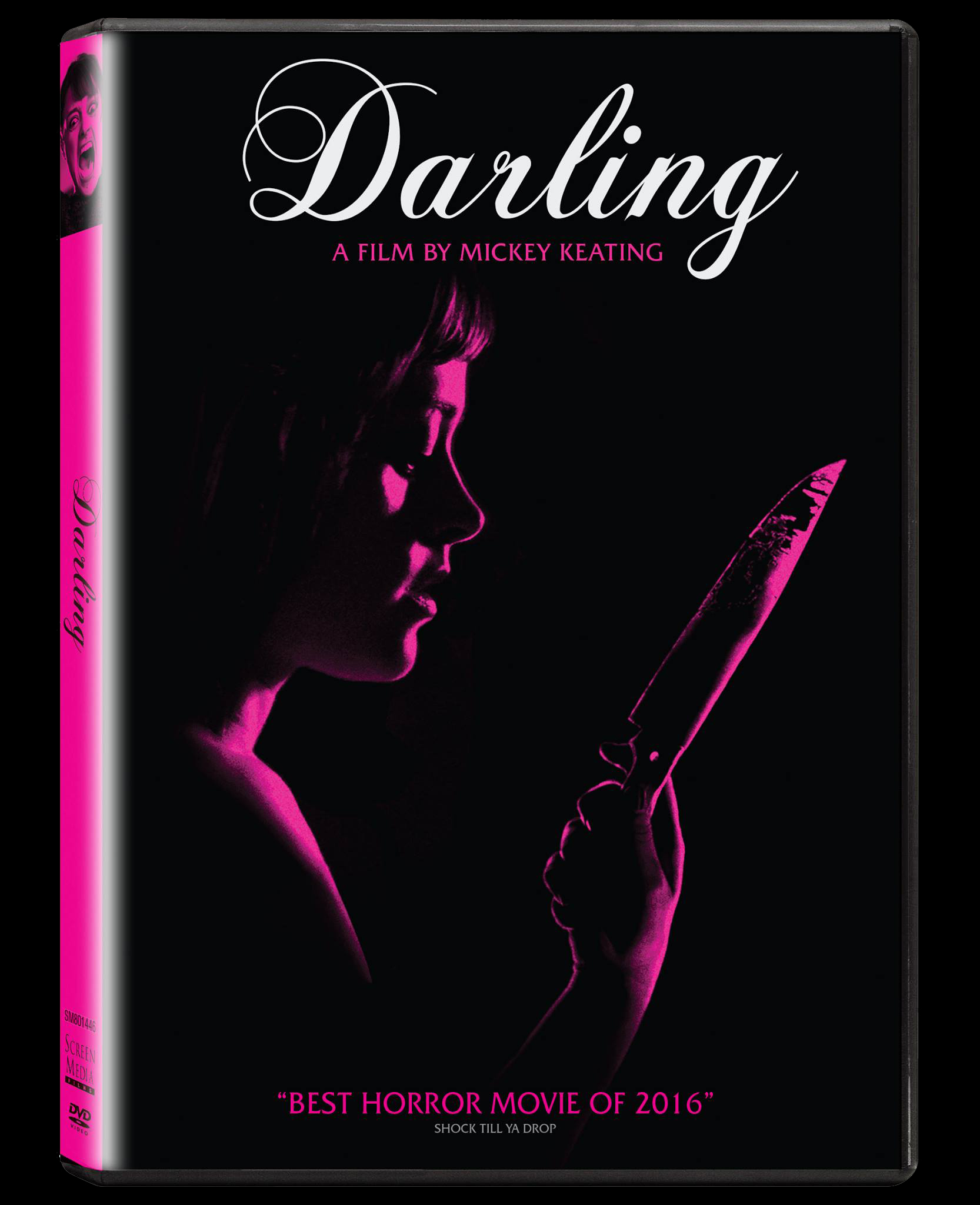
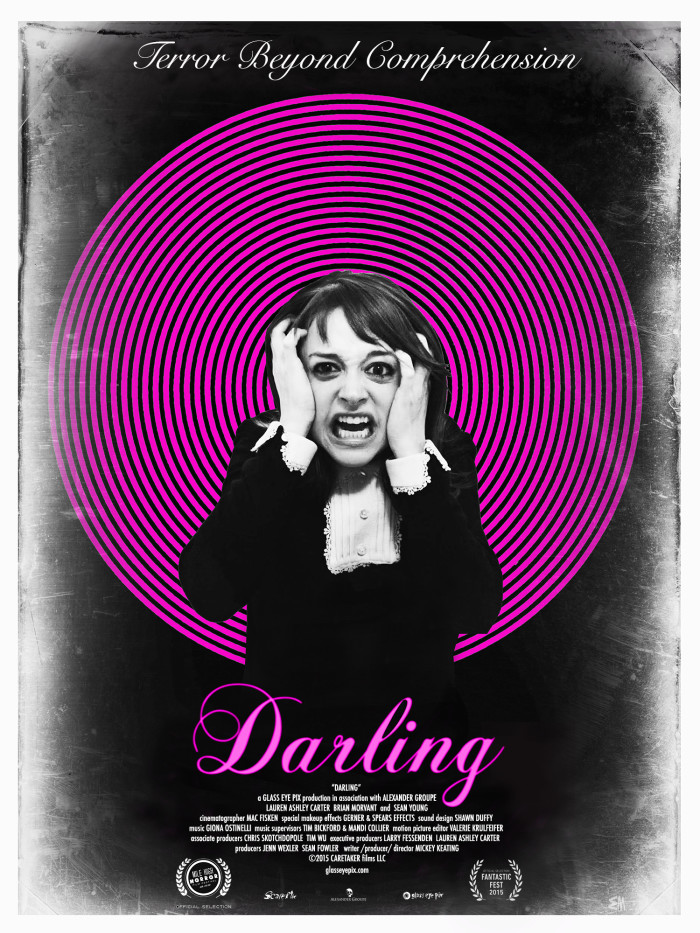
Fangoria’s got a brand new poster for Mickey Keating’s DARLING, which Fangoria describes as:
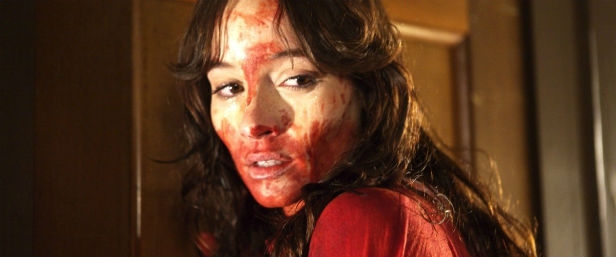
Written and directed by Mickey Keating, whose POD just saw release (see story here), DARLING stars JUG FACE’s Lauren Ashley Carter as a young woman who takes a job as a caretaker in a mysterious Manhattan mansion, where the last person to have the job committed suicide and her own sanity begins to crumble. The cast also includes Brian Morvant, Sean Young, Larry Fessenden, John Speredakos and Helen Rogers, and the film was produced by Fessenden, Jenn Wexler, Sean Fowler, Keating and Carter.
Appearing in three films at London’s Fright Fest, Mickey Keating’s POD, Ted Geogehan’s WE ARE STILL HERE and BODY by Dan Burk and Robert Olsen, ScifInow took notice and posts this extensive interview with Fessenden.
LARRY FESSENDEN INTERVIEW: “HORROR IS A BASTARD GENRE!”
by Jonathan Hatfull, 8 September 2015
We talk to the great Larry Fessenden about his new film Body and why he’s proud to be in horror
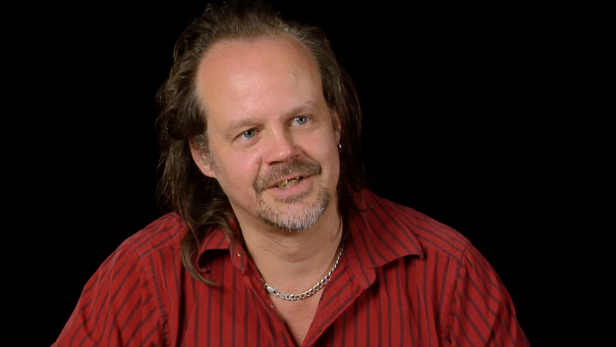
Larry Fessenden is a giant of independent genre cinema. He’s directed excellent films like Wendigo, The Last Winter and Habit, as the head of Glass Eye Pix he’s worked with filmmakers like Ti West, Jim Mickle and Kelly Reichardt, and he’s died in so many films that he’s got his own death reel. It’s a fact that if you see Fessenden’s name somewhere in the credits of a movie, you’ve picked a good one.
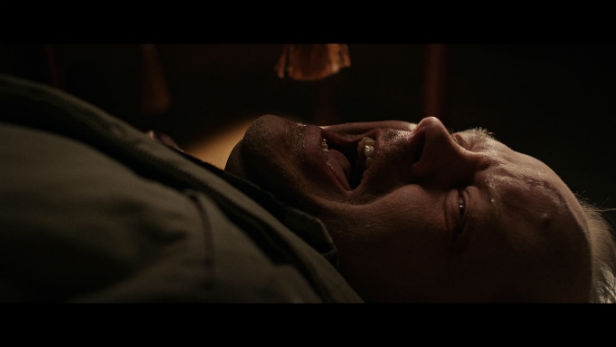
One of the films in which he stars is Dan Berk and Robert Olsen’s indie thriller Body, in which three girls head to a supposedly empty mansion to spend the night before Christmas Eve. When they’re surprised by the caretaker (Fessenden), someone ends up in a broken heap at the bottom of the stairs…No prizes for guessing who.
We were lucky enough to talk to Fessenden about the film, getting killed on screen so regularly, the state of studio genre movies, the challenges facing young filmmakers and why he’s happy to be a horror guy.
Body is one of three films you star in showing at Film4 FrightFest this year, with Pod and We Are Still Here. How do these acting appearances come about?
Well, the horror community is a small one. Mickey Keating who did Pod was an intern at Glass Eye Pix, and We Are Still Here, my friend Ted Geoghegan the director, and he came to me and invited me to be in that. Body, I didn’t know the directors but I knew one of the producers. So it’s a small community, we all kind of know each other from such events as the festivals.
Body’s an interesting part for you. What drew you to a character who’s incapacitated for most of the film?
Well that’s true, but I’m also the title character! [laughs] I think they were trying to emphasise that. “Well, your name is on the poster!” I’m up for a challenge. I find all of that very interesting and I am interested in horror and all of the various things that are horrific, and one of them of course is being paralysed in some way. And the predicament the character is in I found intriguing. What I also liked was that, because of the way the script is written, is I get to play a villain briefly in the flashbacks as they imagine an alternative story. That was my favourite element of the script, this Rashomon way of seeing my character, both as a mad rapist and also truly as the victim that he is in the story.
Things get bad for Larry Fessenden in Body
The three actresses in the film are fantastic as well.
They were great. Well, Helen [Rogers] and I have an awkward scene and luckily we’re pals, and I also know Lauren Molina. So it was a very friendly set in that regard. I think the strength of the movie is the girls and especially in the beginning, before there’s even a cause for tension, I just like their rapport. Certainly what interests me in horror, is to ground the film in something very naturalistic and you really become engaged with these people. And then when there’s a change, when something goes wrong, it’s more harrowing.
I think in the UK my movies aren’t very well seen but I have a box set coming out in America with my old films, and a movie I made called Habit is also slow burn, you barely know you’re in a genre film. It’s just this sense of dread starts to creep in, and of course that what I loved about Ti West’s work and why we forged a bond. I love horror in the place that you get to, but I am less fond of when the credit music announces that you’re in a horror movie. I prefer to creep in, the way it would in real life, so that’s always been what interests me and I think the movies we’re talking about have a little of that.
How do people approach you about appearing in their films? Do they have a character in mind for you?
To be an actor, they want me to be someone who gets killed right away! You can be guaranteed I have a three page arc! That’s just the nature of it. I even have a death reel online somewhere. Soon it will be feature length!
I don’t know, that’s how people think of me, of course I’ve done other types of roles and I enjoy when I’m able to do something a little different. When I was little I wanted to be an actor and I idolised Robert De Niro, when he was young, every movie you could barely recognise him. That’s always been the great romance for me as an actor, to be able to change persona. Now of course when I get on set they always say “Keep the rings, keep the teeth and the funny hair.” So in a way I walk on like my goofy self, but I get to change up a little bit.
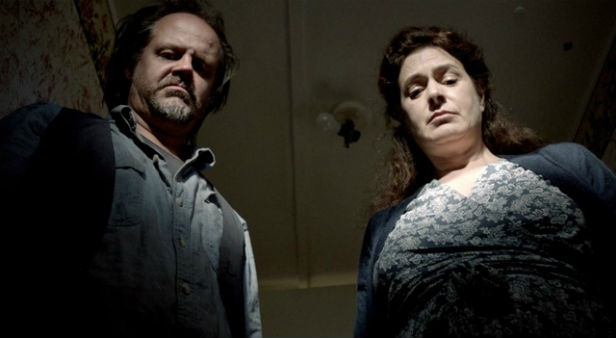
Fessenden and Sean Young in Chad Crawford Kinkle’s Jug Face (2013)
There have been movies where you get more of a character to play. We’re big fans of Jug Face…
I really like that too, a more sympathetic character, and a little more air time. Although I don’t need a lot of air time, it’s really the role and something different. I think my instinct, just as we’ve said that I like to ground a scary movie in a certain reality, I like to find the sympathetic element of a character, even if he’s a villain, especially if he is, because I think that becomes more interesting. When I direct actors I never tell them to play the villain, I always say “Let’s find the vulnerable part of this character, the vulnerable part that may make them in fact lash out.” Certainly the hunter in Wendigo, I tried to find his motivation beyond just being a moustache tweaking villain.
The Last Winter has a lot of that as well, with those characters in a stressful environment.
Right, and I wanted the villain to be charming, which is why I cast Ron Perlman, and then the environmentalist who might be the hero, he’s a little off. So that’s the idea, to blur it so it doesn’t become a political diatribe. It’s sort of about how we all find our solutions in different ways and everybody is just trying to figure it out. But, mind you, some people’s behaviour can become villainous and encroach on others, and on it goes. It’s why I haven’t made probably a straight slasher movie, that’s maybe not my orientation, I’m not quite as interested in that.
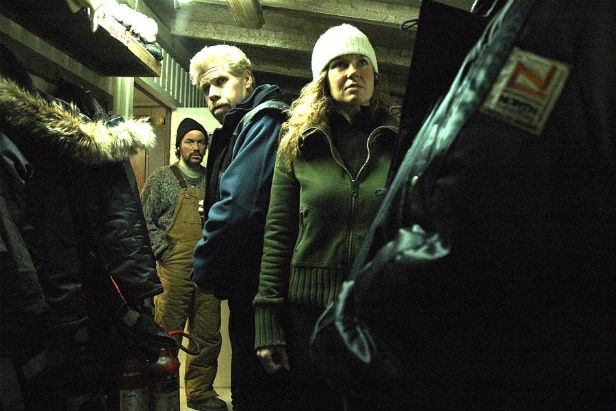
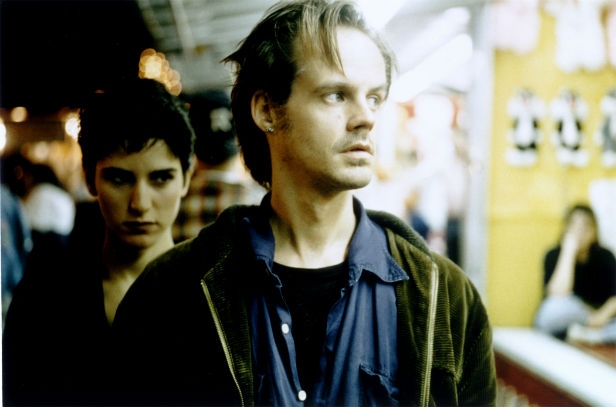
Tensions run high in Larry Fessenden’s The Last Winter (2006)
You’ve said before that you’re more interested in supernatural horrors than human evil, why is that?
I guess I find humanity so atrocious that I don’t need to just make a straight play on that. I’m more interested in evoking a more transcendent element, which is to remind the viewer that there are things we can’t understand and it’s not all human-centric, there’s something else. And I’m not speaking of God in a religious sense, but there’s a sort of otherness. There’s the great writer Algernon Blackwood who tries to address that. It’s a fear of something totally unknown, I think “unknown” is such a fascinating flavour to try to evoke. Whereas just a guy with an axe, obviously that’s terrifying and there are certainly interesting movies to be made, I love Henry: Portrait Of A Serial Killer and I love Psycho of course, but I also like werewolves and ghosts.
I like a movie that plays both ways and you realise how subjective reality is, and frightening because that is where the ghosts can live. So in a funny way, I’m saying I love the supernatural, I like to evoke the supernatural, but very often it might just be living in someone’s head in my films. For example, Habit, he thinks his girlfriend’s a vampire, but he’s a drunk. Maybe he’s lost his frickin’ mind.
Do you remember what the first horror film you saw was?
The very first film I saw was King Kong. I saw it on a TV in a hotel. It made a very strong impression, and there is a movie with a creature but he’s misunderstood and there’s also a great deal of pathos to that as well as the frightening element. And I think that says a lot about what intrigues me in the horror genre. It’s also about the outsider pathology and being misunderstood, and abusing this beautiful creature ,and so in other words there’s a lot more emotion than raw fear that I respond to in these dark fables.
Frankenstein, The Wolf Man, all the old black and white movies, these were the ones that you could get on TV when I was little. I responded very deeply to those stories, and if you think about Boris Karloff playing Frankenstein’s monster, there again it’s a very sympathetic portrayal. And oddly enough Freddy Krueger is a victim, but it’s many layers, sort of a chicken and egg! Who did the wrong thing first! “Now, Freddy, what are you doing to the children, why did they burn you up?” I think some of the new horror icons aren’t that appealing to me but now they’re getting to seem old, so that’s funny.
Freddy and Jason are now what most kids encounter and think of as horror but I grew up on the old black and white movies which were very evocative and spooky and quite honestly, quite strange.
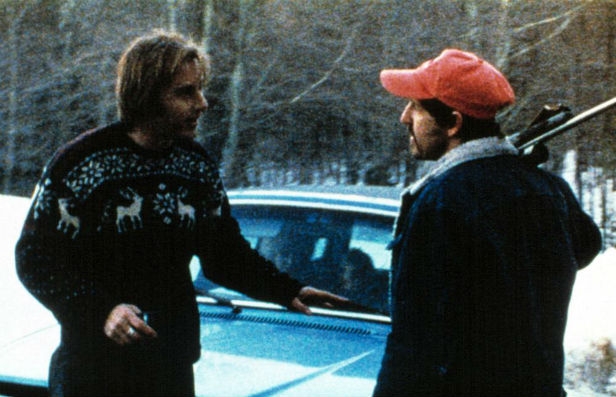
Jake Weber fails to control the situation in Fessenden’s Wendigo (2001)
What kind of stories do you feel drawn to as a director?
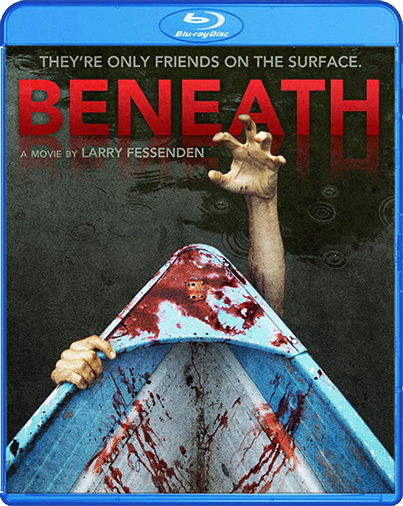
Well of course I do want to direct my own stories. I’ve directed a few things that I didn’t write but usually then I go in and I tinker around. It’s mostly so that I really understand what I’m making this movie about and why. I haven’t worked particularly for a paycheque. I mean I made a TV movie called Beneath about a giant fish, but see that seemed to me to be totally delightful. My own films that I direct are all very personal in a way. As a producer, I’m very proud of the movies that are out of the genre that I’ve supported. Kelly Reichardt, Rick Alverson. It doesn’t all have to be horror, but when I do my own films they drift into horror very quickly! [laughs] Although I have a musical! I do have a musical I would like to make!
For the films you’ve produced, like The House Of The Devil or Stake Land, how do those projects come about?
Somebody emails me. Haha! I have this compulsion to do as much as I can, and I’m saying it out loud because I’ve got to make a new decision about a film, and I’ve got to take care of my own work because in the end that is your legacy. So I’m trying to get back to directing a film and that’s what I’m hoping I’ll be focusing on next. But in the meantime I’m sure I’ll be falling down the stairs or get axed in the head for some low-budget film somewhere! [laughs]
The House Of The Devil (2009) is just one of the Ti West films that Fessenden produced
Do you feel separate from the studio system?
Yes I do. I feel left out in the cold! Because I think I could make a film under the system. I tried to make the remake of The Orphanage with Guillermo del Toro, and that was a great experience until it wasn’t. I had an amazing time writing the script and was handsomely paid, and I got to hang out with Guillermo and we batted ideas back and forth and I was interacting with the studios there, and some of their notes I was resisting, but that’s the same with anything. You always have battles, maybe with your collaborators or maybe with your financial guys. It’s part of the pleasure of it all and part of the frustration, but that’s life.
I don’t have anything against the studio movies, I think we’re in a pretty good place film-wise right now. The indie movies, I’m just going to say Babadook because it’s a recent out of the blue movie, that’s cool, and some of the stuff from Jason Blum has been good but I think it’s getting a little redundant now. What you want is someone to take chances and unfortunately the studio gets hooked into something that’s working and then they’ll repeat that until it becomes a dead horse. You have to suffer through these cycles. Same with the real business, the superhero thing. How many more articles do you have to read saying “The public is getting tired of superheroes?” And yet we have at least seven more years of it being propped up, and it just makes you want to tear your eyeballs out.
Just thinking about Crimson Peak, it does seem that Guillermo del Toro is pretty much the only filmmaker who can make these big budget horror movies at the moment…
Well, thank God for that. I know that Guillermo has tremendous passion for it so let him do it. But when I was little, of course you had Texas Chain Saw Massacre and Night Of The Living Dead, these rogue outsider pieces, but it was also cool that Hollywood was making The Omen, The Exorcist, even though that was by an auteur it was a Hollywood film, and so in a weird way Hollywood has sort of turned its back on the genre and let the mini majors do it like Jason Blum. Well, I guess we have a resurgence of Alien, though Prometheusdidn’t have enough monster in it for me. I can’t quite call that a monster movie yet, let’s see the next one. And then I mean, I may be alone in this but I liked the Godzilla movie, I’m ready to see more from that dude or that design, that approach, so once again, it’s all going on. And look, Jurassic Park was a huge movie! Now, I love those movies because I love those movies because I want to see real dinosaurs running around, so I was happy!
Fessenden wrote, directed and starred in acclaimed indie vampire tale Habit (1995)
Looking back at your early days starting out in the horror genre, do you think the situation has changed for the first-time filmmakers you’re working with now?
Yes. I think what’s interesting is that horror is actually a little bit more accepted in that people are realising it’s a good way to make a film early in your career. I don’t know, maybe I’m saying that more studios like Oscilloscope, which did Body, normally we would associate that with artier films like Kelly Reichardt and so on. And Sundance is now willing to play, if you can follow me, some thoughtful horror.
See, when I was younger I was bitter about Sundance because they wouldn’t play my movies but they’d take really goofy horror movies and play them at midnight and laugh at the genre. Well, I think they’ve matured and now they’re willing to admit that somebody will make a Let The Right One In and that’s actually cinema and that will be taken a little more seriously, so that’s all a good thing. Then you also have the fact that people have access to these cameras now and you can make a movie like Body for very little money. Obviously the elephant in the room is the location that Body is shot in. Because you couldn’t rent or pay somebody to go into that home, but the filmmakers had a connection, so they said to their rich friend can we shoot in your dad’s house, and that’s why there’s this massive production value, but otherwise it’s a tiny budgeted film.
So there’s a lot going on and the one problem is distribution and actually getting paid for your movie, because of course there’s many platforms you can play your movie on, but the accounting with things like VOD and Netflix is very shady and that’s making it hard to sustain a career in the low budget movies. I used to be able to sell these movies for a good enough amount to the video distributor and they needed content. But it’s like the music business, the kids expect this stuff to be free somehow, streaming for free, but how do the artists get paid?
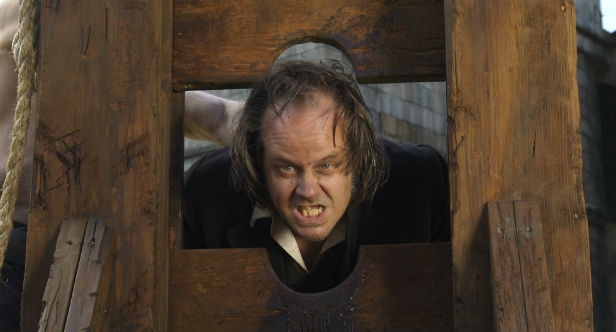
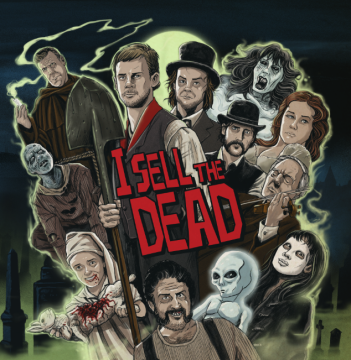
Fessenden facing the chop as Willy in Glenn McQuaid’s I Sell The Dead
You mentioned Kelly Reichardt; Glass Eye Pix produced her films Wendy And Lucy and Night Moves, which are acclaimed art-house dramas. Are you happy to be thought of as a horror filmmaker?
You know what, I’m very proud of it. It’s a bastard genre and I stand by it. I think the world is a frightening place and people should be shocked out of their complacency. Now the irony is, I don’t know that everybody thinks of horror that way, but I think of it as a confrontational genre, a way to scream from the rafters, ‘Look at humanity, it needs fixing, it’s a mess, look at how we treat each other.’ So I use it as a punishing genre! [laughs]
I love it, and I also love the aesthetic of horror, the creepy, the cobwebby cellars and corridors, I like the darkness and I like the night and a big full moon and a creaking tree. So these are actually purely aesthetic things and you can almost not quite put your finger on why you’re like that. I think it’s literally psychology or something dreadful happened when I was a kid that I don’t remember [laughs].
But at the same time I do resent not being taken seriously as a filmmaker because you’re involved in the genre. I think that’s just an oversight of the culture and so it will be. People actually are afraid of death and they’re a little wary of people who are constantly harping about death [laughs]! So you’re a little bit like the weird guy in the room, let’s face it, and that’s like being a punk rocker, it makes me feel OK, I don’t mind. I don’t know that the pristine glowing happy smiling society is particularly accurate to our experience in life so I’d rather call it like it is: a bit of a scary place.
What have you got coming up?
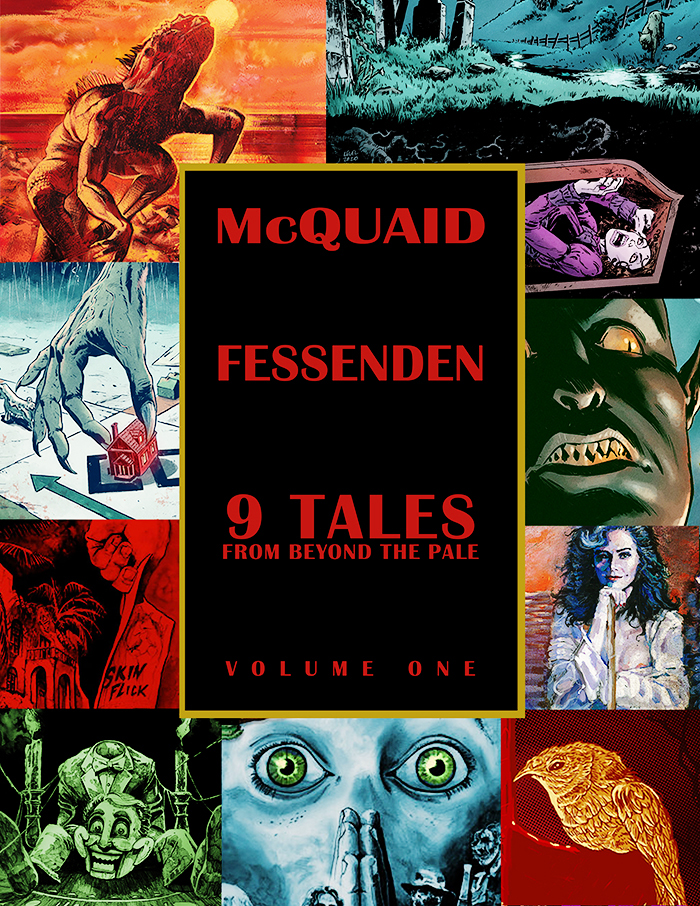
I do have a box-set coming out in the US, I don’t know if it’s all regions but it’s a great honour to be celebrated in that way. I also have a series with my comrade Glenn McQuaid of audio dramas called Tales From Beyond The Paleand we have a new season coming out. And those are really cool. You can get them on iTunes and there are also beautiful box-sets of CDs. So we have all that coming and there’s a lot of retrospectives and stuff happening because this is the 30th anniversary of Glass Eye Pix. So I’m riding on that wave for a little while and then I’m hoping to get back in production in 2016.
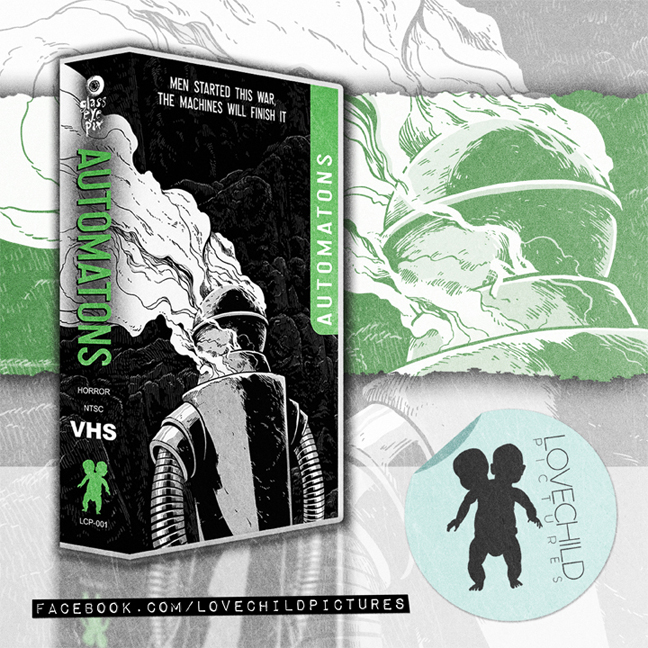
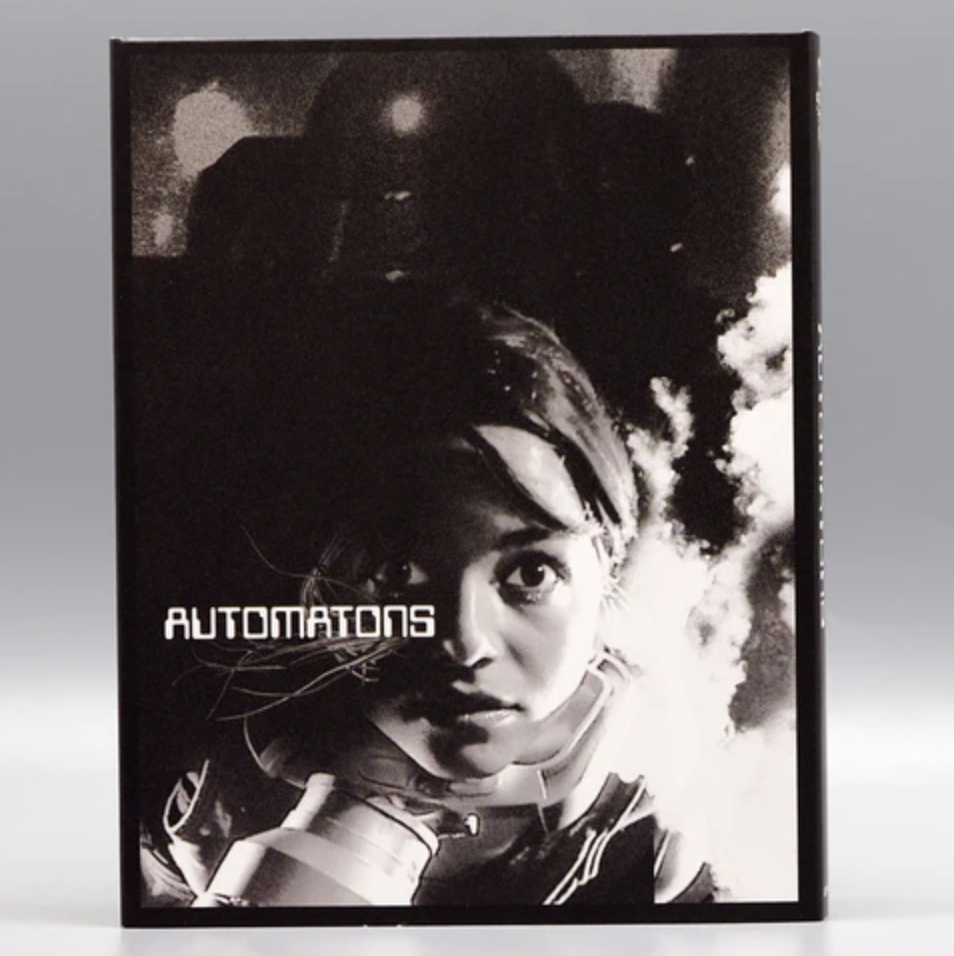
Lovechild Pictures is set to re-release James Felix McKenney’s AUTOMATONS as a special-edition, limited print run VHS. Copies go on sale on October 15th, but if you stop by the Glass Eye Pix booth at New York Comic Con, you’ll have a chance to snatch up an early copy.
From the press release:
Newly established niche distribution label Lovechild Pictures is proud to announce its first in a series of artisanal VHS releases; James Felix McKenney’s dystopian sci-fi opus, AUTOMATONS.
Set in the distant future following an all-out robot genocide, AUTOMATONS follows a lone female survivor, sparring on against all odds with the aid of her mechanical companions.
Lensed in gritty black & white Super 8mm, Lovechild Pictures’ analog presentation enhances the experience of this nostalgia-inspired horror epic, best described as ROBOT MONSTER meets ERASERHEAD.
Produced by Larry Fessenden’s Glass Eye Pix and McKenney’s MonsterPants Movies, AUTOMATONS stars newcomer Christine Spencer (SATAN HATES YOU), Brenda Cooney (I SELL THE DEAD) and genre icon Angus Scrimm (the PHANTASM series). Also featured are Don Wood (COLONIAL HOUSE, HYPOTHERMIA), John Anthony Blake (DOCTOR WHO, PSYCHOMANIA) and Executive Producer Larry Fessenden (HABIT, THE LAST WINTER).
Packed to the brim with bonus content and an original making-of interview zine with director James Felix McKenney, Lovechild Pictures’ AUTOMATONS tape will be available for online purchase October 15th, signed and limited to 50 copies. NYC Comic Con attendees receive an advance opportunity to grab a copy at the Glass Eye Pix booth, where 20 of the tapes will be for sale, limited to one per customer.
“Automatons is bound for cult status and should be dug up in ten years and viewed again — that is, if humanity is still around” – RUE MORGUE
“The movie’s loving attention to light and shade transcends its hermetic setting and meager budget. At times the buzzing static and fizzy backlighting recall the glistening surrealism of the filmmaker Guy Maddin… enormously endearing” – NEW YORK TIMES
“Robot radness achieved! Budgets are for bitches.” – VILLAGE VOICE
Inspired by late-night cable broadcasts of yesteryear’s horrors, Automatons spins a fever-dream nightmarescape that must be seen to be believed.
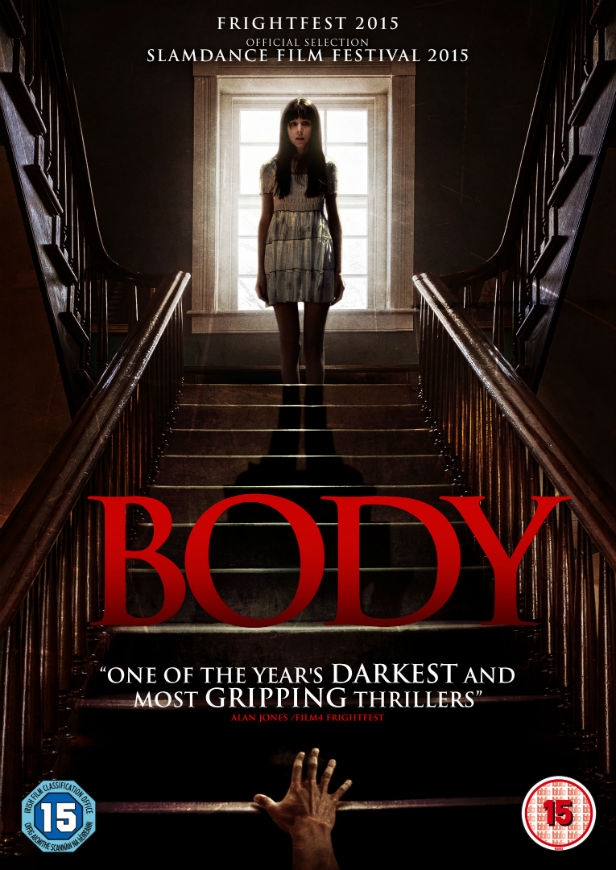
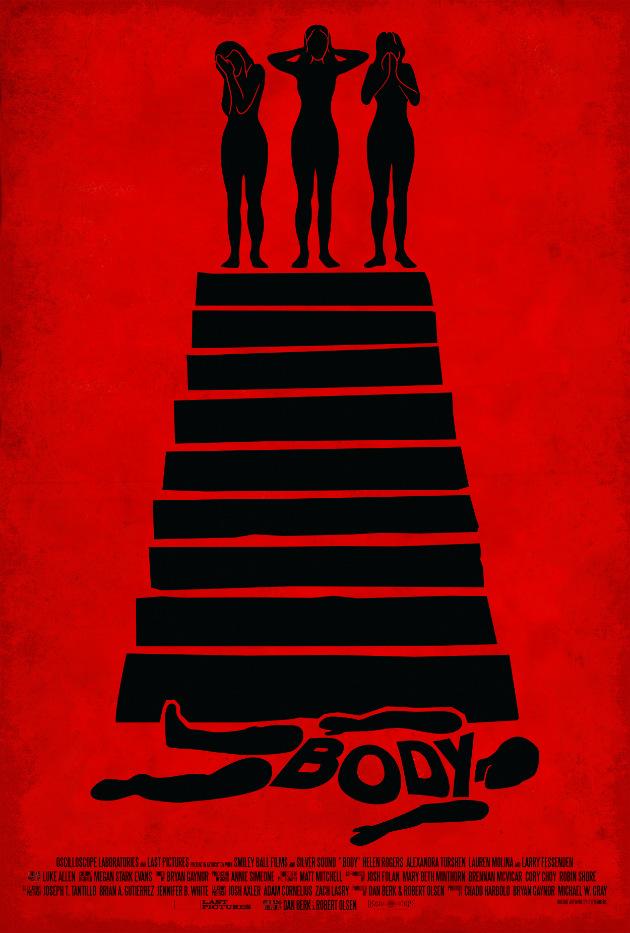
There’s a new, bold poster for the suspense/thriller BODY. Starring Helen Rogers, Alexandra Turshen, Lauren Molina, and Fessenden star, the movie follows three college students as they accidentally end up in a terrifying situation.
A darkly funny and twisted journey taking place entirely on one unforgettable Christmas Eve, Body revolves around a trio of college co-eds whose dalliance with breaking-and-entering goes horribly awry. Sneaking off to a secluded mansion to party, the young girls are faced with dire choices after they unexpectedly encounter the property’s groundskeeper.
Following a freak accident, the girls find themselves entangled in a Hitchcockian nightmare steeped in tension, suspicion, double-crossing, and murder, where no one is to be trusted and a new twist lies around every corner.
Matt Barone, writing for Tribeca Film, spoke at length with Graham Reznick about UNTIL DAWN, the PS4 Horror Video Game written by Reznick and Fessenden.
“Until Dawn gives you a very stereotypical approach and very stereotypical characters and has them do the things you’re familiar with, but then it puts you in control,” says Reznick. “Our players are given a certain amount of control over the characters, which allows you to take a stereotypical character and mold them into something that’s more reflective of you, the person who’s playing. That immediately raises the stakes and makes things scarier, because you’re truly invested in the characters. With each move and decision they make, the game’s characters start to resemble aspects of the player’s own personality.”
THE BEST SLASHER MOVIE IN YEARS? BELIEVE IT OR NOT, IT’S A VIDEO GAME WRITTEN BY TWO INDIE FILMMAKERS
By Matt Barone
The best slasher movies have something that’s much scarier than masked psychos hacking away with machetes: an underlying sense of helplessness.
The horror sub-genre’s strongest entries earn that recognition not only for their inventive kills and memorable killers but also for their characters. As is the case with any horror film, the fine line between watching with sadistic glee and emotional investment is drawn by how much the viewer actually gives a damn about the potential victims. The Texas Chain Saw Massacre‘s invalid Franklin (Paul A. Partain), for example, is so overly performed and unbearably whiny that it’s justifiable to beg for Leatherface to slice the insufferable chatterbox’s portly belly open; Scream’s Tatum (Rose McGowan), on the other hand, is charming, lovable and a good friend to “final girl” Sydney Prescott (Neve Campbell), so watching her get turned into a human pretzel in that closing garage door hurts. And because of that fourth-wall-derived helplessness, there’s nothing the viewer can do to help her.
But what if slasher fans had the power to dictate who lives and who dies? In that empowered scenario, the cocky douche-bro who treats the sexy co-eds like pieces of meat could easily be eliminated, while the kindhearted virgin needn’t die—the viewer could simply make the douche-bro try to hide in an exposed closet rather than run through the wide-open doorway as the killer’s approaching him, and the virgin could do the opposite and see the end credits.
Thanks to modern technology, that kind of slasher movie is now a reality—it’s just not going to be seen in any movie theaters, and it requires a gaming console to be shown on a television screen. Released last week exclusively for Playstation 4, the new interactive horror video game Until Dawn has revolutionized the stalk-and-slaughter movie template popularized by genre icons like Jason Voorhees, Freddy Krueger and Michael Myers.
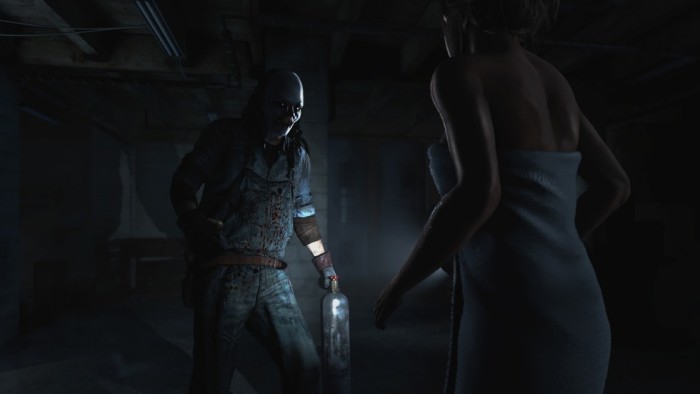
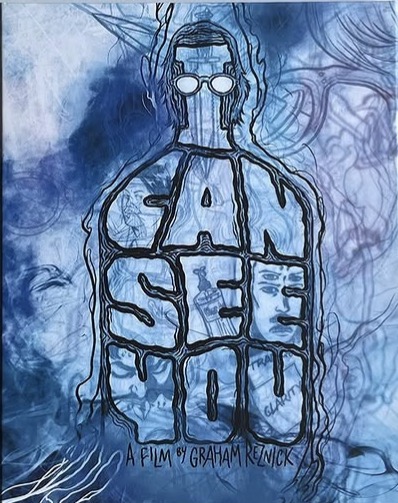
Created by Supermassive Games, Until Dawn is as authentic as any horror game can get, and that genuineness stems from Supermassive’s wise decision to hire a pair of experienced horror filmmakers to write the game’s mammoth script, which, all told, tallied at around 10,000 pages of dialogue. Starting the game’s production in 2011, Supermassive called upon two longtime collaborators who’d never worked in the gaming medium before: Glass Eye Pix founder Larry Fessenden, who’s been a fixture in the independent horror scene and New York City’s patron saint of DIY scares since the late ’90s, and Fessenden’s go-to sound designer Graham Reznick, who’s also a writer-director in his own right. (See: the 2008 indie feature I Can See You.)
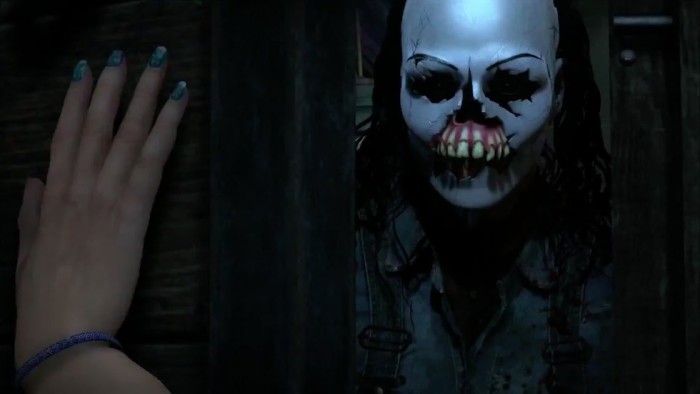
The game’s set-up is vintage ’80s slasher construction: eight young and attractive friends head into a mountainside lodge for a party-filled weekend when they’re suddenly trapped inside its claustrophobic walls as a deranged, mask-wearing madman hunts them down. It’s nighttime, the weather outside is frightful and the damaged electricity makes flashlights and candles a navigation priority. The kids themselves, rendered by putting real actors through facial-capture tech, are also familiar slasher conventions: there’s the beautiful and easily likable Samantha (played by Nashville‘s Hayden Panettiere); the arrogant douche-bro Mike (Marvel’s Agents of S.H.I.E.L.D. co-star Brett Dalton); the party’s fun-loving organizer, Josh (Mr. Robot star Rami Malek); and the somewhat cold-hearted Emily (Nichole Bloom), who’s the antithesis of Panettierre’s Sam.
With its human-looking characters and overall cinematic veneer, Until Dawn is the closest gamers have come yet to living inside an actual horror movie. Split into ten “chapters,” the game allows players to oversee each of the eight youngsters at various times and unfolds a lot like those old Choose Your Own Adventure books. Their actions, whether they’re merely exploring or sprinting at full-speed away from the killer, are interrupted by two next-move options, and it’s up to the player to pick which move to make. In some cases, it’s either “Run” or “Hide”; in others, it’s a choice between fighting back or continue being the hunted.
For co-writer Reznick, Until Dawn was a dream come true that, as a filmmaker, the now-34-year-old storyteller never expected to see happen. He grew up in Delaware as a video game fanatic, gravitating more towards PC games, like those released by Sierra Entertainment, than consoles like Nintendo or Sega. When he wasn’t playing Sierra titles, Reznick was hanging out with his friend, and fellow soon-to-be filmmaker, Ti West, who’s currently one of independent horror’s most acclaimed directors. They’ve remained tight all throughout their careers so far, with Reznick handling the sound in all of West’s movies. He’s been an especially key player in West’s most successful films: the Satanic-Panic-minded ’80s throwback The House of the Devil (2009), the blue-collar horror-comedy The Innkeepers (2011) and last year’s Jonestown-inspired cult thriller The Sacrament.
The childhood pals followed each other to Manhattan for college; Reznick attended New York University’s Tisch School of the Arts, while West went to the School of Visual Arts. The SVA is where West’s relationship with teacher/filmmaker Kelly Reichardt led to him meeting Fessenden, with whom Reichardt was good friends. At the time, Fessenden was all the city’s rage as a result of his critically lauded 1997 film Habit, a clever vampire subversion that appealed to West’s horror-loving sensibilities. Around 2000, West’s newfound friendship with Fessenden led to Reznick befriending the Glass Eye Pix maestro, and the three of them have worked together ever since; all of West’s films minus The Sacrament have been Glass Eye Pix productions. So when Supermassive asked Fessenden to help them flesh out an ambitious new horror title in 2011, Fessenden utilized his younger buddy Reznick’s video game fandom and brought him on as a co-writer.
The Glass Eye Pix duo’s assignment was to bring their filmmaking inclinations and horror expertise to Supermassive’s already-established—internally within the company, at least—Until Dawnuniverse. Fessenden and Reznick were given the “kids trapped inside a lodge” foundation and then left to develop the characters into believable protagonists and ensure that Until Dawn’s scare tactics and genre beats wouldn’t leave horror fans crying foul. “Until Dawn gives you a very stereotypical approach and very stereotypical characters and has them do the things you’re familiar with, but then it puts you in control,” says Reznick. “Our players are given a certain amount of control over the characters, which allows you to take a stereotypical character and mold them into something that’s more reflective of you, the person who’s playing. That immediately raises the stakes and makes things scarier, because you’re truly invested in the characters. With each move and decision they make, the game’s characters start to resemble aspects of the player’s own personality.”
There’s been a genre-specific uphill battle throughout Until Dawn’s conception, though: slasher movies aren’t just out of vogue these days—they’ve become formulaic and, even worse, the opposite of scary. In 1996, Wes Craven and screenwriter Kevin Williamson’s intelligently self-aware Scream laid all of the slasher format’s rules out, laughed at them and then diced them up with Ghostface’s knife, and slasher cinema has never been able to get his ’80s-era, pee-your-pants groove back.
Whereas other filmmakers might have let that reality hinder them, Fessenden and Reznick welcomed the challenge, mainly because video games with Until Dawn’s staggering advancements are completely uncharted terrain for guys like Jason, Freddy and Michael. (The less said about the amazingly bad NES Friday the 13th game here, or anywhere, the better.) “One of the great things about slasher movies is that they involve the audience in ways that’s very unique,” says Reznick. “It’s almost like watching sports, in a weird way. You’re rooting for people or rooting against people in ways that you don’t in other types of films. What Larry and I were so attracted to with Until Dawn was that it presented an opportunity to, if not reinvent, reinvigorate some of the life that’s been lost to the slasher conventions. It’s not super meta—it’s not Scream or The Cabin in the Woods or something that addresses the slasher genre in a snarky way. You won’t play it and think the makers of saying to you, ‘Yeah, slasher movies are stupid! And isn’t it so dumb how they do the same things in each one! And here are their rules!'”
Initially planned as a Playstation 3 game, Until Dawn was upgraded to the PS4 once the PS3’s capabilities became dated. The systematic upgrade was both a screenwriter’s best-case outcome and a nightmare for anyone who enjoys sleep. The PS4 enhancement meant that Fessenden and Reznick had to rewrite all of the characters’ dialogue and reconfigure their back-stories and in-game arcs accordingly. But that also allowed Until Dawn to skew closer to what they know best: a traditional movie. “The original version was all first-person, so it wasn’t as cinematic,” says Reznick. “A lot of the original dialogue was really on-the-nose and jokey, with characters off-screen telling you everything that’s going on. Because of the PS3 technological limitations, you couldn’t tell a story the way you tell a story in a movie, but with the PS4 version. But because of the incredibly hi-def facial capture technology that’s now available for the PS4, Supermassive realized they could get actors to come in and actually be actors, and do what they do in a film. That’s when we were able to start writing Until Dawn like a real movie script.”
The major difference being, though, that what normally requires one or two pages in a movie screenplay demanded upwards of seven or eight pages of material within Until Dawn’s multi-character gaming world. By saving a character in the third chapter, for example, the player sets a chain of events into motion that wouldn’t happen if he or she were to cause that same character’s death, and that “Butterfly Effect” of sorts is applicable to every single character. “It became this complex, bizarre, almost Rube Goldberg-esque system where we had to remember where all the characters were according to the story’s parallel scenarios, and to keep track of how little things that happen in Chapter 2 could change what happens in Chapter 8,” says Reznick. “In the game, if a character dies, he or she is dead—the player can’t go back and fix their mistakes, so that affects the player’s decisions in a major way and dictates how the rest of that specific player’s game will turn out. Based on what you do in previous chapters, a scene in, say, Chapter 7 can have Mike, Chris and Sam, or it could have Emily, Sam and Josh.”
The ways in which Until Dawn merges Hollywood with the gaming world aren’t new. Games like 2011’s L.A. Noire and 2013’s Beyond: Two Souls similarly blended actors’ performances with motion-capture to create impressively realistic visuals, and the Playstation-and-Xbox-compatible Life is Strange, released earlier this year, also features an interactive “Butterfly Effect” storyline that’s broken into sections. But Until Dawn is the most accessible of the bunch. Life is Strange, for instance, is an abstract time-travel adventure that’d be more at home in the Tribeca Film Festival’s Midnight lineup than in a Loews multiplex on a Friday night; Until Dawn, however, is a quintessential grab-some-popcorn-and-have-a-blast Hollywood horror rollercoaster. And if the game is financially triumphant, it could signal a major gaming shift towards more Hollywood-friendly subject matter with interactive gameplay. “In the way that we tend to think of them, video games are essentially now 30 years old,” says Reznick. “I think we’re all ready for more games to embrace these kinds of narratives.”
He adds, “There’s a traditional way of looking at things that sees movies in one slot, video games in another slot, TV in a third slot and then prose in fourth slot, but it’s all just one big spectrum. That spectrum is very blurry, and there’s no reason why it shouldn’t be. All of those mediums should be able to coexist. I’m currently working on various VR projects on the side, but that’s not the only thing I want to do—sometimes I want to just sit down and watch nine straight hours of a show on Netflix. But I wouldn’t necessarily want to do that with a VR headset. There are different applications for different mediums, and it’s really great that we have so many things available to us now to help use these mediums together in different ways to tell stories.”
Now officially a member of the professional gaming community, Reznick has immersed himself within that previously foreign space. And through that, he’s encountered some resistance to Until Dawn’s unique presentation. Not everyone’s happy with how it connects movie-going with controller-based gaming.
But Reznick hopes they’ll eventually think bigger. “There’s a lot of debate within the hardcore gamer set about whether or not Until Dawn is actually a video game,” he says. “People say, ‘Oh, it’s not really a game—you’re just watching a movie and making some choices.’ And my response to that is, ‘Why does it matter?’ It shouldn’t matter whether you call it a ‘game’ or ‘interactive fiction.’ I don’t think having boundaries is a helpful way of looking at art. Most, if not all, gamers think video games are art, right? So why not try to create that art in any way that you can?”
New short by Glass Eye Pal Chris Skotchdopole starring newcomer Taylor Zaudkte and THE BATTERY’s Jeremy Gardner heads into post-production after summer shoot in Upstate New york.
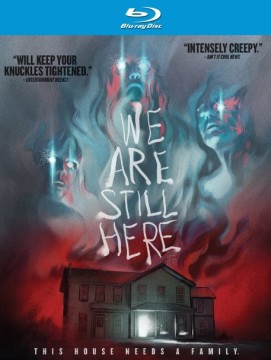
WE ARE STILL HERE, Ted Geoghegan’s terrifying ghost flick starring Barbara Crampton, Andrew Sensenig, and featuring Fessenden, gets a Blu-Ray release date! On October 6th, 2015, you can bring home this wonderfully creepy movie! Preorders are up on Amazon.
And GEP pal Joe Begos’ bloody psychokinetic thriller THE MIND’S EYE will premiere at Midnight Madness of the Toronto International Film Festival! The festival page succinctly sums up the movie as “A drifter with psychic powers takes on an evil doctor and his crew of telekinetic assassins.” Starring Graham Skipper, Lauren Ashley Carter, John Speredakos, and Fessenden!
Glass Eye Pix is the fierce independent NYC-based production outfit headed by award-winning art-horror auteur Larry Fessenden with the mission of supporting individual voices in the arts. Read more...



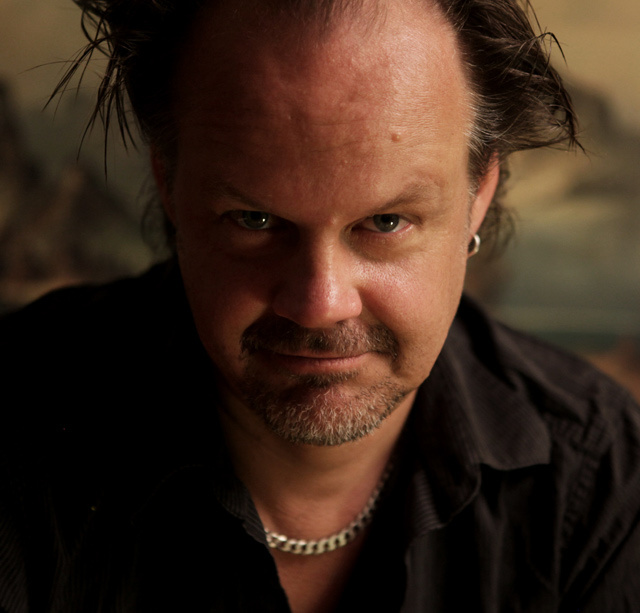
 Larry Fessenden is a giant of independent genre cinema. He’s directed excellent films like Wendigo, The Last Winter and Habit, as the head of Glass Eye Pix he’s worked with filmmakers like Ti West, Jim Mickle and Kelly Reichardt, and he’s died in so many films that he’s got his own death reel. It’s a fact that if you see Fessenden’s name somewhere in the credits of a movie, you’ve picked a good one.