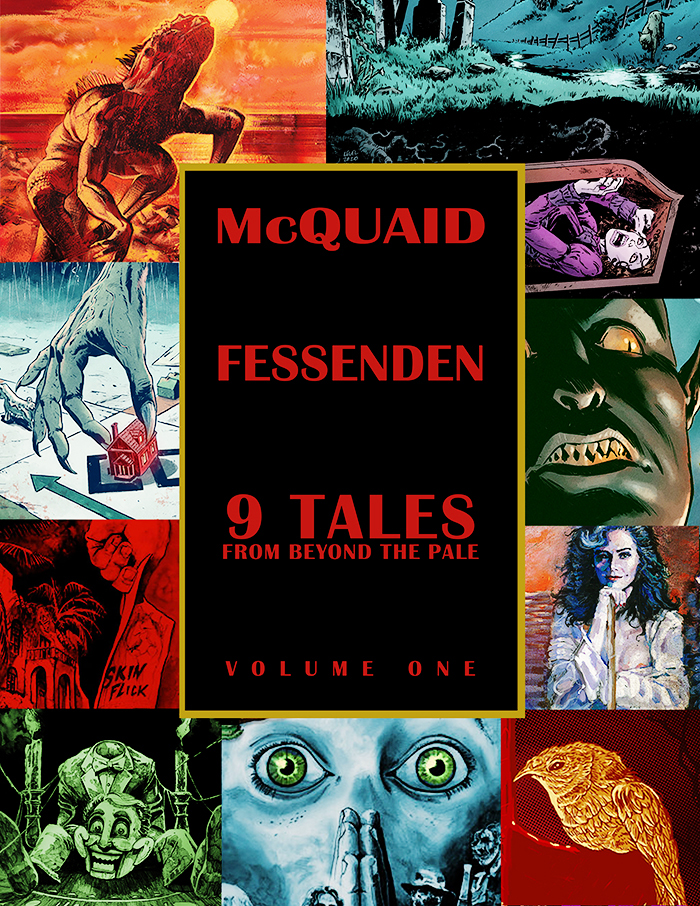
GEP pal and UNTIL DAWN co-writer Graham Reznick spoke with Venture Beat about the process of writing UNTIL DAWN with Fessenden. Reznick spoke about everything from the butterfly effect of the game:
“As far as the butterfly effect and the branching narrative, as a filmmaker and a screenwriter, you sit down with a character and a story, and then you immediately think of every possible version of that story at any given moment. You’re trying to find the best path for your screenplay. If a character has to go to the store and buy a loaf of bread, there’s a million ways that can happen. Who’s he gonna run into along the way? Does the store get held up when he gets there?”
To the balance between traditional gaming and surprising storytelling techniques in the game:
“Exactly. There’s a bit of a more traditional gameplay element built in where it’s like, okay, I have to make sure I hurry along this path or else I’m not going to get to someone in time. But then there are a lot of situations where, depending on the conversation you have with someone, it might result in their death almost immediately. You wouldn’t know that going into the conversation.”
To Reznick’s history with video games:
“I grew up on games. I’m 34, so I feel like I literally grew up with games every step of the way, from the earliest consoles on. I played pretty much everything as I grew up as much as I could. I played a lot of computer games, a lot of Sierra games. That was my bread and butter when I was a kid, almost more so than console games at first. Then CD-ROM games with a lot of FMV—We weren’t quite ready yet. Some of those were a lot of fun, but we weren’t ready to interact as deeply as we can with a story now, because of the technology.”
Check out the entirety of awesome interview, originally posted by Dean Takahashi on Venture Beat.
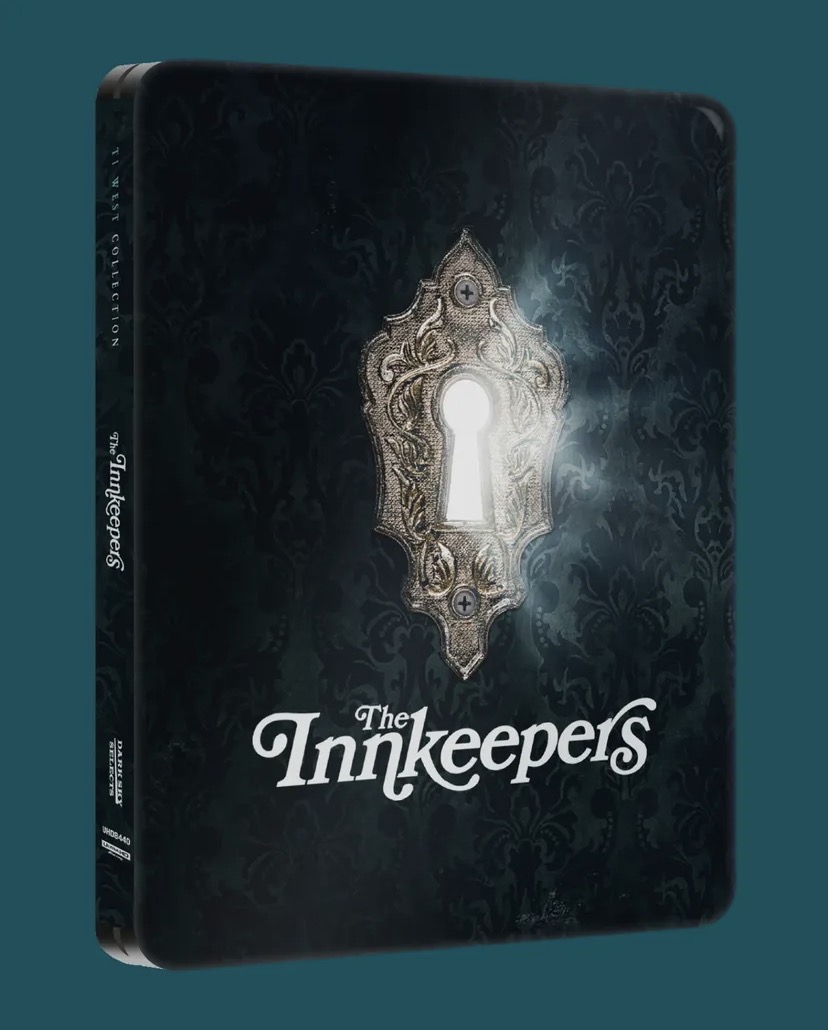
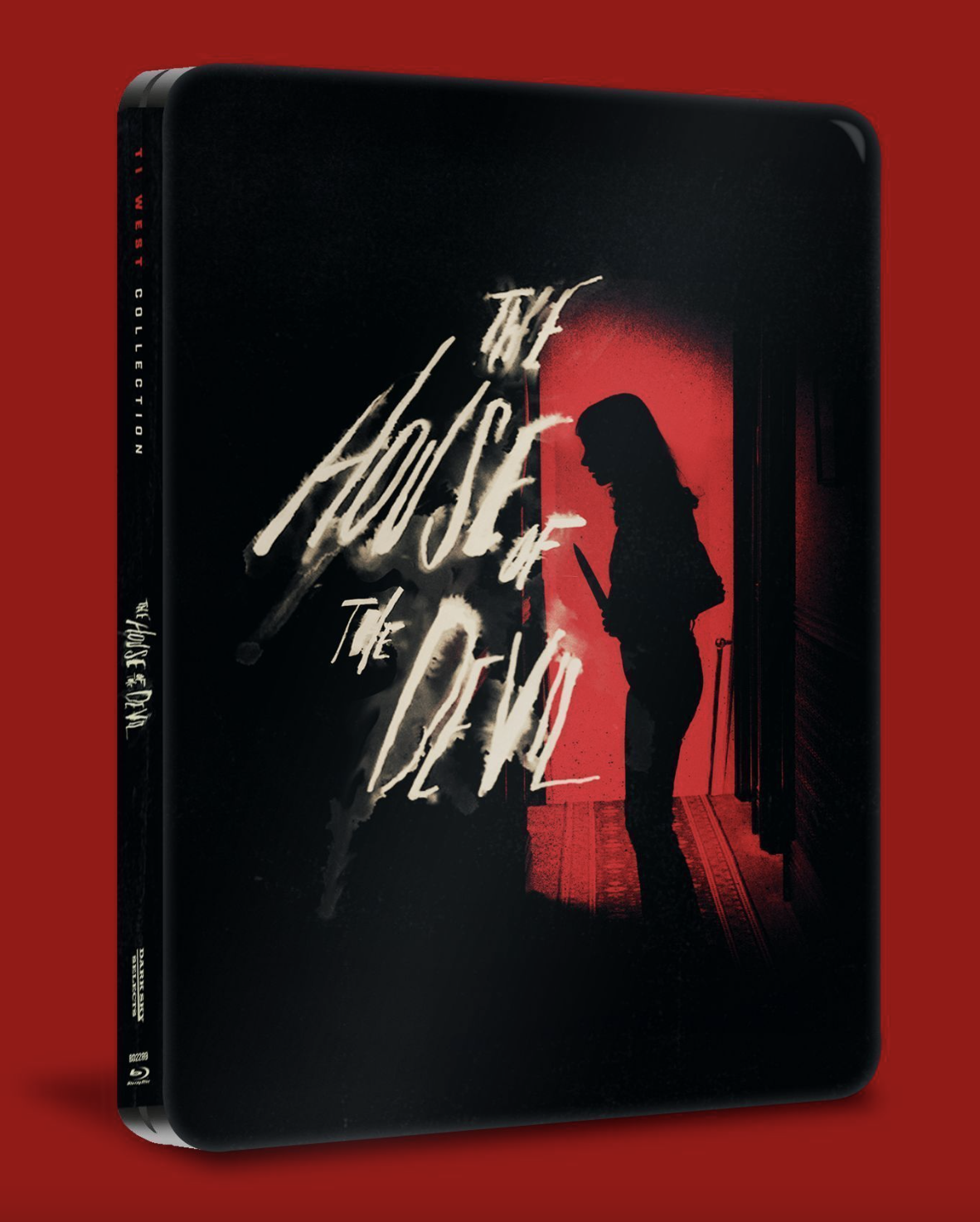
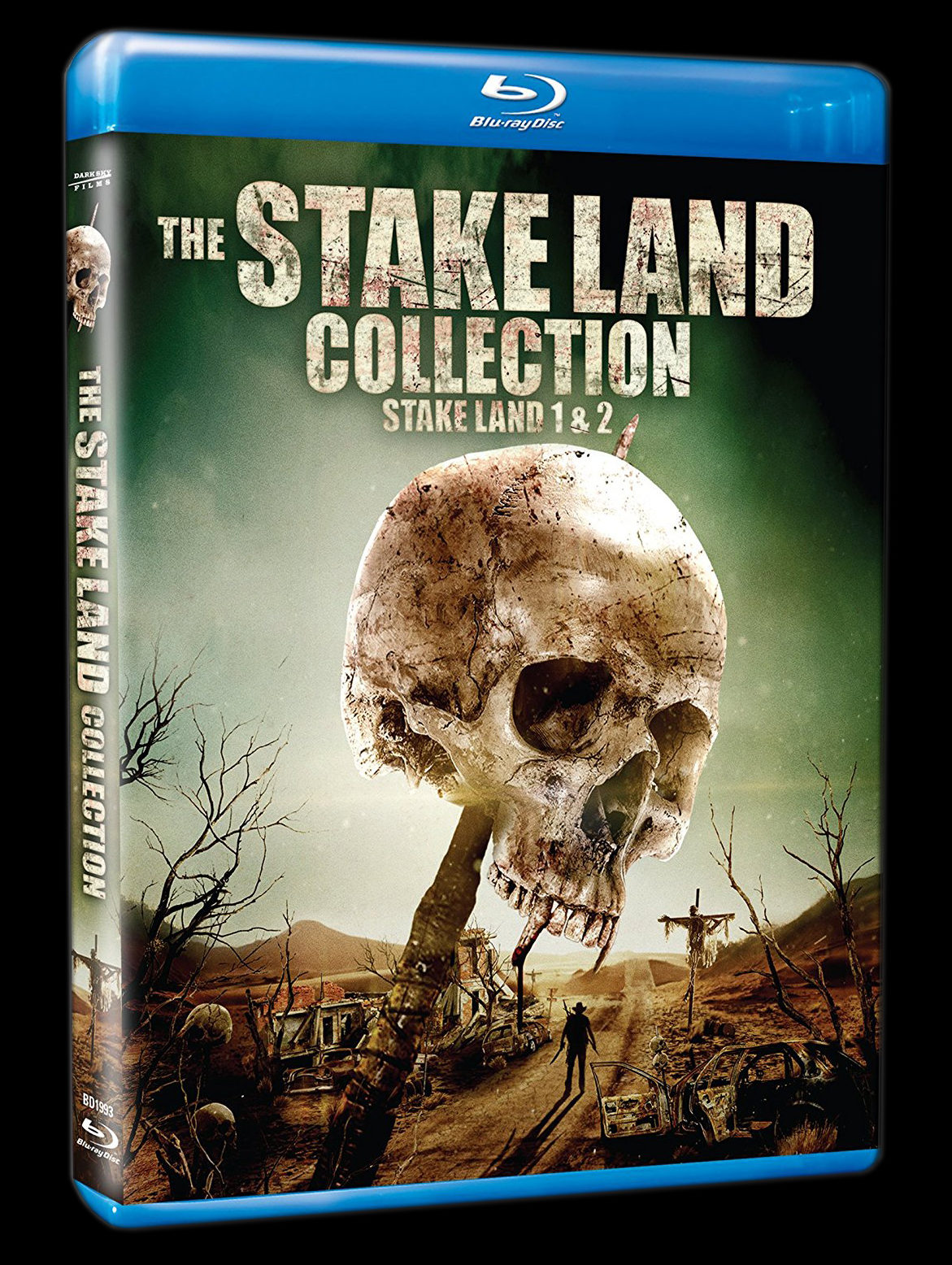
That Until Dawn feels like an awesome indie fright-fest rather than late-night Netflix stoner fare, like Zombeavers, is because it was written by Larry Fessenden and Graham Reznick, a pair of Hollywood scribes whose resumes read like contemporary horror’s greatest hits. In fact, the movie-poster-adorned walls of Dawn’s ski-lodge home theatre highlight the writers’ past IMDb credits: The Innkeepers, The House of the Devil and Stake Land. It’s a knowing wink to horror fans. Without the duo’s guidance, it’s possible Dawn could’ve devolved into a cheesy trope-fest.
Until Dawn feels like an awesome indie fright-fest rather than late-night Netflix stoner fare
It’s clear Fessenden and Reznick have the utmost respect for horror and they gleefully play with how well-tread genre archetypes generally work. There’s a scene where a jock and the “hottest girl in high school” slink away to a secluded spot to have sex, because that’s what happens in horror films. However, lines like, “It’s so cold in here my tongue would get stuck to your flagpole,” make the clichéd situation feel fresh, and most importantly funny. Dawn expertly balances between a genuine atmosphere of suspense and humor because a player can only take so much interactive stress before calling it quits.
Adam Rosenberg of Mashable just posted an awesome, in-depth review of UNTIL DAWN. Written by Fessenden and Graham Reznick, the PS4 exclusive hits stores tomorrow.
How many times have you sighed at a horror movie victim’s stupidity — “Why would that idiot hide under the bed when there’s a perfectly good door to run through?”
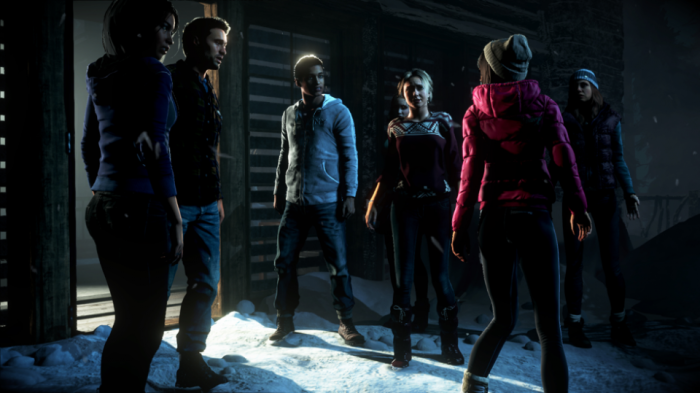
Until Dawn lets you answer those questions in your own way. And thanks to the intricately constructed story from Hollywood screenwriters Larry Fessenden and Graham Reznick, there are no right or wrong answers. Characters live and die based on your decisions, and whoever’s left at the end of the game is a reflection of how your story played out. They can all live. They can all die.
The setup is classic horror. A group of young adults return to the cabin where a friend of theirs (or two) disappeared exactly one year earlier. The disappearance happened after the group pulled a mean prank, so the anniversary trip back is fraught with different degrees of inner turmoil for everyone.
The cast is a line-up of genre stereotypes. There’s the missing girl’s brother, Josh, an oddly calm fellow who is unsettlingly at ease with what happened. He’s either still processing the loss of his sister or he’s up to something. Or both. You never really trust him.
Mike is the brash, courageous action-taker of the group. He’s charismatic. He’s got a way with the ladies. He’s kind of a dick. His girlfriend, Jess, is a pretty-but-stuck-up blonde. She’s superficial and borderline annoying, and she’s got “secretly insecure” written all over her.
Jess is constantly at odds with Emily, a former fling of Mike’s who shows up at the cabin with her new boyfriend, Matt. Emily is bossy and domineering, with a short fuse and little patience for the much calmer Matt, a quiet yet friendly jock. Also in attendance is Chris, a nerdy prankster and Josh’s boyhood friend, and Ashley, a “girl next door” type who crushes hard on Chris.
Finally there’s Sam. She’s the most obvious hero of the story, a strong, fearless woman who isn’t afraid to speak her mind or put Type As like Mike in their place. She’s got smarts and the ability to remain levelheaded in a crisis. She’s charismatic, but not a jerk about it.
It’s important to understand how these different personalities orbit around one another, because the interpersonal relationships are everything in Until Dawn. Over the course of 10 chapters, you get to take control of each of them at least once, and your choices dictate the flow of the plot.
Until Dawn is very good at keeping the illusion of control in the hands of the player. Like most choice-driven games, there are scripted things that will happen regardless of what you do — Josh’s sister always disappears during the prologue, for example — but it’s often hard to tell where the ironclad script ends and the player choice begins.
The presentation helps a lot here. While the frame rate never quite rises above the level of passable — it hovers in the 20 to 30 fps range all throughout — the fidelity of each actor’s performance is impressive. You easily recognize Hollywood faces like Hayden Panettiere (Heroes), who plays Sam; Brett Dalton (Agents of S.H.I.E.L.D.), who plays Mike; and Rami Malek (The Pacific), who plays Josh.
They’re all motion captured, but they don’t feel like animated characters in a video game. All you see is a bunch of actors visibly working at their craft. There’s emotion in each performance. These are people that you can connect with. Yes, they’re also dumb horror movie victim who really should have grabbed that gun or turned on that light — but the illusion is strong.
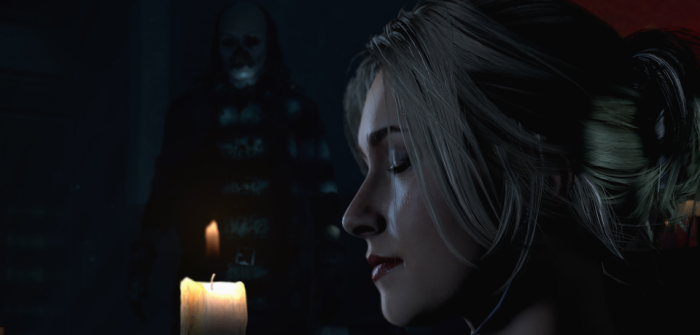
The game also makes great use of restricted camera angles and carefully deployed audio cues to ratchet up the tension. You view and control each character from a third-person perspective, but what you see is always left in the hands of the game’s invisible director. The camera pulls in tight as you round blind turns. Or the musical score wells up slowly, menacingly. Until Dawn creep-out factor is exceedingly high.
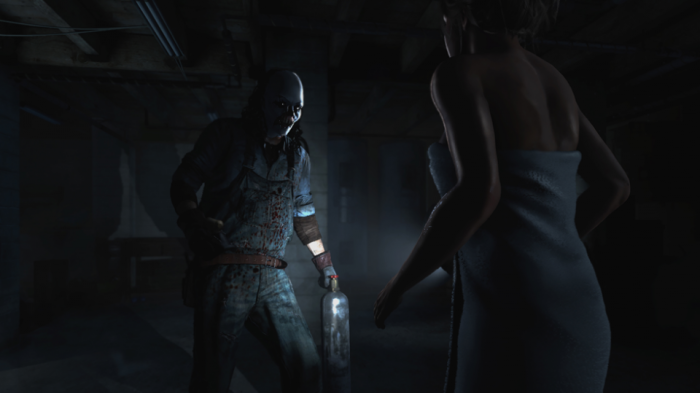
The story leans heavily on jump scares, especially during the early chapters, before the real threat presents itself in full. There’s no easy horror sub-genre to lump it in with. You get a little bit of a slasher vibe, some torture porn, even a touch of creature feature. The story takes some unexpected turns over the course of nine or 10 hours. You see some twists coming a mile away; others make you sit up and shout as comprehension dawns.
As valuable as it is to sit down and let your impressions of each character guide the decisions you make, Until Dawn throws out some bones for those who would like some measure of control over the outcomes of key situations. Totems scattered throughout each chapter’s environment tease future events. They show you things like how a character could die if you make the “wrong” choice, or advise against acting on what might seem at the time like an obvious course of action.
But be careful about how you view what “wrong” is in the context of Until Dawn. Most will probably run through the game with an eye toward keeping everyone alive — it’s a natural instinct to preserve your lives in a video game, after all — but it’s arguably more important to base what you do around how you’d like to see the story play out.
Maybe you can’t stand Mike and want to set him up for an ugly demise. Or you think Jess deserves better than his punk ass, so you blow up Mike’s spot as Matt, after he accidentally spots the jerk hugging Emily in the woods. Not every choice is yours to make — but you can use them to engineer death in the same way you use them to save lives.
That’s the big achievement in Until Dawn. You can play it however you want and angle for the outcome of your choosing — but there’s no winning or losing. It’s a game that puts your story out in front, first and foremost. You don’t have to sigh at the idiot hiding under the bed, but you can cackle with sadistic glee when you force a character to do just that.
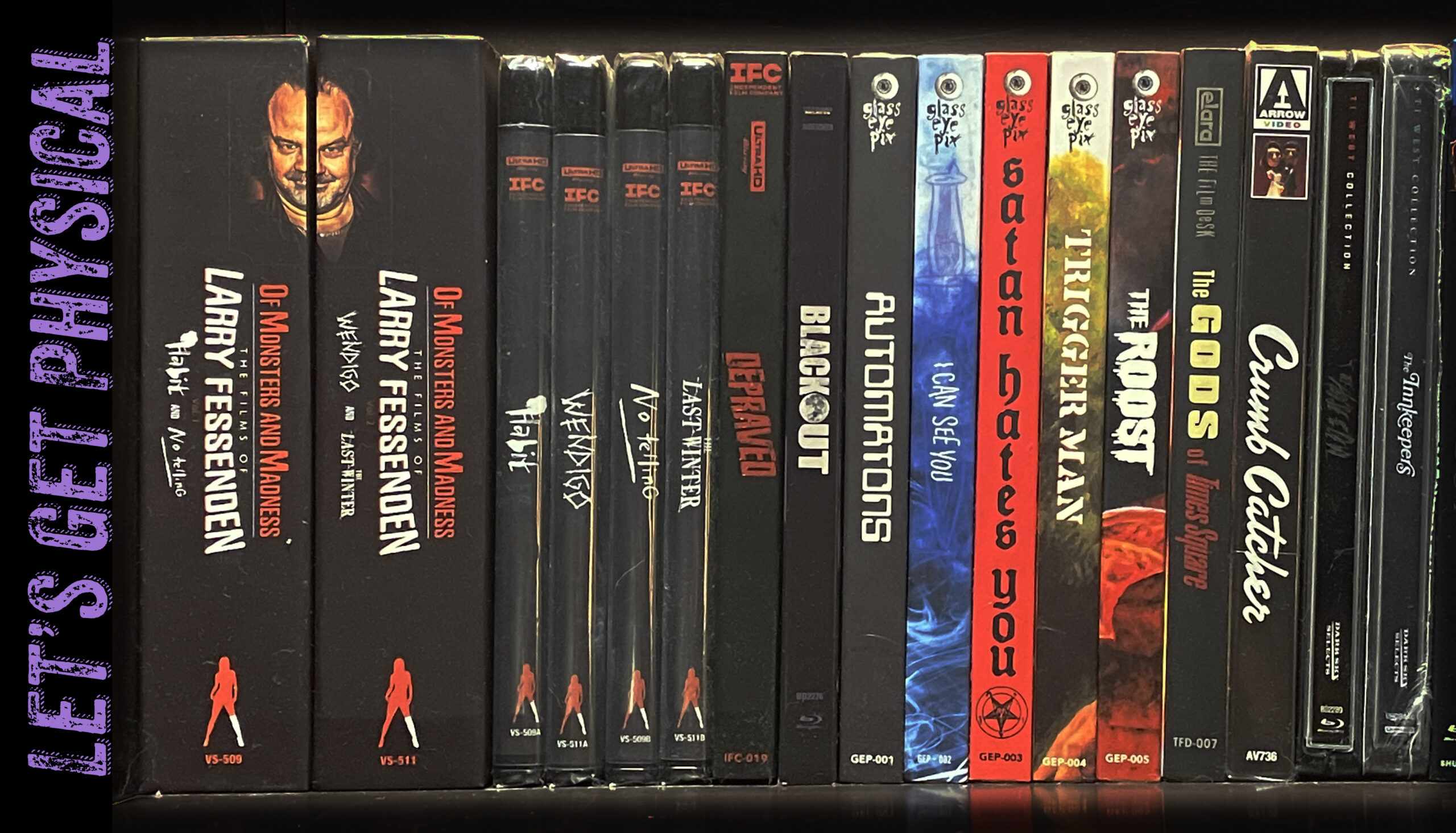
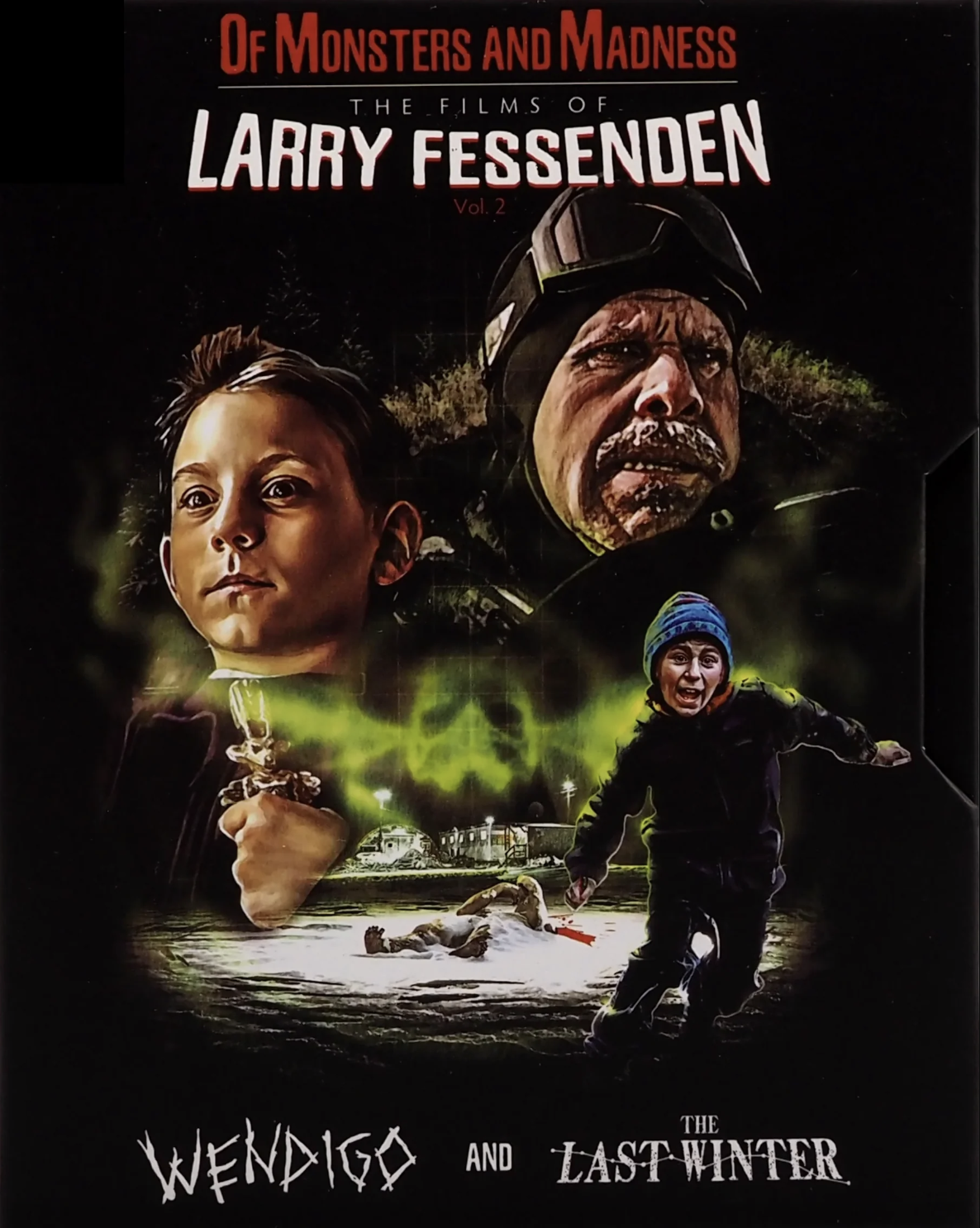
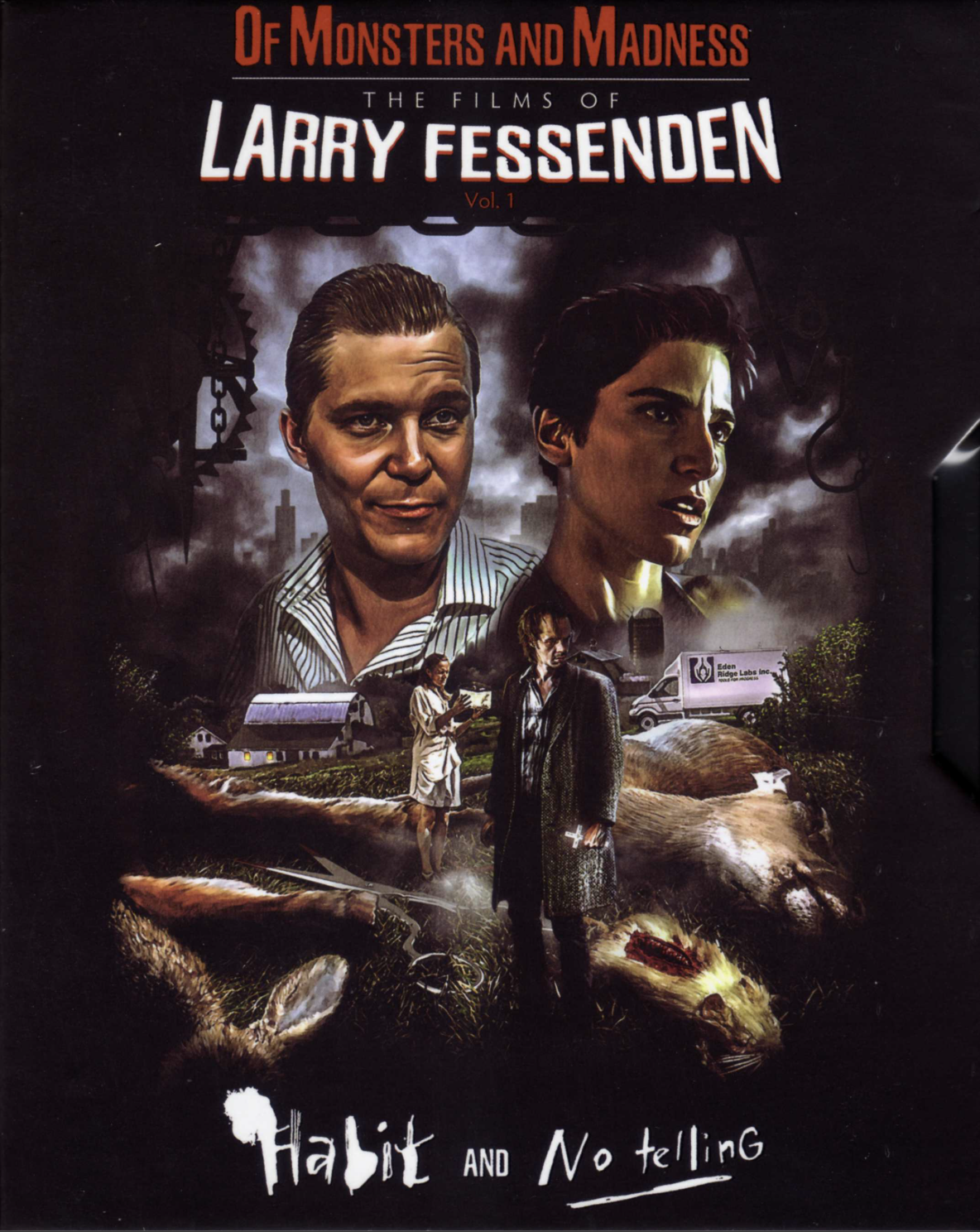
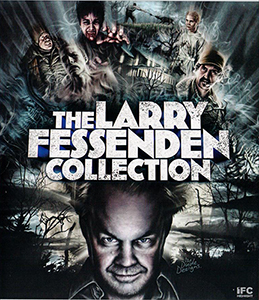
EW just shouted out some standout films to be shown at SpectreFest 2015, and also gave a nice nod to the upcoming THE LARRY FESSENDEN COLLECTION boxed set. The set, from Scream Factory, hits shelves October 20th, 2015 and includes NO TELLING, HABIT, WENDIGO, and THE LAST WINTER.
The lineup for this year’s SpectreFest was announced on Friday, and it includes a sneak peek of the upcoming Goosebumps movie, the Elijah Wood-starring horror-comedy Cooties, and a screening of actor-director Larry Fessenden’s influential 1997 vampire tale, Habit.
SpectreFest is curated by SpectreVision, the boutique horror film production company founded by Wood, Daniel Noah, and Josh C. Waller, whose films include Cooties and the just-released origin-of-a-serial-killer tale, The Boy. This year’s festival takes place Sept. 3 through Oct. 30, at L.A.’s Cinefamily, at the Silent Movie Theatre, 611 N. Fairfax Avenue.
This year’s lineup also boasts the Taissa Farmiga– and Nina Dobrev-starring Final Girls, the by-all-accounts-completely-nuts New Zealand film Deathgasm, and a night of programming by horror film expert Zack Carlson. The screening of Habit, which takes place Oct. 4, will be followed by a discussion between the director and Daniel Noah. (Fessenden fans may also care to note that Habit is one of the films featured in The Larry Fessenden Collection, a Blu-ray set being released by Scream Factory, Oct. 20).
As usual, SpectreFest also features a strong musical component: Cooties composer Kreng (a.k.a. Pepijn Caudron) will provide an original score to accompany a screening of the Ingmar Bergman film Hour of the Wolf, and film composer and electronic musician Steve Moore will present an original synth score set to an abstract re-edit of the Superman films of the ‘80’s. Finally, Geto Boys rapper Bushwick Bill will present a screening of his favorite horror movie, Child’s Play, as part of a “Hip Hop Horror” evening.
The full SpectreFest lineup can be found via the official SpectreVision website.
MCV tells an awesome story about the founding of the upcoming PS4 exclusive game UNTIL DAWN, as well as thoughts and quotes from the makers of the game!
It’s not safe to come out from behind the sofa yet.
The last year has seen horror rise back into the charts, as a mixture of beloved franchise sequels and remakes, big-name licensed titles and indie efforts draw scores of gamers seeking a fright.
Whether it’s Alien Isolation’s 2.1 million worldwide sales, The Evil Within reaching number one in the UK charts or the HD remaster of Resident Evil, which became the fastest-selling digital game ever released by Capcom in Europe and the US, scary titles are seeing a heyday reminiscent of 15 years ago.
It may seem like we are seeing the next generation of horror games, but these are ideas we’ve seen before. Resident Evil has been a consistent presence in the industry over the last two decades, while Alien was backed by one of the most iconic movie franchises in history. Even The Evil Within, while technically a ‘new’ IP, had the legacy of Resident Evil creator Shinji Mikami behind it. However, this month will see a completely new IP step into the fray.
The title is a brand new IP – it’s not a sequel or a licensed spin-off, and comes from a team known for PlayStation Move titles and BBC tie-ins, rather than horror games – but it has already been a name in the industry for longer than some of its peers.
“We announced Until Dawn back in 2012 at Gamescom as a PS3 title with PlayStation Move support,” explains Pete Samuels, MD of developer Supermassive Games.
“We got an overwhelming response, a lot of positivity about the type of game it was and its interesting take on horror, but also an overwhelming desire for it not to be a Move title, particularly Move-only.
“We took that very seriously and began to have some conversations. During those conversations the PS4 was coming over the horizon, so we looked at what we wanted to do and what would be best for the title. We all agreed that the best thing would be to age it up, make it more serious, and we could achieve that by making it more believable because of what the PS4 could do.”
In fact, while Until Dawn may look like a leap away from Supermassive’s past output – which includes titles such as Doctor Who: The Eternity Clock, motion-controlled party game Tumble and the HD remaster of Killzone – the spooky title has underpinned much of the studio’s history.
“We’ve been working on this for five years now – and the studio is only seven years old,” continues Samuels.
“It is quite different from our previous releases. We’ve cut our teeth on levels of innovation, controls and interface with Move titles and so on – that’s helped with Until Dawn because we’ve retained some of that innovation. It’s certainly got Supermassive’s personality about the control system.
“In terms of the size and style of the game, it’s very big and very serious, and the first one we’ve done as a studio. Most of the team we’ve brought into the game have really strong pedigrees from big developers and publishers on triple-A titles. It’s not new to anyone on the team, but to the studio it is.”
Actually, to call PS4 exclusive Until Dawn completely new is to bend the truth a little.
Most of the Until Dawn team have really strong pedigrees from big developers and publishers on triple-A titles.
Pete Samuels, Supermassive Games
Soaked in blood and punctuated with the shrill screams of teenagers, Until Dawn aims to recreate the feel of classic horror movies like Halloween, Friday the 13th and Nightmare on Elm Street.
The game’s cinematic qualities are hardly surprising; indie horror film-makers Larry Fessenden and Graham Reznick helped write and advise on the title. Its cast, too, is plucked from the heart of cinema, including Hayden Panettiere from TV show Heroes, who also starred in slasher sequel Scream 4.
“Hayden is not the only famous actor in the mix,” adds Joe Palmer, product manager at Sony.
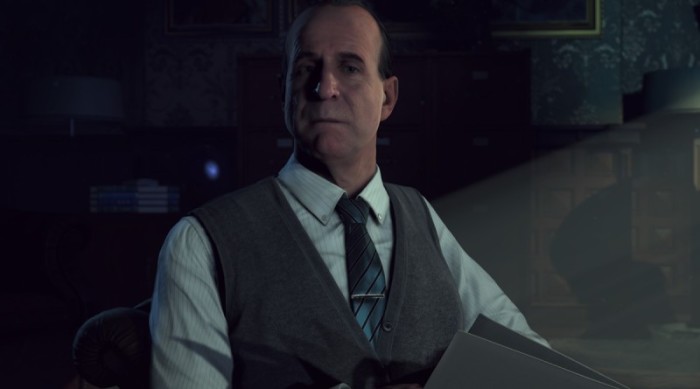
“Until Dawn also stars Peter Stormare of Fargo and Prison Break and Rami Malek of Need for Speed and the Twilight Saga; it’s a real benefit to have such strong Hollywood talent in a cinematic game like this.”
Much like its cinematic siblings, Until Dawn relies upon building tension and fear in the player to pull off its story twists (See ‘Don’t Go That Way’). As with any film, the portrayal of emotion goes a long way to making characters relatable – a vital requirement if players are to want to move them out of harm’s way. Games have long been criticised for their inability to capture nuanced facial expressions and movements, but Supermassive has utilised the Killzone Shadowfall graphics engine, combined with its own custom-made systems, to bring its live-action cast to life.
“We wanted to make it feel like you were participating in a horror film,” Samuels states. “For a number of reasons, in horror games, that’s quite a new approach.
“Horror films have such a huge fan base and we’re massive fans, so we know that you can pull off good tension, fear and scares in that kind of photographic, cinematic medium. That was the challenge – can we do that in a game?
“By moving from first-person in the PS3 game to the current third-person cinematic, we are creating that horror film atmosphere and tension, where you desperately care for the characters, no matter how stupid they might be – which is very typical in a horror film. You can see the stress, the pain and the fear.”
“The horror genre is huge in the wider entertainment industry,” observes Palmer.
“People want to be scared and games always carry the potential to be scarier than movies or novels due to their immersive and interactive nature. Hopefully what we’re seeing is a shift towards mainstream gaming appreciation for the genre.”
Samuels adds that the wider interest in horror as a whole has harmonised with the launch of PS4 and Xbox One to provide a fertile environment for terrifying titles to thrive.
“It’s partly because of what we can achieve in terms of realism with the next generation of consoles,” he says.
“That’s driving people to want to do something very different, whatever their motivation – whether that’s realistic gore, or, for some, more realistic and terrifying monsters. Whatever your motivation, realism for horror is a big driver in games.”
Until Dawn’s reception among horror fans will be helped further by its platform alignment. Palmer says that, as a PlayStation exclusive, the title follows in the footsteps of seminal scary games that remain iconic and lucrative decades later.
“PlayStation has a rich heritage over its 20-year history of debuting and nurturing new franchises and gaming genres,” he explains.
“As part of that, the horror genre is very well represented with Resident Evil, Silent Hill and our own Siren. Even the recent popularity of the Zombies mode in Call of Duty still testifies to the appeal of the fright genre.
“Until Dawn represents a novel twist in a genre for which PlayStation fans have proven a healthy appetite. We are hoping to strongly appeal to that demand with our marketing and PR comms in the run-up to launch.”
Until Dawn is launching in August – a release period not widely associated with horror. But it closely follows the release of scary movies Sinister 2 and The Gift, which have also opted to give consumers summer chills. Long a niche enthusiast genre, horror is increasingly a mainstream obsession – something no longer just for Halloween.
Games carry the potential to be scarier than movies or novels due to their immersive and interactive nature.
Joe Palmer, Sony
Perhaps it is Supermassive, rather than its players, that should be quaking in its boots. By entering the horror genre with Until Dawn, the developer will find itself head-to-head with some of the most venerated games of all time.
Samuels perceives Until Dawn to be the offspring of, rather than a rival to, titles like Resident Evil and Silent Hill, as well as the mastersof the macabre in other mediums.
“We’ve been inspired by pretty much every game,” he enthuses.
“We wouldn’t want to pick one thing out as inspiration because we don’t want to give too much away about the game. People will recognise a number of influences, in both small moments and big scenarios.
“I wouldn’t say nothing has influenced us because everything has. As a team, we watched about 1,500 hours of horror film in research for this and read I-don’t-know-how-many horror short stories and novels, from Lovecraft through Wheatley to Stephen King – the whole spectrum. They’ve all had an influence in some way.”
With its unique take on terror, it could be that Until Dawn becomes the next big horror hit – and Supermassive the next indie developer – to strike it big in the mainstream market.
“We wanted to do something new because we wanted to make a great horror game, and we needed to create our own,” recalls Samuels.
“We feel very blessed that we managed to come up with a concept and that Sony has stuck with us, even through effectively stopping production on one platform and moving it over to another.”
Palmer concludes that there has rarely been a better time to make a splash with a horror title. It may be that Until Dawn was worth the long wait – for Supermassive as much as its players.
“The recent success of titles like The Evil Within is hugely encouraging and proves that there is still a healthy appetite for games in the horror genre,” says Palmer.
“This gives companies more confidence to give horror games the attention they deserve.”
The recent success of titles like The Evil Within proves that there is still a healthy appetite for games in the horror genre.
Joe Palmer, Sony
‘DON’T GO THAT WAY’
“Until Dawn has a classic horror movie setup,” says Sony product manager Joe Palmer.
“However, the way you interact with the story and characters is completely unique. You make all the decisions and shape the relationships. For once, instead of just shouting ‘Don’t go up the stairs’, you can actually make that decision for yourself.”
Until Dawn will allow players to tell their own scary story. A huge range of different endings will be available through the branching ‘butterfly effect’.
“The ‘butterfly effect’ turns what could be trivial split-second decisions into moments of grave peril,” explains Palmer.
“Anyone can die and anyone can survive. It’s an incredibly complex narrative design, with thousands of unique pathways.”
This means that fans should be driven to complete the title multiple times.
“No two stories will be the same,” says Palmer.
“I genuinely think gamers will be intrigued to know how much their choices impacted their story by playing through again and again.”
Playstation Underground has just released a whopping 20 minutes of new footage for the upcoming PS4 exclusive game UNTIL DAWN. Written by Fessenden and Graham Reznick, the game offers tons of choices, splintering paths, and a butterfly effect to every decision you make as a player.
Check out this awesome footage and be sure to grab your copy of UNTIL DAWN when it hits stores this TUESDAY, AUGUST 25th!
JoBlo’s horror site Arrow in the Head took an in-depth look at the career (so far) of GEP pal Ti West. This awesomely exhaustive article was written by Jake Dee!
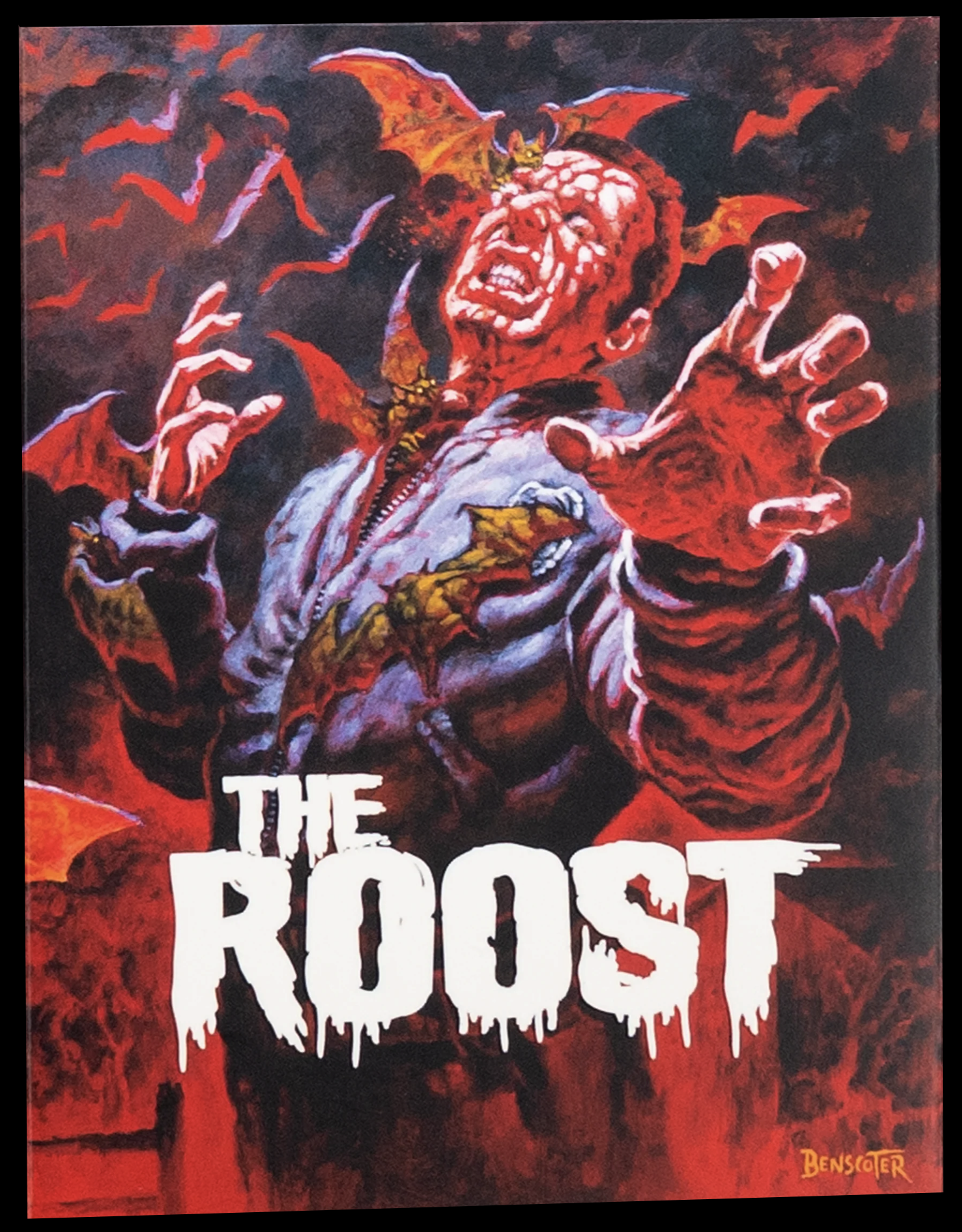
No doubt about it, Ti West is a promising horror filmmaker that has, in the past decade, turned mere potential into a burgeoning brand of his own. Dude made an instant mark with his feature debut THE ROOST in 2005, and in the 10 year interim between then and now, is starting to become more of a household name as a dedicated purveyor of ultra gory and grisly entertainment. Hell, when you start off as a young indie hopeful and graduate to helming a stint of Scream The Series for MTV, yup, you’ve arrived!
Not that it’s all been a primrose path of a career for Mr. West. After ruling THE ROOST in ’05, Ti has maintained control of his own material by continuing to direct scripts he writes himself, which, let’s be real, sets him apart from a lot of filmmakers right there. The authorial voice has translated (more clearly than others) in subsequent work including TRIGGER MAN, CABIN FEVER 2: SPRING FEVER (which he’s since disavowed), HOUSE OF THE DEVIL, THE INNKEEPERS, THE SACRAMENT, as well as anthological chapters of V/H/S/ and ABCs OF DEATH. Some hits, some misses, but one thing remains clear…the arrow on West’s career is most certainly pointed north. So join us folks, we’re giving Ti an apt Dissection of his 10 year career thus far!
Based on the aggregate of critical mass and wide-spanning metascores – whatever they’re worth – HOUSE OF THE DEVIL seems to be considered West’s best. However, we here at AITH don’t quite cotton to such a belief. Don’t get it twisted though, I love the 80s throwback feel of the flick, and do think the final 20 or so minutes pack a seriously unexpected wallop. But for the first hour…nothing! So, it’s with a bit more discretion that we bestow THE INNKEEPERS the highest honor among West’s work. I really think it’s his most accomplished piece. Here’s why…
Not only was THE INNKEEPERS shot in the real establishment of the Yankee Peddler Inn, built in Connecticut back in 1891, but it’s a place long said to be truly haunted. So right off the bat there’s an inherent eeriness and pent-up history of ghastly vibes and ghoulish energy that really permeates the film. There’s a musty antiquity to the joint that feels genuine. No need to try to manufacture the creep factor when you have the real thing right there. A wise move on West’s part.
As for the story, I just really love how it takes its time to get going. The plot features two quirky Innkeepers who, in the last week before the Hotel closes for business, decide to prove or dispel the long-running theory that the place is indeed haunted. Sara Paxton, a bona fide scream queen in her own right, stars alongside Pat Healy as the two hoteliers. And really, their droll interactions are good enough to entertain without the fright night they end up enduring. Kudos to Ti for creating three-dimensional characters who aren’t merely meant for grisly victimhood. These two have a depth, a rapport, and the banter between the two before anything of horrific note goes down is really refreshing for a horror picture. The deliberate pace that so hindered HOUSE ON THE DEVIL was used to much better effect here, as the time taken to establish the characters and the slow brooding horror really pays off in the spectral spectacle of a finale.
Speaking of which, the final shot of THE INNKEEPERS might have been too subtle for you to even notice. But if you were lucky enough to spot it, man, the reward is great. Not to spoil much here, but there is a very cool use of a CG ghost in the final frame that really is the best representation of a specter I’ve seen on film. It’s exactly how I’d imagine a real life ghost would appear, almost translucently vaporous. Hardly noticeable. Then, when detected…yup, you scat your f*cking trou!
It’s easy to castigate Ti’s second feature TRIGGER MAN as undoubted sophomore slump, though it’s paltry $10,000 budget and slight 80 minute runtime hardly constitute a full-length credit. So will cut him some slack on that one, particularly since it attempted to tell a real life story. Instead, even knowing full well how West utterly disowned his involvement with CABIN FEVER 2: SPRING FEVER, we’re chocking up the entire debacle as his worst filmmaking experience. And really, I suppose it starts with West failing to pen his own screenplay for the much anticipated flesh-eating sequel. Probably put him behind the eight-ball from day one, despite the fact he hold story credit for the film.
The story goes that once West wrapped production, producers and editors came in with every intent to kill the originally envisioned movie. Massive reshoots and reedits all but rendered West’s version unrecognizable, so much so that West wanted his namesake stripped from the credits in place of the alias Alan Smithee. No such luck however. Nope, I’m afraid this an permanent blemish on West’s record, even if he had little to do with the final output. The horrors of moviemaking!
Is there such a distinction as the first horror hipster? Oh we jape and jest, and would never cast a pejorative tone on that word when it comes to West being a cool young filmmaker. Not just for rocking flannel and beanie anyway. Truthfully, at this point I’d say the West calling card is writing and directing his own original material. I mean, the man has 12 writing credits and 12 directing credits, all of which align to reverberate one true authorial voice. Whether its essaying a creature feature, zombie yarn, Satanic worship, a flesh-chewing virus, a haunted hotel, or even suicidal occult brainwash…as diverse as that net spans…there’s only a single brain-trust behind it all. Ti’s!
Beyond the diversity and maintaining authorship of his own material, it’s clear West has a deep romanticism for halcyon horror of yore. HOUSE OF THE DEVIL was conceived and shot as if it were really made in 1983. As such, the flick almost plays less as a vintage throwback and more of a nostalgic love-letter to when the genre was at its most fecund.
Taking it even further, casting recurrences of West’s also include a small coterie of actors like Tom Noonan, Larry Fessenden, Sean Reid and a few others. Nothing like making movies with your friends, right? F*ckin’ A!
It’s not often a filmmaker’s latest release is considered their most sub rosa, but that’s exactly what I’m posting with West’s mass-suicide occult picture THE SACRAMENT. I mean, how many of you have seen it? Well, if you haven’t, you should. Not only does it feature one of the most charismatically creepy turns from any actor I’ve ever seen (Gene Jones), it has a raw, unvarnished, documentary quality that, aesthetically, is really quite different than West’s other pictures. It’s also a daytime horror joint for a lot of the time, which is also a nice change up. The flick follows three pals trying to locate one of their sisters, who ran off to find solace at Eden Parish, a rural cult-community deep in the heart of unknown foreign country. Civil by day, bat-shit brainwashing by night, THE SACRAMENT is a hard to swallow potable of unparalleled terror. Really, the final sequence of this film is f*cking bonkers!
NEXT PROJECT
Luckily for us, West has a pair of wildly diverse but equally intriguing genre joints barreling down the lane. On the big-screen, a vengeful western with an A-list cast comes in the form of IN A VALLEY OF VIOLENCE. John Travolta and the great Ethan Hawke headline an ensemble that also includes Taissa Farmiga, Karen Gillan, old favorites Larry Fessenden and James Ransone, Toby Huss, Burn Gorman, K. Harrison Sweeney, Jeff Bairstow, James E. Lane and Tommy Nohilly. Peep the simple logline that’s bound to be subverted by the Direction West:
A revenge Western film set in the 1890s, where a man arrives in a small town seeking vengeance for his murdered friend.
Sounds so tired, right? Well I’m willing to bet bucks for bra-straps that the flick will be anything but. My guess is such a monastic premise is only meant to keep the real story out of the presses hands and thereby preserve a bit of mystery. Well, I guy can hope, can’t he?
As for the small-screen, I’m rather loaded with agog to echo the fact that West will direct one of the final two episodes of Scream The Series, which we’ve been reviewing with great enjoyment each and every week. And if the following tweet is any indication, West sounds pretty pumped as well:
“The first movie I drove myself to see when I got my license was @wescraven’s SCREAM. Now I’m directing part the TV Series. Life is weird.”
Weird indeed. But I seriously can’t wait to see if and how much of his own trademark verve he brings into the ultimate or penultimate episode of Scream. After-all, HONEYMOON director Leigh Janiak helmed episode 7 of the series, and the sheer brutality and cinematic qualities she brought to the table resulted in the highest score we gave the show so far. My guess is West will push all of his chips to the center of the felt and call all bluffers. Shit better get gnarly!
Like it, love it, despise it…Ti West has taken the horror world by storm over the last 10 years or so. It started with a pair of short flicks before escalating to THE ROOST, TRIGGER MAN, HOUSE OF THE DEVIL, CABIN FEVER 2, THE INNKEEPERS, THE SACRAMENT, V/H/S and ABCs OF DEATH. And while his newest venture is a Ti Western, IN A VALLEY OF VIOLENCE, the director is on record saying the film features the most disturbing stints of violence in any of his movies. So even out of genre, dude’s bringing the unapologetic gore. Gotta love it. I’ve certainly come to, and genuinely look forward to see what West has in store in the future. Keep killing ’em Ti, keep killing em!
Spectacular Optical just posted an awesome, in depth interview with GEP Pal Graham Reznick!
Here’s just a small snippet from the interview, where Reznick speaks about listening to music while writing:
I listen to a lot of noise when I write. It puts you in an emotional space, and it doesn’t distract you. I use music a lot as a kind of utility based on everyday life. It helps me get into a space. It’s hard for me to write to things that take all of my attention. Noise can go both ways. I can listen and hear every detail of it, or I can put it on, and let it affect me subconsciously. I’ll hear it but I won’t be hearing it. I know it’s a good writing day when I don’t realize the record has been on for forty-five minutes.
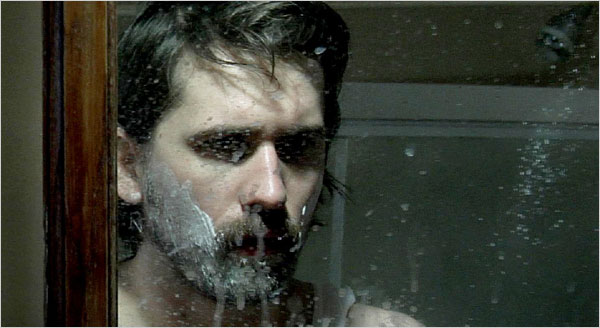
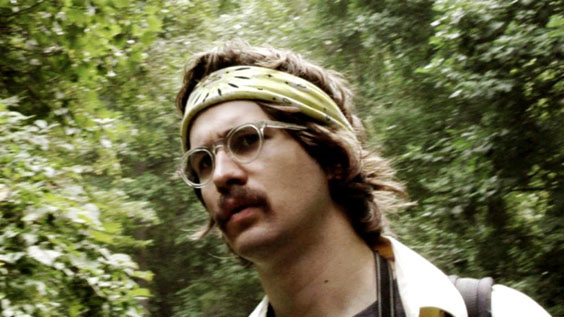
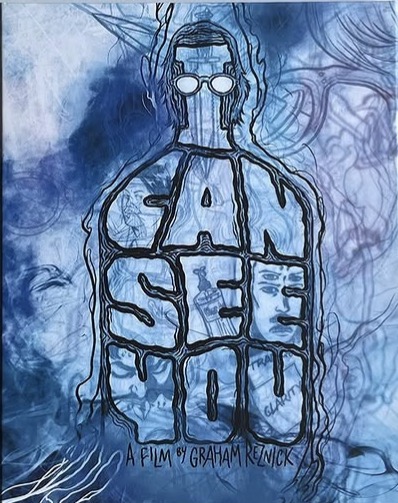
Sound designer, writer and director Graham Reznick is a creative jack of all trades. Reznick first gained recognition as a director with his 2008 feature I CAN SEE YOU, the slowly-unfolding odyssey of a lonely ad executive gone mad in the woods, and has been a regular sound designer for production studio Glass Eye Pix since his longtime collaborator Ti West’s 2005 film THE ROOST. Reznick and Glass Eye Pix head Larry Fessenden were at this year’s Fantasia International Film Festival to perform the live version of Fessenden’s radio play TALES FROM BEYOND THE PALE, and to pitch their new film THE DESIGNER through Fantasia’s Frontières market.
Here, Esinam Beckley talks to Reznick about his curious first feature, writing for video games, the sounds of Alzheimer’s disease and the sinister surrealism that fuels his singular vision.
++++
Esinam Beckley: Where did the idea for I CAN SEE YOU come from?
Graham Reznick: The short version of that is that I went to NYU with a bunch of friends who have all become very successful filmmakers in the recent past, at the time they were not. Like Jon Watts who is going to direct SPIDERMAN now. Benjamin Dickinson who directed CREATIVE CONTROL. Jake Schreier. All these guys were in a group called Waverly Films and they did music videos. So we were doing a lot of music videos right out of college. I was editing for a lot of the different ones we did like the Fatboy Slim video that Jon directed, and then we ended up doing a Ministry of Sound video for the British dance company, and it was a disaster. It was just a total disaster. They had a rep on set who was like approving the elements. They had these like girls in bikinis through this whole weird science experiment project part of the video and they were approving everything, and then when we delivered the video they were like ‘’these girls aren’t hot enough! You did a terrible job! You’re not getting paid!’’ and it was like, no, but your rep was here and said this was good. They basically turned it on us and it was really screwed up. We were all like really young – twenty-three, twenty-four, being chewed up by the system and paid nothing. I just kind of got obsessed with the idea of talent being churned out for schools, and just being chewed up by the machine of the corporate art music videos. They were just looking at the talent coming out saying ‘’let’s pay them nothing, and destroy them.’’
I CAN SEE YOU is a version of that. Guys in an advertising agency who are really young, who may be very good at what they do. They have a lot of energy, and they just get chewed up by the system. So we follow the main character who’s an artist, who doesn’t understand how that works. He may be on the edge already, and he just gets chewed up. He’s grist for the mill basically. So that’s where the idea for it came from. At the time Ti West (I’d grown up with Ti), he had done his first film THE ROOST for Larry Fessenden. So Larry financed THE ROOST, and after THE ROOST we both pitched him this really small fifty-thousand dollar project. Two different stories about three guys going around in the woods with weird shit happening. It was going to be like a grindhouse double feature type of thing. So his film was TRIGGER MAN and mine was I CAN SEE YOU. He loved the idea, but we all realized that they were both enough for full feature films, so we just split them up and made them on our own. So that is how it came about.
EB: I CAN SEE YOU is unique in the way that you have a vision/dream sequence toward the end, an almost camp like musical scene. The imagery at the ending of the film is especially unique. Where did this originate?
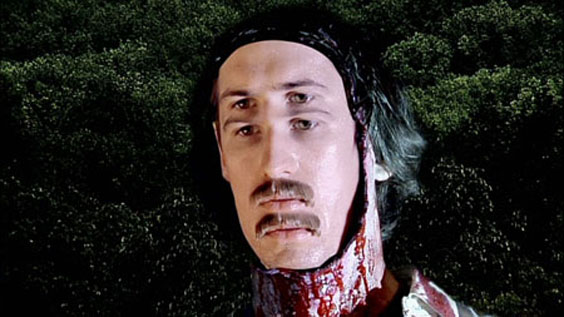
GR: I liked the idea that as reality was breaking down for the main character he began to see the people around him as aspects or elements of his own persona, and he would see things in people that he wanted to remove from them. He would see a caustic part of someone’s personality, and he would want to use that against himself. It’s actually an expression of that. In Chris Ford’s character he saw something in that guy that was cutting him apart, and he took that literally. So it was a literalization of that feeling in their relationship. There’s a lot of that expressive literalization towards the end of the film. I watched a lot of Jodorowsky, and Kenneth Anger. Semi-magical stylized, heightened expressionism. I wanted to explore that in these kind of weird torrid relationships. If you go out into the woods there’s only room for those things to grow. You don’t have the confines of the city. It’s suddenly expansive. I always like doing research. I don’t really do drugs, because I don’t like being out of control, I’m too neurotic. I do have limited experience with it, and I’ve been fascinated by it. So in looking into psychedelics, and where that even comes from I became obsessed with the origin of the word psychedelic, which basically means “mind manifest”. Those are the Latin roots. That’s how it was coined in the 50s. So I liked the idea of mind manifest. Things from the internal being manifested outside. Not necessarily as hallucinations, but as figurative expressions of the internal state. So my feeling was we’d go out into the woods with these characters and there’d be all these tensions, and unresolved issues between them they would literally contort, manifest out, and kind of suffocate everyone.
EB: At the point in the film when Ben is swimming with Summer Day. He does not have his glasses on. He has trouble being able to see her. Her image just becomes totally blurry, yet he is still trying to carry on a conversation with her. It’s embarrassing, and terrifying. Can you explain this scene?
GR: That’s the world I live in! I’m completely blind. The sunglasses I’m wearing are actually prescription! You are like a blur right now. I’ve been in situations like that where I’ll be swimming, at the beach, I talk to someone, and I can’t see them at all. It becomes this weird thing like I don’t know how to read you. It’s a really upsetting situation.
EB: It’s really upsetting watching him trying to keep up the conversation, and make the motions.
GR: It also mirrors this passionate moment they had together that was in the heat of the moment. They were by a campfire. They went off, and it meant a lot to him but it didn’t mean anything to her, because why should it? He’s just some guy, and they had a thing. The next day he’s realizing we have no connection, we have nothing here. So she just is kind of dissolving. That literalizes. She dissolves in the woods and disappears, and he misplaces that anger onto his friend. He believes his friend is responsible for it. Then comes the subjective reality for us in the film. That’s the turning point for me. When he realizes that his emotions have gotten the better of him.
EB: Ben is very easy to sympathize with, but he shouldn’t be. He’s very quiet, morose the whole time, dealing with his own inner turmoil. How did you develop his character?
GR: Yeah, he’s pretty mopey! Ben and I describe him as the worst aspects of both of our personalities. Ben Dickinson actually directed a movie called FIRST WINTER. Then recently directed CREATIVE CONTROL which is about augmented reality. After I saw it I was joking with him that it’s a sequel to I CAN SEE YOU, because it kind of is. He uses augmented reality. He recreates a woman he has a crush on in the augmented reality. He can’t really see the world around him the right way. It’s not literal, it’s a very figurative thing. He can’t interact with the world unless he’s doing it with the augmented reality. He kind of recedes into that, and he’s playing a similarly mopey ad executive character. He directed it, but he’s also playing the lead. It’s great. As a pairing with I CAN SEE YOU it’s fun. It’s all about glasses as well.
EB: What are some of your inspirations, what fuels your ideas most?
GR: I’ll rattle off a list. Philip K. Dick. Ubik by Philip K. Dick. Ubik is a big influence on I CAN SEE YOU. The spray is like Ubik spray in the book. Nicolas Roeg is a huge one. Editing wise the movie is kind of modeled after WALKABOUT in some ways. In the beginning of WALKABOUT everything is in the city, and everything is crazy, and chaotic. Just crashing together, and then you go out into the woods and it just expands, and becomes this textural experience. The structure is kind of based on that and the first ten minutes of PRINCE OF DARKNESS. Carpenter, David Lynch. I get a lot of shit for the red curtains thing in I CAN SEE YOU. It was supposed to be blue curtains. A powdered blue suit on blue curtains. We had that stage in my hometown where we shot. At the last minute they told us we can’t use smoke machines because they had a laser based fire detection system. We had to shoot it at my high school which only had red curtains, and then for years everyone was like oh yeah that’s like David Lynch. There are other things that I’m ripping off from David Lynch that I am fully willing to admit. The red curtains was not one of them. We actually tried at the time to take out the red curtains, and make them blue on computer, but it was just too much work. So Lynch, Roeg, Kenneth Anger, Jodorowsky, all those fellows. A lot of pulp science fiction writers.
EB: What is your newest project?
GR: I have a number of things in progress. I just finished writing a video game for PlayStation 4 with Larry Fessenden called UNTIL DAWN. It’s a super cinematic slasher film game. Very traditional in some sense like a slasher movie. Kids go up to a lodge in the woods. I wrote the dialogue with Larry. It’s a weird experience though. In this game all of the eight characters can die at different points. So writing the dialogue was like writing twenty-five different parallel universes with the same dialogue through the whole thing. Because chapter eight could be Ben and Ashley, or it could be Chris and Mike. Having similar conversations. A very fractured, layered way of writing. It was a really interesting project. It comes out next month.
I’m here at Fantasia’s Frontières market to pitch THE DESIGNER, which is a film I made about a video game designer. I wrote it a couple years ago after we finished a pass of the video game. I’ve been sitting on it. It’s been dormant for a while. So I resurrected it. I feel like it is pretty relevant now. It’s about augmented reality, and mundane usage of video games, tablets, interactive websites, even cars now. It’s about engaging. How you interact and touch something. I also have a couple other projects in the works.
EB: Tell us about your episode “The Caregiver” in Chiller’s FIVE STATES OF FEAR anthology film, and how it relates to themes that have been in your work previously. [Ed. note: The segment is about a vengeful wife charged with taking care of her unfaithful husband when he is paralyzed]
GR: That was a weird experience. I pitched a bunch of ideas I loved. They picked the one I liked the least. I liked the idea of someone who has locked-in syndrome. I liked the idea of a physical outer stillness beating to an inner vibration. I didn’t want it to just manifest like I’m gonna raise you into the air now and spin you around. That’s fun too, but for this I wanted it to be really shitty. Like the main character can only move a cup half an inch, and that’s his day. Then he takes a nap. That’s all he can do, and he’s just being tormented by this woman. We’re not sure at the end if he really does make her crash. He’s just locked in. I wanted to go more into his head at the end, but I was talked out of it. I wanted it to be very unclear. Originally, I wanted it to be that he dies then we go into a fantasy version at the end, and that’s where he gets his revenge. That would be his one moment of peace or accomplishment. Both the characters in that are horrible people. It was an interesting, fun TALES FROM THE CRYPT-type exercise.
EB: Can you talk about the sound design in your episode “The Grandfather” for Larry Fessenden’s radio play project TALES FROM BEYOND THE PALE? You use animal/cat sounds in a very particular way.
GR: I had a whole origin for that which I actually don’t remember right now, but part of it was that I wanted to do something with Angus Scrimm. He has an incredible voice. I was like I just want to have that voice in my head for half an hour. Just hear him talk, and muse about things.
My wife works with a lot of geriatric patients. She did research on Alzheimer’s disease for a long time. I mentioned the thing I’m most afraid of is my own brain turning on me. That’s what Alzheimer’s is. Only the tragic blessing is that you’re just gone basically. I was like what if a guy is somewhere between a threshold? He might be slipping away. He might be losing his sense of what things are. He might be becoming demented. Or he might not. What would that feel like from his perspective? I thought doing it from an audio perspective would give an interesting way to plant a lot of visual, and conceptual scenes in the viewers mind. To let it blossom in their heads. That is kind of the whole point of TALES. So I was like, let’s take someone who’s maybe going crazy, and have the sound of a cat meowing turn into this weird stretched-out voice.
EB: There’s many street cats where I live. At night, when they are fighting, or having sex it sounds demonic. Like a portal to a dimension could be opening.
GR: In L.A outside in the alley beside our house sometimes, I’ll wake up in the middle of the night, and me and my wife are like who is dying?! The sound morphs. Your brain does that thing. It can’t figure out what it is. We just have these patterns of recognition. If something does not fit into that recognition, it’s almost an acid trip feel. That euphoric feel of your brain stretching, contorting, and creating a new neuro-pathway to accommodate for it. It’s how I approach writing, and sound design. To make things that are familiar but slightly off. I was reading an interview with Aphex Twin when the album Syro was coming out. He did a whole interview where he talks about that. I was like I knew it! I was so excited that was his approach.
EB: What kind of music do you listen to? Anything experimental? Noise etc..?
GR: I listen to a lot of noise when I write. It puts you in an emotional space, and it doesn’t distract you. I use music a lot as a kind of utility based on everyday life. It helps me get into a space. It’s hard for me to write to things that take all of my attention. Noise can go both ways. I can listen and hear every detail of it, or I can put it on, and let it affect me subconsciously. I’ll hear it but I won’t be hearing it. I know it’s a good writing day when I don’t realize the record has been on for forty-five minutes.
EB: The sound in I CAN SEE YOU is very apparent. There are droning sounds, and vibrating that turn into human sounds. Human screaming also turns into mechanical sounds.
GR: I like the idea of that. Back to the psychedelic thing. The morphing contextualization that the brain does. I’m very fascinated by the way our brains work. It’s kind of an obsession. I just like the way our brains try to make things understandable, and fail all the time. It terrifies me. In the original director statement I did for I CAN SEE YOU I said that the thing I’m afraid of the most is my own brain failing on me. It does so much work filling in. If it’s missing information it fills it in. Often, it fills it in wrong. It creates these things that are not right. That is terrifying, because you realize you lose a connection to the world. It’s like Ben not seeing her in the water. Her face is blurry. Your brain is still trying to fill in a face. The way it blurs out the mouth and eyes. You see the most horrific representation of a face. It’s the same thing with sound. I don’t see sound any differently than I do visuals, so that sort of audio play from one place to another is the same idea. To me it’s just like a smearing of visuals. Blurring. The way I like to approach sound design is essentially a visual. It’s a visual medium, it’s just a different form. Like painting. You have a palette. You can put things together in a certain way. You can layer them a certain way. It’s a very similar language as the visual language. It’s just not visual. Like a synesthetic connection between visual and audio, that’s fairly easy to tap into. I think a lot of people just don’t give sound enough though in a movie. Which is a shame because it’s almost like black magic. You can really effect people in a way that they’re not consciously aware of, but they are very subconsciously aware of when it happens. Drone sounds, and things like that will kind of cut past all the intellectualism when you are watching something. You’ll just feel it.
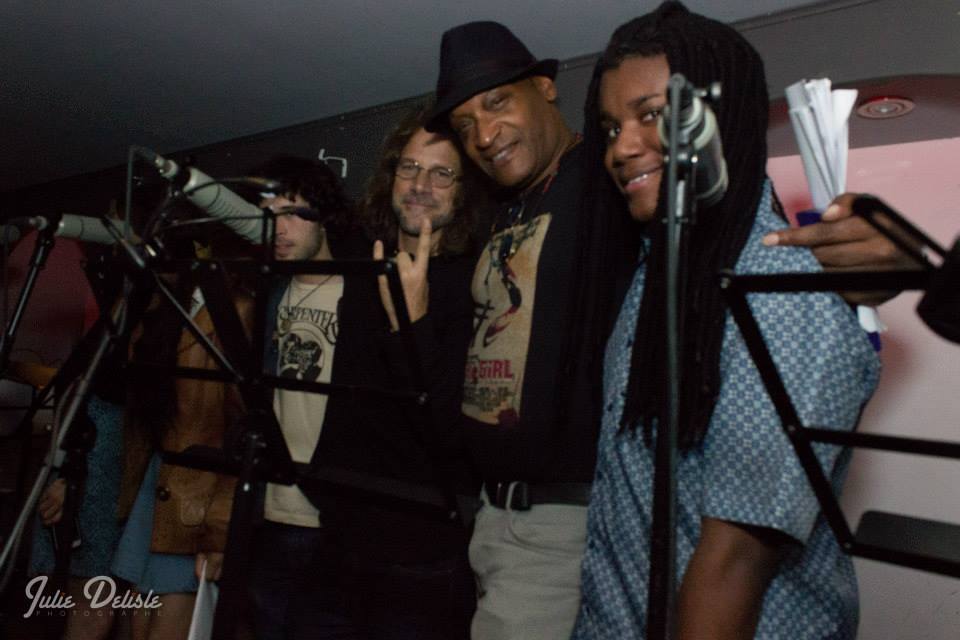
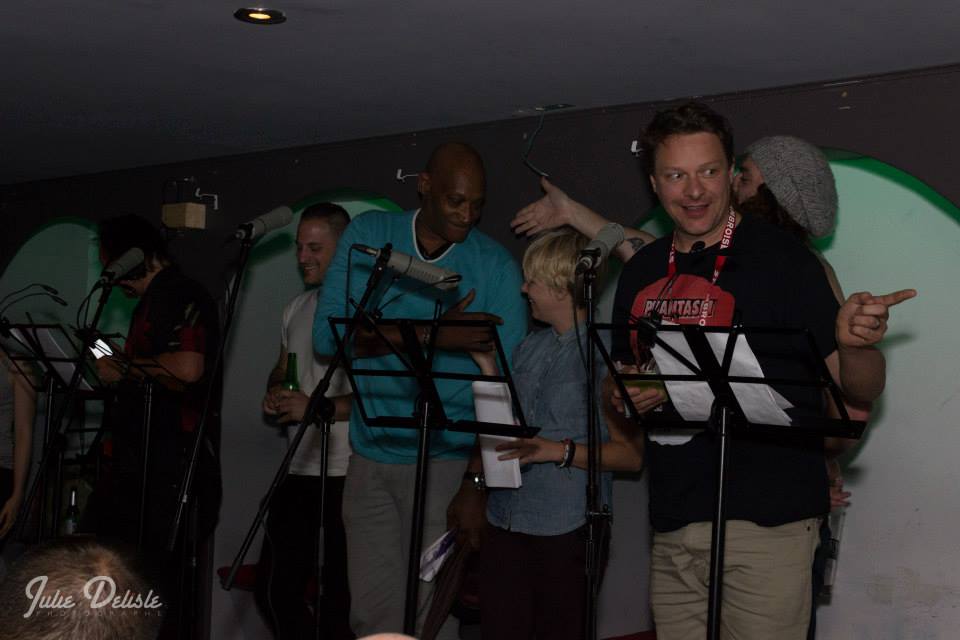
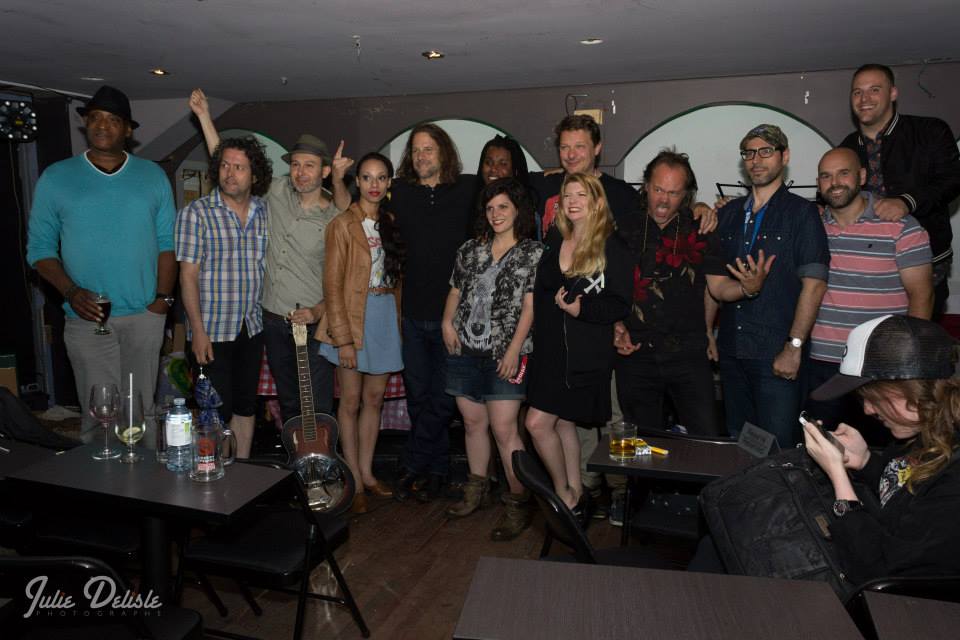
Below: Photos from Fantasia’s presentation of TALES FROM BEYOND THE PALE: LIVE on Monday July 27, 2015. Photos by Julie Delisle.
Where would the horror genre be without creepy woods and basements? We don’t know—and, fortunately, it’s not something we have to worry about.
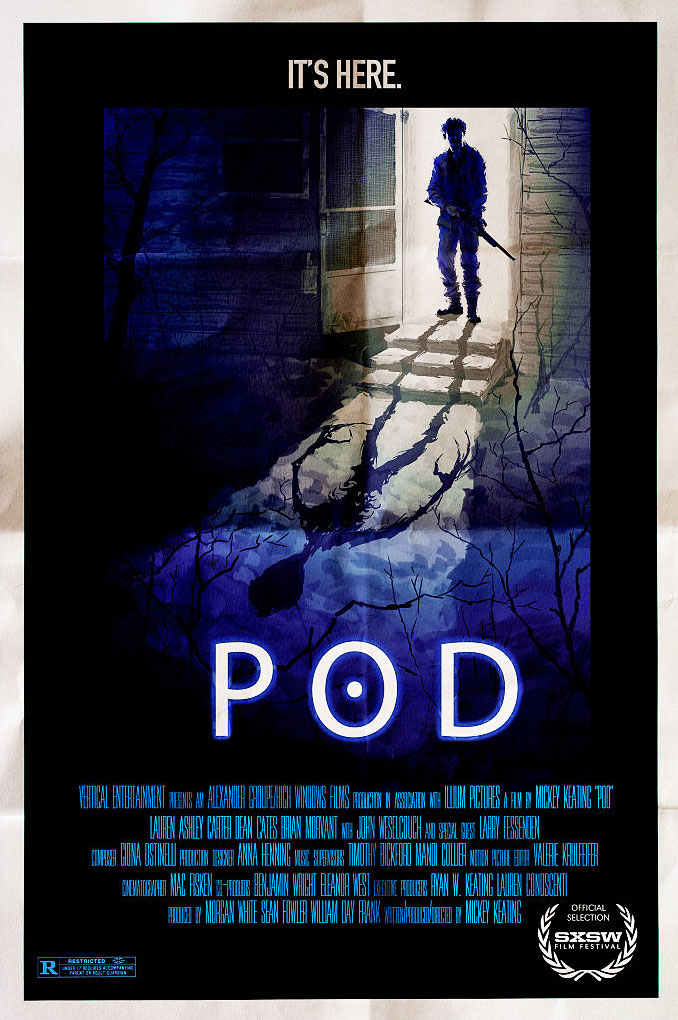
That brings us to the creepy woods-and-basement-featuring trailer for the new, SXSW-screened horror movie, Pod. Written and directed by Mickey Keating, the film stars Dean Cates and Lauren Ashley Carter as siblings whose veteran brother, played by Brian Morvant, believes he has a secured a sinister being of some sort in the basement of their family’s remote lakehouse in Maine.
The film also features the always watchable indie-horror nabob Larry Fessenden and will be released to select theaters and on VOD, Aug. 28.
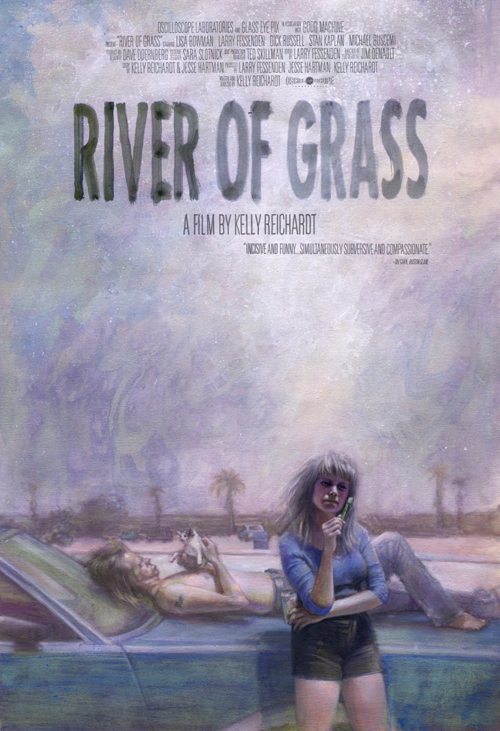
Over the past few years, Kelly Reichardt has become one of our favorite independent filmmakers, bringing her unique style, relentless realism, and unmistakable voice to such diverse pictures as Meek’s Cutoff, Old Joy, Wendy and Lucy, and Night Moves. But her first film, 1993’s River of Grass, has always been a bit slippery; limited availability on DVD (used copies are currently going for $40 on Amazon), impossible to stream, and generally out of circulation, it’s getting a major re-release via the fine folks at Oscilloscope Laboratories. And as part of that push, they’ve commissioned a brand-new poster from artist Zachary Baldus, which we’re thrilled to debut exclusively on Flavorwire:
Glass Eye Pix is the fierce independent NYC-based production outfit headed by award-winning art-horror auteur Larry Fessenden with the mission of supporting individual voices in the arts. Read more...