March 24, 2019
Share:
Facebook Twitter Email

Film School Rejects: DEPRAVED “refreshingly original”

From Film School Rejects:

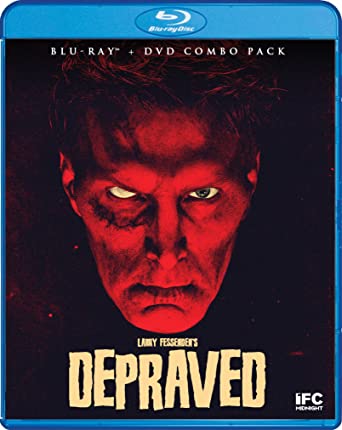
‘Depraved’ Review: Larry Fessenden’s ‘Frankenstein on the Hudson’

The legendary New York filmmaker’s latest masterwork explores the father/son dynamic of Mary Shelley’s timeless classic.

The sinew that ties horror’s unquestionable importance to the rest of the cinematic arts is the ubiquitous feeling of fear. It’s one of our most universal and earliest learned emotions that, despite however much we may say otherwise, is an integral part of our lives. So many of our life decisions are dictated by fear, from career changes, to moves, to one of the most relatable — having children. And while films like We Need To Talk About Kevin directly illustrates the fear of what our kids could become despite our best efforts, Larry Fessenden‘s brilliant new film Depraved takes the anxiety of raising a child and strains it through the structure of the Frankenstein story — bringing new depths to Mary Shelley’s classic while having a refreshingly original take on a tale that’s been told for ages — to indirectly ask the untold truth parents may think, but never reveal: what if I made a mistake?

Alex (Owen Campbell, Super Dark Times) and Lucy (Chloë Levine, The Ranger) are recent college graduates on the cusp of moving in together in Gowanus, an industrial and rapidly gentrifying neighborhood in Brooklyn. After an offhanded expression of how good of a father he’d be, Alex becomes upset and decides to walk back to his own apartment on the desolate canal where he is accosted and repeatedly stabbed.

After having hallucinatory visions of his grandmother and girlfriend — told with Fessenden’s brand of hypnotic, dreamy visuals and startling shocks of vibrant animation — Alex wakes in a rudimentary lab. But his body is filled with cuts and stitches, one eye clouded with blood smeared on his arms. He finds a mirror, but it isn’t the Alex we just met: it is Adam, played with knowing precision by Alex Breaux(Bushwick). Alex lives on in Adam, an amalgamation of body parts constructed by Henry (David Call, Tiny Furniture) an ex-military field doctor now being funded by a mysterious corporation through his fellow doctor and money man Polidori (Joshua Leonard, The Blair Witch Project).

Adam may be the Frankenstein’s Monster to Henry’s Doctor Frankenstein but Depravedstrips the story to only its bare essentials. Fessenden smartly eschews the trappings of Shelley’s original tale that’s been told ad nauseam. We’ve seen what happens when The Doctor instantly regrets creating The Monster, casting him out before hunting him down so it’s refreshing to see Henry instantly want to help and care for Adam. We watch through their mutual frustration and joy as Henry teaches Adam about emotions, basic motor functions, and table tennis.

And it’s in this early decision that we see Fessenden focusing on an aspect of the story that rarely gets further discovery: the father/son dynamic between Doctor and Creation. We know what this story is like when The Doctor struggles with the moral and ethical dilemma of creating life, but never one where that creation has a strict bedtime.

This riff intentionally mimics the struggle of single parents raising a child that I think will resonate most strongly with parents of children on the autism spectrum. Henry has to find new ways to help Adam learn, like using music to focus his mind. He is clearly filled with empathy and compassion for the person he created, but he also becomes understandingly exasperated and overwhelmed by what is now his responsibility. This isn’t a story about a doctor playing god, but rather a man trying to be a father.

But that doesn’t mean that Depraved is completely detached from previous versions of Frankenstein. It does hit familiar beats that humanized the creation in James Whale’s original run of Universal Films, like the monster eventually demanding a mate, leading to Adam encountering the cheekily named Shelley (Addison Timlin, The Town That Dread Sundown) whose fate gives this Frankenstein’s Monster shades of Lennie in John Steinbeck’s Of Mice and Men.

Visually and aurally Fessenden’s film is a feast filled with animation and sound design meant to embody the multitudes that reside within Adam. These soundscapes of noise and reverse speech illustrate the conflicting dualities within him as his present mind tries to understand how to speak while his past mind struggles to remember who he once was. The film’s lighting is washed in warm reds and greens to give Depraved an almost E.C. Comics-esque color palette juxtaposed with Fessenden’s aesthetical camera work (shot by Chris Skotchdopole and James Siewert) imbued with his early 90’s DIY spirit. As his films are character studies as well as genre pieces, Fessenden gets the most out of his talented cast but especially Call and Breaux, who embodies this version of The Monster with a quiet intensity, unlike any other iteration we’ve seen before.

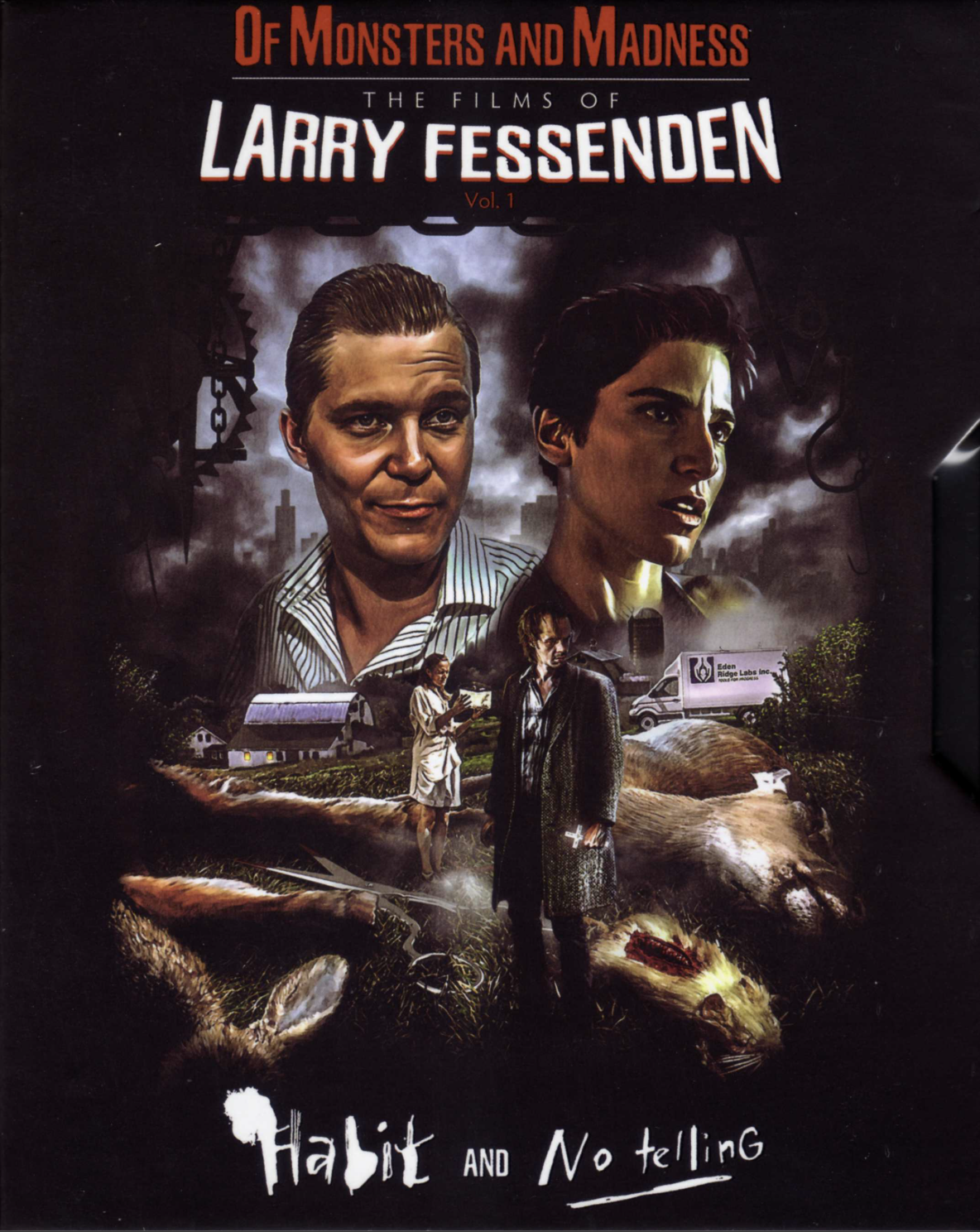
Fessenden has been creating genre films with a message for years. In the director’s notes for the film he elaborates, saying I have always been deeply moved by the archetypes of horror, and have made it my mission to breathe new life into these stories by grounding them in our contemporary world.His works are emotional journeys, weaving you through unexpected territories until the rug is pulled from beneath you and you are left with the films emotional core. Or maybe it’s better to describe it as a pit, like the one each of his characters eventually have in their stomachs. He does this with every one of his films, from Habit’s commentary on alcoholism through the lens of vampirism to The Last Winter, his Eco-chiller using the Wendigo legend as a proxy for the destructive nature of climate change.

For lack of a better term, I’d argue that he is our sole Activist Horror filmmaker, starting all the way back in 1991 with his ostensible debut No Telling. The film, a dark romance about a love triangle and ethically ambiguous animal testing, has a clear lineage to Depraved when viewed in tandem. But while No Telling ends on a visceral gut punch, this film leaves us with a modicum of hope. Fessenden is a director that is constantly evolving, finding new ways to let his voice be heard, and in a career of home runs, Depraved stands out as the film where his voice can be heard the clearest.

March 22, 2019
Share:
Facebook Twitter Email

Weekends with GEP: WTF in NYC

GEP thanks What The Fest!? for a fantastic world premiere!
Go see all the other goodies they got cooking this weekend.

March 22, 2019
Share:
Facebook Twitter Email

ANTHEM MAGAZINE: A one-on-one with David Call and Larry Fessenden

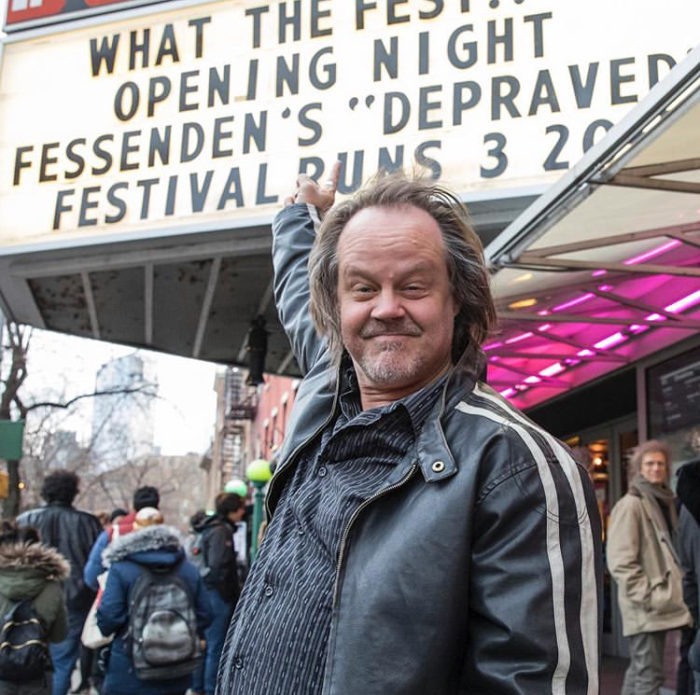
This week, the Second Annual What the Fest!? arrived in New York City. The five-day showcase of genre films kicked off with the world premiere of Larry Fessenden’s Depraved, which was shot on the 200th anniversary of Mary Shelley’s Frankenstein. In Fessenden’s contemporary take on the literary classic, the Vienna castle is now a Brooklyn loft and the reanimating lightening bolt a miracle drug that’s not yet FDA approved, while the monster—still very much cobbled together from various body parts—is similarly on a profound quest to learn what it means to be human.

Depraved opens with a twentysomething couple, Alex (Owen Campbell) and Lucy (Chloë Levine), making love in their Brooklyn apartment and then immediately squabbling about their future plans together. Then the film abruptly plunges us into a far more frightening scenario with Alex getting stabbed in a frenzied attack while leaving Lucy’s apartment. He wakes up in his new Frankenstein body with only his brain having made the transfer. This monster named Adam (now played by Alex Breaux) has been brought to life by Henry (David Call), a surgeon and war vet suffering from PTSD, and his accomplice Polidori (Joshua Leonard), a deviant who’s out to cash in on their experiment. Henry is the “father” of the two, “raising” Adam by way of toy blocks, children’s books, a ping-pong table, and a rubber ball—Adam’s first word is “gravity.” Polidori, the “uncle,” has mostly nefarious intentions, taking Adam on a joyride to a strip club, introducing him to cocaine, and generally keeping him hooked on a cocktail of his so-called miracle drug, opioids and meth. But when Adam happens on secret videos documenting his reawakening in a Frankenstein body, he goes on a vengeful quest in search of meaning, which costs the lives of many around him.

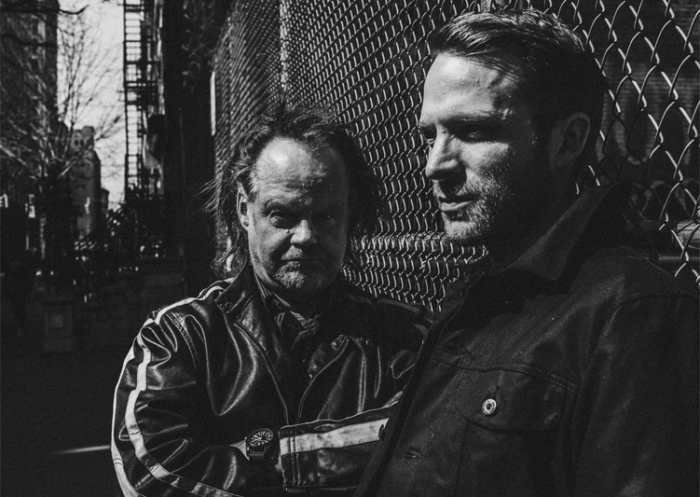
Anthem joined Fessenden and Call at B Bar and Grill in Manhattan this week to eavesdrop on this exclusive 1-on-1 conversation and for our photo shoot before Depraved’s premiere at IFC Center.

DAVID CALL: I guess I have to interview you.

LARRY FESSENDEN: Well, that’s novel.

DAVID: It is. I haven’t done this yet.

LARRY: I’m just gonna sit here—yes and no answers.

DAVID: We’re gonna sit here and stare at each other. So you like horror movies, huh?

LARRY: [Laughs] This is where we met.

DAVID: This is where we met. This is almost the exact booth we were sitting in.

LARRY: This is where it all began.

DAVID: I guess that sort of brings me to, where did it begin for you with this?

LARRY: When I was a kid, I just always liked this movie Frankenstein. I read the book eventually. Of course, it’s traditionally a bit of a disappointment for a horror geek because it’s so much more a thoughtful book than you’d expect. Of course, as life goes on, you realize how profound it is and you learn that it was written by an 18-year-old girl. It really has an amazing legacy. But it all came from the early Universal Pictures and that creature designed by Jack Pierce with the flat head and the bolts—it’s crazy. I always find it worth mining this story, and I wrote the Depraved story like 10 years ago. It was coming out of the current events and that’s why there’s the Middle East veteran aspect of it, and just the way technology and medicine has gotten more and more sophisticated. All of that intrigued me and seemed to play into all the themes. Then the loneliness, the monster, and all that. It’s a rich soup.

DAVID: Yeah, the loneliness of the modern age and whatnot. Something that struck me while we were shooting and noticed when I saw the rough cut was that you have such a hodgepodge, unique mixture of cinematic language. You almost created your own in certain places, which is really exciting. What were some of the influences?

LARRY: My base instinct is to very much design every sequence based on, “Whose perspective is it from?” and “What is the emotional thing?” I ad nauseam refer to Hitchcock because he was very deliberate in his design. From there, the agenda was to tell it from the monster’s point of view, so that sets up certain rules. Then of course halfway through the movie, we fracture it and it’s then from Henry’s point of view. It already had a very specific structure. It was sort of a passing of the baton. I think subjectivity is worth highlighting in this story because it really reminds you that everybody comes from their own specific place, especially if we think about politics now. Everyone’s being influenced by their own news media of choice and so they have a very specific take on reality based on their influences. Our story is supposed to highlight that. Also, I’m telling a story about how the brain is really where it all starts, which is obviously from the Frankenstein story, and since you’re making a Frankenstein movie, you wanna talk about the brain. Then we brought in all kinds of strange imagery. James Siewert did all these animations and you’re sort of highlighting all that. I felt that the story could sustain all that. It’s all about how you take in information. There’s also imagery of art and books that he’s read. It’s about the whole enchilada, you know? It’s about what it is to be alive. There’s so much stimulus coming in. I felt the form of the movie could actually handle that because the story, in a way, is so simple and familiar.

DAVID: One of the things that I loved and drew me to it was the ways in which you sort of departed from other cinematic Frankensteins. I mean, how many have there been now?

LARRY: It must be dozens. Then there are ones like Frankenstein like Species and Robocop.

DAVID: When I read the book after we met, I was really taken aback with how lyrical it was and how you switched perspectives between the doctor and the monster. I thought our version sort of hewed the most closely to the book, even though it was modernized. Is that something you tried to do?

LARRY: I always say that I didn’t re-read the book to write this script. I just internalized it over the years. But one thing that both Frankenstein and Dracula, the books, do—I think it was a trope of literature at the time—is that they tell the story through letters, which is so interesting. You realize it was a very modern idea that one thing is from the diary of the captain who discovers the doctor off in the wilderness and brings him home and then he tells his story. Then you build the monster and the monster tells his story. You keep going into these subjective worlds. In a funny way, the way we made the film, it is that kind of structure where you’re first with the kid who then becomes the brain and then you’re with the monster and then the doctor. It’s kind of a tradition that’s baked into the telling of the story and it was fun to find a modern way to do that.

DAVID: Why do you think no one has done that before?

LARRY: You could say that Frankenstein, the 1931 James Whale/Boris Karloff movie, established a certain trope that the monster is sad, but he’s gonna be scary and he’s gonna attack the town and the villagers, and then you’re gonna get your torches and burn down the windmill. In a way, it was so potent that that’s the way the story is told. I don’t think people were dealing with identity and the way the brain works and some of the things that became interesting to me. There were two books that influenced me: one was about a person who’d had a stroke and how they could reconnect their brain [My Stroke of Insight by Jill Bolte Taylor]. You have that whole speech in the movie where you’re going, “Synapses!” and all this stuff. The horror fans love that! [Laughs] Whatever. The other book was called On Call in Hell [by Richard Jadick], about a field surgeon that really advanced medicine in Iraq by making the triage portable. He would bring the hospital to the soldiers and we’d save a lot more people that way. So I just thought about that kind of medical genius and what he would maybe want to do when he came home and felt bad for himself. That was part of it.

DAVID: One of the things that struck me when I was reading the book is the parallel between the creation myth and the ways in which the doctor’s plight is similar to that of an artist’s or a filmmaker’s in the sense that a film is realized into the world outside of your control. Did you feel a certain kinship?

LARRY: Well, everything is going to come back to that process. It is a creative process making a monster and making a film. Also, the thing I did add to the story was the idea of the jealousy between the two creators. In other words, you’re the artist and Polidori is your financier. I think their squabbling is very much about an artistic dilemma: who owns the rights to it? My favorite line that Josh [Leonard] delivers is, “You couldn’t have done this without me! I was in the room!” How many times have two writers, or a writer and a director, said to each other, “I came up with the cool part of the story!” I do think I wanted to capture that aspect. It is about creativity. The whole movie is about human enterprise and where it goes astray. I’ve done that in other movies where I suggest that the arts is the best way to express boundless ambition, as opposed to in a world where it’s going to do harm. Keep ambition in the arts!

DAVID: One of my favorite sequences from the film—granted, I’ve yet to see the finished product, but from what I saw—

LARRY: Oh, that’s been cut. [Laughs]

DAVID: The museum. Is that all still there?

LARRY: Of course.

DAVID: The Polidori character takes the monster to the Metropolitan Museum of Art and basically introduces him to art.

LARRY: The history of the world.

DAVID: The history of the world through art. I loved it because it seemed like the creature after that has got in touch with his more human instincts.

LARRY: Yes.

DAVID: And also became more of a pronounced individual.

LARRY: I really feel that’s true. In the beginning, he’s sort of like an infant. He’s learning puzzles. I love the scene where you’re sort of impatient with him, like many fathers that don’t quite get their kid until they grow up and start to be more cognizant. Then we have the ping-pong where he’s learning the idea of competition and all of that. But Polidori introduces him to, literally, the history of ideas and emotions and morality and so on. After that, he’s kind of an adolescent. So the thing I liked about the story is that you get to sort of tell an entire lifetime of development in this one succinct allegory. Of course the sad thing is, once you’ve been educated, comes your awareness of duplicity and moral collapse and narcissism like everybody. Then things go terribly wrong, unfortunately. You learn that your parents are vulnerable. That’s all in one little story.

DAVID: Much like an adolescent, the creature starts lashing out and disrespecting seniority.

LARRY: Goes to the titty bars! [Laughs]

DAVID: Yeah, yeah, yeah, yeah.

LARRY: As you would do.

DAVID: As you would do as a teenager exploring New York City.

LARRY: Exactly, and things go horribly wrong. His uncle gives him cocaine. It’s a real shitshow.

DAVID: You grew up in New York. Did you always want to set the story here?

LARRY: When I was first talking about it, I called it my Rock ‘n’ Roll Frankenstein. I just pictured a bunch of badasses sitting around in a loft. It was always the conceit to set it in an everyday place. In those days, Brooklyn was more mysterious. I started thinking about this story in the early 2000s. The idea of Brooklyn—who knows what goes on in all those lofts? Now I can tell you what goes on there: drinking IPAs and Tweeting! [Laughs] In the old days, it was a little more mysterious and I loved the idea that somebody was building a creature somewhere.

DAVID: There are still some parts of Brooklyn where you could probably get away with that.

LARRY: We chose Gowanus, which is great because it has the most toxic stream in America.

DAVID: I could see a creature crawling out of that.

LARRY: Yeah, well, that’s a whole other movie. In fact, I don’t want to overplay because we didn’t really use the canal enough.

DAVID: You could do a swamp thing.

LARRY: Oh, absolutely. Don’t get me started. I’ll do Creature from the Black Lagoon: Gowanus!

DAVID: You could turn that into a whole trilogy.

LARRY: Don’t give out all of our ideas here! Holy shit.

DAVID: I know you produce an awful lot. Do you have another thing you wanna direct?

LARRY: What I mostly wanna do is direct. I’ve got two movies I’m trying to get financed and made, but then I really wanna go back to directing because it takes too long between projects. Part of it is that I get distracted and enthusiastic about producing, but it’s not even my forte. I’ve had the luck to meet a lot of great filmmakers and try to usher them into the world, but it took me a long time to make Depraved and I was very happy to be doing that. That’s my passion, not producing. The only reason I’m a producer is that I always wanna get everybody excited about their work, and help them find their vision and be truth to it. So I do find that it’s mostly a mentorship or just sort of encouraging them. I’m not good with numbers. I hate dealing with agents.

DAVID: Paperwork.

LARRY: It’s terrible. Thank god for the producers on Depraved: Chadd Harbold and Jenn Wexler.

DAVID: Who are awesome.

LARRY: Liz Astor… I’m very lucky to have that kind of support system. So yes, I’ll be directing more. As for what, I’m always secretive until it’s really happening.

DAVID: That’s probably a good idea.

LARRY: You don’t wanna be too huffy puffy and then it never happens. Good lord.

DAVID: [Laughs]

LARRY: My most famous movie never got made. The Orphanage, a remake of a real movie.

DAVID: Is that dead?

LARRY: Well, it’s still on IMDB. That’s the point. You can’t erase these things anymore. But that was a great experience. I wrote with Guillermo [del Toro]. As I say, onto the next thing.

DAVID: You’ve been doing this for a long time. I’m hopefully gonna be directing my first feature in the next year.

LARRY: Congrats.

DAVID: Thanks. Is there anything you learned on this that you hadn’t learned previously? Also, is there anything you’d like to impart onto me?

LARRY: No. It’s just the greatest privilege to make a movie and to get the team, you know? You really want a team that’s making the same movie with you and understands the scale that you’re able to work at. That was sort of my big thing. I tried to make a movie on a bigger budget for a long time and you need name actors to do that. I got good actors instead. It really is true that, as long as everybody’s making the same movie, you can be so creative and get the shots you dream of. In a weird way, there was no compromise on Depraved, but on the other hand, certain things could’ve been done differently. You really have to not fight that aspect. You have to embrace what you have. You’re gonna shoot in the Northwest?

DAVID: Yeah.

LARRY: That’s incredible.

DAVID: You shot back there before.

LARRY: Most of all, you have to work with what you have. I always say, let fate be one of your partners, then your limitations become your strength. That’s really the pep talk I give because you can sit around and moan and groan that you don’t have enough time. The funny thing is, even the big movies—Scorsese never had enough time to do Silence. It took him 20 years to get it made.

DAVID: And I’m sure there’s still stuff that he wishes he could’ve done.

LARRY: Oh yeah. Film is always gonna haunt you and there’s always something that you might’ve done differently, but you have to be in the moment. Then it becomes thrilling and you’re riding a wave. You just want good partners who understand the mission and then it’s a blast. It is what we had with Depraved. I felt like everybody was in it to win it.

DAVID: When you feel like you’re all playing on the same team, it’s a much more enjoyable process, even when things are going badly. Having worked on a few bigger-budget things, it just gets so demoralizing so quickly when it feels like most of the people are not there for any reason other than to get the paycheck.

LARRY: That’s no way to make art. If you care about what you’re doing, especially if it’s gonna be your script, you realize you really want everyone to bring their passion and their A game. Then the budget isn’t the point. It’s about the amazing discoveries you make with every detail, every shot, and every acting choice. It’s fantastic. It couldn’t be better. It’s such a privilege. I made this movie on a raft on a lake with a giant rubber fish and some kids on a boat, and whenever the crew would complain, I was like, “You know—people your age are in Iraq right now.”

DAVID: [Laughs]

LARRY: “There are people digging trenches. They’re fighting. You should be just having the best time.” That’s the thing about making movies.

DAVID: I completely agree.

LARRY: That’s all we’ve got.

See Interview HERE

March 21, 2019
Share:
Facebook Twitter Email

DEPRAVED review round-up!

“Whilst the Frankenstein story has been told hundreds of times across the world of cinema,
Depraved somehow manages to feel completely fresh.”
HOLLYWOOD NEWS

“a dramatic character piece that will reward those looking
for a thoughtful take on Mary Shelley’s masterpiece.”
HORROR FUEL

“Depraved marks one of Fessenden’s best films to date,
showcasing the director’s ability to craft a memorable,
stylish and creatively astute narrative on a small budget.
His status as a darling of horror and New York indie cinema
has only be reinforced with this feature.”
 FILM PULSE

“A moving drama of post- millennial conflict.”
 PROJECTED FIGURES

 “DEPRAVED is an inspired Gowanus-grungy DIY Frankenstein,
with director Larry Fessenden pushing through to the subtext of parentally irresponsible men.
Grabs you with its ideas (and imaginative production moxie). Somebody buy this.”
Josh Rothkopf/ TimeOut NYC

“DEPRAVED might be Larry Fessenden’s best movie yet.
Certainly his best since “Skin and Bones,”
his fantastic 2008 episode of FEAR ITSELF.”
Simon Abrams (Vulture/ Robert Ebert)

March 21, 2019
Share:
Facebook Twitter Email

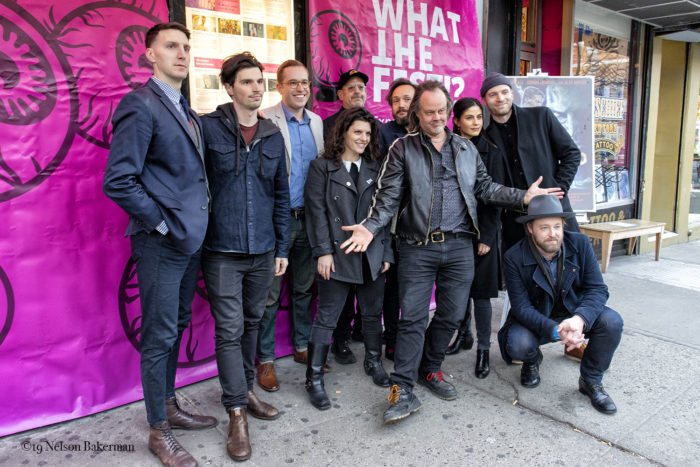
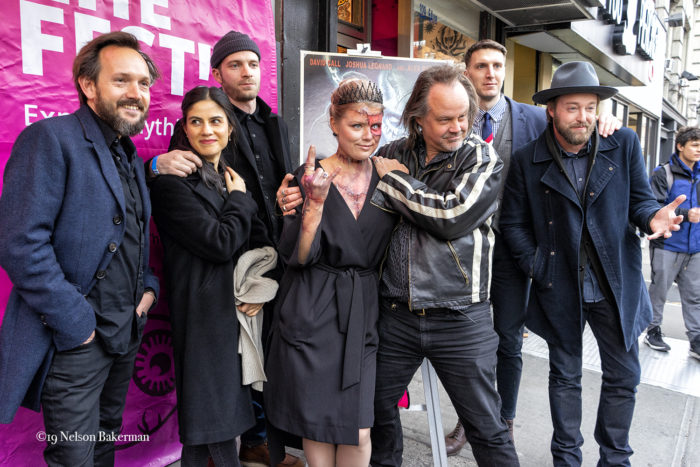
Big Night Out: DEPRAVED premiere at WHAT THE FEST!?

March 19, 2019
Share:
Facebook Twitter Email

IndieWire: DEPRAVED “fun and febrile tale that takes the moral temperature of our time with an almost invasive degree of accuracy.”

‘Depraved’ Review: Larry Fessenden’s No-Budget Delight Brings Frankenstein into the 21st Century

Indie horror maestro Larry Fessenden refashions Mary Shelley’s immortal novel into a modern story of trauma and self-interest.

Hell-bent upon finding evidence of ancient monsters in the modern world (often by exploring how they continue to be reflected in the raw stuff of human nature), Larry Fessenden launched his filmmaking career with a Frankenstein story, and he’s been working his way back to the subject ever since. Traces of Mary Shelley’s mad science can be found in many of the low-budget horror movies that his Glass Eye Pix has produced since 1985, and they’re even more apparent in the ones that he’s directed: From the ecological hubris of “The Last Winter” to the monster-is-us mythicism of “Wendigo” and the selfishness that percolates beneath all of his narratives and bubbled to the surface in “Beneath,” each of his features has dissected a severed limb from Shelley’s foundational story.

With “Depraved” — which is perhaps both his least expensive and most ambitious movie — Fessenden sews his entire body of work together. More than a masterclass in DIY cinema, the result of this deranged experiment is a fun and febrile tale that takes the moral temperature of our time with an almost invasive degree of accuracy. If Fessenden’s reach inevitably exceeds his grasp, well, whose doesn’t these days?

Shot on the 200th anniversary of Shelley’s novel (after more than 15 years of kicking around Fessenden’s head), “Depraved” wasn’t conceived as a no-budget riff on a story that’s traditionally been adapted by large studios, but none of the bigger fish were taking the bait. But Fessenden, a Dr. Frankenstein in his own right, wouldn’t let a lack of cash get in the way of his creation. And so, with the help of some talented collaborators and a very flexible Gowanus warehouse, he forged ahead on a film that resurrects Shelley’s 19th century masterpiece with a decidedly 21st century mentality. This is a Frankenstein for the “move fast and break things” era, for a time when people really can fuck with God from their parents’ basement, and every tech giant from Facebook to Theranos is flying by the seat of its pants. The world changes faster than we do, but we can always see our true selves reflected in our visions for the future.

“Depraved” begins on its most benign note of recklessness, as a couple of Brooklyn twentysomethings (Owen Campbell and Chloë Levine) have a stilted post-coital argument about commitment; she wants him to stay over, but he’s already gotten what he wanted. Needless to say, you won’t be particularly heartbroken when the guy gets stabbed on his walk home. From there, he’s dragged to a scuzzy laboratory nearby, where his wet brain is transplanted into the stapled, alabaster body that Henry (David Call) has been stitching together in secret.

With the final piece in place, Henry — a grieving but gifted field medic who’s suffering from PTSD after serving in the Middle East — is ready to flick on the lights. And so Adam (Alex Breaux) is born. A mute and mangled collage of different corpses who’s brought to life by a mysterious drug, the careful precision of Breaux’s cyborg-like performance, and also the brilliant makeup work of Peter Gerner and Brian Spears, Adam is a far cry from the lumbering green oaf that James Whale made into a Universal icon (think Alex Pettyfer’s character from “Beastly,” only much less humiliating). He’s like a reformatted computer that’s been assembled from old scraps. And Henry, who’s sweeter and more optimistic than Dr. Frankenstein ever was, can’t wait to program him. His old-money financier (“Unsane” actor Joshua Leonard as the single-minded Polidori), has other ideas. The rest is history: Men become monsters, monsters become men, everyone flies too close to the sun, and gravity takes its toll.

Despite the twisted implications of its title, “Depraved” is a rather sensitive, emotionally-driven story that’s at its best when its characters engage one another with the best of intentions. The film is seen through a woozy subjective haze (James Siewert contributes a clever lo-fi effect to get into Adam’s headspace, as colored lights fizz and pop across the entire screen to suggest his synaptic connections), and the first half in particular is padded with a gauze-like softness.

Surprised by Adam but only repulsed by himself, Henry becomes the heart and soul of the movie, and Call’s delicate performance walks a fine line between altruism and self-interest. To what extent is Henry conducting these experiments for the benefit of all mankind? To what extent is he just perverting the laws of nature in order to quell his personal grief over not being able to save his fellow troops? It’s hard to say — especially for Henry. Whether teaching Adam how to play ping-pong, or introducing Henry’s creation to his semi-estranged girlfriend (Ana Kayne), Call is always wrestling with the destructiveness of his character’s salvation, and always using one eye to watch how Henry’s worst impulses are borne out by Adam’s behavior. “Depraved” offers a skewed glimpse at what “The Social Network” might have been like if Mark Zuckerberg had a conscience.

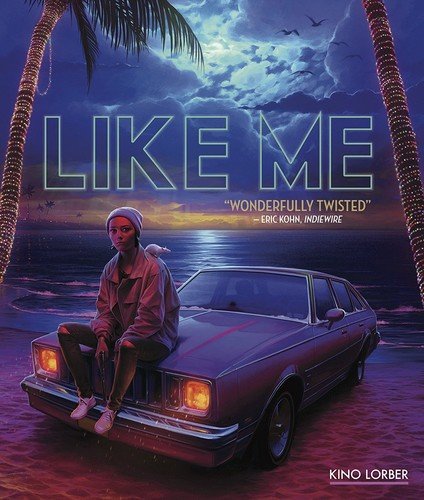
That comparison extends itself to the film’s structure, which is linear but unstable. “Depraved” only moves in one direction, but it possesses different people as it goes along, and looks at Adam from their perspective. Fessenden’s approach reflects the shape of Shelley’s novel (at least to a certain extent), and stresses how everyone brings their own kind of moral equivocation to these grotesqueries. Polidori hijacks the story in order to show Adam some culture, and then Henry’s girlfriend slips in to show Adam some affection; the impressionable golem soaks up what he sees like a sponge, and becomes a fun-house mirror for the self-interests of those he meets. It isn’t long before strangers become potential victims (Addison Timlin, who co-starred with Fessenden in the dementedly brilliant “Like Me,” gives the movie a well-timed shot in the arm as a curious bar-dweller who’s too kind for her own good).

For the most part, however, “Depraved” suffers for pulling focus away from the fragile bond between Henry and Adam. As a caricature of start-up culture, Polidori is a poor complement to the wrenching journey that the rest of the characters are on; Fessenden wanted to make a version of “Frankenstein” where we feel empathy for both the monster and his creator, but he may have underestimated how successful he was in doing so. Henry brings the war home with him so vividly that his brewing conflict with Polidori is hard to believe in comparison.

It’s as if Fessenden, whose work has always satirized human selfishness, is a bit uncomfortable with the idea of taking it seriously. The tortured nuance of the film’s core gives way to a broad throwdown between right and wrong, and the DIY charm that “Depraved” relies on to stress how we’re all stuck in a horror movie is replaced by an overextended attempt to make this story feel larger than life. It’s possible that Fessenden — who finds a satisfying way to bring the story home — has succumbed to the same American exceptionalism that fuels so many of his characters. More likely, he was seduced by the scale of the original “Frankenstein” story. Either way, “Depraved” has the brains to survive all sorts of mottled damage to its body, and resolves as a welcome reminder that independent cinema would be a better place if everyone shared Fessenden’s ambitions for it.

Read Full Review HERE

March 19, 2019
Share:
Facebook Twitter Email

Yellow Veil Pictures boards global sales on Fessenden’s DEPRAVED

New York and Los Angeles-based Yellow Veil Pictures has come on board to handle worldwide sales on genre and industry veteran Larry Fessenden’s horror film Depraved

The title is set to receive its world premiere tomorrow (20) at the IFC Center’s What The Fest?! and is styled as a contemporary reimagining of Mary Shelley’s Frankenstein.

Depraved centers on a field surgeon (David Call) who builds a man from body parts in a makeshift lab in Brooklyn. When he succeeds, the surgeon is overcome with remorse and tries to protect his creation (Alex Breaux), although it soon becomes unclear who is in greater need of protection. Joshua Leonard, Ana Kayne, Chloe Levine, and Addison Timlin also star.

Yellow Veil Pictures co-owner Joe Yanick said, “Depraved represents everything that is great about Fessenden’s work. It’s an honour to be able to work with a director I’ve so greatly admired.”

“It is very exciting to be working with Yellow Veil on this project,” said Fessenden, whose New York-based production company Glass Eye Pix produced Depraved alongside and Joe Swanberg’s Forager Film Company. “I am enthused to partner with a young company that is finding its groove in this fickle business, and I look forward to seeing what they can do to get my movie out into capable hands.”

Read Full Article HERE
March 18, 2019
Share:
Facebook Twitter Email

DEPRAVED second show added! Wednesday 3.20.19 at 7:30

By Popular demand,
WTF has added a second show to the opening night presentation of
DEPRAVED

Wednesday 20 March at 7:30 Get tickets while they last

“Fessenden’s macabre, inspired take on the Frankenstein story is heartbreaking as it is horrifying…
Alex Breaux’s performance is stunning in its physicality and pathos.”
—Dennis Darmody, Cinemaniac


March 17, 2019
Share:
Facebook Twitter Email

Cinemaniac: Depraved is “incredible”

Review by Dennis Dermody of Original Cinemaniac, March 17

Depraved. Larry Fessenden’s macabre, inspired take on the Frankenstein story is heartbreaking as it is horrifying. Set in a warehouse/loft in Brooklyn, Henry (David Call) is a former army surgeon suffering PTSD who has stitched together body parts and brought to life Adam (Alex Breaux). He reluctantly becomes a father-figure to this re-animated creature, training Adam how to talk, think, dress himself, play puzzles and ping pong and learn that “gravity” is his friend. Fessenden gets to the core of Mary Shelley’s story, this go-round the science used is more drug-related that electrical. But it also gets the folly of the God-like doctor learning to regret and fear his own creation. Alex Breaux’s performance is stunning in its physicality and pathos. Fessenden truly is a hero of mine- he has consistently made some of the most lyrical, bizarre, thought-provoking genre films. This Frank ‘N The Hood is one of his very best.

March 14, 2019
Share:
Facebook Twitter Email

DEPRAVED teaser on Youtube