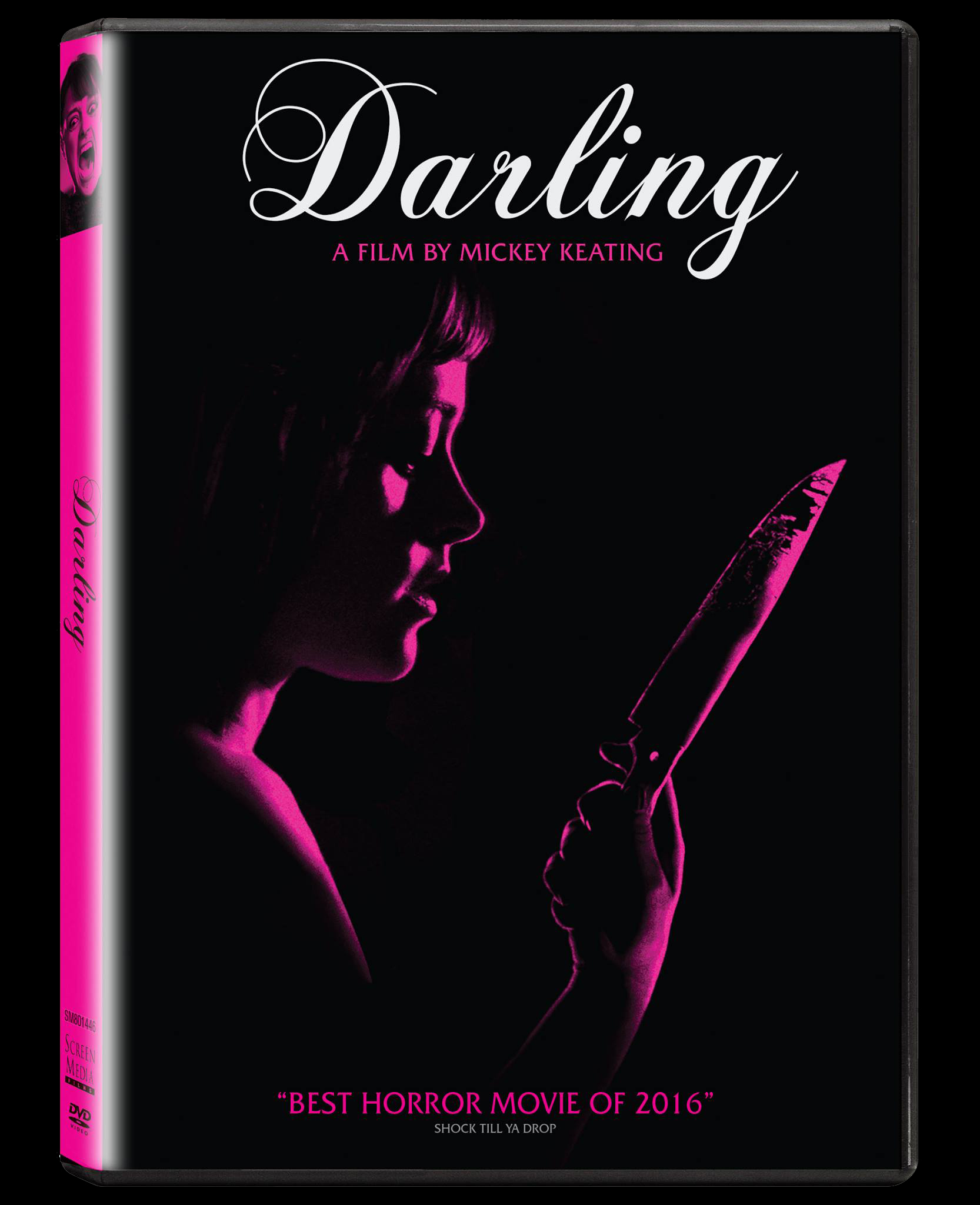
Review: Why DARLING is the Best Horror Movie of 2016
Filmmaker Mickey Keating’s deft fest hit is an indie horror landmark.
It’s not what you have.
It’s not the colors in the pallete.
It’s not the gear.
It’s not the tech.
It’s not the government funding. It’s not the marketing.
Art is none of these things.
No, art is simply the reflection of the artist, authentic and true and brave and bold and alive and visceral. Art is using whatever you have at your disposal to project the dreams and nightmares and hopes and fears and horrors and truths and fantasies you want to share in ways that are pure. In ways that are yours, unique to you.
Of course, when it comes to pushing the definition of art into the confines of an intensely commercial industry, some of that purity is bound to be lost. And so it goes with cinema. And if you truly love movies, this amalgam of all the liberal arts, you have to be forgiving, I think.
I know I have had to be. As a fan.
Especially in regards to a populist genre like horror, you have to navigate plenty of trend and soft-witted terrain to find the “moments” that transcend. And I’m fine with that. I have long lived for moments. Life is like that. We endure and suffer and when the moments come, we remember. And we hold on to them.
But once in a while a horror film appears. A real deal, peel back the surface and see the slithering worm-life underneath horror movie. It comes not with a Michael Bay budget or major studio marketing campaign, but with a mandate to make a movie that matters; something alive and screaming, something dangerous.
Recently, I reviewed a no-budget piece of transgressive cinema masquerading as a horror film called UPSIDEDOWN CROSS and I bring it up now because it was one such film. UPSIDEDOWN CROSS is a picture I fear will get lost in the DIY DVD quagmire and I want to make sure more people see it. That film applied the principles of making a successful feature-length independent movie while also functioning as direct expression and statement of its maker, in this case, director William Hellfire.
The movie we’re chiefly here to discuss today, right now, is kin to that film in philosophy, but it’s more than a bit different in its presentation. It’s an immaculate work of art and one of the most affecting horror movies I’ve ever seen.
As you already know, that picture is director Mickey Keating’s poisonous psychodrama DARLING, a movie that breaks rules and is filled with so much innovation and such daring, deceivingly simple vision, that I actually yelled out loud as it un-spooled, shouting in excitement and a joy stemming from the revelation that the people that made it were not only making an auteur horror movie that was progressive and meaningful, but that a third party was backing the movie, distributing it and ensuring that people saw the movie and knew it existed.
DARLING. Sweet, horrible, savage DARLING.
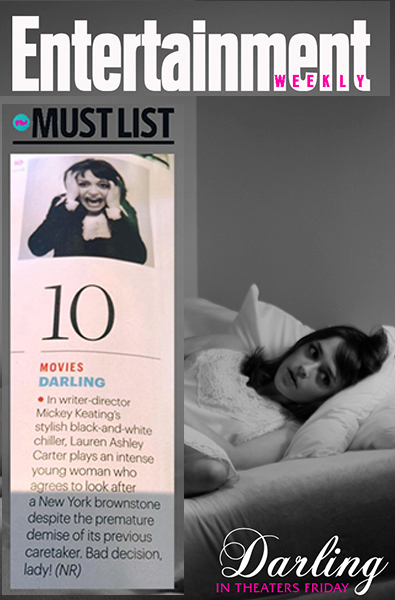
Imagine early incarnations of David Lynch, Roman Polanski, Lars von Trier and Guy Maddin on a three day meth bender in one of Stanley Kubrick’s suites at The Overlook Hotel and you’ll get a sense of DARLING’s mission statement. Made for very little money with a skeletal cast on spare locations (primarily a looming house in what I think might be upstate New York), DARLING casts the doe-eyed Lauren Ashley Carter (JUG FACE) as an obviously disturbed girl who accepts a position as the caretaker at posh mansion owned by an elegant, icy and presumably wealthy woman (BLADE RUNNER’s Sean Young, looking great and a welcome presence back on the screen). Like Jack Nicholson’s Jack Torrance at the aforementioned Overlook in Kubrick’s impossibly influential THE SHINING, it’s clear that Carter is crackers from frame one. But considering the home’s haunted history, it’s a given that she’ll go even madder as the movie progresses. And she does.
My god, does she.
Filmed in stark black and white, an affectation that both glosses over any budgetary restraints while adding elegance, mystery and menace by flipping the mundane parameters of the natural, shot-on-video world into monochrome, the film’s visual sheen echoes one of the picture’s closest stylistic cousins, that of Polanski’s 1965 girl-gone-gaga melodrama REPULSION. There’s also a nod to either Woody Allen or von Trier in the way the picture is divided into chapters.
Carter is a magnificent presence and Keating knows exactly how to use her like a kind of living piece of mise-en-scene to move around his carefully controlled universe, allowing his camera to prowl after her on the streets, to stare at her from distances, to dive into her when she is most vulnerable physically and emotionally. It’s one of the greatest master/muse cinematic marriages since Jonathan Glazer’s equally unforgettable UNDER THE SKIN.
And like that unsettling contemporary nouvelle vague sci-fi horror masterpiece, DARLING relies heavily on its sound design and music to batter its helpless audience senseless.
And like Mica Levi’s discordant soundscape in SKIN, Giona Ostinelli’s alarming score here is set to stun, amplifying simple sequences into the stuff of shrill horrorshow; every movement is accompanied by an “off” sting, a loud slam of percussion, an atonal screech.
The ultimate effect is like having the most hideous of hangovers, where every soft sound splits your skull open.
Of course, Ostinelli’s soundscape isn’t all attack, there’s some lovely piano passages and Jerry Goldsmith-influenced percussion pieces that are incredibly evolved, daring and unique. But Keating takes great pleasure in abusing them, thus abusing us, the audience. A section where Carter and her potential lover/victim have a conversation in the home’s opulent dining room is murdered by Keating’s choice to nearly drown out all traces of dialogue entirely, letting Ostinelli’s music swell to uncomfortable volumes, culminating in an act of violence which is the gory punchline to the unfunny joke.
And the movie is indeed gory.
One might say that because the film is black and white, the gore has a diminished effect, but that’s not true at all. Like PSYCHO’s “chocolate sauce in the shower”, the bloodletting in DARLING is a character, foreshadowed in quick, violent bursts throughout and wallowed in to near blackly comic levels toward the final quarter. And like the best horror films, the grue is simply the extension of the themes of the picture, in this case, the logical culmination of the lead anti-heroine’s simmering insanity.
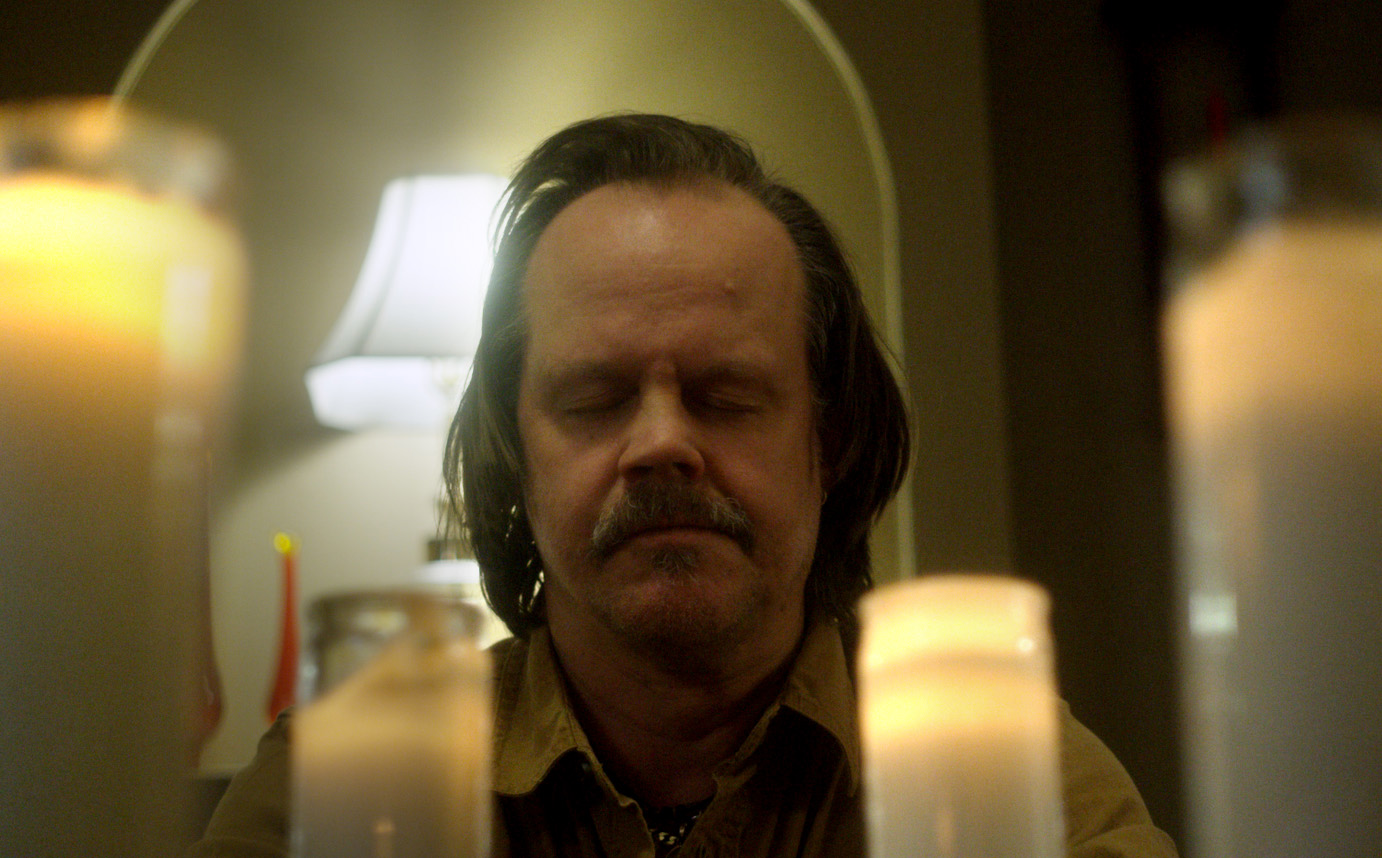
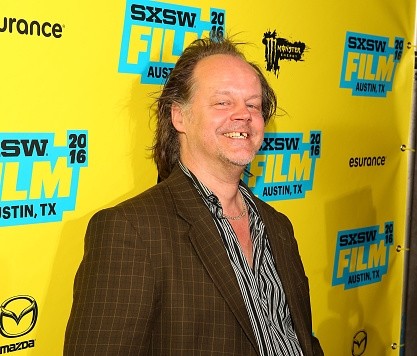
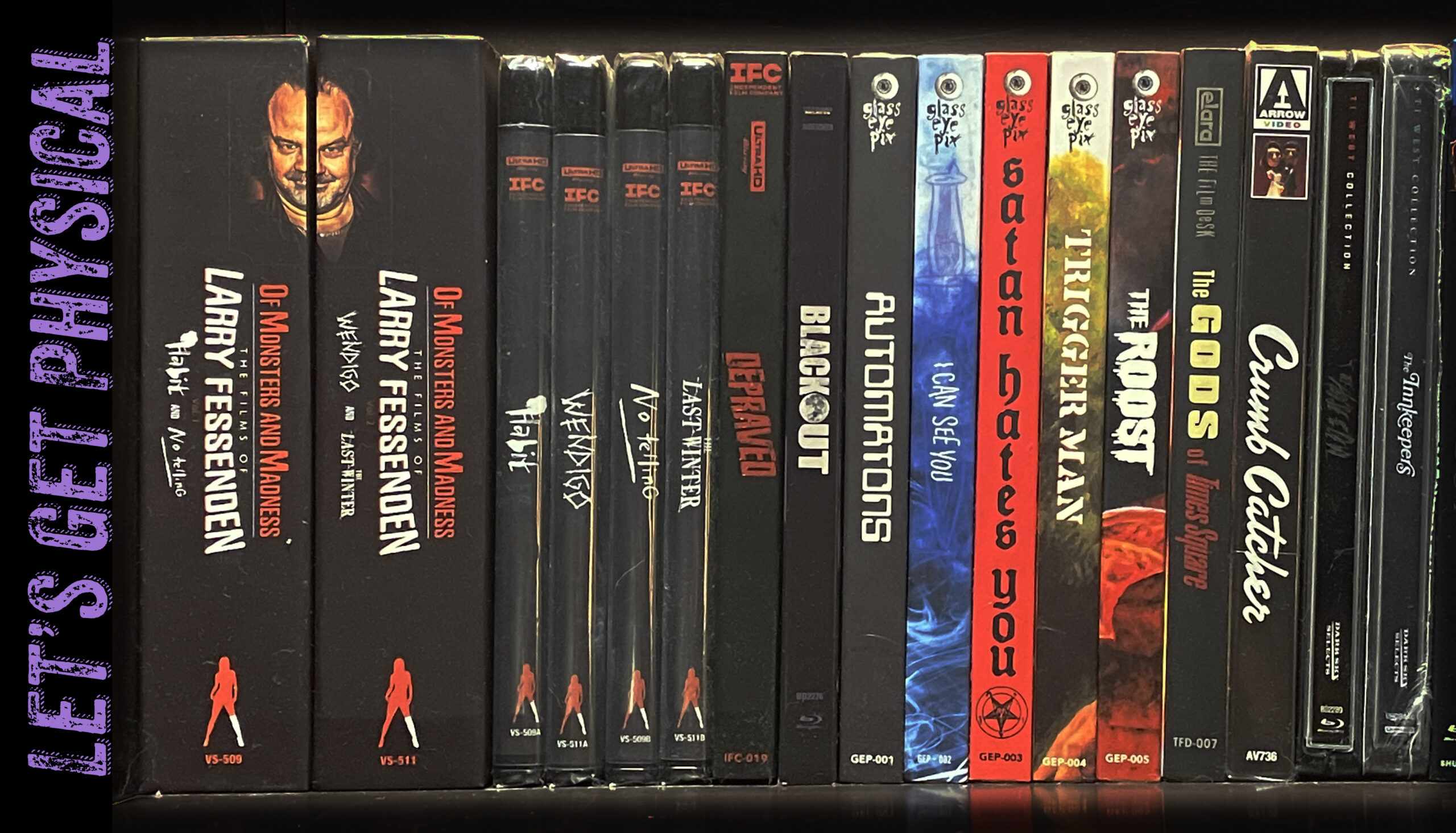
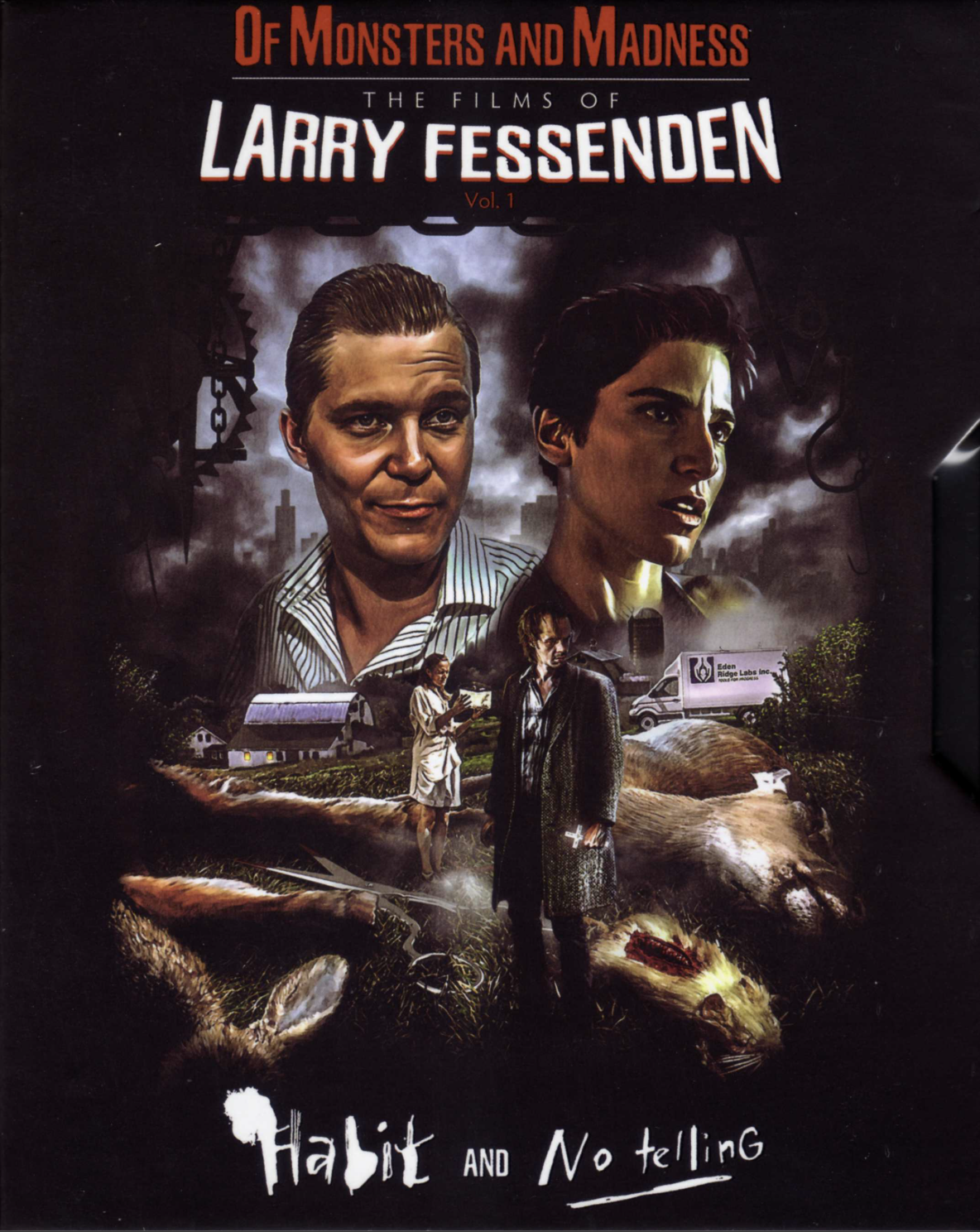
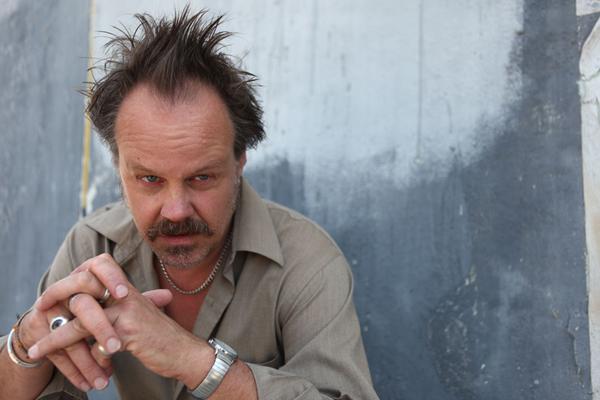
DARLING is co-produced by the great Larry Fessenden, who also appears in the film, a product of his Glass Eye Pix, a company that almost always makes interesting, modestly budgeted and wholly original horror films.
But here, backing Keating’s vision, they may have made their first real deal masterpiece.
DARLING is a perfect movie in its imperfection. It’s a movie that bends rules and defies expectations and always remains a messy, personal primal scream of a picture. It’s most assuredly a work of dark, seething art and, as the hyperbolic headline of this review screamed, it’s the best horror movie of 2016.
Well, so far, anyway.
But I can’t imagine it will get any better than this.
Then again, I haven’t seen Keating’s Sundance hit CARNAGE PARK yet…
Look for DARLING when it opens theatrically and on VOD on April 8th.
The following is an account of an interview, not a transcript nor even a very coherent paraphrasing. It couldn’t have been, because what took place was too sprawling and fractal, because that’s the nature of a long conversation, because he is a non-discriminating student of the horrific and the convivial, because I got lucky. I got lucky because I was slated for fifteen minutes and he gave me an hour and fifteen. I got lucky because, via some serendipitous allowance of mutual and overlapping interest, we both felt like talking about neuroscience, frailty, nature, fathers, and fear with another person who knows about the killing of Tim McLean. Or, more likely, I felt like it, and he wasn’t actively opposed to indulging me.I found out that I was going to be granted court with Larry Fessenden at about noon the day of, while at work, busy. I wanted to prepare something halfway interesting to talk about for fifteen minutes, as I have no idea how endlessly many people he has had to talk to, to indulge, in his life, in the recent past, at SXSW and wherever else Larry Fessenden is needed (which seems to be everywhere, judging from his sprawling involvement and socially prolific mentor’s umbrella). Below are the three questions that I printed out from my work computer and brought stuffed down and already lost in some pocket:
This wendigo, as a symbol/intentionally created myth, is good/a bit of a hero, he warns against something that we agree we shouldn’t do. What do you think about the wendigo-ization of other things, things that probably shouldn’t be warned against, but people are sometimes so good at creating a convincing myth around that they become effectively wendigo. Were these things you thought about in making the movie?
I saw somewhere that you recommended people watch Gerald Kargl’s Angst, and that you had it alongside Henry: Portrait of a Serial Killer and Man Bites Dog and Irreversible, on the shelf where you keep things you only need to watch once. You have that kind of film in you/your work, and you deal with some of the same ideas, (see Q. 1), but also have a much more playful and rocking-ness. Did you choose that balance? Is it just naturally like that? Is it necessary in a business way?
How do you manage longevity/to be prolific while remaining an “independent” artist?
I didn’t even write the third question, soliciting it instead from my brother, who may or may not have been trying to sabotage me, mordantly providing his idea of the most grossly clichéd “question to ask an indie filmmaker.” But on my limited chronological budget I couldn’t spare the bandwidth to parse out right then what level of ruin he had in mind for me, so I put it on the list, put the list in the pocket, and put myself in Shay’s Pub & Wine Bar at 6:30.
Fessenden arrived pretty punctually, maybe looking me over skeptically at first, and allowed himself to be bought a drink by our gracefully facilitating festival liaison Kaila before we headed over to his suggested seat. Now, immediately, as is the bizarro way of the world he lives in, it was time to learn about me. What’s the plan – not for the interview, for my life? What’s your day job? Where’d you grow up? Although answering them initially seemed irrelevant to me, my novicehood as interviewer showing relative to his prowess as interviewee, my answers became the geography around which he would walk his responses for the next hour. I’m not sure if I realized it quite yet, but this was a function of his incredible sensitive empathy, which which makes him the viable director, writer, actor, interlocutor he is.
I told him about my job – research, neuroscience. That I’m beginning to worry my background’s attention lies too close to the material on that grand gamut where matter becomes imagination, though that psychology and the fact of consciousness remain hopeful hubs of interest. Later, looser, he would broadly laugh at those “incomprehensible people who want to upload their consciousness,” who want it to live on in a file, experiencing itself forever, as part of a larger point he would make about beauty and stimulus. He explained that what makes the conscious experience magical are the things it gets to reckon with – the trees and bugs and films – and not consciousness itself, before comically saying, “Look I’ll contribute more than I really need to in my lifetime.” Somehow, this prompted me to mention that it annoys me that people are so comfortable saying, “I have a brain,” unconsciously asserting some atavistic dualism that they refuse to stop believing in. At this he animated tremendously, lighting up and reciting for me, complete with such precise gestural subtitles that one could have placed the quote without sound, the famous exchange from Polanski’s The Tenant:
“Cut off my arm. I say, “Me and my arm.” You cut off my other arm. I say, “Me and my two arms.” You…take out… …take out my stomach, my kidneys, assuming that were possible… And I say, “Me and my intestines.” Follow me? And now, if you cut off my head…would I say, “Me and my head” or “Me and my body”? What right has my head to call itself me?”
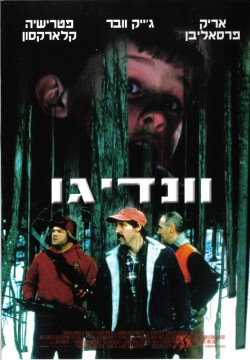
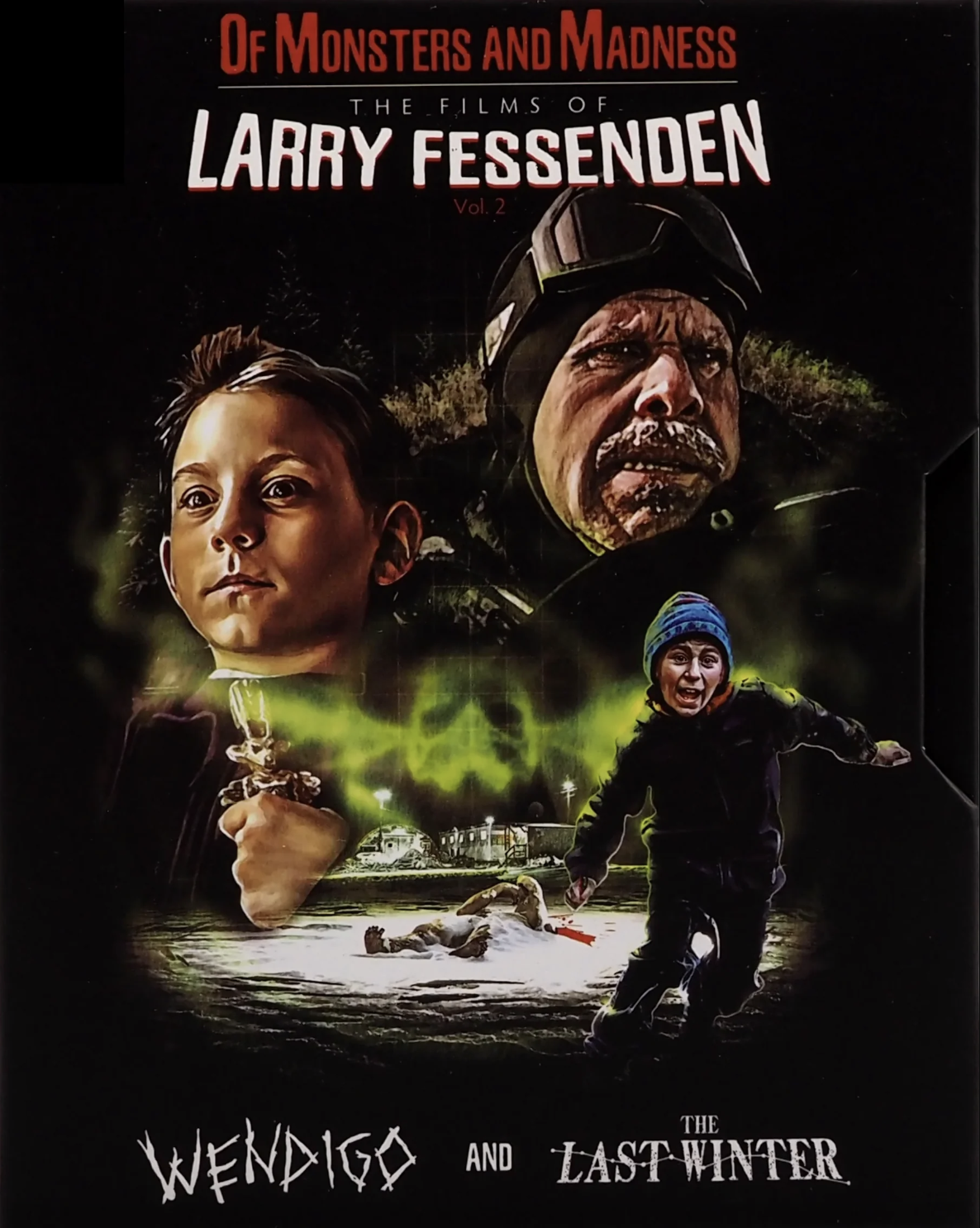
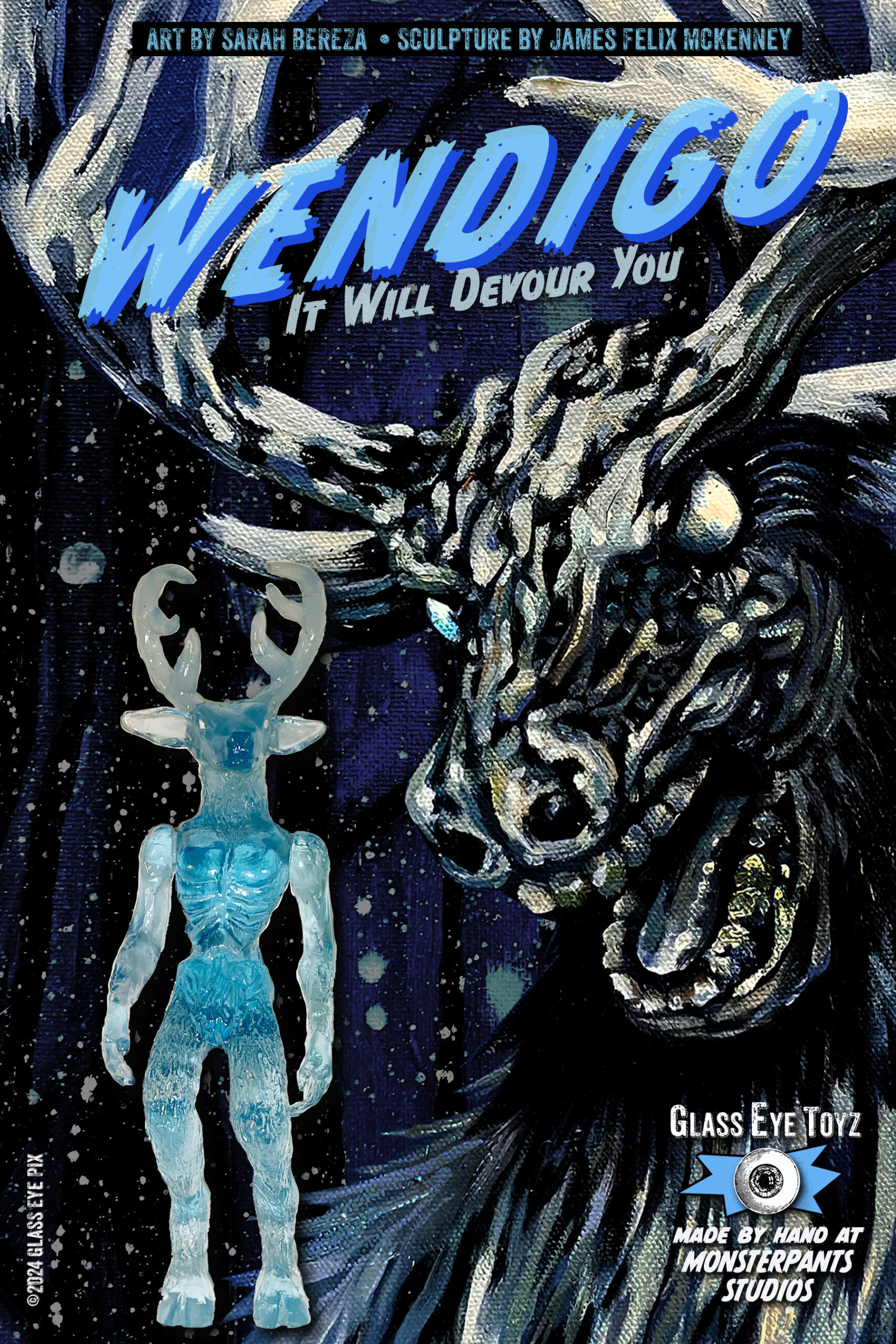
But let’s rewind. After sketching out who I was, it was my turn to inquire, so I started with some version of my first question. The Wendigo is an ostensibly mythical creature, with as many names as forms in which it appears, derived from Algonquin lore. The idea is that, after tasting human flesh, one becomes deranged and blood-buzzed, insatiably stupefied with the delicacy, turning into a Wendigo. Wendigo have a huge range of behavioral traits: some are zombified while others are rampantly patrolling the forested shores of the Great Lakes looking for meals out walking. Now, I understood the basic utility of the myth, that in a time when food wasn’t stockpiled and key lit, it served a community well to have deterrents against cannibalism.
After hearing Larry Fessenden describe the origins of the myth as related to his interest in it, however, I learned that I didn’t really understand anything. I didn’t understand the potency of the myth as a symbol of myth-making, even politicking in general. Fessenden’s deeper understanding stemmed from his being connected empathetically to the world, much more so even than his greater depth of historical knowledge – which was there too, obviously. He asked that I imagine that time, the desperation of society around food scarcity, and the constantly close danger of desperation great enough to eat someone else. So they needed, equally desperately, something to discourage this, so they created a myth around what you would become. But more than just description of a monster, the story included the circumstances of becoming that monster: that it occurred in a person who was apart, other than and isolated from his or her community to a degree such that he or she would resort to that, stoop to that. In this is contained the great power; whether or not you actually become a monster, which people can choose to believe in or not (although likely they do), the definite reality remains that you will be isolated and excluded, set forcibly apart from your peers, your people, your source of life and its richness. And, importantly, if you engage in the behavior, you are accepting and admitting that you were not “one of us” all along.
That’s the scary thing, and, from the glimpse of Larry that I got, definitely what attracted him to it. He loves monsters, he loves Bela Lugosi and the classic Universal Monsters, but, even more, he loves you. He loves the possibility for community and kindness and so what is truly scary is being set apart, being alone. This is why, for him, for them, for me, the Wendigo is successful at being cautionary. It is a physiologically mature, elaborately effective prohibitive psychic object. And that’s what he cares about.
I then got into the part about “Wendigo-ization,” about how this Wendigo is at least a sort of hero-Wendigo, one that stands to deter something that, for the most part, most of us agree is bad (cannibalism). This process exists all over the place, the packaging into tales, with all of the masterful social psychology needed to really make them a deterrent, prohibitions against becoming things we probably shouldn’t. And we need a lot of these, because in reality, a lot of things they deter are much closer than it’s necessarily safe to maintain cognizance of. Like those sometimes starving people in the base example, cannibalism is probably a lot closer to everyone’s surface then the myth cares to affirm. They wouldn’t have to be an outcast, or even frantically stranded in some snowstorm away from society to do it; it’s present and an option always. But by including that part of the story it frames society as further from collapse than it is, the line between one and the other much wider than it is. And that extends to everything that has been Wendigo’d, like people who snap and become homicidal. They are packaged as abused, traumatized in some incredibly particular way that “you’re not, right?” They’re radicalized, and so resort to some warped thing in them all along. And this serves as more of a deterrent than anything, than sentencing laws, that you will be deemed to have been extreme and need to be categorically excluded.
Maybe it can be said that the circus tent of society is pitched on perfectly placed Wendigos. The epoxy, of stories about us mixed with our belief in them, holding society together is much thinner and more brittle than we often allow.
I wondered if he agreed that a sign or symptom of topical sickness is the emergence of “Reverse Wendigo-ization,” a phrase at which if, as he should have, he had had enough of my ridiculous coopting parlance, it didn’t show. Like, what our society at one point successful cast in the light of evil, which, even if contrived, was powerfully for moral safety, is now in the position to publicly characterize new Wendigo. Trump, for example, who should have been Wendigo, and fit the description we once held, is now rounding up, with his tiny fingers, huge groups of people and attributing to them stories that distance them from us, Wendigo-izing them!
Whether or not he cared about this point, he was exuberantly outraged about American politics and the state of the globe, philosophically and climatologically. He demanded to know, “Why can’t I look at a tree?” referring to the national political conversation, “Why do we have to talk about this? Why can’t we talk about trees?” Not that he is impossibly romantic, he just feels, and iteratively expressed, that nature is vastly beautiful and powerful and undervalued as an object of mass appreciation. Earlier in our discussion, when we were talking about myth and the creation utility, he talked about much of his work’s dealing in distaste for religion, how it was not that modern religion, as a myth genre, has any particularly insidious qualities other than those by which they contextualize humanity as other than nature, as put here by some greater force to be above it. “Us? What about a fucking mountain lion!?!?”
Eventually, meanderingly, we got to the conceptual realm of the second question, of films and filmers. Why someone chooses horror (although he said he doesn’t exactly accept that label) as the genre mechanism by which to express themselves isn’t exactly obvious to me, or at least there are a ton of answers. I think it is easier for me to understand Pasolini or Haneke than it was for me to understand Larry before meeting him (What happened to Kargl eluded even Fessenden, but did merit a good exchange. He had said before that most things emerge before they can be interpreted; he wondered, then, if he could imagine himself ever making something so horrible he could never make another film). There could be so many reasons someone expresses in that way, and which one is hard to discern from home. For him, I think it’s a function of sentimentality and sweetness. I think he’s just a kind guy, and it terrifies him what’s at stake: what can go wrong, how people betray themselves and can brutalize. How much there is to lose is what’s scary for him. That’s why, watching Wendigo after sitting with him, the most vicious part, by far, was when dying father George (Jake Weber) says from his stretcher, “I remember so much about today.”
As for why Angst, he got pretty cinephilic on me. The clear dichotomist use of the objective/subjective camera positioning is a central part of what he loves in it. The ease with which it communicates disconnection and self-betrayal, two common and re-referenced themes for him. “Self-betrayal through fear, weakness, or addiction,” he says, motioning to his beer – an indication of self-knowing, though not an ashamed or angry one. It doesn’t read as sad, but almost as if he loves it, or that he hates it, but loves his knowledge of himself as in some ways weak; that this knowledge reassures for him not only his humanity but that humanity extends, unavoidably, through him, and that weakness deserves love. He knows weakness, deals with weakness, explicitly not because he loves it, but loves the love it deserves, that it deserves love, that people love, that people are frail, but can be, for a moment, made to feel better, and that other people can do that for them, and do.
We spoke about that world of shocking, horrific and explicitly violent film – Angst,Man Bites Dog, Irreversible,Salo. It was important to him to make clear – and it is an important and true and defining distinction in him – that he does not make those movies, where violence is the coveted object. He intentionally does not, as that is not what he is, not what he is interested in. Again, he is much sweeter, more sentimental, fragile, a lover of fragility, a lover of wonder and marvel, of beauty. He said he’s tried to make it through Martyrs, but just can’t, probably not because it’s too violent, but he’s just not that interested in that (although I bet he would find that the ending pays off).
Eventually, while walking him to a dinner meeting, generous as he was to waste so much energy on me before another similarly needy fan/inquisitor demanded answers from him (a Harvard psychology professor “pen pal” of his), he answered a text from his son. It, too, demanded something of him, related to the credits on their feature together, to which he broke into hysterics and mimed out, in busy Harvard square, his best hobbling Baldrick, his best “Oh yes, master Blackadder.”
Before depositing a reluctant Larry Fessenden at the gates of some white tablecloth clad place, shamelessly I asked him about getting movies made. I asked if “vetting technically competent people [was] a huge part of succeeding?” He said, “Getting like-minded people is more important, although I often seem to pick fragile ones,” which probably doesn’t disregard the prescription. He said that like-minded people are the only way to feel safe enough to make something good. He had mentioned that “if you’re not a little embarrassed by what you make, it’s probably not good.”
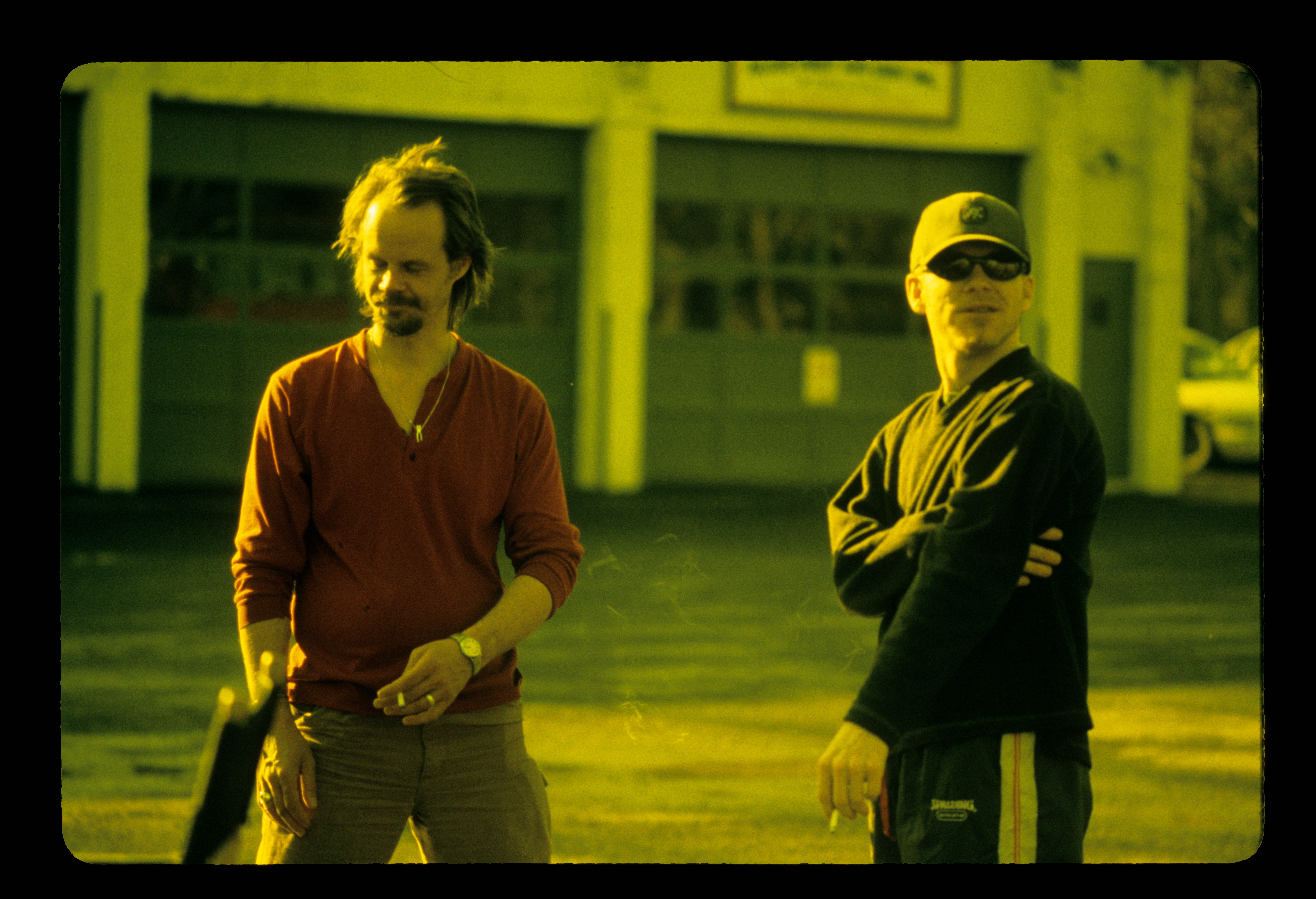
I asked him, “How does one [make movies] outside the broad middle of Hollywood?” He said something incredibly useful; that, and I’m paraphrasing, but not embellishing, “in directing an independent film, there is so much suspense, because anything can happen, because only people who are themselves… with specifically their own things to say, can make them. And that makes you indispensable, because no one else can be you, and if what you are is good, then…good. A lot of different people can direct the same Avengers movie.” And so they are dispensable, and can be disposed of and replaced. They’re like razor blades. Well, Larry Fessenden doesn’t look terribly acquainted with being well shaven, so, as I joked with another BUFF crewmember beforehand, it shouldn’t be hard to recognize him.
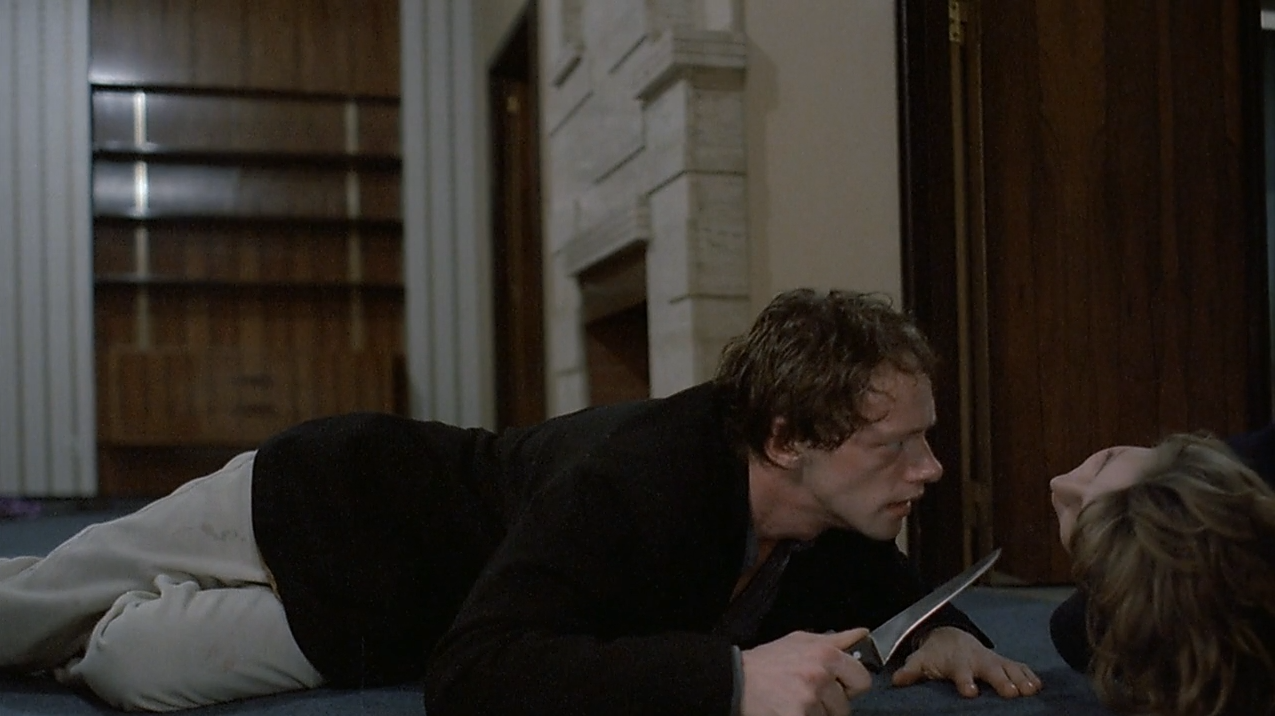
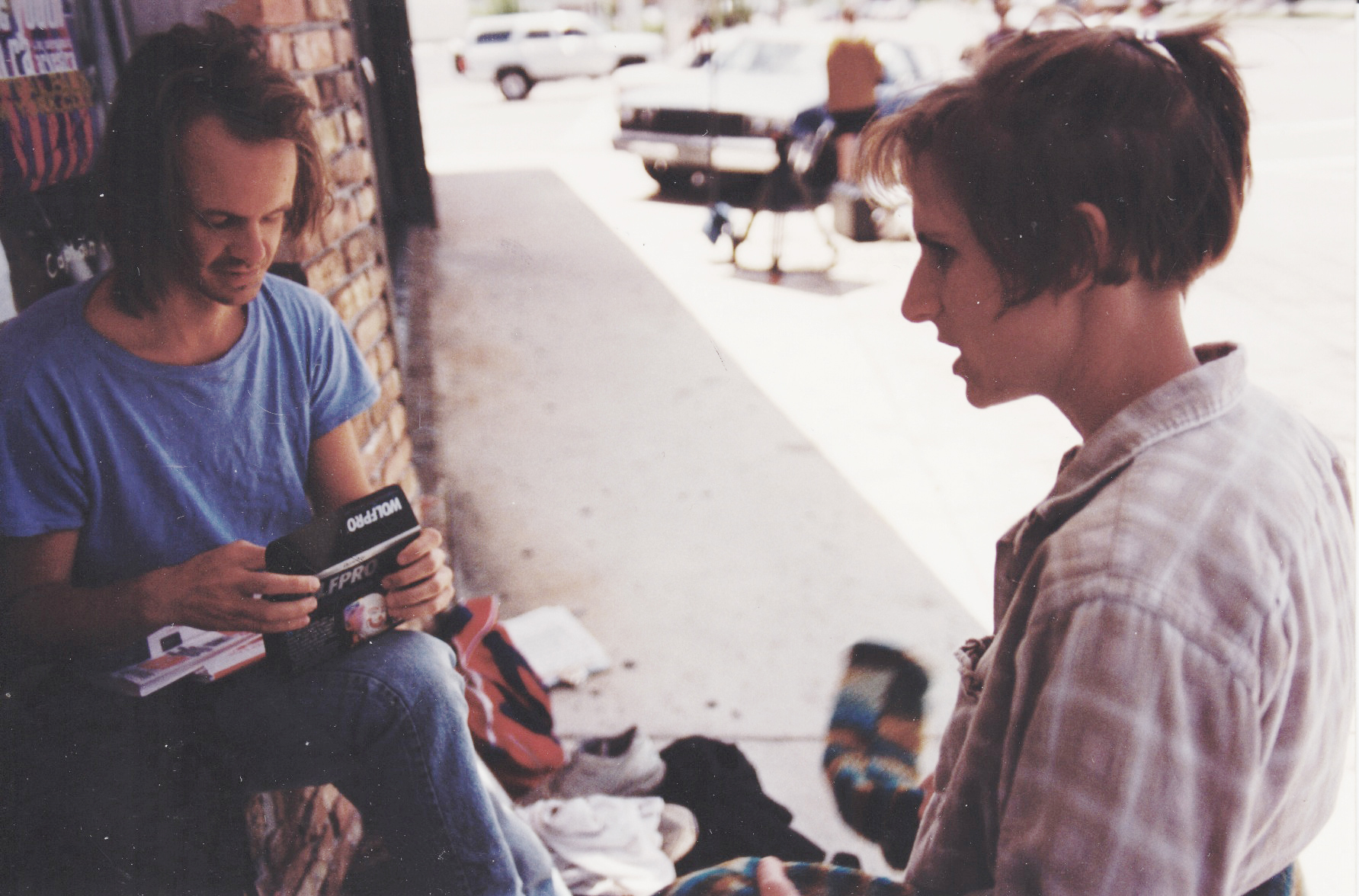
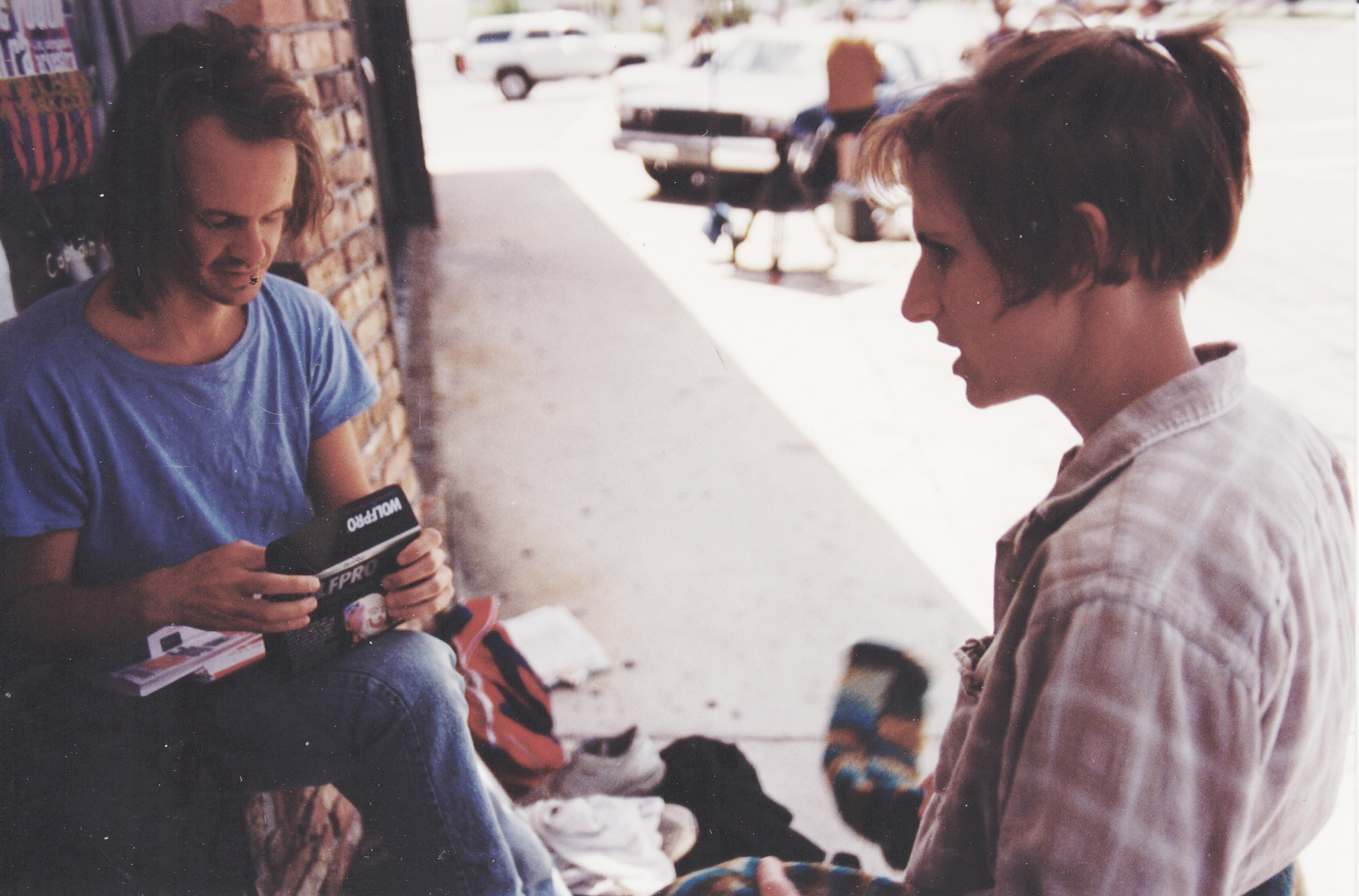
… One county over is Lee (Larry Fessenden), a layabout who lives with his grandmother until she kicks him out. Fessenden, who would go on to a lively career as a character actor and director of cult horror movies like 2001’s “Wendigo,” has a long, jellybean-shaped face, droopy hair, and a snaggle-toothed grin; he looks like rocker Nick Cave’s younger, mouthier brother and he has a loser’s kind of charm. He meets Cozy in a bar, where he confesses “I’m kind of in limbo now.” “Limbo. That sounds nice,” she replies…
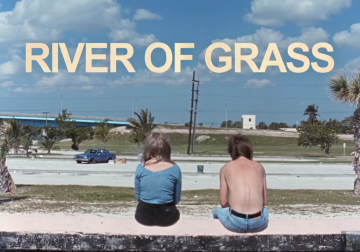
Have you heard the buzz about the new restoration of Kelly Reichardt’s debut film River of Grass? Check out some of the reviews, including an AV Club interview with Reichardt. It is now available for streaming on Fandor!
Glass Eye Pix is the fierce independent NYC-based production outfit headed by award-winning art-horror auteur Larry Fessenden with the mission of supporting individual voices in the arts. Read more...





 But let’s rewind. After sketching out who I was, it was my turn to inquire, so I started with some version of my first question. The Wendigo is an ostensibly mythical creature, with as many names as forms in which it appears, derived from Algonquin lore. The idea is that, after tasting human flesh, one becomes deranged and blood-buzzed, insatiably stupefied with the delicacy, turning into a Wendigo. Wendigo have a huge range of behavioral traits: some are zombified while others are rampantly patrolling the forested shores of the Great Lakes looking for meals out walking. Now, I understood the basic utility of the myth, that in a time when food wasn’t stockpiled and key lit, it served a community well to have deterrents against cannibalism.