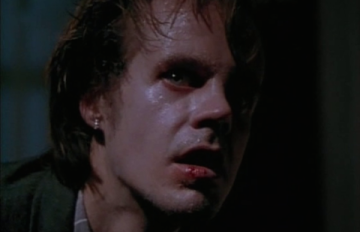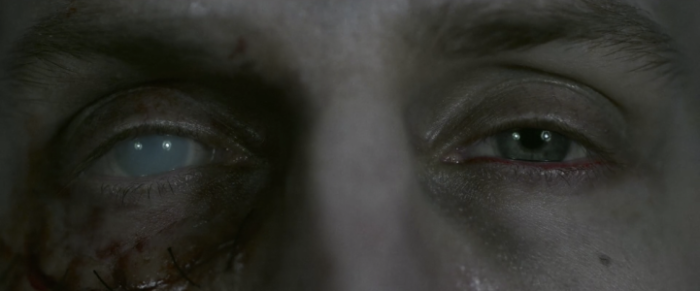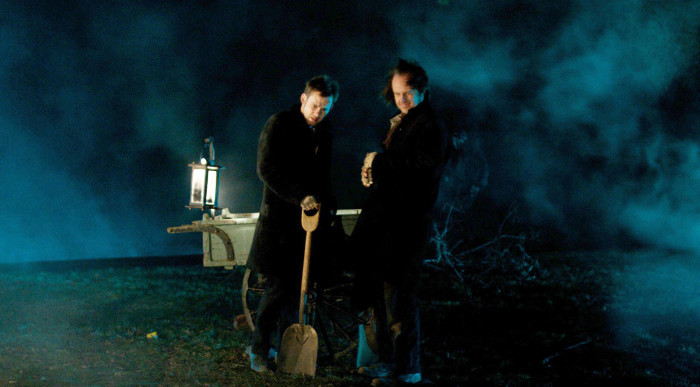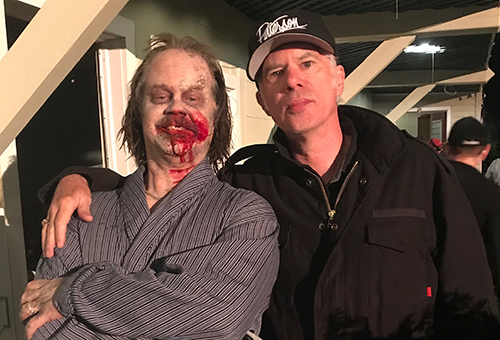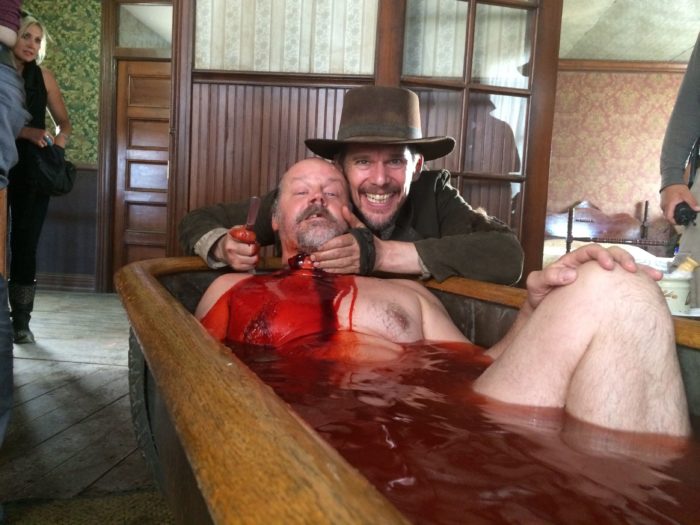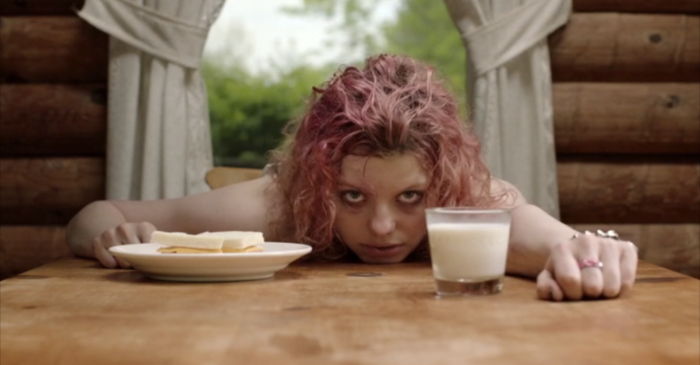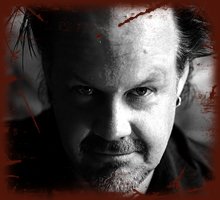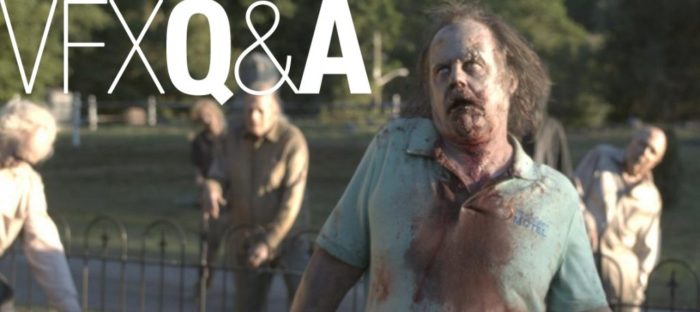
Zombified Fessenden hangin’ with the undead.
“The Dead Don’t Die” – Q&A with Alex Hansson
by Joe Fordham
Zombies come in many flavors. For many horror devotees, George A. Romero defined the genre with his Pittsburgh-made 1968 Night of the Living Dead. The black and white, 16mm shocker depicted shuffling corpses with a hunger for flesh ostensibly triggered, per a half-glimpsed TV news report, by a crashed Venusian probe. Romero’s own sequels Dawn, Day and Land of the Dead hinted at deeper themes of social unrest as cause of the undead pandemic. The Bela Lugosi 1932 feature White Zombie offered Haiti voodoo as trigger for reanimating the dead, as did Wes Craven’s gripping 1988 thriller The Serpent and the Rainbow. Lucio Fulci and other European imitators piled on zombie gore with tropical zeal through the 1980s. More recent filmmakers goosed the undead into jittery hyena-like packs in 28 Days Later and Train to Busan. Zombies were played for laughs in Shaun of the Deadand Zombieland. They went primetime in AMC’s The Walking Dead. And World War Z presented the Z-word as Hollywood extravaganza.
Filmmaker Jim Jarmusch was aware of the cinematic legacy piled behind him when he offered his own take on the zombie phenomenon in Focus Features’ The Dead Don’t Die. The indie cinema mogul had a rich history of playing with Hollywood stereotypes in his slow-burning, deadpan style in Down by Law, Night on Earth, Dead Man and his 2013 postmodern vampire fable Only Lovers Left Alive. When news of Jarmusch’s foray into the zombie genre was announced at the 2018 Cannes Film Festival, an all-star cast of Jarmusch collaborators signed on – including Bill Murray, Adam Driver, Steve Buscemi, Tom Waits, Alice Cooper, Iggy Pop and Tilda Swinton.
New to the team was visual effects supervisor Alex Hansson, founder of Haymaker in Gothenburg, Sweden. After a landing the assignment, Hansson joined Jarmusch and cinematographer Frederick Elmes to scout locations for their small-town zombie apocalypse in upper New York state, offering digital solutions to augment in-camera zombie makeup effects created at Mike Marino’s Prosthetic Renaissance. After ten months of intense postproduction, followed by a premiere at the 2019 Cannes Film Festival, Hansson joined Cinefex to recall his zombie experience with Jarmusch.
CINEFEX: The concept of Jim Jarmusch doing a zombie movie is quite mind-boggling. How did this come about, and how did Jim explain his intentions to you?
HANSSON: Well, preproduction had been going for about a year when I received the script. About a week later, I had a Skype call with Jim. The producer decided, ‘Well, you’ll have to be here next week to have a briefing with Jim and you guys are going to go location scouting.’ That was it. It was very fast-paced. When I was in New York on the briefing I asked him, ‘How do you visualize the zombies?’ He said, ‘Well, I want them to be filled with dust.’ I thought, okay, that sounds cool. I had references from Bladegoing through my head.
When we went location scouting, I got to know him more, because far less stress than shooting. I hung out with Jim and Fred Elmes for a day or two. We were viewing a graveyard location and we discussed one of Tilda Swinton’s big scenes.
CINEFEX: Tilda plays the town mortician, who is very skilled with a samurai sword.
HANSSON: Yes, I told Jim, from the script, it read like a great scene for her character, and I suggested we could shoot her attacking all these zombies as a one-take action moment. One zombie coming up behind her, she turns around and she does a vertical slice right through him, and then she turns again. I suggested we could stay in frame, not cut away, all in one hero shot. And for the vertical split, I asked could we make that guy be bald, to make our visual effects work a little easier without the hair. Jim said, yeah, we can do that. And by the way, that happened – when we returned to shoot that scene, the guy was bald.
CINEFEX: It’s good to hear that he was so receptive. Did Jim like to use storyboards?
HANSSON: Yes, and that turned out to be good reference. He didn’t always shoot storyboards exactly, but it was a very useful for visual effects.
CINEFEX: Jim’s films are so much about character and mood, it’s hard to imagine him doing a lot of previs and technical preparation.
HANSSON: That’s right. To wind back a little bit, when we were in the briefing room before we went out location scouting, one of Jim’s first comments was, ‘I’m used to doing movies with people talking, so you have to tell me what to do here.’ He was very open-minded about visual effects from the first minute I met him, which is extremely rare. When people have asked me about how it was working with Jim, I’ve often told them it was my best experience ever working with a director. And this was working with a director who confessed he didn’t know visual effects. He might not have understood the process, but he had so much respect for it.
CINEFEX: Did you discuss previous zombie films?
HANSSON: Yes, Jim loved the old-school zombie films. That was the direction he wanted to go. He was not a fan of fast-paced zombies. He made that clear from the beginning. One of the notes he gave me was we wanted to see ‘dust’ when zombies were killed.
CINEFEX: So, the undead were not wet inside?
HANSSON: Exactly – just ‘dust.’ I was trying to get into his head, so I asked him, did he imagine this dust might be like when you go out in the woods, you find a piece of a log that has gone rotten and, when you touch it, it just goes pfft. I asked him, ‘Is that it?’ As if, the bones inside the body might still be solid, but everything else is like more of the log. He said, ‘Yes, you nailed it.’ That was my brief.
CINEFEX: How did you develop zombie dust effects?
HANSSON: After I flew back home to Sweden, right away I brought my camera to my parking garage and I started shooting plates with myself acting as a zombie. I gave that footage to my artists, and we started working on the zombie dust effect. The shoot was coming up fast, and so, within about a week we did some tests, and I sent a couple of different proposals over to Jim. He said, ‘This is exactly what I want!’ We weren’t sure what he was looking for, but that was encouraging, and my team kept refining that effect all the way to shot production.
CINEFEX: Did you try physically throwing dust on people on set?
HANSSON: There were a few zombie deaths-by-gunshot where the special effects team tried to spray a dust effect. There was supposed to be more of that. I wanted dust to end up on the clothes of the zombies getting hurt and, initially, I had asked to have practical dust on-set, as a secondary effect. For instance, when Bill Murray’s character was shooting off zombie heads, I wanted dust to land on the actors’ clothes. They couldn’t make that happen. So, we did that 100-percent digitally. I kept working with my artists. We tried Vector Paint in Nuke, and when we ended up adding that to shot, that was a big surprise to Jim because we had not been able to achieve that during production. It was something that I wanted to add to make the visual effects work better, and it ended up working great.
CINEFEX: How did you work with makeup effects? We know Mike Marino’s work from Black Swan, and more recently True Detective, and he is a very talented artist.
HANSSON: Yes, Prosthetic Renaissance designed all the zombie makeups. They had different levels of detail – hero makeups, makeups where zombies were within a 10-meter distance, and then the extras who wore custom masks. There were a couple of scenes where the script indicated heads falling off. My first criteria for those was to make sure they were not featured in close-up, with heads spinning and rolling on the floor right next to the camera, which could have involved visual effects. Mike’s team built those heads practically. In two shots, they ended up quite close to camera, but thanks to the great work they did, those shots did not need visual effects. My other request was that when we were going to chop off a head, I asked for a sharp and detailed cut point. Mike’s team made the makeup to work with that.
CINEFEX: What were your criteria for decapitation scenes?
HANSSON: For all decapitations, I asked Fred Elmes to shoot using a large frame area. He was open to that and we ended up shooting 4K, using the new Arri Alexa LF. I also asked if we could use master prime lenses, to make use of Arriflex’s Lens Data System. For some reason that didn’t work out, so I had no metadata. On difficult shots, where it was obvious that we would have tracking problems, we added tracking markers to the zombie actors, and then we lidar scanned every scene. After Jim was happy with a take, I’d immediately run in with my own custom rig – which captures high dynamic range images and lidar. That was part of the deal that I made with the producers and the film crew, and it was a very efficient way to light CG elements that we were adding to the scenes. That helped us track the environment, and gave us data so we could mesh the lighting and the environment. We then used HDRI textures to map lighting back onto the mesh. After that, we did a lot of roto animation to add digital effects to zombie deaths.
CINEFEX: You had a lot of those – there’s Bill Murray with his shotgun, Adam Driver beheads Carol Kane and many others with a machete, Danny Glover uses gardening shears – was each zombie death a custom build?
HANSSON: This was a low-budget production, so sometimes we would finish shooting, redress the same stunt person, Mike Marino’s team would redo the makeup, and suddenly we had another zombie. In each instance, when we knew we were going to be doing a zombie death, I’d ship them off to be scanned. Travis Reinke, founder of SCANable, scanned all the actors for us on set. They gave us raw scans back, and then we went to work.
One of our toughest challenges was we had so many zombie deaths, I wanted to avoid them feeling repetitive. I asked my artists come up with different techniques. For Steve Buscemi, we blew off half of his head. For another zombie in the graveyard, we blew off his head but decided to keep his jaw going as he fell. The deaths were part of the humor of the film, so we tried to make them feel comedic, in terms of how they came apart in different places every time.
CINEFEX: Did you build a kit of body parts?
HANSSON: We built custom parts. We did a quick rig for each head that was blown off. If we wanted the neck to flap in the air, we did a quick and dirty rig, and then we figured out what worked for that specific shot. It had to be time-efficient.
CINEFEX: How did you animate the innards?
HANSSON: Going back to the R&D, where I used myself as a zombie, I had my Houdini artist to work on an effects setup that he refined so we could customize the rig to each shot. That’s how we did every shot. We rendered Side Effects Deep Camera maps, which allowed us to work with skin shaders in Autodesk Maya and 3D rendering in Chaos Group V-Ray. We took Mantra renders from Houdini and V-Ray renders from Maya, combined them in the composite and rotoscoped the actors from the plate. That gave us control of depth for our dust effects.
CINEFEX: Where did you make the blends to the actors?
HANSSON: We scanned most of stunt guys from the sternum up. Once we had an edit of a scene, we studied each specific shot to decide how far up we needed to roto-animate, and then it was up to comp to find the magic point for each transition. I tried to limit custom shaders and textures, and instead used camera mapping from the plate and re-mapped onto the 3D model using manual roto animation. In a few places, we had to use cloth simulations for flesh effects, depending what happened after the head was chopped, or the angle of the character in the plate.
CINEFEX: When Tilda is using her katana, and she gives the bald guy a vertical slice, how did you create his internal anatomy?
HANSSON: We had the neck bone together with the skull. And we found some textures to map his insides and inside his head. It is interesting what you can find online.
CINEFEX: What was your brief for the science fiction finale?
HANSSON: Jim and his production designer, Alex DiGerlando, wanted to see a 1950s-style flying saucer. At first, they were talking about shooting that as a model, because they wanted it to feel old-school. I wasn’t sure about that, because I knew there would be a lot more work if they went that way. Pretty soon, I heard they moved away from that, which gave us much more control, but they wanted to keep that retro feeling. They gave me a reference picture from a black and white UFO sci-fi movie. I suggested to my team that we could give that a modern touch, using volumetric lighting and textures that could make it feel more interesting than the typical aluminum finish they used back then. We rendered a still frame for Jim and he loved it right away.
CINEFEX: How did you integrate Tilda and all the zombies?
HANSSON: When we did the location scout, Jim told me he wanted somewhere in between 150 to 200 zombies. We animated those digitally using Houdini’s new crowd simulation tool, which was very effective. We modeled 25 to 30 individual zombies and then made small adjustments so each one looked unique. Like most of the film, we shot day for night, and that made this scene so difficult, as the saucer was coming down with its light beam reaching out to Tilda. They wanted her to disappear into the light, but I knew when we were shooting in full sunshine there was no way we’d be able to create that interaction, with a very strong light coming down on her from above. To accomplish that, we did a full body scan of Tilda, and that enabled us to light her correctly when we added the effects.
CINEFEX: It is a strange ending to an amusing film. You must have asked Jim Jarmusch ‘what did the zombie represent for you?’
HANSSON: Well, I think it’s obvious when you see the film. They represent us. That was Jim’s take on the world, where it’s at now. It was funny, my wife was with me in Cannes, and we talked to Jim at the after-party and she asked him, ‘So, do you like zombies as much as my husband?’ Because I’d been in this for 10 months straight, 7 days a week and it had become a part of my life. Jim answered to my wife, ‘I hate zombies! I hate everything about them. I have always done. They’re stupid, they’re slow, they’re not sexy, like vampires. They’re dumb.’ That was such a funny answer. You’ll have to see for yourself. There are a lot of political statements.
Read Q&A here!
Now playing in theaters, check your local listings!