


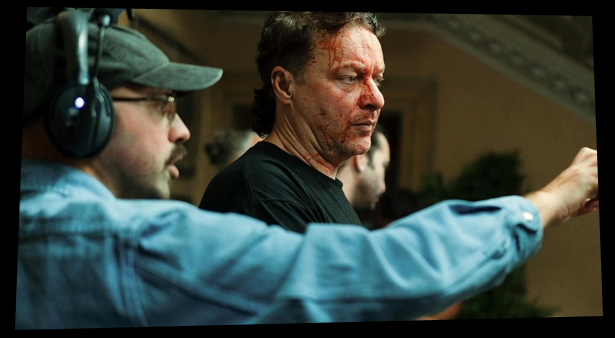
Ahead of the UK premiere of his uniquely camp sci-fi horror comedy, THE RESTORATION AT GRAYSON MANOR at FrightFest Glasgow 2026, director Glenn McQuaid reflects on creating murderous hands, the influence of diva soaps, and tackling the horror of homophobia.
FrightFest last saw you in Glasgow in 2008 with I Sell the Dead. It’s now 2026 — what has taken you so long to return with The Restoration at Grayson Manor?
I’ve never really thought of it as being away. I’ve been working consistently across film, audio drama, music, and development. The Restoration at Grayson Manor (2025) is the result of a long gestation and a few false starts. We were preparing to go in 2019, then Covid intervened, and when we finally returned to it everything aligned in a way that made the production not just possible, but genuinely joyful.
I was able to assemble a cast I could not have been more excited to work with, and collaborate with my cinematographer Narayan Van Meile, who I had wanted to work with for years. I don’t think this film could have been made as well earlier. Hats off to Brendan McCarthy, John Mc Donnel and Deidre Levins at Fantastic Films for staying the course with me.
How did this project come about, and how did you meet your co-writer Clay McLeod Chapman? Was the inspiration for the central premise drawn from real technology involving amputees and subconscious control of artificial limbs?
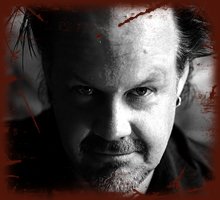
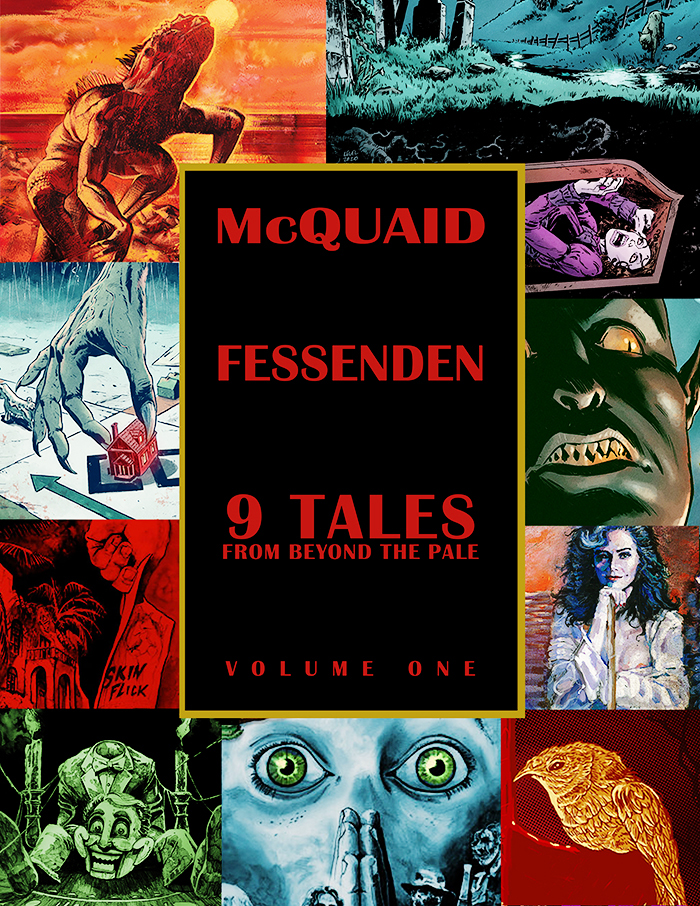
Clay and I met through our shared orbit around Larry Fessenden and Glass Eye Pix. Larry and I later invited Clay to write an episode or two for our audio drama series Tales from Beyond the Pale, and there was an immediate creative shorthand. We are both interested in using genre as a Trojan horse for emotional and psychological truths. The original spark came from watching a YouTube video of an amputee controlling a robotic
hand with his mind. That led me into neurological research around phantom limbs and subconscious motor control, particularly the idea that the subconscious never forgets, regardless of what the conscious mind tries to repress. From there, the story moved away from technology and toward questions of inheritance, trauma, control, and what gets passed down whether we want it or not.







Add a comment