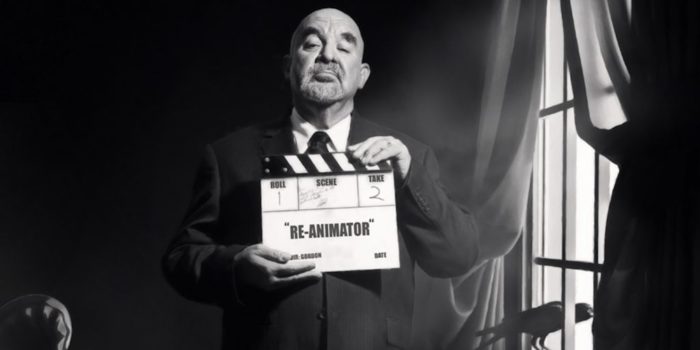
Talkhouse Film Contributors Remember Stuart Gordon
Testimonials from Barbara Crampton, Richard Stanley, Rodney Ascher,
Jim Hemphill, Brian Trenchard-Smith, Charles Band, Joe Dante,
Darren Lynn Bousman and Fessenden.
In the following post, Talkhouse Film contributors and other filmmakers share their tributes to Stuart Gordon, the great genre filmmaker behind such films as Re-Animator, From Beyond, Dagon and Dolls, who passed away yesterday, aged just 72. He was a contributor to Talkhouse Film from its inception (you can see all of his pieces here), and was both a brilliant writer and a warm, lovely human being. He will be deeply missed.
More remembrances will be added to this post as they come in. Feel free to leave your own tributes and memories in the comments section. – N.D.
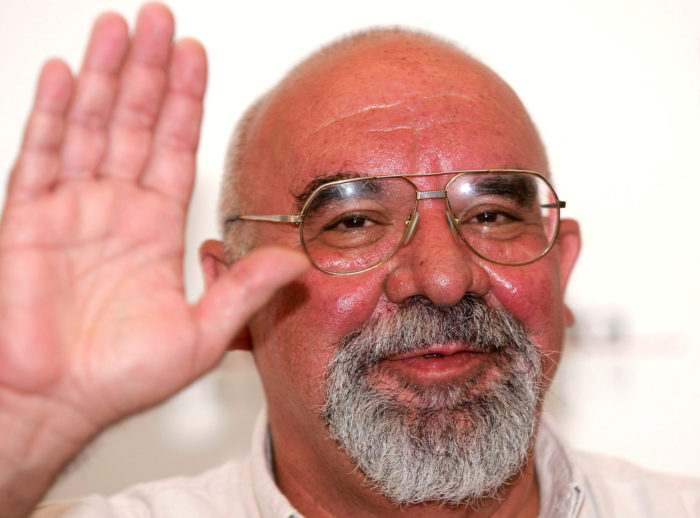
Richard Stanley
We are deeply saddened here at Shadow Theatre HQ by the news of Stuart Gordon’s passing. Stu was the founder of Chicago’s Screw Theater who staged a notorious 1968 anti-war adaptation of Peter Pan (inspired by the Democratic National Convention riots of that year) that got him and his then-girlfriend (and later wife) Carolyn Purdy arrested on obscenity charges. The case received national attention before the charges were finally quashed. Stu capitalized on the publicity generated by this case to launch the Organic Theatre company, described as “take-off-your-clothes, scream and bleed theater,” whose legendary excesses included the premiere production of David Mamet’s Sexual Perversity in Chicago (1974). He is perhaps best remembered by contemporary audiences as the director of Re-Animator (1985), a darkly comedic re-imagining of H.P. Lovecraft’s classic story cycle that served to unleash a further slew of hugely popular adaptations on the world, including From Beyond (1986), Dagon (2001) and “The Dreams in the Witch House” (2005) for the Masters of Horror anthology series. His work played a pivotal role in widening the reach of Lovecraft’s mythos and cementing its place in popular culture. I had the good fortune of meeting Stu in the early 21st century when I appeared as an uncredited extra in Dagon, playing one of the inhuman denizens of the cursed village of Imboca, indeed the only one to be seen wearing a hat. We took meals together many times during the course of the troubled production as I suspect Stu needed a sympathetic listening ear, being somewhat adrift in Galicia at the time and relatively unfamiliar with the Spanish language. I will always cherish the memory of those conversations. Now Lovecraft’s Old Ones have recalled their tireless publicist and cinematic spokesperson to the great beyond. Iä! Iä! Cthulhu fhtagn! In pace requiescat, maestro. This world will never be the same without you.
Rodney Ascher
There’s a quote from Flaubert I’ve always found inspirational (one I’ve misattributed for years to J.G. Ballard): “Be regular and orderly in your life, so that you may be violent and original in your work.” Although I can’t claim to have known Stuart Gordon closely, my brief meeting with him at the 2015 Stanley Film Festival (where he was generous enough to speak well of my film The Nightmare, and more importantly, to talk at length with my five-year-old son about Honey, I Shrunk the Kids) left me with the impression that the quote was written specifically for him.
Re-Animator is a film I’ve watched and rewatched countless times (and even showed clips from when I was teaching at a film school), but the trio of neo-noirs he directed in the 2000s (King of the Ants, Edmond – or as I like to call it “David Mamet’s Eyes Wide Shut” – and Stuck) riveted and shocked me in ways that are increasingly rare. All four of those films did things I assumed couldn’t be done, broke rules that I assumed were carved in stone, and delighted me as they did it. My brief in-the-flesh encounter with him suggested that these uncompromising works of transgressive art (that were also often very funny) were all the work of a kind and generous man and I’ve been heartened to see it confirmed in the countless testimonials to him exploding online this morning.
Jim Hemphill
Stuart Gordon was a god to me for almost 30 years before I ever met him. Like many of his fans, I first discovered his talent via his debut feature Re-Animator, a movie I still consider to be one of the 10 greatest horror films of all time. When it was released in 1985, I was a rabid 13-year-old movie nut who pored over Roger Ebert and Pauline Kael’s reviews like a rabbi studying the Talmud. They were sacred texts, and I vividly remember both Ebert and Kael championing Re-Animator in reviews that made me salivate for the film. (The fact that it had been released unrated because no cuts imaginable could make it palatable to the MPAA made it even more appealing.) When I finally saw it after what seemed like an eternity of waiting (it was probably about two weeks), the most shocking thing about Re-Animator wasn’t its explicit violence or sex but the fact that it exceeded my stratospherically high expectations; it was smart, hilarious, scary, and as philosophical as it was visceral – the work of a true visionary.
I don’t have the space here to go through my ongoing relationship with Stuart’s films, but I’ll just say that after Re-Animator I looked forward to every new Stuart Gordon release with the same breathless anticipation that met each movie by Scorsese, Eastwood, Bigelow, Demme, and the other masters in my personal pantheon. In 2015, I finally had the opportunity to interview Stuart for Paste Magazine, and the experience proved that whoever said you should never meet your heroes was an idiot. Stuart was every bit as intelligent and funny as one of his films, but with a soft side that might surprise some. (It didn’t really surprise me, since in my experience meeting filmmakers like Wes Craven and Sam Raimi I’ve often found that directors who make the most savage movies can be the nicest, most well-adjusted human beings on the planet.)
We struck up a friendship via email and then in person, and I found out what a special man Stuart was. He seemed genuinely interested in me and my work, taking the time to watch my movie The Trouble with the Truth and giving me advice about where to go next. Making films is such a brutal and difficult business that many people who do it are too busy treading water in their own careers to help others, but Stuart always had time for me and my questions, no matter how dumb or frivolous. When you finished a conversation with Stuart, you always felt better about yourself and the world than when the conversation began; he was a man of faith and empathy, and I think that’s the key to the greatness of his films – they were dark movies by a pure soul, giving them a complexity and resonance that makes them endlessly rewarding on repeat viewings. I felt honored and flattered by Stuart’s mentorship and generosity, and in the hours since he passed away I’ve discovered that he had a similar relationship with dozens of other filmmakers – I thought I was special, but it turns out Stuart was the one who was special.
Darren Lynn Bousman
A few years back, I was invited into the inner horror circle by way of an exclusive event known as the “Masters of Horror” dinner. This was something put together by our maestro, Mick Garris. This event was held a couple of times a year at various restaurants around Los Angeles. In short, it was an excuse for a bunch of horror lovers to get together and geek out about all things macabre. I remember at one of these events, I was sitting by myself at the bar… Truth by told, I didn’t know many of these legends outside of their movies I idolized as a kid. In the beginning, I was scared to approach them, so the majority of that first event I sat by myself, trying to work up the courage to introduce myself and inject myself into their conversations. So, cut to me sitting at the bar, sipping on a cheap beer, when over walks Stuart Gordon. Holy fuck, this dude is a legend. As I sat there, trying to figure out what to say to him, he turned to me. “Darren Bousman?” he says. “Yes!” He extends his hand, “Stuart Gordon, wanted to introduce myself to you!” I flipped the fuck out. Stuart Gordon is introducing himself to me!!! We chatted, and he walked me over to the group, and invited me into his conversations.
Stuart was a fucking insanely talented artist. Most will fawn over his movies, Re-Animator, Castle Freak, or my personal favorite, Stuck. But my favorite Gordon production hands down was his directing of Taste, the nasty and gut-wrenching play based on the true account of a man who put an ad online looking for someone he could kill, cook and eat… Sitting in that theatre, revolted at the content, I couldn’t help but smile, Gordon was jumping and shifting narrative mediums and still finding a way to disgust and entertain me, decade after decade.
Brian Trenchard-Smith
I met Stuart Gordon when he came to Australia to make the Christopher Lambert sci-fi actioner Fortress. I had been a big fan since his gloriously Grand Guignol Re-Animator, one of several H.P. Lovecraft novellas he brought to the screen. He was kind and gracious to me personally. We would meet periodically at Masters of Horror dinners. He was a warm-hearted, energetic man, with a keen intellect and a love of actors born of many years working in theater. He loved movies and relished the challenge to make them bigger than their budgets. He knew how to build tension, then break it with a laugh. He enjoyed turning clichés on their heads, while chopping off a few heads along the way. But he also understood what would make family audiences laugh, as the co-creator of the Honey, I Shrunk the Kids franchise. There was, in fact, no genre he could not handle. It was a pity the studios did not recognize that. But he will always be remembered as an icon in the Horror Hall of Fame. Vale, Stuart, you will be missed.
Barbara Crampton
I met Stuart when the actress originally cast as Meg in Re-Animator dropped out, after her mother read the script.
I guess the role was thought to be too racy and provocative. But that’s what I loved about it, those boundary-breaking leanings and the humor, of course.
The casting director Anthony Barnao called me in on the second go-round to read for Stuart, with Jeffrey Combs and Bruce Abbott, who had already signed on for their respective roles.
There were a few other young gals there too, but after a few hours, it was just us three actors. Stuart had us run through the scenes and offered a lot of directives for us to try.
I remember him calling out specific prompts to me personally: “You love him more than anything in the world,” meaning Dan. “You don’t trust this guy, he’s hiding something,” meaning Herbert West.
I felt like I was rehearsing a play. We went on like this for a long afternoon. The next day, I received the happy news that I’d been picked for the role. I was ecstatic. This was the biggest part I’d been asked to play up until this point. We continued to rehearse for the three weeks leading up to filming. We didn’t get paid for that time, but I didn’t care. It was about the work and I was so happy to be in the company of a real director and talented actors, honing the words and the play of each scene. We were so prepared going into production for our 22-day shoot that it felt like we actually had more time than that. Yet surprisingly, we also went into overtime almost every day. Stuart never wanted to stop filming, or for that day to end.
Wrapping shortly before the Christmas holiday, many days we went 14 or even 16 hours. I made more money in overtime on Re-Animator than my original salary. The film was a hit and called “pop Buñuel” by Pauline Kael. Janet Maslin said it had “grisly vitality.” Roger Ebert walked out of the theater saying he was “surprised and reinvigorated.” Most agreed it was daring, exciting and original.
The success of the film spawned a working relationship with Stuart Gordon and a deep friendship which lasted more than 30 years. He pushed me into uncomfortable and vulnerable places as Meg, he encouraged me to celebrate my bravery and heroism in From Beyond and to search for my deep love as a mother while simultaneously examining the horror of an unforgiving marital relationship in Castle Freak. He, along with his longtime writing partner Dennis Paoli, wrote thought-provoking and long-lasting stories of men and women thinking and acting on impulses others dare not utter. He was the bravest and kindest creator, gentle, funny, and illuminating of our darkest fears and greatest hopes.
Joe Dante
Stuart was a longtime attendee at the Masters of Horror dinners in Hollywood, a gathering of (usually out-of-work) genre filmmakers, which allowed me to recruit him as a valued Trailers from Hell Grindhouse Guru. His taste in commentaries was eclectic, running from the expected Cannibal Holocaust to the unexpected Calamity Jane!
Which serves to highlight a divide in his media profile — although beloved for his iconic and witty horror films like Re-Animator, he was just as dedicated to the theater, co-founding Chicago’s Organic Theater Company and defying the University of Wisconsin to stage a notorious nude version of Peter Pan.
More recently, he’d been active in the L.A. theatre scene with his staging of Nevermore with Jeffrey Combs as Edgar Allan Poe, and most riotously, Re-Animator: The Musical, during which the first several rows of audience were supplied with plastic sheeting to ward off the gouts of gore splattered from the stage. Despite a number of health issues in recent years, he never lost his sense of humor. He will be missed.
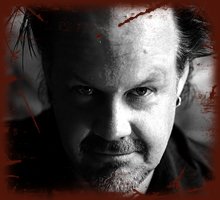
Larry Fessenden
I had known Stuart Gordon through his work since Re-Animator came out. I was always charmed by that film’s wry sensibility and the theatrical panache with which he pulled off the special effects. It instantly felt like a new voice in horror had arrived. I remember sitting with my future wife watching From Beyond a few years later. In my memory, we were in some sleazy theater on 42nd Street, but that’s just the spell cast by the movie. And I remember watching Stuck, from 2007, and wishing he had gotten to work more.
Years later, in 2010, I found myself corresponding with Stuart about collaborating on a movie together. My company, Glass Eye Pix, had specialized in producing low-budget horror and Stuart felt maybe we could get a project off the ground. He had a sort of “Old Hollywood” workman’s approach to the business which I found grounded and appealing. We went out with two different scripts that he liked, but never quite landed the big bucks. And indeed, I feel like Stuart’s idea of low-budget was a bit elevated from the sort of fare I had been able to pull off with young first-time directors.
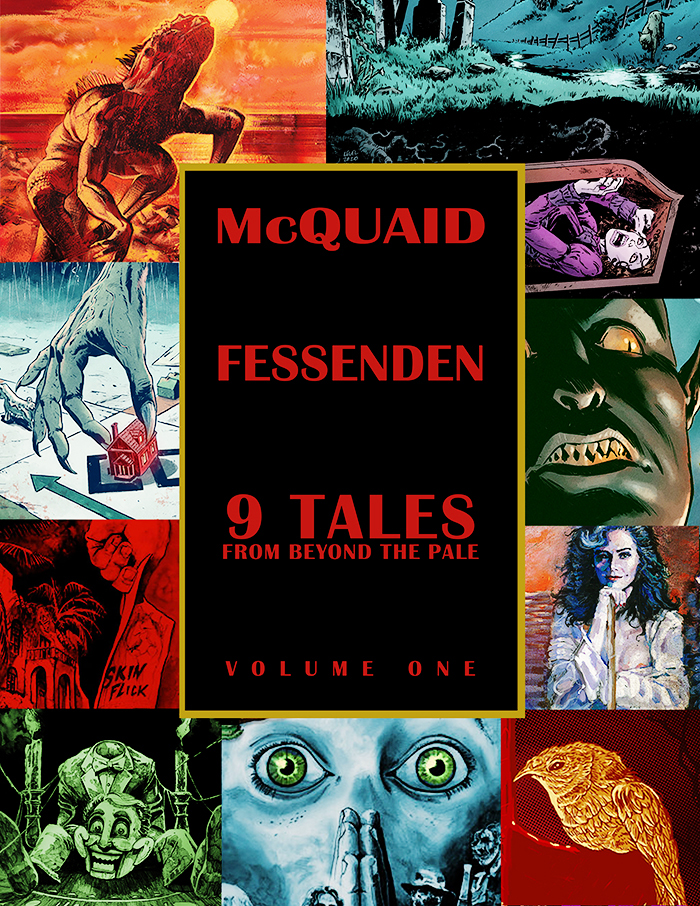
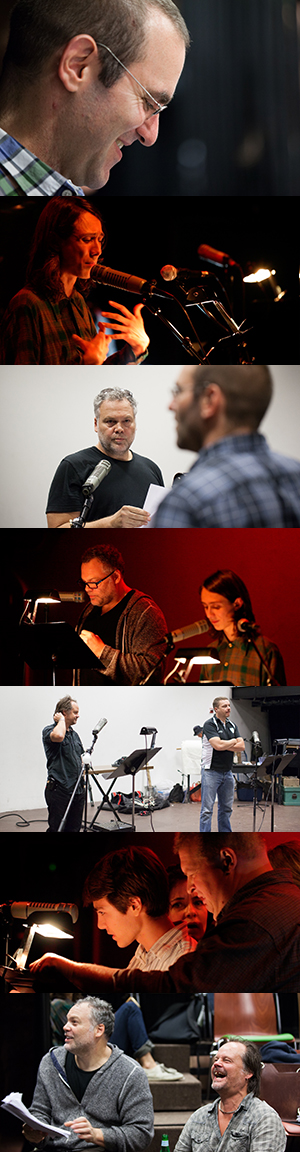
Then, almost in a conciliatory gesture, I invited him to direct a radio play for the series I had launched with Glenn McQuaid, Tales from Beyond the Pale. Stuart agreed and we mounted a lovely production in which he brought on many old collaborators — writer, composer, and cast members, including the radiant Barbara Crampton — and with Glenn on board as sound designer, they created something quite wonderful. (I even got to be directed by Stuart in my role as the Demon Hound Itself!)
Stuart was always very convivial and supportive, generous with a compliment but never pandering. He was an artist and workman who had his own struggles with the industry, despite his iconic contributions. (Recall that he also penned the story for Honey, I Shrunk The Kids). Just last month, I was working with Ms. Crampton on a film and our thoughts turned to Stuart. Our reminiscences were warm, our admiration deep. He was a mentor and friend and fellow traveler, all at once. Godspeed, Stuart.
Charles Band
Everyone in our Full Moon Features family is deeply saddened by the passing of Stuart Gordon. Our history with Stuart goes back over 35 years, when he and Brian Yuzna came into the Empire Entertainment office and found a home for Re-Animator. Films like From Beyond, Dolls, Robot Jox, The Pit and the Pendulum and Castle Freak followed and throughout all of them, Stuart and I remained good friends. He and my dad had an especially great relationship and hung out until my dad left us in 2002. Beyond his talent, Stuart was a super sweet man: if you had met him on the street you would never imagine that he was the creator of such compelling, yet depraved work. Lovers of our genre have lost a unique kindred spirit and we will miss him very much.
Talkhouse.com



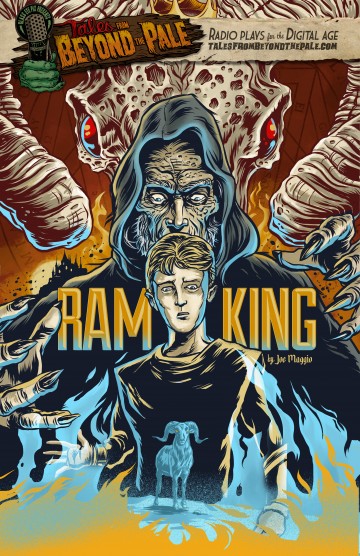 PALE MEN: How did the idea for Ram King come about?
  PM: There is a wonderful righteous anger to the piece.
 PM: This tale of the plague and powerful anti-science forces seems relevant to day’s world. Any thoughts on that?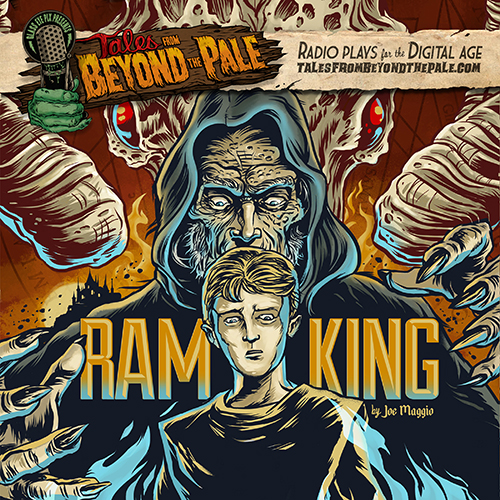

 LF: SIT is one of the more literary TALES. It feels like a gothic short story. What were the inspirations? And how was the collaboration with April?
 LF: The dual language is so interesting listening again, just wonderfully rich. Was it strange directing the French-speaking actors
 LF: The ending has that strange McQuaid whimsey, after all the listener has been through. Any thoughts on how it came about?