August 9, 2013
Share:
Facebook Twitter Email

More YOU’RE NEXT Love From EW

yourenext

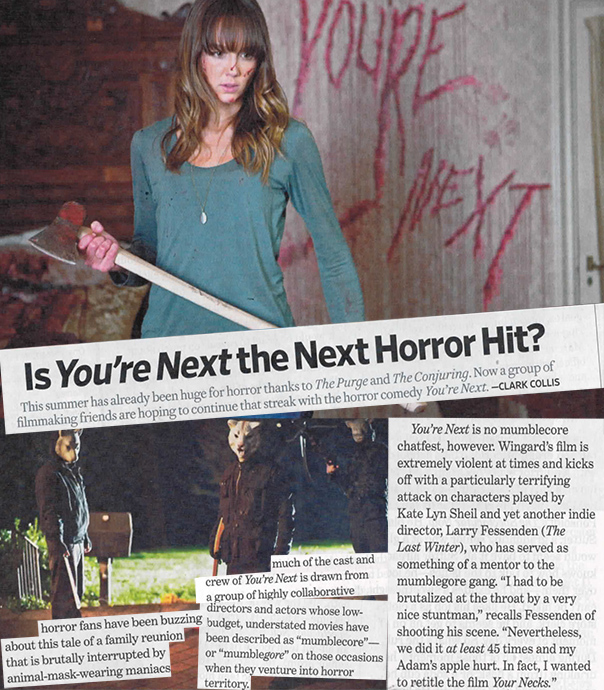
Check out the August 9th issue of Entertainment Weekly for a YOU’RE NEXT piece by EW’s Clark Collis.

The fright-flick from director Adam Wingard and writer Simon Barrett features Fessenden and Glass Eye pals Joe Swanberg, Ti West, AJ Bowen, Amy Seimetz, Kate Lyn Sheil, et al. The film hits theaters August 23rd.

August 8, 2013
Share:
Facebook Twitter Email

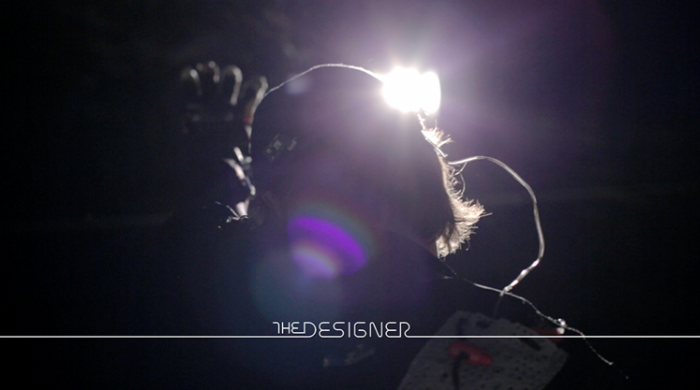
Another segment of Graham Reznick’s THE DESIGNER wraps

A third segment of Graham Reznick’s science fiction omnibus THE DESIGNER has just wrapped shooting. The Glass Eye Pix production is being shot over a period of months with a group of regular GEP collaborators.

Screen Shot 2013-08-08 at 6.22.06 PM

In THE DESIGNER, a journalist searches for a suspiciously missing video game designer as his game begins to take over the world.

Learn more about THE DESIGNER at www.whosegameareweplaying.com.

August 8, 2013
Share:
Facebook Twitter Email

The Dig It Interview: The Sound of Genius

From Tom Efinger at The Dig It Post:

The film Beneath is the latest directing effort of writer, director, actor, and producer Larry Fessenden. Larry is a tried and true film maker; his acting credits include roles in movies like Scorsese’s Bringing Out The Dead, Jarmusch’s Broken Flowers, and The Brave One with Jodi Foster and Terrence Howard. He has directed several films, too: The Habit, Wendigo, The Last Winter, and Beneath are some of his main titles. He has also produced more films than you can shake a stick at. Larry is a real craftsman and his knowledge as a filmmaker informs every aspect of his films. What’s more, Larry Fessenden is an accomplished musician—who has the kind of ear and creative instincts that lead to great and compelling sound in movies.

Larry, you and I go way back. It might be fun to mention that we went to high school together and dabbled in film, theater and music back then. And now we recently finished the sound editing and mixing on Beneath, the third feature film, with you as director, that I have had the pleasure to work on. We have worked on about 12 to 15 feature film projects together with you as producer. I should also mention that the sound designer, Graham Reznick, who is someone we have both worked with extensively in the past several years, played a huge role in the sound for Beneath.

LF: I always like to tell people who I introduce to DigIt that you taught me to play the saxophone back in ninth grade when I was trying to figure out the instrument on my own. And I’ve watched DigIt grow over the years. These are my favorite relationships in show biz, the on-going ones.

Sound has always been a profound part of a movie for me. Before you could rent video, back in the bad-old 70’s, I would record movies off the TV and listen to them on cassette over and over and develop a relationship to the rhythm of the sound effects, talking and music—and I gained an appreciation for the potency of those elements playing together, even without picture.

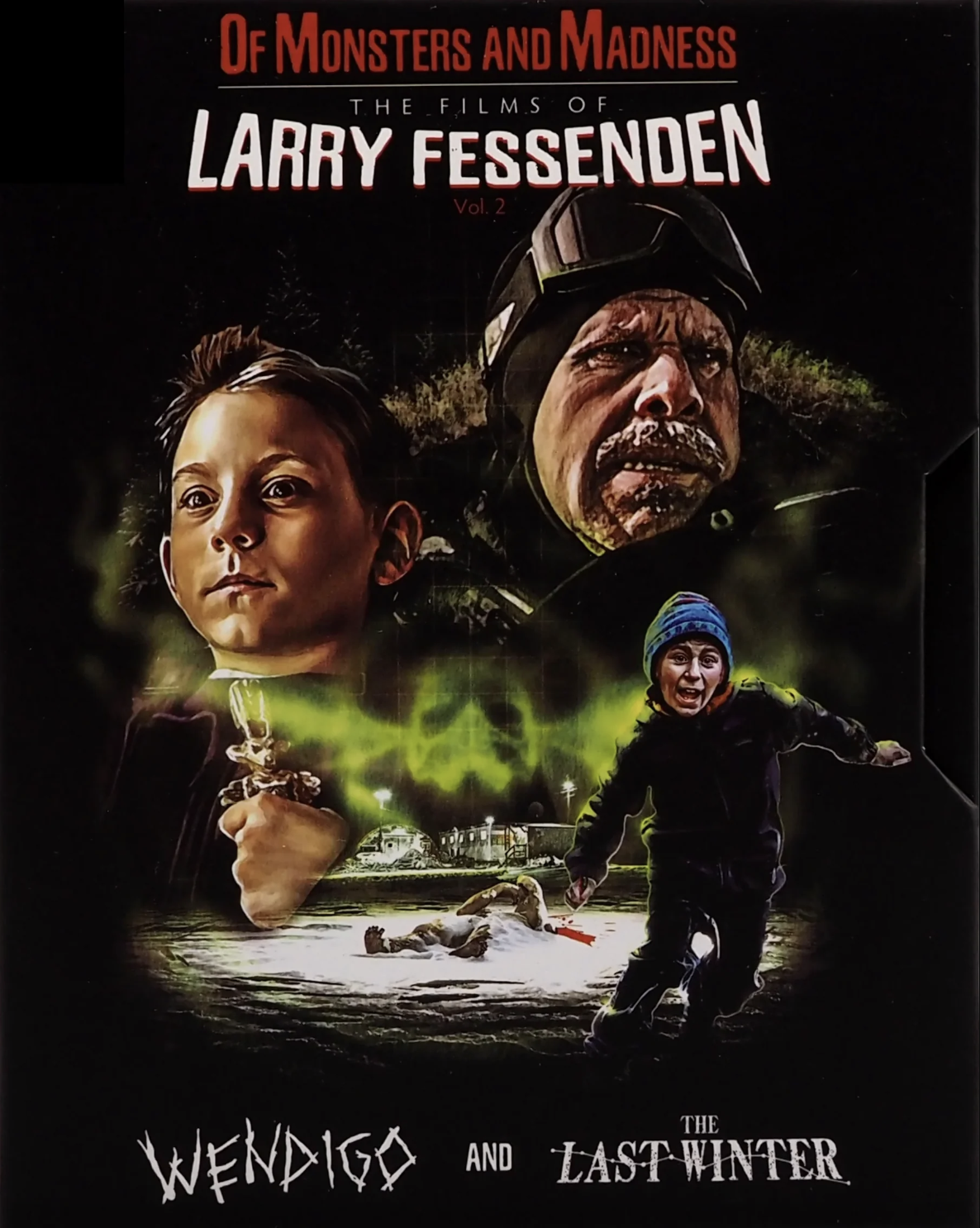
I met Graham through Ti West and quickly came to understand his obsessive love and command of sound design. I immediately got him on to my project THE LAST WINTER, but he ended up being relegated to foley editor of the wendigo footfalls—of no small importance mind you. But in any case I hoped to work with Graham eventually and finally Beneath came along. Of course in the interim we have been at maybe half a dozen mixes together on the films I’ve produced.

How much do you think about sound when you are writing or working with the script prior to shooting?

LF: The way I work, I generally preconceive a film as I write the script. Even if I don’t write the original draft, eventually I get the script into a program where I can start breaking the whole story into beats, then individual shots. Somewhere in there the sound starts taking shape as well. A sense of place and the atmosphere are hugely important to a film, and I’m thinking about that stuff from the start. Also, like a lot of filmmakers, I start listening to music and gathering tracks that take me to that place where the film exists. So even at the start when I dream about my film, that dream has a full 5.1 mix.

Do you shoot differently when you are working towards a special sound moment?

LF: Every shot you take has an effect on the viewer, that is why the choice of lens, shutter speed, frame rate, exposure and movement all matter. At the same time, when planning a shot, I am often hearing how it will play as well. Often on set I bemuse my crew by making the sound of a shot: “Camera zooms in like this.” And then I’ll make a zoom sound. Then cut—and so on. Ti West does this too. It’s because film is rhythm, and rhythm suggests sounds.

On set I will occasionally assert that there will be sound design on a shot, and there is no need for sound, but the reality is it’s always good to take sound. At the same time, slating for sound can be infuriating and disruptive and I can get very impatient when trying to be spontaneous or candid or off the cuff. I am a big fan of tail slating, but so often people forget to call it. All of this speaks to having a crew that is working in sync with each other.

What were some of the specific challenges for sound on this project during the shooting?

LF: There were many. First of all, there was the acoustics of the water. You could literally hear people talking on shore even when you were in the middle of the lake. When the camera was low to the surface of the water the fan in the camera would echo and make all sorts of noise. And there was no hiding six lavaliere on the scantily clad teens either. We generally boomed from a little rubber raft and we had a lavaliere hidden in the boat so we had some choice in perspectives. Of course, it being summer, we had a lot of lawn mowers mowing throughout the day, and did I mention we were near a small airport? Then there were the dog walkers who were very pleasant except for the one who put a cowbell on his pooch. Took twenty minutes to hunt them down. Every day at 5:00 the local shooting range started up. You can still hear some of the shots on the soundtrack.

How did you begin to discuss the sound design with Graham, and how did that conversation evolve?

LF: Graham was actually on the shoot taking stills and he ran second unit the last week, so we were always talking about the sound, delighting in gathering creeks and noticing the noises of the lake and the boats and all the specifics of the location. Our sound man was excited to spend a day recording wild material for us, but as happens with low budget productions, someone in the ranks forbade him from doing the task to save money, and when I found out it was too late. This is always a tragedy. We recorded sounds months later in the country with the boats on dry land, but Lord, do it while you’re on set and in the moment. I was on another movie long ago and the sound guy said he would record lots of great wild tracks for us as soon as the shoot wrapped. He couldn’t have known his brother was going to murder their father, but that’s what happened so he never got to record the wild sound, he had to go home.

Thus, do it while you’re there on location, don’t delay. There may not be a “later”.

Graham had a wonderful reaction to the edit of the movie. He saw in my cutting and temp-audio that I wanted a heightened sound design. What we did was we sat down only once and “spotted” the film, took notes with time code on every single sound event we imagined in our heads. We were remarkably in synch in how we heard the film, where we wanted to play with perspectives, reverbs, drones, where the music would dominate and where the sound design would dominate. Some scenes were specifically shot with the sound in mind, as for example where the boat creeks fall into a nagging rhythm throughout the first voting scene. We established motifs throughout the film that form a subliminal substructure to everything the viewer hears. I always say, there is one picture that an audience responds to in a movie, but there are myriad sound tracks that are having a profound effect on the viewing experience.

Graham took the notes and went into his lab and built a great many tracks on his own—and then we watched it and made refinements in preparation for the mix. With some collaborators, I am more controlling, but with Graham, I felt in safe meticulous hands.

We had some fun mixing this show for sure. I find that we’re usually working with some very set ideas that you have going in, but we also leave room for experimentation. Can you comment on that?

LF: The great thing about genre films is you are working with subjective reality, and you are trying to put the audience in a place beyond their normal experience. Sound can be a critical method to transport the viewer. When we get into the mix room, no matter how much we’ve put in place, there are still opportunities to experience the film anew, and once the dialogue is refined and smoothed out, the real mix begins. Everything from choosing the reverbs that work in the room, to placing sounds in the 5.1 mix, to finding new enhancing sound effects comes up in the mix. No matter how much preparation there is beforehand, the mix is the time you are seeing all the elements together for the first time, and you want to be responsive to the fresh experience and keep crafting the material. For me, the best approach to all aspects of filmmaking is to show up with a plan and be prepared to verge from it if the spirit moves. Often the mix is the time that the music stems are first made available, and a lot of the mix is dealing with the balance between music and the sound design. For me, a good wind sound and a creek are as potent as a symphony orchestra. It’s all about crafting each moment.

What is your favorite aspect of the finished sound design and mix? What came as a surprise if anything?

LF: With sound, you can give weight, you can give immediacy, or existential indifference. In film school they often talk of the Kulachov theory of picture editing where they have an actor’s face staring and when you cut to a soup bowl the actor seems hungry, but when you cut to a coffin he seems sad and so on. Just think of all the things you can do with sound, just watching that same face and listening. That’s what I like about sound. It is a primary storyteller, every bit as much as picture. Of course on set all you care about is getting the image, sound gets trounced.

In Beneath, we tried to find aspects of telling a very traditional (dare I say clichéd?) story and find unexpected ways to present the material, as with when the first girl dies, we let the sounds drift away and we enter a dream state as the characters grapple with the strange reality that has just befallen them. Throughout the movie we delved into subjective points of view to indicate how the mind grapples with shock.

Do you find that directing the sound finishing is a difficult challenge or is it relatively easy after all the pressures of production?

LF: It is relatively easy only in that you are in a studio with your latte and pretzels, not off on location sweating it out. But there are the same restrictions on time that plague any endeavor with a budget. The thing about the mix, is it is truly the last stop on the long journey creating a film. If you are doing things right, it’s even after color correction, so this is the last chance to unify the film and make every beat flow to the next to create the impact, legibility and subtlety you are after. It is the end of the line, and therein lies tremendous pressure and the start of letting go.

See the original interview at http://thedigitpost.onsugar.com.

August 7, 2013
Share:
Facebook Twitter Email

Rob Kuhns’ BIRTH OF THE LIVING DEAD to play at the 2013 Sitges Film Festival

Glass Eye Pix is pleased to announce that Birth of the Living Dead, the new documentary on the making of the George Romero classic, will screen at the 2013 Sitges Film Festival, running 9—13 October near Barcelona, Spain. The award-winning film was directed by Rob Kuhns, produced by Kuhns and Esther Cassidy and Executive produced by Fessenden. Stay tuned for more news on the Fall release schedule for this compelling  documentary about one of the most influential films ever made.

cartelSitges13OKOK

August 5, 2013
Share:
Facebook Twitter Email

The Outer Church Compilation Featuring Graham Reznick Track – Available Today

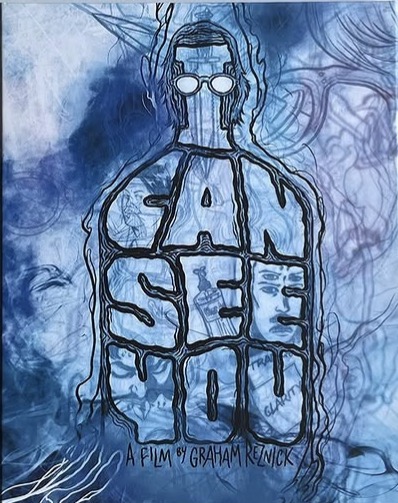
Glass Eye Pix collaborator and director of I CAN SEE YOU, Graham Reznick, has a track on The Outer Church compilation, available today.

You can check the album out and give some tracks a listen here.

a1611539556_2

From http://fandf.bandcamp.com:

The artists list in full: Embla Quickbeam / Grumbling Fur / Some Truths / Kemper Norton / Pye Corner Audio / Black Mountain Transmitter / Angkorwat / Position Normal / Ekoplekz / BrokenThree / Anna Meredith / Hong Kong In The 60s / Baron Mordant & Mr Maxted / Graham Reznick / Old Apparatus / VHS Head / The Wyrding Module / Silver Pyre / These Feathers Have Plumes / Hacker Farm / Robin The Fog / Vindicatrix / Wrong Signals / Sone Institute / Tidal / Paper Dollhouse / Time Attendant / IX Tab.

Joseph [Stannard of The Outer Church] writes:

“Wind the tape all the way back to Brighton in 2009. The uncanny influence seeping into contemporary music from ‘elsewhere’ had become impossible to ignore. Magazine pieces I had written in my capacity as a music critic were revealed to contain subliminal memos for my own attention. Unusually vivid dreams and unsettling anonymous telephone calls imparted curious instructions. I was to establish a space in which various forms of unheimlich audio would converge with moving images of a similarly anomalous nature. Equipped only with a well-thumbed copy of The Beginner’s Guide To Psychic Architecture, I resolved to build a Church.

“This compilation presents a selection of the artists who have performed at The Outer Church, with the exception of illustrious filmmaker and composer Graham Reznick, who lives in faraway Brooklyn and kindly permitted us to screen his tremendous psychedelic campfire tale, I Can See You, in Brighton and Dublin. All of the recordings here are previously unreleased. Together they advance the argument that something weird is stirring in modern music which resists categorisation, manifesting itself in unsettling cadences and temporal distortions across a wide variety of occult strategies.”

The Outer Church was established in 2009 by music writer Joseph Stannard (The Wire, Mojo, The Quietus). Since then it has brought the finest in uncanny film and music to Brighton, including live sets from Demdike Stare, Raime, Pye Corner Audio, Old Apparatus, Moon Wiring Club and The Haxan Cloak plus screenings of new independent films such as I Can See You, Die Farbe and Overhill.

August 5, 2013
Share:
Facebook Twitter Email

JUG FACE Hits Select Theaters August 9th

JUG FACE, starring Fessenden alongside Lauren Ashley Carter, Sean Young, Daniel Manche, and Sean Bridgers, opens in select theaters August 9th (find out where it’s playing here) and is also On Demand and streaming on iTunes and Amazon Instant Video.

JUG FACE Film Review From SciFiNow:

Indie horror debut Jug Face is a compelling and complex must-see.

The opening minutes of Chad Crawford Kinkle’s debut film Jug Face might feel familiar. We have the backwoods community with its archaic customs, we have something sinister and supernatural in those backwoods, and we have the wide-eyed ingénue who is probably going to be put through hell before the whole thing is over. But Kinkle is all too aware of his genre-savvy audience and subverts our expectations to deliver one of the most engrossing, surprising and rewarding horror films of the year.

Ada (Lauren Ashley Carter) lives with her family deep in the woods as part of a small community that prays to an entity living in a nearby pit. When she hears that her parents (Larry Fessenden and Sean Young) are going to marry her off to one of their neighbour’s sons, she’s frightened that her pregnancy, courtesy of her illicit relationship with Jessaby (Daniel Manche), may be discovered. However, those fears pale into insignificance when she sees that the group’s potter Dawai (Sean Bridgers) has made a jug in her likeness; indicating that she has been chosen as the next sacrifice to the pit. When Ada disposes of the jug she sets off a chain of events that will tear her community apart.

The closest thing we come to simple exposition in Jug Face is an animated opening credits sequence which gives us a bit of childlike visual history. Once the film starts, Kinkle puts the viewer into the middle of an established world where everyone knows the rules and there’s no need to repeat them. By refusing us an outsider identification point, our only judgement on the characters in the film comes from us as viewers. For Ada and her family, their traditions are there for a reason. There’s no sense of redneck horror tourism here; this is a far more interesting proposition.
It’s difficult to sum up the mythology created in the film without doing it a disservice. The script drip-feeds us information rather than relying on unwieldy clumps of backstory, allowing Kinkle to sculpt his dark fairy-tale at his own pace. We can see where it’s going, but it’s the teasing out of details and history that makes the worship of the pit so fascinating.

Then there’s the complex Ada. Carter, who was fantastic as the abused daughter in Lucky McKee’s The Woman, delivers a stellar lead performance. She’s strong, determined, she’s certainly no saint, and she’s driven by an urgent self-preservation and the need to protect her unborn child. It’s wonderful to see a horror heroine this complex; as an audience we’re rooting for her but her actions put everyone else at risk. Once crossed, the community responds violently but, like her, the locals are acting out of self-preservation. The pit wants what it wants, and it won’t stop until it gets it.

Carter is backed up by excellent performances from indie horror godfather Fessenden as Ada’s father and community leader Sustin, and Bridgers (so fearsome as Carter’s psychotic paterfamilias in The Woman) as the simple, kindly potter whose connection with the pit leads him to sculpt the likenesses of upcoming sacrifices, while the long-absent Young sinks her teeth into her role of Ada’s hot-tempered mother with glee.

The presence of both Carter and Bridgers cements the Lucky McKee connection (as does Sean Spillane, who wrote the music for both films), and there’s a similar sense of twisted humour that comes from struggling to make sense of a situation we don’t immediately understand. There’s a surprising amount of humour from Bridgers’ Dawai, because Dawai understands both the absurdity and the tragedy of the town’s traditions. McKee aside, the film’s illustrious touchstones include Angela Carter, Robin Hardy, Guillermo del Toro and Lewis Carroll.

It’s rare to find a film with such a confident, convincing mythology that has such complicated characters inhabiting it. There are one or two hiccups along the way and, inevitably, some effects shots show a lack of budget (not imagination), but Jug Face is an excellent debut from Kinkle with a superb performance from Lauren Ashley Carter, and we urge you to seek it out.

August 2, 2013
Share:
Facebook Twitter Email

IFQ: BENEATH Interview with Larry Fessenden

From Independent Film Quarterly:

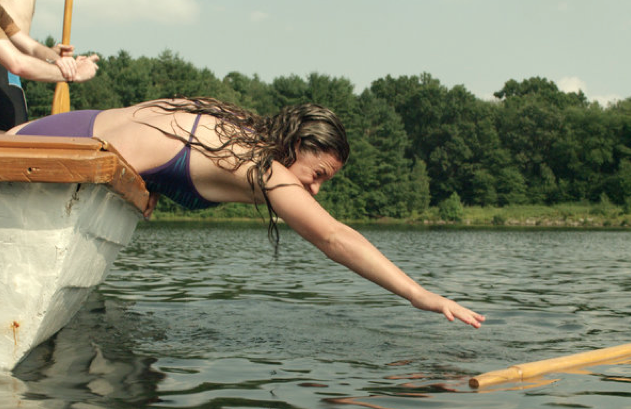
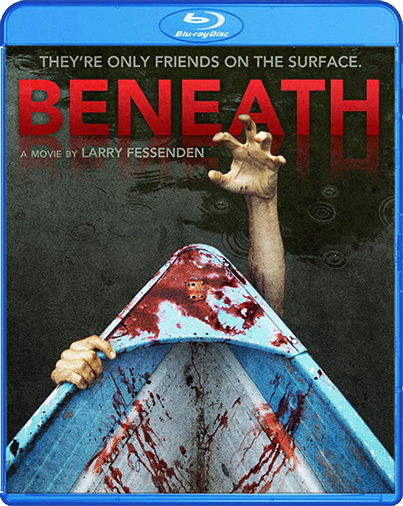
BENEATH is a satirical horror-thriller directed by established filmmaker Larry Fessenden (The Last Winter, Habit, Wendigo) and produced by Fessenden and Peter Phok for Glass Eye Pix. The film tells the story of a group of six bratty teens who celebrate the end of high school by taking a trip to an isolated lake. Things get perilous with the appearance of a deadly monster piranha like fish lurking in the water. Stuck in their bloodied, oarless, leaking boat, the kids face the ultimate tests of friendship and sacrifice as they each try to make it ashore.

The film has a largely unknown cast: Johnny Orsini, Chris Conroy, Daniel Zovatto, Griffin Newman, Bonnie Dennison and Mackenzie Rosman, who come across as selfish, self-absorbed and lacking in integrity, especially as the big fish starts claiming lives. Darren Aronofsky favorite Mark Margolis (Requiem for a Dream, The Wrestler, Black Swan) has a supporting role to up the creep level. With dark humor, a claustrophobic boat setting and a cast who are their own worst enemies, audiences begin to realize the point of the film.

Regardless of production value, I am always amazed that horror consistently peaks the interest of buyers and distributors worldwide. IFQ chatted briefly with Fessenden to learn more about his film.

Independent Film Quarterly (IFQ): Larry, you are obviously no stranger to horror and creepy flicks, most notably The Last Winter. Why are you drawn to this genre?

Larry Fessenden (LF): It’s the way I see the world. Life seems arbitrary and scary, consciousness seems subjective and tenuous. I like the horror genre because it invites the audience to see the world the way I see it: populated by demons, real and imagined.

IFQ: Tell us more about the concept for this monster killer fish movie that has dark comedic elements?

LF: In BENEATH, we tell the story of six high school graduates, their whole lives ahead of them, heading out for a day on the lake. When misfortune strikes in the form of a massive strange looking creature, the kids turn on each other, their insecurities and resentments become lethal: High school is never over. The comedy in BENEATH is dark because there is no punch-line, no wink to the audience, and so there is no relief. It is a satire about selfishness.

IFQ: How was the translation from script-to-screen for you?

LF: Every film project faces the challenge of moving from script to screen. A creature film is difficult because a monster in the mind is more powerful than one in a movie. Then there is the difficulty of shooting on water. They say it takes twice as long as shooting on terra firma. On the up-side, you have the actors, who bring a realism and vitality to the lines on the page that can be better than anything you’d imagined.

IFQ: You are considered a unique and modern horror indie filmmaker? What do you think about that?

LF: I am grateful for the notoriety I have because it helps me get work made, either my own work or the projects I support. Showbiz is a massive status game, and the best you can do is take your place in the pecking order and make the most of it.

IFQ: How was it working with the Chiller production team and how did they manage to snag you for this project?

LF: I took a meeting at Chiller to pitch them some low-budget projects. That’s what we do at my production company Glass Eye Pix, we make cheap high-brow scary movies. After all my pitches, they pulled the script for BENEATH out of a drawer and asked me to read it. Soon as I finished, I said “I’ll direct it. I’m the man for the job.” I loved the setting, simplicity, and the monster.

IFQ: The ensemble acting was good. The characters are not very likable especially as the plot unfolds and it’s everyman for himself. Was there high interest level for the college kid roles?

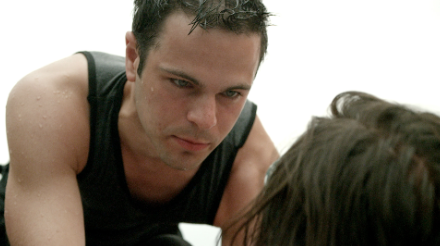
LF: We briefly went to name actors in the age range. But it is hard to get established talent to be in a TV horror movie with a limited budget. As soon as it became clear we weren’t going to get stars in the roles, we went for the best New York talent. These are good roles for an actor because they unfold in real time in a singular location, like a play. I felt I got the best in the business.

Screen Shot 2013-08-02 at 4.37.32 PM

IFQ: Apart from acting skills were you looking for actors with a specific look especially for the more intense characters such as Johnny and the nerd Zeke?

LF: The script called for certain “types” and I cast the actors that I felt brought the most humanity to the clichés that are built into the story.

IFQ: What is challenging about making a horror film as compared to another genre?

LF: Well, once you’ve taken on the mantle of making horror films, then you are saying, “I will scare you”. At which point the audience member will judge your success by the degree to which you do indeed arouse fear. But this presumes that a horror film is like a rollercoaster, designed to frighten you. The type of films I make, I am more interested in defying expectations, to put an audience member off kilter and to undermine their assumptions. This can arouse less predictable reactions and sometimes there’s a backlash.

IFQ: Tell us more about the Oxford setting and deciding to keep the film largely confined to a boat on the lake. They seem to have a lot of trouble actually getting it ashore!

LF: The lake we chose was actually a former reservoir in Oxford, CT. It was a good-sized body of water and we put a large platform in the middle and filmed from a crane. I wanted the story to be claustrophobic and tell the whole thing from the kids’ point-of-view, no flashbacks to the prom, and no fish point-of-view either. Just stay stuck on the boat almost in real-time, and let the kids’ back-stories come out in the dialogue. The whole point of the movie is the kids are getting nowhere fast, they can’t agree on what direction to go and close as they are to shore, they can’t work together to save themselves. That’s how I see humanity right now.

As for the boat not being that far from shore, it’s further than you think and I know I wouldn’t want to swim that distance with a big fish after me no matter how silly it looked.

July 31, 2013
Share:
Facebook Twitter Email

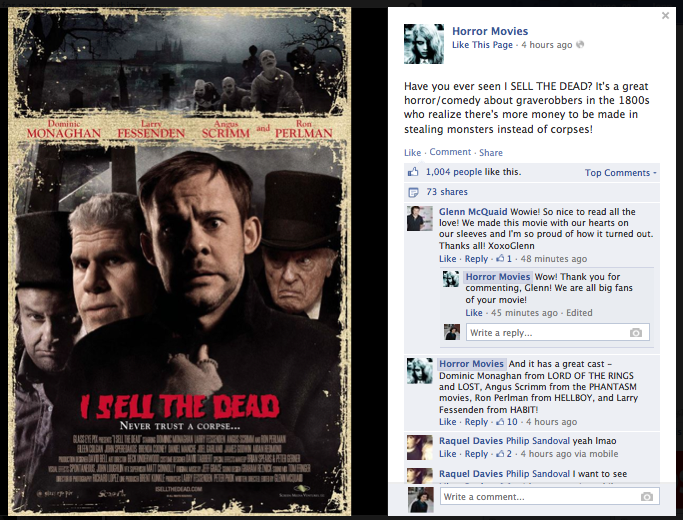
Big Time Love for I SELL THE DEAD on Facebook

Screen Shot 2013-07-31 at 6.45.35 PM

Join in on the I SELL THE DEAD love at Facebook.com/HorrorHorrorHorror

The movie, directed by Glenn McQuaid, starring Larry Fessenden, Dominic Monaghan and Ron Perlman, is streaming right now on Netflix! Check it out here.

July 31, 2013
Share:
Facebook Twitter Email

The Thing(s) In The Lake: Discussing Larry Fessenden’s Latest Off-Beat Horror Opus

PunkeInFilm discusses Larry Fessenden’s BENEATH:

Scout Tafoya: Larry Fessenden’s first film was a Super 8 remake of Spielberg’s Jaws which included a pretty accurate miniature representation of the vessel The Orca. It’s half parody, half-tribute, all proof that Fessenden was someone who got the details right and has his own way of doing things. When he started making horror films they felt real, every inch of them. They were horrific long before the monster showed up because he got the details of anxiety and aggressive behavior just right. The real villain of his film Wendigo isn’t the violent and nightmarish forest-dwelling spirit at all. On top of being a unique director, Larry’s also a singular presence on camera and of course one of the best indie film producers who’s ever lived, so naturally when he took a break from directing I was fine with it because he was using his time admirably. That said I was more than a little thrilled to hear he’d once again directed a horror film and the more I learned about it, the more it became clear that he was returning to that little homemade Jaws parody with a bigger budget and a real monster. And that would have been enough, but Fess’ is too interesting a filmmaker to leave it at that.

Screen Shot 2013-07-31 at 2.12.19 PM

The joys of his latest, Beneath, are tactile. You can see the monster and the characters really touch it. That was a satisfaction I thought long gone from mainstream horror: CGI means you can have any creature you can dream up attacking your characters, you just can’t prove it’s there. If all this film’s budget went into the mutant in the lake, then it was money well spent. But that sense of reality, of being able to reach out and put your hand on everything is also in the character design. At the start these people are shades away from cardboard cutouts (this is on purpose) but as soon as the first victim’s blood fills the boat, they become real people with wicked survival instincts. If getting off the boat means everyone else has to die, then that’s how they’re going to play it. But it takes goading before the characters who seem primed to be the ‘villain’ take matters into their own hands. And characters who seemed fated to be heroic slowly prove they’re less than meets the eye. It’s a sort of slow-burner waiting to see who’s going to snap and do something out of self-preservation. Their dialogue also has that weird, half-improvised feel of nervous people trying to seem imposing. It’s just weird enough to be totally believable. And of course the film’s best joke is that the characters can see the shore the whole time and the monster is kind of cute if you look at it the right way. They’re only trapped because they keep damning themselves. I loved its old fashioned approach to the monster and loved the completely contemporary approach to the human dynamic.
 What’d you make of it? Did you want them all dead or were you rooting for someone to make it back to shore?


Lucas Mangum: 
I’m glad you brought up character. I liked the issues the characters had with each other because it definitely helped make the film so much more than just a mere monster movie. Fessenden showed real competence by not limiting the conflict to two or three characters. Each person has some kind of secret beef with the other people on the boat and the tension escalates perfectly. I’d say it demands patience from the viewer, but the fact that they were also being attacked by a monster kept things moving right along for those of us with short attention spans.
And what a monster it was! I got really excited the first time it appeared on screen. It definitely conjured that enthusiasm I had as a ten-year-old seeing the shark in Jaws for the first time, or the squid in Disney’s 20,000 Leagues…

Check out the full discussion and join the conversation here.

July 30, 2013
Share:
Facebook Twitter Email

Yahoo: Larry Fessenden’s ‘Beneath’ Pays Homage to ‘Jaws’

beneath_screengrab_GriffinNewman_BonnieDennison_ChrisConroy_JonnyOrsini_DanielZovatto_©BeneathLLC_01

From Yahoo.com:

Fessenden’s 10-foot Rubber Fish as Finicky as Bruce the Shark

As Larry Fessenden, director of the new thriller “Beneath,” likes to point out, you can’t make a giant-creature-under-the-water movie without thinking of “Jaws.” Like Steven Spielberg’s classic, Fessenden’s tale of terror will make some viewers stay away from even the quietest of lakes.

Looking like a distant relative of Bruce, the mechanical shark from Spielberg’s epic, Fessenden’s 10-foot rubber nemesis was built on land in a laboratory for props, but not necessarily for swimming. “It behaved about as well as Bruce the shark. Since I loved ‘Jaws’ so much, I never fantasized that we were doing anything as classy,” Fessenden said when reached by telephone.

6 characters, 18 days, one hungry fish

“Beneath” focuses on six teenagers celebrating their high school graduation with a trip to Black Lake. Underneath those calm waters, though, lurks a hungry predator with a taste for tender flesh.

Fessenden said that he and the crew decided early on that there would be two approaches to filming. “One is to have sort of a shaky cam approach in a boat or a boat next to it and really get down and dirty. I chose the opposite, which was to have a sweeping–what I call existential–camera that was indifferent to the characters that were floating around,” the director explained.

The crew also put a movie crane on a really big barge: “You aren’t supposed to do that because the crane is just balancing on a tiny fulcrum. And the movement of the barge was very stretchy on the crane.”

While in the boat, would-be director Zeke (a hilarious Griffin Newman) has his waterproof wrist camera filming all the action. Fessenden said footage from that device was used in “Beneath” as well.

“Usually we added some sound so you are very aware that it is his camera. The actor actually shot a lot of his sequences. That was exactly the opposite, more of the found footage element which people like a lot nowadays,” he said.

Without having to use lights on set, Fessenden thought the shoot would move quickly, but it still took forever to set up a given shot: “And there were the actors just sitting out there on the boat under an umbrella so they didn’t bake.”

Actors dying for a role

Without giving too much away, several characters in “Beneath” end up as fish food. Fessenden shot the scenes in order so as their character was killed, they would leave and say their goodbyes. “I think it helped the actors feel that loss over the course of the shoot and over the course of the story,” he explained.

In some ways, the performers each get a star turn before meeting their maker. Griffin Newman, for instance, generates some big laughs before he is tossed into the lake. His character doesn’t opt for a heroic, self-sacrificing end, however.

“I love that shot. I specifically cut to it; there was no other take that showed that little bit of business. It’s almost its own shot, to get that in,” Fessenden said.

On the other hand, actress Mackenzie Rosman had to stay in the boat covered in what appears to be her own gore.

“Typical of my kind of directing, I literally asked her to stay an extra day to lie under the towel. Normally, you’d put a mannequin there, and yet I just felt having her there would look more realistic,” the director said. “That’s always a funny thing, when you become a prop as an actor after you are dead and they still need you as a corpse.”

Produced by Glass Eye Pix, “Beneath” is available on VOD.

Check the interview out at yahoo.com.