December 2, 2016
Share:
Facebook Twitter Email

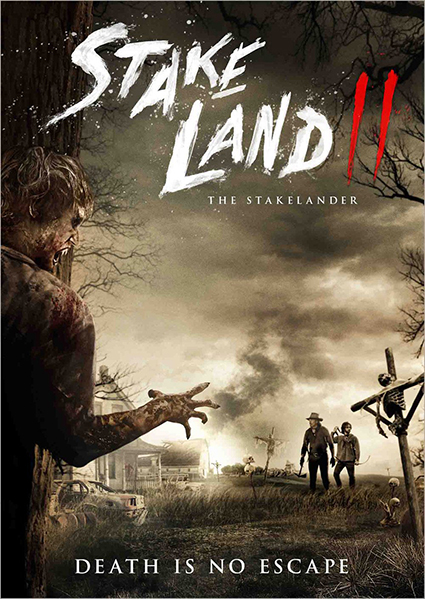
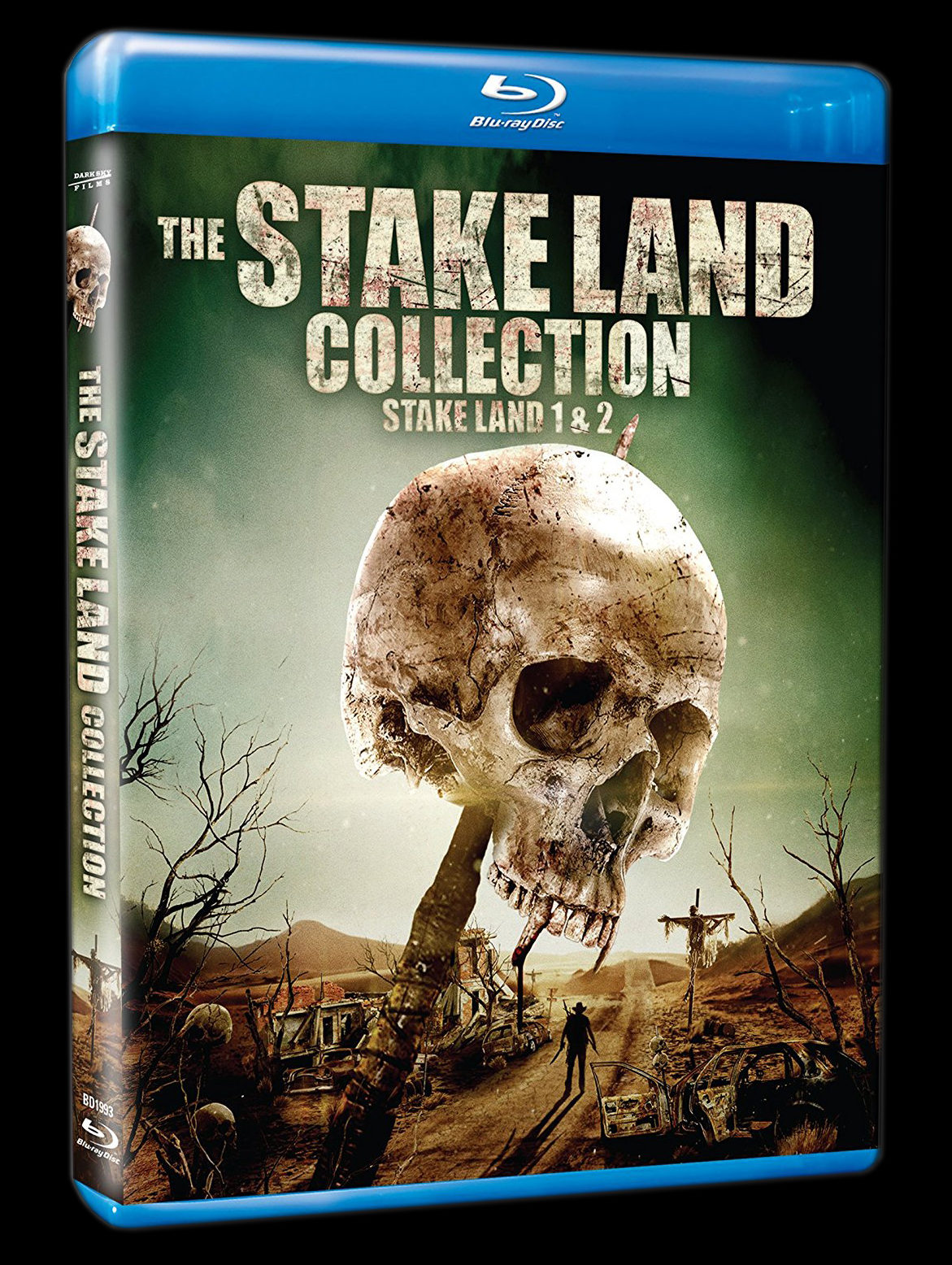
STAKE LAND II — The Stakelander out on Digital 2/7/17, DVD & Blu-ray 2/14/17

stakeland-2-poster_425

Stake Land set a new standard in vampire apocalypse thrillers in 2011, and now the eagerly awaited sequel arrives to push the story and its characters to the next shocking level. STAKE LAND II, again starring Nick Damici and Connor Paolo, will be available across digital platforms on February 7, 2017. The film will also be available on Blu-ray and DVD beginning February 14, 2017.

STAKE LAND II, a Dark Sky Films presentation of a Glass Eye Pix production in association with Berserker Entertainment and Last Pictures, is a new adventure set several years after the events in Stake Land, in which mankind must struggle to survive in the wake of a vampire apocalypse. When his home in New Eden is destroyed by a revitalized Brotherhood and its new Vamp leader, Martin finds himself alone in the badlands of America with only the distant memory of his mentor, the legendary vampire hunter Mister, to guide him. Roaming the wilderness of a steadily decaying country, Martin searches for the one man who can help him exact revenge.

Once reunited, Mister and Martin prepare to confront the ravenous Brotherhood and its monstrous overlord. But it’ll take more than the two of them to battle this terrifying new threat, and with the future of humanity hanging in the balance, the stakes are higher than ever before.

Reuniting one of horror cinema’s most memorable heroic teams, STAKE LAND II is an epic exploration of a post-apocalyptic world ravaged by blood-thirsty vamps and social collapse, where only the strongest survive.

The film brings back some of the key cast and creative team behind the post-apocalyptic hit Stake Land. Nick Damici (“Hap and Leonard”) reprises his role as Mister and is also the screenwriter, while Connor Paolo (“Gossip Girl,” “Revenge”) is back as Martin, and director Jim Mickle (We Are What We Are, Cold in July) is back as executive producer. Peter Phok and horror icon Larry Fessenden of Glass Eye Pix produce, along with Dark Sky’s Greg Newman. It is the second film from directors Dan Berk and Robert Olsen, following their gripping debut, Body. Also starring in STAKE LAND II are Laura Abramsen (Basic Human Needs), A.C. Peterson (Shooter), Bonnie Dennison (Beneath), Kristina Hughes (Green River), and Steven Williams (TV’s “Supernatural”).

The original Stake Land received prestigious international festival play and won the Midnight Madness Audience Award at the 2010 Toronto International Film Festival. It was a commercial and critical success around the world, praised as “the American horror film of the year” (Twitchfilm), “terrific” (New York magazine), “bold and memorable” (San Francisco Chronicle), and “nothing short of epic” (Dread Central).

Praise for STAKE LAND II has been equally enthusiastic since its world premiere at the 49th Sitges International Fantastic Film Festival (2016). Horror Society called it “the perfect sequel, the perfect continuation of the story… the vampiric sequel we’ve all been dying for.” Amy Seidman of Fangoria opined: “Olsen and Berk’s direction is as strong as Matt Mitchell’s cinematography, which is beautiful and, at times, reminiscent of Robert Altman’s westerns.”

December 2, 2016
Share:
Facebook Twitter Email

THE STAKELANDER is “genuinely moving”

“My god Damici and Paolo are so good..so intense.
There’s a scene near the end of the film where the two express their affection towards one another
and I almost lost it – their onscreen chemistry is spectacular…
Damici wrote a really stellar sequel to a film that didn’t need expanding upon,
but I’m glad he did because in the process he also opened up Stake Land into a potential horror franchise
which I didn’t know I needed, but now I do.”
foxforcefivenews

stakeland2hammer

December 1, 2016
Share:
Facebook Twitter Email

It’s not too late to order your Creepy Christmas Calendar!

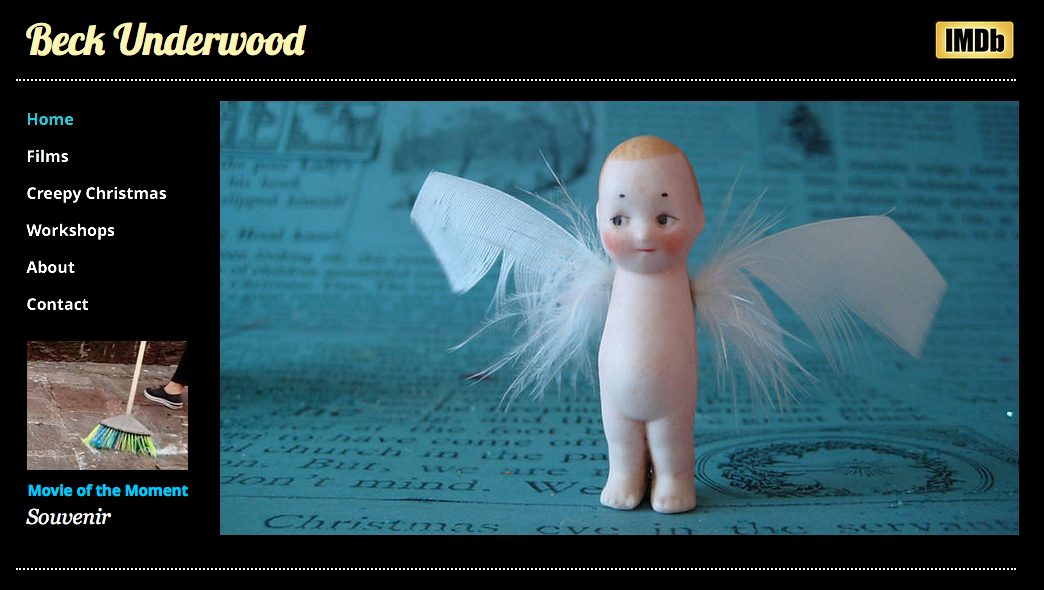
Glass Eye Pix invites you to count down 25 Days till Christmas with this creepy Advent Calendar. What better way to celebrate the Holiday season than with a daily peek behind the doors and windows, nooks and crannies of this mysterious doll village assembled by artist and stop-motion animator Beck Underwood? See vintage dolls and Santas, stuffed critters and misfit toys, all to delight and tease in this merry celebration of Christmas mischief. Buy Now!opening-page_take-a-peek-ov

And check out Beck Underwood’s Creepy Christmas Film Festival: 25 Films in 25 Days
with films by Sara Driver, Beck Underwood, Jim Mickle, Ti West, Brahm Revel,
Graham Reznick, Glenn McQuaid, James McKenney, Fessenden, and many others!

creepychristmas-700x466-700x466
November 30, 2016
Share:
Facebook Twitter Email

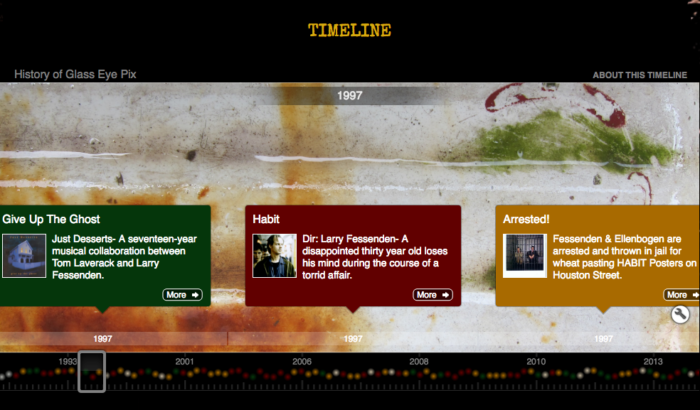
GEP timeline updated! Check it!

screen-shot-2016-11-30-at-3-49-18-pm

November 23, 2016
Share:
Facebook Twitter Email

An inside look at Past Inside the Present

The Past Inside the Present
the_past_inside_the_present_03

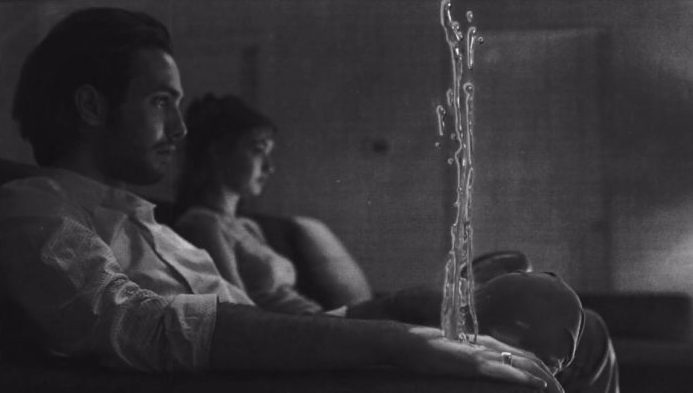
What is it about the past which compels us to expend quintillions of bytes of data trying to preserve the minutia of our daily existences? Perhaps it’s the unknowable nature of the future, coupled with disappointments about our present, which causes us to reach for the rose tinted memories of what has gone before. This is a question addressed by James Siewert in his multi-year labour of love allegorical short The Past Inside the Present – in which a couple directly plug into recorded memories of happier times in an attempt to renew their dying relationship. Take a look at the trailer below (or download the full Bittorent bundle) and then check out our interview with James where we discuss The Past Inside the Present’s epic two and half year production journey and consider the narrative and craft casualties caused by the continuous hunt for ever efficient production practices.

The Past Inside the Present is far from typical in both its concept and execution, where did the idea come from for this labour intensive short?

The ideas for the film came together slowly and from many different sources. The very first idea, which I had at the end of high school was just to do something with these half-headed figures with analogue circuit boards on their heads. It was a much more aggressive idea in tone than what the final film became – the rhythm and vibe would have been more like Aphex Twin’s Come to Daddy video. I think it was born out of anger – feeling resentful of people that were able to have sex easily, and wanting their relationships to be shown to be superficial or at least purely chemical in nature.

Once I got to college I became much more nostalgic – because I was doing the thing where you would go home to your high school friends and play at repeating all the old jokes and routines with diminishing returns. Visiting home occasionally you get this crystallized view of how time breaks everything down because each time you go home it’s this little time capsule of what your relationships are like so you have these distinct intervals where you can clearly track how quickly feelings fade and things fall apart. So the the idea of the figures plugging into these tapes that would allow old rituals to be iteratively reenacted got incorporated into the original idea.

A second of animation feels more pregnant than a second of live action film.

The last piece was how to treat the visual effects – which ended up being done with rotoscoped animation. This came about because in college I took a lot of printmaking classes. I took a photogravure class where you learned how to etch a digital image onto a copper plate. I would experiment with etching illustration back into the photographic image. I began to want to use that style in animation – I liked how the drawing allowed me to editorialize on the image that was underneath it. And I also felt that the sort of labored look you get with animation – where images seem to ‘hang in the air’ for a second – time seems to have more weight in animation – a second of animation feels more pregnant than a second of live action film. The weight of time was so much part of the concept that it seemed like the right way to treat this story. Plus it allowed me to not have to be so fussy with the visual effects – since they were going to be rotoscoped over, strict photorealism wasn’t necessary.

Could you take us through your production process?

Really slowly. This was my thesis project in college I had hoped to be able to complete the film in a year – it took others and myself two and half years of more or less continuous work to finish. I had made some music videos with this company Glass Eye Pix, produced by Chris Skotchdopole. In the spring of 2013 I storyboarded the whole movie and Chris and I brought it to Glass Eye’s owner Larry Fessenden, who agreed to give us some money to film the live action part. I raised the rest of the money for production by selling an antique music box I had inherited to a collector. I built the set in a week and a half in a studio we had available at my school, Bard College. Principle photography was 4 days with one day of travel. Of course about half the movie is composed of little macro inserty shots which I gathered slowly over the course of the next two years.

Once I had done some editing and VFX work on the film, Chris and I used that footage to create a Kickstarter campaign to raise money to complete the VFX and rotoscoped animation. I used the money to hire my friend from high school Auden Lincoln Vogel and his friend Annelyse Gelman to get me over the hump of the VFX and rotoscoping. By the time of my graduation, the spring of 2014, we had completed almost all of the VFX but still had more than half of the rotoscoping left to do. So I moved back in with my mom in Richmond California and worked out of her garage for the next 10 months. I also asked Larry for a bit more money so I could hire my cousin Carter to help me for a few months. During this time my dad supported me for food and things like that – I tried not to take it for granted and work at least 50-60 hours a week on the animation. Finally by May of 2015 almost all the animation was completed. I moved back to New York and have been working off and on as a freelance cinematographer and visual effects artist. I met Geoff Saba, who did the music for the film, through a mutual friend. He worked off and on on the music from July 2015 to early January 2016. Arjun Sheth – who did the sound design started working in October. During Christmas and New Years of 2015 I did the remaining piece of animation: the credits. The last frame of the credits was finished only a few days before the premiere of the film at Slamdance in late January.

How did that process translate into the equipment and software you used?

The film was shot on a Canon 5D Mark III. We had a dolly and a few lights – a couple Rifas, a couple Kino Flos and a Lowell kit. A couple other camera rigs I built for the film: for when the camera spins around the couple during sex this was a bicycle petal bolted to the ceiling with a pipe coming out of it and the camera hanging off the pipe with c-stand arms. There was also a pulley rig for when the camera dives from the ceiling into the male figure’s open mouth. Everyone was terrified of these rigs. The actor, Miles Joris-Peyrafitte, wouldn’t let me lower the camera onto him so it had to be filmed in reverse – the camera started in his mouth and was raised to the ceiling.

Visual effects were done primarily in Adobe After Effects and Blender. Each frame was printed out on any number of basic monotone laser jet printers: basically the cheaper the better – I found that if you took the files to a Kinkos or a Staples the prints would end up coming out without any of the laser jet toner texture that was important to me. The film is about media being degraded through translation and time, so I felt the actual frames had to undergo that same analogue degradation process. For the rotoscoped frames (approximately 3/4s of the film’s 11000 frames were drawn over) that was done by tracing each frame with pen and charcoal. Both the print out and the drawing were scanned into the computer – at first using school scanners and then later my mom’s scanner – and then the drawing and the print were combined in After Effects to create the final image.

The Past Inside the Present is being distributed for free through Indie Street via the BitTorrent Now platform. What attracted you to Indie Street’s distribution co-op model rather than going the standard Vimeo route?

I”m going to put it on Vimeo in December so the choice never felt like an either or. Is honesty the best policy? I got a small advance for putting the film on BitTorrent and having it exclusively on there for a month. My income has been in a shitty place this whole year so it was really really welcome (if any of your readers want to hire me to do anything, believe me I’m probably game). Beyond that though IndieStreet has been really generous in supporting the film through Facebook and social media. There’s an illusion of a level playing field on the internet – that any one can make something that can “go viral”, but chances are anything that’s been seen by any large number of people has gotten a megaphone through a platform that already has a lot of traffic – so IndieStreet giving me a small megaphone is something I’m really grateful for. Finally – I do enjoy Bittorrent as a platform – it’s refreshingly free of editorial as a platform – they just put cool shit up without a ton of context which I think allows for a really pure experience – I like the idea of people downloading my movie without know very much about it and just thinking “What the fuck was that?”.

The making of archive (included in the premium download bundle) is so detailed, honestly reflective and gorgeous to boot, that I found myself inadvertently reading the entire 70 pages in one sitting. What was your process when it came to selecting and combining all the years of filmmaking ephemera into a cohesive collection? Were you ever concerned about being ‘too’ honest?

I think it started as just writing a short reflection on each stage of the process – I mostly wrote it for myself so I can remember what this period in my life was like in 20 years. I also thought – once someone has had this chance encounter with this short film, if they are interested in knowing my thought process behind it they deserve it. I’m very skeptical of the notion that art is this mysterious process and the artist needs to be kept behind a curtain like the Wizard of Oz. I vaguely feel like – artists shouldn’t have to be able to explain their art completely but if you can’t say anything meaningful about the thing you made there’s a seriously decent chance you’re full of shit. My girlfriend encouraged me to organize the whole book a little bit more explicitly chronologically to help keep readers oriented. In terms of my selection: there wasn’t a ton of stuff to choose from. Pretty much all the material I had ended up in the book.

If you can’t say anything meaningful about the thing you made there’s a seriously decent chance you’re full of shit.

I don’t think I was concerned about being too honest – again this a book that I expected to be read by 20 people max: it was a surprise to me that IndieStreet wanted to make it part of the bundle. I guess the most embarrassing part of writing the book is admitting how much privilege you need to make a film like this: you basically need the luxury of sitting in your mom’s garage working for a year and a half. And that’s something that few people have. But I think that’s an important thing to say as well: if you like this kind of filmmaking, and you care about it, you can’t expect it to get done on the ordinary mercenary production cycles that have become the norm. Part of the reason films can be feel homogeneous is because the process by which they are made are homogeneous – so many tropes in filmmaking come from what is expedient to the process that is taught in film school. So many decisions get made because “We have to make our day” – coverage gets simplified, and the structuring of a film shoot becomes increasingly military – every conversation becomes a conversation about efficiency. Giving yourself time is the only way to emancipate yourself from the homogeneity of these processes. But having time is a huge privilege – and it is a little uncomfortable to say “Hey look at what I was able to accomplish with my privilege!”

Years of man hours and determination to move towards your goal went into the creation of The Past Inside the Present, what effect do you think the extended period of time had on the project and on you as a filmmaker?

To contradict what I just said a little bit maybe, I think the effect hasn’t been totally great on my post-PITP work generally: once you become used to moving an a very glacial pace that easily can translate into complacency. I’m working on a couple music videos at the moment but I think my work has lost a little bit of urgency and structure because with PITP I blew through so many deadlines that the psychological effect of having a deadline just lost its power. Once you’ve worked on something for a year and half longer than you originally planned to it’s hard to give a shit about being behind. I’m trying to change this – trying to be a little harder on myself and demand more broader strokes and more progress out of my work. I also think – and it’s hard to tell if this is related to making the film or not – but I’ve become a little more numb as a person since beginning the film. Beginning the film I was working my way out of some depression, but the channels of feeling were definitely more open. Spending 2.5 years of all work and all play (since really tracing frames never felt like serious work) has made me a little bit of a dull boy.

Are there any new projects you’re productively procrastinating about at the moment?

Well like I said – there are the two music videos I’m working on right now. And I’d like to make more – if I can find some way to make it make any kind of financial sense, which right now it does not. Just like every other creative I have feature length script I’m working on: it’s a coming of age story set in an alternate 1979 Portland OR, where sex is physically very different, and where the friendship of two young women catalyze a series of radical bodily transformations. And there’s another vaguely Past Inside the Present-ish idea – more diaristic and explicitly personal but an extension of the rotoscoping techniques I played with in PITP. It’s another one that that is at its core about transformation of human anatomy.

FULL INTERVIEW

November 22, 2016
Share:
Facebook Twitter Email

Twitter Q&A with Graham Reznick

We sat down (on Twitter!) with Graham Reznick, a multi-talented sound designer, mixer, film writer + director who has been using Waves plugins for in films like In a Valley of Violence and Gone: VR 360! Find out how he mixes audio for film.
gr
November 15, 2016
Share:
Facebook Twitter Email

INDIEWIRE sites TALES FROM BEYOND THE PALE

INDIEWIRE — Genre Fanatics: Where Aficionados Go to Keep Up on the Latest in Blood, Frights and Creatures

IndieWire highlights the festivals, websites, Twitter feeds and podcasts that connect genre fans to films and filmmakers they love.

Podcasts

Genre is no different than any other corner of the media world; it too is branching into the world of podcasts. When we reached out for recommendations of what we should be listening to from our genre friends, these were the shows most commonly recommended:

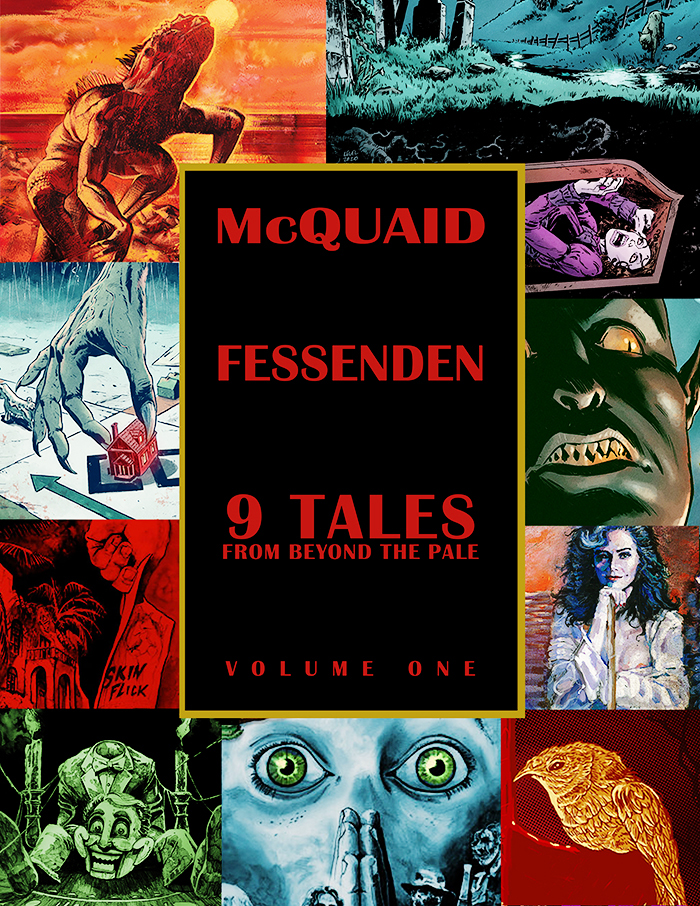
Tales From Beyond the Pale”: while this is not a way to keep up on the world of genre, it is incredible entertainment. The horror podcast — produced by Larry Fessenden and Glenn McQuaid for Glass Eye Pix — is inspired by 1930s radio dramas and re-opened the door for genre filmmakers to return to the tradition of radio plays.

Read entire list

November 14, 2016
Share:
Facebook Twitter Email

Rob Kuhns reflects on Birth of the Living Dead

The Birth of ‘Birth of the Living Dead’

By Rob Kuhns, director of Birth of the Living Dead:  Making this documentary was probably the most fun I’ve ever had in my life.  I got to not only meet my heroes, but spend real time with them.  And I got to see a story—the story of how a tiny horror film reflected one of the most tumultuous times in American history while becoming a worldwide sensation—unfold before my eyes with a richness I couldn’t even begin to imagine.

I first saw Night of the Living Dead at a midnight show in 1983.  I was a film student at NYU and Night had been playing continuously, almost without a break, in theaters since its release in 1968.  I remember leaving the theater feeling shattered and dazed—a feeling I hadn’t had since 1973 when I watched on my family’s first color TV Charlton Heston come across the crumbled remains of the Statue of Liberty on the beach in Planet of the Apes. Of the thousands of movies I’ve seen in my lifetime only a handful have hit me on that primal, gut level.

My love of George A. Romero‘s films, and particularly of Night, began at that screening in ’83.  I watched all of his movies and read all I could about him.  In my research I came across the inspiring and frequently hilarious accounts of the making of Night of the Living Dead.  Romero, a 27-year-old college dropout from the Bronx, and a crew of mostly very young working class people, not very experienced in filmmaking and with very few resources, came together to make a seminal film.  This story of a “little-movie-that-could” could make a wonderful documentary.

My wife, Esther Cassidy, (who produced Birth with me) and I got in touch with Romero in 2006 through friends of a friend.  When he opened the door of his apartment to greet us I was reminded of that scene in Spike Lee‘s Malcolm X when Malcolm first met Elijah Muhammad—we were awestruck and speechless.  We were soon disarmed by Romero’s graciousness, humility and humor.  He shared the most amazing stories about Night and the time in which it was made.  Romero is a compulsive, wildly-gifted storyteller with no off-switch.  The director of photography couldn’t change the tapes fast enough.  Astonishingly, he gave us several days of his time and through his interview alone we immediately knew we had the core of a great documentary.

Birth of the Living Dead

BIRTH OF THE LIVING DEAD’S ROB KUHNS, GEORGE ROMERO AND ESTHER CASSIDY. COURTESY ROB KUHNS.

Soon after shooting the interview I was given another incredible opportunity—to work as an editor with another one of my heroes, Bill Moyers. I would never have expected my work with Moyers to have anything to do with the story of Night of the Living Dead, but once I started this job, I’d have to be blind not to see the connection.

Moyers was Press Secretary for President Lyndon B. Johnson at the time that Night was made and he frequently commented on his show about that moment in history.  He did a show about the Kerner Report, an LBJ initiative, which examined the causes of the race rebellions in 1967, the same year that Night was shot.  I was stunned by the footage of Newark and Detroit during this time.  It looked like the apocalypse.  We did another show about LBJ grappling with Vietnam, escalating the war at a time when the country was deeply divided about our involvement.

I experimented in weaving these stories chronologically with the stories of the making of Night and it hit me like a ton of bricks—this tiny, low budget horror film made in Pittsburgh by a bunch of young first-time filmmakers was in fact a living document of its moment in history.  The documentary had developed a life of its own.  It was just a matter of following the bread crumbs.

Michael Winship, Bill Moyers’ head writer, gave me a copy of Pictures at a Revolution, by Mark Harris, which looked at the cultural and political context of the films that were nominated for the Academy Award in 1968, the same year Night was released.

We interviewed Harris and once again we couldn’t believe our luck.  Harris, with almost no direction from me, nailed it with one example after another of how Night reflected that particular moment in history.  This was a ferocious, confrontational horror film—very 1968—which questioned all of those things which made us feel safe in traditional Hollywood movies:  The media, the family, the police, the military, the government.  He said, “I don’t think audiences were ready for Night of the Living Dead, and I think that’s why they responded to it.”

Around this time a friend connected us with Larry Fessenden, a writer/director of thoughtful, uncompromising horror films, very much in the same vein as Romero’s.  I had been a fan of Fessenden’s work for many years and jumped at the chance.  The gods once again smiled on us.  It turned out that Night was Fessenden’s favorite horror film of all time.  With irrepressible enthusiasm—he could barely stay in his chair during the interview—he spoke about how horror films, and Night in particular, can portray and confront the anxieties of a nation.  After the interview Fessenden got more and more involved with the production, eventually becoming Executive Producer of Birth of the Living Dead.

Birth of the Living Dead

BIRTH OF THE LIVING DEAD. COURTESY GRAVITAS VENTURES

He connected us with Elvis Mitchell, a former critic of the New York Times whom I’ve always admired.  Many critics write with an air of condescension about horror films but not Mitchell.  He clearly loves them when they’re good and he saw Night as a real work of art.  To my utter astonishment, I discovered through the course of the interview that not only did Mitchell grow up in Detroit during the race rebellions, experiencing them first hand, but also saw Night of the Living Dead at the tender age of 10 at a drive-in theater there.  To Mitchell the fact that Romero cast Duane Jones, an African American, as the lead and that the film never once referred to Jones’s character as a black man, “It felt like a brand new day.  It truly did.” 1968 was a time when race was THE primary characteristic of any African American cast in a film.  Mitchell gave us yet another incredibly rich angle to explore.

Each interview turned up more wonderful surprises which made editing an absolute joy.  It’s a great thrill when a project develops a life of its own and takes you in directions you would never have anticipated.

Esther and I have stayed in touch with Romero and his wife Suzanne Desrocher over the years.  Today Romero continues to write non-stop, and is involved with the “George A. Romero’s Filmmaking Program” at the Douglas Education Center in Monessen, PA, about 30 miles south of Pittsburgh.  He was in New York this month supervising the 4K restoration of Night at the Museum of Modern ArtNight first showed at MOMA on June 16th, 1970 when it became part of the museum’s permanent collection.  You can hear Romero giving a Q & A from that night as one of the special features on the DVD of Birth of the Living Dead.  It’s a wonderful snapshot of the moment when Night was getting international recognition as a work of art (after getting eviscerated by U.S. critics) and Romero, age 28, was poised for a career as a world-renowned filmmaker.

Brooklyn-based Rob Kuhns is the producer, writer, editor and director of Birth of the Living Dead.

READ ARTICLE HERE

BIRTH OF THE LIVING DEAD

November 10, 2016
Share:
Facebook Twitter Email

Cutting Room #76 – All Seasons of the Witch

cuttingroom500_notext

November 9, 2016
Share:
Facebook Twitter Email

tlw